Mori Atlas logo
Nature reserveRéserve naturelle régionale du récif fossile de Marchon - Christian Gourrat

A rare protected limestone outcrop showcasing ancient Jurassic reef assemblages in the heart of a French forest.

Explore the Geological Heritage of the Réserve naturelle régionale du récif fossile de Marchon - Christian Gourrat

The Réserve naturelle régionale du récif fossile de Marchon - Christian Gourrat stands as a uniquely significant protected area within the Auvergne-Rhône-Alpes region. Covering a modest surface, this site serves as a vital locus typicus for Kimmeridgian coral and rudist fossils. Visitors can examine the exposed limestone reef embedded within a dense beech and fir woodland, providing a rare window into an ancient tropical marine ecosystem now preserved within the southern Jura mountains.

fossil reefpaleontologyjurassic geologygeological heritagesmall nature reserveregional nature reserve

Réserve naturelle régionale du récif fossile de Marchon - Christian Gourrat

Nature reserve

Park overview

Structured park overview, official facts, and landscape profile for Réserve naturelle régionale du récif fossile de Marchon - Christian Gourrat

Réserve naturelle régionale du récif fossile de Marchon - Christian Gourrat park facts, protected area profile, and essential visitor context

Review the core facts for Réserve naturelle régionale du récif fossile de Marchon - Christian Gourrat, including designation, size, terrain, visitor scale, habitats, and operating context in one park-focused overview.

About Réserve naturelle régionale du récif fossile de Marchon - Christian Gourrat

The Réserve naturelle régionale du récif fossile de Marchon is a specialized French regional nature reserve dedicated to the protection of a single geological feature: a fossilized coral and rudist reef from the Kimmeridgian age of the Upper Jurassic period. Although the reserve covers only 0.1 hectare, the outcrop it preserves holds an important place in regional paleontology. The site lies in the commune of Arbent, in the Ain department of eastern France, within the broader Auvergne-Rhône-Alpes region, and is close to the town of Oyonnax.

From a scientific standpoint, the reserve's significance lies in the quality and reference status of its fossils. The reef is built primarily from colonial corals and rudist bivalves, organisms that flourished in the warm, shallow seas that covered much of what is now southeastern France during the late Jurassic. Because of the clarity and representativeness of these fossils, the outcrop is designated as the locus typicus, or reference locality, for the local Kimmeridgian reef assemblage. This gives the site an outsize importance relative to its tiny physical footprint.

The reserve sits within the forêt de Marchon, a woodland dominated by beech and fir, and the geological exposure emerges from this forested setting. In practice, most of the outcrop was already covered by vegetation as of 2023, which limits the visual impact of the site on casual visitors but does not diminish its scientific and inventory value. The reserve is open to the public, but collecting fossils, hammering the rock, or otherwise damaging the outcrop is forbidden.

Beyond its immediate geological purpose, the site illustrates the role of regional nature reserves in France as instruments for the conservation of small but scientifically important natural heritage features, particularly paleontological outcrops that would otherwise be at risk from collecting, erosion, or land-use change. As a classified regional nature reserve, it is included in both the national inventory of protected natural areas and the regional inventory of geological sites.

Quick facts and research context for Réserve naturelle régionale du récif fossile de Marchon - Christian Gourrat

The Réserve naturelle régionale du récif fossile de Marchon is a regional nature reserve in the commune of Arbent, in the Ain department, Auvergne-Rhône-Alpes region of eastern France. Created on 6 March 2015 by a deliberation of the Regional Council, it covers just 0.1 hectare, an area small enough to make it the second smallest nature reserve in France. Its IUCN management category is IV (habitat/species management area), and its WDPA identifier is 555597276.

In official French classification, the reserve is designated RNR284. It protects a Kimmeridgian (Upper Jurassic) limestone outcrop containing fossil corals and rudists. The site was discovered in 1996 by the naturalist Christian Gourrat, after whom the reserve is now partly named. The reserve is also part of the regional inventory of geological sites.

Protection and recognition

Examine documented terrestrial protection metrics and official conservation data.

Protection Status and International Recognition for Réserve naturelle régionale du récif fossile de Marchon - Christian Gourrat

Terrestrial protection status and administrative records document the formal framework governing Réserve naturelle régionale du récif fossile de Marchon - Christian Gourrat. Structured database entries outline available designation details without presuming external conservation outcomes.

Protection details

Protection scope
Terrestrial
WDPA ID
555597276
Park context

Deeper park guide and search-rich context for Réserve naturelle régionale du récif fossile de Marchon - Christian Gourrat

Réserve naturelle régionale du récif fossile de Marchon - Christian Gourrat history, landscape, wildlife, and travel context

Explore Réserve naturelle régionale du récif fossile de Marchon - Christian Gourrat through its history, landscape character, ecosystems, wildlife, conservation priorities, cultural context, and seasonal travel timing in a structured park guide built for atlas discovery and search intent.

Why Réserve naturelle régionale du récif fossile de Marchon - Christian Gourrat stands out

The reserve is primarily known for protecting a small but scientifically important Kimmeridgian fossil reef outcrop built by ancient corals and rudists. It serves as the type locality, or locus typicus, for these particular Upper Jurassic reef assemblages, giving the modest 0.1-hectare site a disproportionate paleontological significance. The reserve is also notable as one of the very smallest regional nature reserves in France, illustrating how a protected area of almost negligible surface area can still carry meaningful geological and educational value. Its location within the beech-fir forest of Marchon adds a quiet forested character that contrasts with its underlying marine fossil heritage.
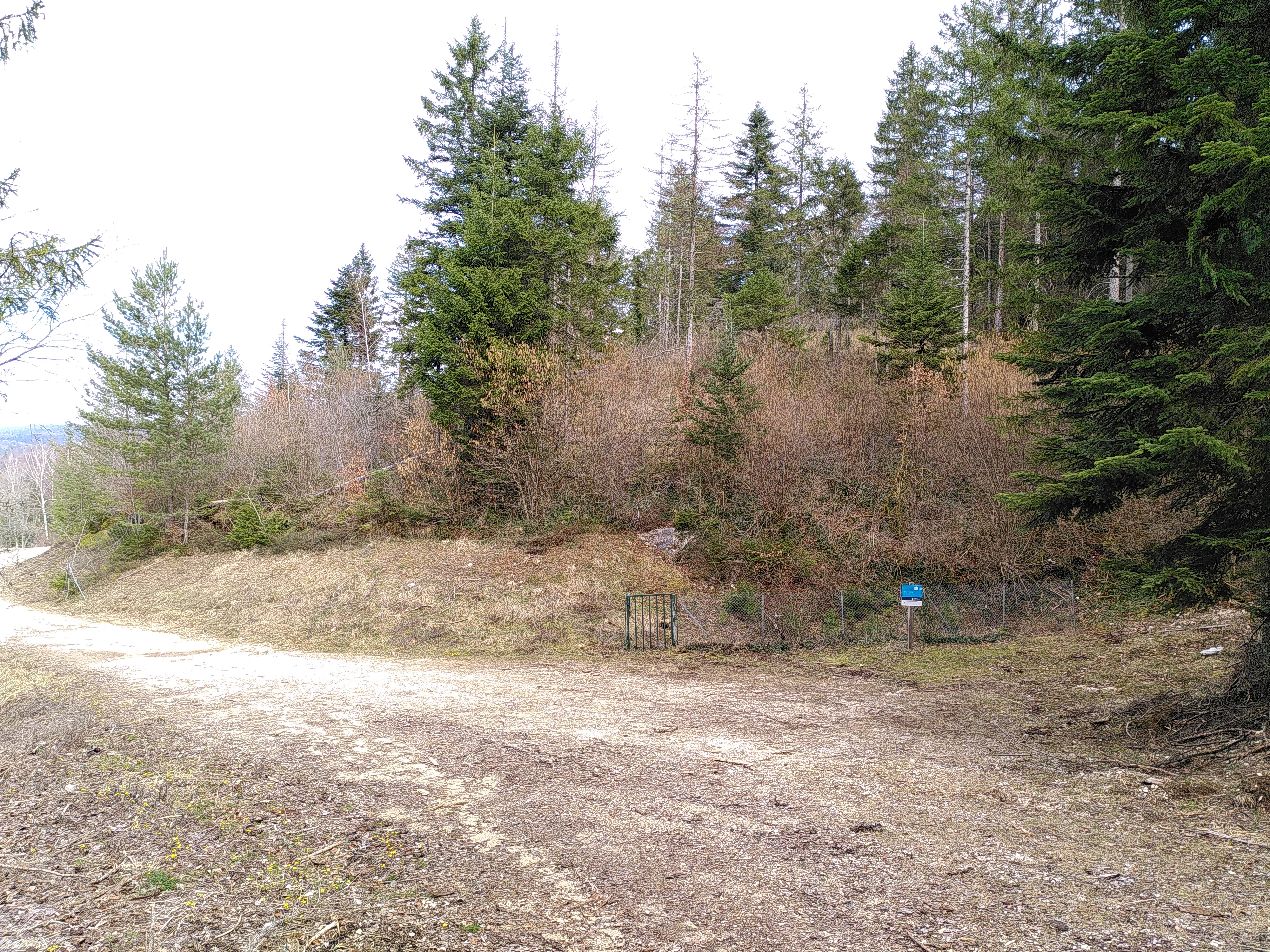
A dirt path leading into a wooded area in the Marchon Fossil Reef nature reserve, with a small blue sign visible near the trees.
A view of the landscape within the Réserve naturelle régionale du récif fossile de Marchon, showing the surrounding forest and trail access.

Réserve naturelle régionale du récif fossile de Marchon - Christian Gourrat history and protected-area timeline

The fossil reef outcrop at Marchon was discovered in 1996 by Christian Gourrat, a naturalist based in Oyonnax, who identified its paleontological significance and worked toward its protection. The site was initially classified as a voluntary nature reserve, an earlier French mechanism for locally initiated nature protection, under the name réserve naturelle de la forêt de Marchon.

Following the broader reform of French nature reserve categories, the site was reclassified as a regional nature reserve by a deliberation of the Conseil régional on 6 March 2015, taking on its present name that honors its discoverer. Since then, it has been formally integrated into the regional inventory of geological sites, cementing its role as a reference locality for Kimmeridgian reef fossils in the region.

Réserve naturelle régionale du récif fossile de Marchon - Christian Gourrat landscape and geographic character

The landscape of the reserve is essentially that of a single small limestone outcrop embedded in a wooded hillside. The outcrop itself is the surface expression of a much larger ancient reef system preserved in the Jurassic limestone substrate of the Ain department. While the exposure is narrow and largely obscured by vegetation in recent years, the rocks it reveals contain a dense concentration of corals and rudists.

Surrounding the outcrop, the broader setting is the forêt de Marchon, a mid-elevation forest dominated by beech and fir that reflects the regional forest character of the southern Jura mountains. The contrast between the wooded surface environment and the shallow marine fossil assemblage below ground gives the site a distinctive dual character: a quiet, forested locality above and a window into a Jurassic tropical sea below.

Réserve naturelle régionale du récif fossile de Marchon - Christian Gourrat ecosystems, habitats, and plant life

Ecologically, the reserve is extremely narrow in scope, focused on a single geological exposure rather than on broader habitat diversity. The exposed rocks are limestone and contain the mineralized remains of colonial corals and rudist bivalves, organisms that originally lived in a warm, shallow, tropical to subtropical marine environment some 150 million years ago during the Kimmeridgian stage.

The present-day natural environment surrounding the outcrop is a beech-fir forest typical of the southern Jura, providing shade and leaf litter that partially conceal the rocky exposure. The reserve's natural significance is therefore primarily geological and paleontological, with the modern forest acting as a protective buffer around a fossil ecosystem rather than being itself the object of conservation.

Réserve naturelle régionale du récif fossile de Marchon - Christian Gourrat wildlife and species highlights

Living wildlife is not the primary focus of the reserve, and the site is conserved for its geological rather than ecological interest. Fauna typical of the surrounding beech-fir woodland of the southern Jura would, however, be present in the broader forest context, including small forest mammals and forest birds associated with mature broadleaf-conifer mixtures.

The reserve's most distinctive 'wildlife,' from a scientific standpoint, is paleontological: the corals and rudists preserved in the limestone, representing an entire reef community frozen in stone. These fossils are protected in situ and cannot be collected or disturbed.

Réserve naturelle régionale du récif fossile de Marchon - Christian Gourrat conservation status and protection priorities

Conservation interest in the Marchon site centers on the in-situ protection of a fragile and scientifically valuable fossil outcrop. Reef fossils of this kind are vulnerable to weathering, vegetation overgrowth, and especially unauthorized collecting, which can quickly deplete the visible fossil material. By classifying the outcrop as a regional nature reserve, the regional authorities ensured legal protection, public access, and a prohibition on any form of fossil collection or disturbance.

The reserve also contributes to broader French conservation infrastructure by being recorded in the national inventory of protected natural areas under the reference FR9300164 and by being integrated into the regional inventory of geological sites. Its IUCN Category IV designation (habitat/species management area) reflects its function as a small but targeted site for the preservation of a specific natural feature of regional and scientific importance.

Réserve naturelle régionale du récif fossile de Marchon - Christian Gourrat cultural meaning and human context

The reserve carries a modest but meaningful cultural dimension tied to the history of amateur and professional natural history in the Oyonnax region. Christian Gourrat, after whom the reserve is partly named, was a local naturalist whose 1996 discovery of the outcrop set in motion the process that eventually led to its legal protection. The reserve's original designation as the réserve naturelle de la forêt de Marchon reflects earlier French traditions of locally driven voluntary nature reserves, often championed by individual naturalists and local associations.

In the wider regional context, the site forms part of an ongoing effort in the Auvergne-Rhône-Alpes region to recognize and protect its geological heritage through formal inventories, with educational and public-access components that connect local communities to their underlying natural history.

Top sights and standout views in Réserve naturelle régionale du récif fossile de Marchon - Christian Gourrat

The reserve's principal highlight is the Kimmeridgian fossil reef itself: a tiny but scientifically rich limestone outcrop containing corals and rudists that together constitute the type locality for this particular reef assemblage. Its status as a locus typicus gives the 0.1-hectare site a research significance far greater than its modest size would suggest.

Other highlights include its position as one of the smallest regional nature reserves in France, its embedment within the beech-fir forest of Marchon, and its dual identity as both a paleontological site and a quiet woodland locality. The prohibition on fossil collection preserves the site for ongoing study and for visitors who want to see, but not take, an example of an ancient Jurassic reef ecosystem.

Best time to visit Réserve naturelle régionale du récif fossile de Marchon - Christian Gourrat

Because the reserve is a small geological outcrop within a forest rather than a landscape-scale park with strong seasonal scenery shifts, seasonality is not critical to a visit. The beech-fir forest of Marchon is most attractive in late spring and early autumn, when mild temperatures and stable ground make walking in the forest comfortable and the outcrop, partially hidden by vegetation, can be approached without disturbing the surrounding habitat.

Visitors should keep in mind that most of the geological exposure is covered by vegetation in the current state of the site, so a visit is best framed as a quiet walk to a small, scientifically important outcrop rather than as a dramatic geological sightseeing experience. Cold winter conditions with snow and ice should be avoided for safety and to limit wear on the sensitive rocky exposure.
Monthly climate preview

Long-term temperature and monthly precipitation averages measured across representative park coordinates

Climate Normals and Annual Weather Patterns at Réserve naturelle régionale du récif fossile de Marchon - Christian Gourrat

Historical climate data reveals a defined annual temperature range alongside steady precipitation patterns across the monitored coordinate. Analyzing the complete twelve-month profile provides deeper insight into long-term meteorological normals.
Annual mean9 °C
0 °C19 °C
Jan
Feb
Mar
Apr
May13°
Jun16°
Jul19°
Aug19°
Sep14°
Oct10°
Nov
Dec
Warmest month
July

18.6 °C

Coolest month
January

0.1 °C

Wettest month
December

3.9 mm/day

Driest month
March

2.8 mm/day

Park location guide

Geography guide, regional context, and park location map for Réserve naturelle régionale du récif fossile de Marchon - Christian Gourrat

Réserve naturelle régionale du récif fossile de Marchon - Christian Gourrat park geography, regions, and map view in France

Understand where Réserve naturelle régionale du récif fossile de Marchon - Christian Gourrat sits in France through a broader geographic reading of the surrounding landscape, nearby location context, and its mapped position within the national park landscape.

How Réserve naturelle régionale du récif fossile de Marchon - Christian Gourrat fits into France

France is a unitary semi-presidential republic and one of the world's largest economies. It borders Belgium, Luxembourg, Germany, Switzerland, Italy, Monaco, Andorra, and Spain, with a maritime border to the United Kingdom. The country is known for its cultural influence, art, cuisine, and political history spanning centuries.

Wider geography shaping Réserve naturelle régionale du récif fossile de Marchon - Christian Gourrat in France

France is located in Western Europe. Metropolitan France extends from the Rhine to the Atlantic Ocean and from the Mediterranean Sea to the English Channel and North Sea. The country borders Belgium, Luxembourg, Germany, Switzerland, Italy, Monaco, Andorra, Spain, and has a maritime border with the United Kingdom.

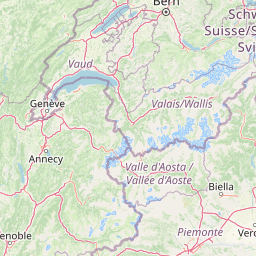
Map view of Réserve naturelle régionale du récif fossile de Marchon - Christian Gourrat

Use this park location map to pinpoint Réserve naturelle régionale du récif fossile de Marchon - Christian Gourrat in France, understand its exact geographic position, and read its mapped placement within the surrounding landscape more clearly.

Pigeon | © OpenStreetMap contributors

Location context for Réserve naturelle régionale du récif fossile de Marchon - Christian Gourrat

Auvergne-Rhône-Alpes

Examine the limestone outcrops, fossil reef formations, and surrounding forest habitats of this protected area.

Visual Exploration and Landscape Photography of Réserve naturelle régionale du récif fossile de Marchon - Christian Gourrat

Visual records illustrate the rare geological formations and dense beech and fir woodland surrounding the protected limestone outcrop. Photographic documentation provides deeper insight into the protected landscape characteristics and ancient marine fossil environment.

A dirt path leading into a wooded area in the Marchon Fossil Reef nature reserve, with a small blue sign visible near the trees.

Park atlas

Compare nearby regional nature reserves and geological landmarks across the surrounding region

Explore Protected Areas Near Réserve naturelle régionale du récif fossile de Marchon - Christian Gourrat

Browse other protected areas and regional nature reserves located near Réserve naturelle régionale du récif fossile de Marchon - Christian Gourrat. Comparing adjacent park geography provides a wider perspective on regional conservation lands and surrounding limestone terrain.
A soft, light watercolor painting of a winding river flowing through a gentle, rolling landscape with trees and distant hills against a pale, warm sky.
Nature reserveAuvergne-Rhône-Alpes
About 16 km away#1 closest

Southeast

Réserve naturelle régionale de la galerie du Pont-des-Pierres Regional Nature Reserve

Protected gorge landscapes and underground habitats in France

An essential record of the Réserve naturelle régionale de la galerie du Pont-des-Pierres, detailing its critical role in safeguarding cliff and underground habitats within the Valserine gorges. This protected land in the Ain department represents a vital ecological intersection of geological features and specialized faunal refuges.

Area
0.093 km²
Established
2009
IUCN
IV
Relief
Mountain
A soft, panoramic watercolor illustration of rolling hills, mountains, and trees in pastel shades of green, yellow, and pink.
Nature reserveAuvergne-Rhône-Alpes
About 23 km away#2 closest

Southwest

Réserve naturelle nationale de la grotte de Hautecourt: Jura Mountain Cave Geography

Protected subterranean landscapes in the Ain department of France.

This nature reserve protects a complex underground environment characterized by a vertical 36-meter cave system and rich invertebrate biodiversity. Located on the flank of Mont Rosset in the Auvergne-Rhône-Alpes region, the area provides a crucial habitat that balances delicate subterranean passages with surface limestone ridges and dry grassland ecosystems.

Area
0.102 km²
Established
1980
IUCN
IV
Wildlife reserveBourgogne-Franche-Comté
About 23 km away#3 closest

Northeast

Tourbières et lacs de la montagne jurassienne: Mapping High-Altitude Wetlands and Glacial Landscapes

A vast protected wildlife reserve in the Bourgogne-Franche-Comté region

Covering more than 12,000 hectares, this wildlife reserve forms a crucial conservation benchmark for peatland and glacial lake systems in the Jura Massif. The landscape encompasses deep combes, broad plateaus, and clear-water basins like Lac de Saint-Point, providing a vital habitat mosaic for diverse flora and fauna across the French highlands.

Area
121.56 km²
Established
2021
Relief
Mountain
Climate
Temperate
A watercolor landscape painting showing green hills, trees, and marshy river banks.
Nature reserveGeneva
About 29 km away#4 closest

East

Naturschutzgebiet Moulin de Vert: Protected Wetland and Forest Geography in Geneva

Detailed nature reserve map and regional landscape context

The Naturschutzgebiet Moulin de Vert nature reserve protects a mosaic of riverside woodland, meadows, and managed pond systems along the Rhône in the Canton of Geneva. Spanning approximately 132 hectares, this conservation area is recognized for supporting extensive biodiversity, from nesting peregrine falcons to diverse amphibian populations. Access this detailed geographic perspective to visualize the park boundaries, internal terrain features, and its ecological connection to the broader Swiss river landscape.

Area
1.32 km²
Established
2001
IUCN
IV
A horizontal watercolor painting depicting a soft, layered landscape with distant hills, gentle slopes, and clusters of evergreen trees in shades of green and purple.
Nature reserveBourgogne-Franche-Comté
About 31 km away#5 closest

Northeast

Réserve naturelle régionale des tourbières du bief du Nanchez: Protected Jura Mountain Peatlands

Mapping bog systems and wet grassland geography in Eastern France

Located in the Jura department, this regional nature reserve preserves forty-nine hectares of vital peatland, including diverse mire communities and forested slopes. The site provides a critical look at montane landscape restoration, documenting significant bog flora and complex hydrological patterns along the Combe du Nanchez valley floor.

Area
0.488 km²
Established
2021
IUCN
IV
Relief
Upland
Nature reserveBourgogne-Franche-Comté
About 42 km away#6 closest

North

Réserve naturelle nationale de la grotte de Gravelle: Underground Protected Nature Reserve

A limestone cave sanctuary in the Bourgogne-Franche-Comté region

This protected area represents a specialized subterranean habitat in the French Jura, preserving essential maternity and hibernation roosts for eleven bat species. The reserve, set within forested limestone cliffs, remains a key node in the regional network of protected underground sites, emphasizing the conservation of fragile environments.

Area
0.014 km²
Established
1992
IUCN
IV
Relief
Upland
A soft watercolor illustration depicting rolling green hills, gentle slopes, and small clusters of trees against a light, neutral background.
Nature reserveBourgogne-Franche-Comté
About 44 km away#7 closest

North

Réserve naturelle régionale de la côte de Mancy: Protected Landscapes and Geography

Limestone escarpments and calcareous grasslands in eastern France

Delve into the geography of Réserve naturelle régionale de la côte de Mancy, a 49-hectare nature reserve in the Jura department. This site features Jurassic limestone cliffs, thin calcareous soils, and scrubby woodlands, documenting a rich intersection of habitats that preserve rare reptiles and diverse butterfly populations within the Revermont.

Area
0.492 km²
Established
2010
IUCN
IV
Relief
Upland
A soft, horizontal watercolor painting depicting a winding river flowing through a lush, green landscape with distant hills and sparse trees.
Nature reserveVaud
About 59 km away#8 closest

East

Chanivaz, Delta de l’Aubonne: Geography, Map, and Protected Landscape Context

A rare glacial geotope and river delta on Lake Geneva.

Chanivaz, Delta de l’Aubonne provides a rich look at the alluvial fan of the River Aubonne. Explore its layered terrace terrain, protected reedbeds, and riparian forests in the canton of Vaud, representing one of the best-preserved natural river mouths remaining on the northern shore of Lake Geneva.

Area
3 km²
Established
2003
Relief
Lowland
Climate
Temperate

Common questions about visiting, size, designation, and location context for Réserve naturelle régionale du récif fossile de Marchon - Christian Gourrat

Réserve naturelle régionale du récif fossile de Marchon - Christian Gourrat FAQs for park facts, access, geography, and protected area context

Find quick answers about Réserve naturelle régionale du récif fossile de Marchon - Christian Gourrat, including protected-area facts, park geography, trail and visitor context, and how the park fits into its surrounding country and regional landscape.
MoriAtlas Explorer

Continue Your Protected Areas Search Across the Global Atlas

Deepen your exploration by continuing the structured search for national parks and protected areas worldwide. Utilize the comprehensive filtering capabilities to compare different conservation landscapes and refine your understanding of global park geography. Discover more about the distribution and characteristics of protected natural areas.

Global natural geography