Mori Atlas logo
Nature reserveRezerwat przyrody „Sugry” imienia Janusza Szostakiewicza

Tracing the rare lichen-rich pine woodlands and ecological succession of the Bug River valley.

Rezerwat przyrody „Sugry” imienia Janusza Szostakiewicza: A Protected Lowland Forest Reserve

(Rezerwat przyrody „Sugry" imienia Janusza Szostakiewicza)

Rezerwat przyrody „Sugry” imienia Janusza Szostakiewicza serves as a critical site for the study of inland dry pine forests of the Cladonio-Pinetum type in eastern Poland. Located within the Kodeń commune of Lublin Voivodeship, this nature reserve protects a rare habitat characterized by its extraordinary lichen diversity, which has flourished on former agricultural land. The reserve sits at a distinctive geographic intersection between the Parczewsko-Kodeńska High Plain and the expansive floodplain of the middle Bug River, forming part of a wider international network of transboundary biosphere reserves and avian conservation areas.

forest reservedry pine forestCladonio-Pinetumlichen conservationlowland woodlandBug valley

Rezerwat przyrody „Sugry” imienia Janusza Szostakiewicza

Nature reserve

Park overview

Structured park overview, official facts, and landscape profile for Sugry Nature Reserve (Janusz Szostakiewicz Memorial)

Sugry Nature Reserve (Janusz Szostakiewicz Memorial) park facts, protected area profile, and essential visitor context

Review the core facts for Sugry Nature Reserve (Janusz Szostakiewicz Memorial), including designation, size, terrain, visitor scale, habitats, and operating context in one park-focused overview.

About Sugry Nature Reserve (Janusz Szostakiewicz Memorial)

Sugry Nature Reserve is a small but ecologically focused forest reserve on the eastern edge of Poland, in the territory of Kodeń commune, Biała Podlaska county, Lublin Voivodeship. It protects a fragment of lowland pine woodland that has developed on sandy soils of the Parczewsko-Kodeńska High Plain, near the floodplain of the middle Bug River. Although modest in size at roughly 44 hectares, the reserve concentrates on a habitat type that has become scarce in the Polish countryside: a dry, continental pine forest associated with conspicuous ground lichens, classified as the Cladonio-Pinetum community.

The reserve is managed as part of the Chotyłów Forest District and sits within a landscape shaped by centuries of agriculture that was largely abandoned after the disruptions of the Second World War. Once fields and pastures stopped being used, forest vegetation, particularly Scots pine and silver birch, gradually returned to the land. Over the following decades, this rewilded mosaic matured into a lichen-rich pine stand whose understory and ground layer developed an unusually rich and species-poor flora in unexpected places, attracting the interest of lichenologists from the University of Life Sciences in Lublin.

Beyond its ecological profile, Sugry is meaningful as a piece of a much larger transboundary conservation network. It lies within the Dolina Środkowego Bugu Special Protection Area for birds, one of Poland's key wetland bird sites along the Bug. It is also included in the Nadbużański Protected Landscape Area and in the transboundary West Polesie Biosphere Reserve, which links Polish and Belarusian protected territories across the river valley. Its location near the Polish-Belarusian border adds a wider regional dimension to its conservation significance, situating a small national reserve within a framework of European and international protection efforts.

Quick facts and research context for Sugry Nature Reserve (Janusz Szostakiewicz Memorial)

Sugry Nature Reserve is a forest reserve covering about 44 hectares within Chotyłów Forest District, in the commune of Kodeń in eastern Lublin Voivodeship. It was established on 9 September 2021 by order of the Regional Director for Environmental Protection in Lublin.

The reserve lies within the Parczewsko-Kodeńska High Plain at the edge of the Middle Bug Valley, very close to the Bug River and the Polish-Belarusian border. It is part of the Dolina Środkowego Bugu Special Protection Area for birds, the Nadbużański Protected Landscape Area, and the transboundary West Polesie Biosphere Reserve.

Protection and recognition

Terrestrial protected area parameters and documented conservation context

Protection Status and International Recognition for Rezerwat przyrody „Sugry” imienia Janusza Szostakiewicza

Rezerwat przyrody „Sugry” imienia Janusza Szostakiewicza maintains a documented terrestrial protection scope within the regional conservation network. Verification records outline the formal status and administrative designations assigned to the protected landscape.

Protection details

Protection scope
Terrestrial
Transboundary protection
No
Buffer area
0.31 km²
Park context

Deeper park guide and search-rich context for Sugry Nature Reserve (Janusz Szostakiewicz Memorial)

Sugry Nature Reserve (Janusz Szostakiewicz Memorial) history, landscape, wildlife, and travel context

Explore Sugry Nature Reserve (Janusz Szostakiewicz Memorial) through its history, landscape character, ecosystems, wildlife, conservation priorities, cultural context, and seasonal travel timing in a structured park guide built for atlas discovery and search intent.

Why Sugry Nature Reserve (Janusz Szostakiewicz Memorial) stands out

Sugry is best known for protecting a rare inland dry pine forest of the Cladonio-Pinetum type, valued primarily for its extraordinarily rich lichen flora rather than for its trees alone. Surveys have recorded around 69 lichen species in the reserve, including several strictly protected and many red-listed taxa, making the site a notable reference for lowland lichen conservation in Poland. The reserve is also recognized as a place where natural forest succession on formerly cultivated land has produced a habitat of high scientific and conservation value, situated within one of Poland's most important transboundary riverine protected-area networks.

Sugry Nature Reserve (Janusz Szostakiewicz Memorial) history and protected-area timeline

The idea of formally protecting the Sugry area dates back to the 1990s, but the practical groundwork for the reserve only came together in the early 2020s. Between 2014 and 2016, researchers from the University of Life Sciences in Lublin, including the lichenologist Danuta Urban, carried out detailed field studies that documented the exceptional lichen diversity of the site and identified it as a candidate for formal protection. Their findings helped justify the establishment of a reserve dedicated specifically to preserving a rare lowland dry pine forest community.

The reserve was officially established on 9 September 2021 by order of the Regional Director for Environmental Protection in Lublin, which defined both the core area of around 44 hectares and a surrounding buffer zone of approximately 31 hectares, formalizing the protection that had been a local and scientific aspiration for many years. The administrative act came amid a broader period in which Polish regional environmental authorities were expanding the network of small protected sites along the Bug valley.

The name of the reserve carries a double dedication. It refers to the historic locality of Sugry itself, which is connected to the former village of Suhre, also written as Suchry, a small settlement that emerged in the early nineteenth century and no longer exists on modern maps. The reserve also honors Janusz Szostakiewicz, a nature conservator active in the former Biała Podlaska Voivodeship and later at the Regional Directorate for Environmental Protection in Lublin, who lived from 1951 to 2011. Szostakiewicz is remembered as one of the initiators of the West Polesie International Biosphere Reserve and of the Podlaski Przełom Bugu Landscape Park, of which Sugry's protected landscape area is a natural extension.

Sugry Nature Reserve (Janusz Szostakiewicz Memorial) landscape and geographic character

The Sugry reserve lies on sandy, post-glacial terrain typical of the eastern Lublin region, on the edge of two clearly contrasted physical-geographical units. The core of the area sits within the Parczewsko-Kodeńska High Plain, an undulating outwash landscape shaped by Pleistocene processes, while very nearby the land drops toward the wide alluvial valley of the middle Bug River. The boundary between upland and river floodplain is just a short distance from the protected site, giving the reserve a setting that combines dry sandy uplands with proximity to a large lowland river system.

Within the protected perimeter, the terrain is relatively flat to gently undulating, with sandy soils that were once used for agriculture. After cultivation stopped in the mid twentieth century, the land reverted to forest in a process of ecological succession visible across the area. Today the surface is dominated by single-species stands of Scots pine mixed with silver birch, with a sparse shrub layer and a ground cover shaped by light intensity, dryness, and the slow accumulation of natural litter.

The wider landscape around the reserve is shaped by the presence of the Bug River itself, which runs just beyond the western edge of the protected area and forms the Polish-Belarusian border. The river's floodplain introduces a contrasting moist, open environment next to the dry woodland of the reserve, creating a sharp ecological gradient between continental pine forest and riverine wetland habitats within a small geographic radius.

Sugry Nature Reserve (Janusz Szostakiewicz Memorial) ecosystems, habitats, and plant life

Ecologically, Sugry is a textbook example of how ecological succession on abandoned farmland can produce valuable habitat when allowed to run its course. The site's defining feature is its inland dry pine forest community of the Cladonio-Pinetum type, characterized by Scots pine dominance and a ground layer built around fruticose lichens rather than typical mesophilic forest herbs. This kind of habitat represents a relict landscape type that has retreated dramatically across Central European lowlands.

The reserve's biodiversity signal comes especially from its lichen communities. Surveys have identified approximately 69 lichen species across the site, including a notable share of legally protected taxa. Five species enjoy strict protection in Poland, among them species such as Bryoria motyki, Hypogymnia physodes relatives, Ramalina fraxinea, Usnea comosa, and the pine-associated Vulpicida pinastri. A further 13 species are partially protected, and 17 species appear on Poland's red list of threatened and endangered lichens and fungi.

In addition to lichens, the reserve hosts a documented bryophyte flora of around 19 moss and liverwort species, some of which are also under partial legal protection. While the vascular plant flora is unremarkable in species number, the combination of pines, sandy substrate, open canopy, and undisturbed continuity has allowed a cryptogam community of unusually high regional importance to develop.

Sugry Nature Reserve (Janusz Szostakiewicz Memorial) wildlife and species highlights

Sugry is fundamentally a botanical and lichenological reserve rather than a large-mammal sanctuary, and its wildlife value is concentrated in lesser-seen groups of organisms. Its most celebrated fauna is effectively the lichen communities themselves, treated in Polish nature conservation as an ecological asset of high priority because of their sensitivity to air quality, habitat continuity, and microclimate.

The reserve also plays an indirect but meaningful role for fauna through its position inside the Dolina Środkowego Bugu Special Protection Area for birds. The middle Bug valley is one of eastern Poland's most important corridors for wetland and riverine bird species, and although Sugry itself is dry woodland, its inclusion in this larger protection zone means that species using both the floodplain and upland edges may benefit from the protected mosaic. As of early 2022, the reserve did not yet have a formal protection plan or defined conservation tasks, reflecting its relatively recent establishment and the ongoing process of integrating it into managing authority workflows.

Sugry Nature Reserve (Janusz Szostakiewicz Memorial) conservation status and protection priorities

From a conservation perspective, Sugry's importance rests on three reinforcing pillars: habitat rarity, lichen diversity, and transboundary connectivity. Dry, continental Scots-pine forests of the Cladonio-Pinetum type have become vanishingly rare across the Polish lowlands because of land-use change, commercial forestry, and disruptions to ecological succession, and every substantial surviving example has high regional significance. Sugry's nearly 70 recorded lichen species, including critically protected and red-listed taxa, put it on the short list of Polish forest reserves that meaningfully conserve cryptogam biodiversity at a regional scale.

The reserve also derives much of its protective value from being embedded in a layered network of overlapping nature conservation designations. It falls within the European Natura 2000 framework through the Dolina Środkowego Bugu Special Protection Area for birds, a site of shared Polish-Belarusian relevance along the river. It is additionally covered by the country's Nadbużański Protected Landscape Area, providing buffer-level landscape protection, and sits within the transboundary West Polesie Biosphere Reserve, an internationally designated biosphere area connecting Polish and Belarusian protected territories. Sugry's 44-hectare core, together with its roughly 31-hectare buffer zone, acts as a small but well-placed node inside this broader system.

At the administrative level, the reserve was created in 2021 by the Regional Director for Environmental Protection in Lublin, and early in 2022 it remained without a formally adopted conservation plan or defined conservation tasks, an indicator that its long-term active management framework was still under development at the time of its establishment.

Sugry Nature Reserve (Janusz Szostakiewicz Memorial) cultural meaning and human context

Sugry carries a layered cultural identity that combines a memorial dimension, a local geographic name, and the broader regional heritage of the Bug borderline. The name of the reserve is rooted in the historic locality of Sugry, itself connected to the once-existing village of Suhre or Suchry, a small early nineteenth-century settlement that does not survive in current settlement patterns of the area.

The reserve's dedication to Janusz Szostakiewicz gives it a second, explicitly biographical layer of meaning. As a long-serving regional nature conservator in the old Biała Podlaska Voivodeship and later a staff member of the Regional Directorate for Environmental Protection in Lublin, Szostakiewicz is remembered locally as one of the architects of some of the most important modern protected areas along the Bug, including the West Polesie Biosphere Reserve and the Podlaski Przełom Bugu Landscape Park. Naming the reserve after him is both a regional tribute and a symbolic connection to the wider borderland environmental protection tradition.

The position of the reserve directly adjacent to the Bug River and the Polish-Belarusian border also situates it within the cultural geography of the eastern Polish borderland, a region historically shaped by multilingual rural communities, shifting borders, and the slow emptying of villages in the postwar period. The forest that now constitutes the reserve grew up largely on land abandoned by those communities, making the protected site at the same time a product of, and a quiet monument to, the recent rural history of the region.

Top sights and standout views in Sugry Nature Reserve (Janusz Szostakiewicz Memorial)

Sugry's defining highlights are compact but unusually distinctive for a small reserve. It protects a rare inland dry pine forest of the Cladonio-Pinetum type, a habitat that anchors the reserve's legal purpose and scientific profile. The lichen flora of nearly 70 documented species, including strictly protected taxa and red-listed species, is the single most compelling feature of the site from a conservation perspective.

The reserve's geographic position is another highlight in its own right. Tucked between the Parczewsko-Kodeńska High Plain and the middle Bug valley, just steps from the Polish-Belarusian border, Sugry acts as a small national unit inside a remarkably layered international network: a Natura 2000 bird protection area, a Polish protected landscape area, and a transboundary biosphere reserve. Its dedication to Janusz Szostakiewicz and to the lost village of Suhre gives the place an additional human-historical layer that connects local memory to broader regional environmental history.

Best time to visit Sugry Nature Reserve (Janusz Szostakiewicz Memorial)

Sugry is a scientific and conservation reserve rather than a visitor attraction, and access is determined primarily by its protected status and by natural cycles of lichen visibility, bird activity, and forest microclimate. For visitors interested in understanding the site, the warm half of the year, roughly late spring through early autumn, is generally the most rewarding window. This period brings more comfortable ground conditions for walking within or near the protected perimeter, easier insect and bird observation in the broader Bug valley mosaic, and better visibility for ground lichens when humidity is moderate and ground vegetation is not snow-covered.

Late winter and early spring can highlight a different character of the site, with bare deciduous birches, low sun angles that emphasize the openness of the pine canopy, and visibility into the surrounding high-plain landscape, but the same conditions also bring wetter, sometimes frozen ground and longer periods when bird observation along the nearby Bug floodplain is less favorable. Because the reserve does not yet have a formal management plan, visits are best understood as low-key, scenery- and ecology-oriented trips rather than as operations with structured visitor services.
Monthly climate preview

Long-term representative temperature and precipitation normals for Rezerwat przyrody „Sugry” imienia Janusza Szostakiewicza

Rezerwat przyrody „Sugry” imienia Janusza Szostakiewicza Climate and Weather by Month

Long-term climate data records monthly temperature swings from sub-zero winter minimums to warm summer maximums alongside consistent precipitation patterns. Analyzing the complete twelve-month normals profile reveals detailed variations in temperature and moisture across the protected coordinate.
Annual mean8 °C
-5 °C21 °C
Jan-5°
Feb-3°
Mar
Apr
May14°
Jun18°
Jul21°
Aug20°
Sep14°
Oct
Nov
Dec-3°
Warmest month
July

20.5 °C

Coolest month
January

-4.7 °C

Wettest month
July

2.5 mm/day

Driest month
January

1.2 mm/day

Park location guide

Geography guide, regional context, and park location map for Sugry Nature Reserve (Janusz Szostakiewicz Memorial)

Sugry Nature Reserve (Janusz Szostakiewicz Memorial) park geography, regions, and map view in Poland

Understand where Sugry Nature Reserve (Janusz Szostakiewicz Memorial) sits in Poland through a broader geographic reading of the surrounding landscape, nearby location context, and its mapped position within the national park landscape.

How Sugry Nature Reserve (Janusz Szostakiewicz Memorial) fits into Poland

Poland, officially the Republic of Poland, is a Central European country spanning from the Baltic Sea in the north to the Carpathian Mountains in the south. It borders Germany, Czech Republic, Slovakia, Ukraine, Belarus, Lithuania, and Kaliningrad Oblast. The country has a temperate climate, diverse landscapes, and is known for its rich history, cultural heritage, and strong economic position within the EU.

Wider geography shaping Sugry Nature Reserve (Janusz Szostakiewicz Memorial) in Poland

Poland occupies 312,696 km2 in Central Europe, extending from the Baltic Sea coast in the north to the Sudetes and Carpathian Mountains in the south. It borders Germany to the west, Czech Republic and Slovakia to the south, Ukraine and Belarus to the east, and Lithuania and Kaliningrad Oblast to the northeast. The landscape includes lowland plains, uplands, and mountain ranges.

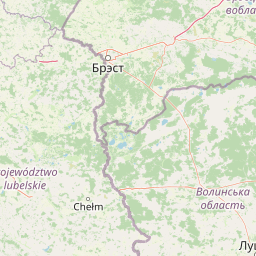
Map view of Sugry Nature Reserve (Janusz Szostakiewicz Memorial)

Use this park location map to pinpoint Sugry Nature Reserve (Janusz Szostakiewicz Memorial) in Poland, understand its exact geographic position, and read its mapped placement within the surrounding landscape more clearly.

Pigeon | © OpenStreetMap contributors

Location context for Sugry Nature Reserve (Janusz Szostakiewicz Memorial)

Lublin Voivodeship
Park atlas

Compare surrounding regional geography, river valleys, and connected lowland woodland reserves.

Explore Protected Areas and Parks Near Rezerwat przyrody „Sugry” imienia Janusza Szostakiewicza

Browse other protected areas and regional reserves located near Rezerwat przyrody „Sugry” imienia Janusza Szostakiewicza in eastern Poland. Compare surrounding outwash landscapes, river valleys, and lowland forest habitats to understand regional conservation networks.
Protected areaLublin Voivodeship
About 4.4 km away#1 closest

South

Poleska Dolina Bugu Protected Landscape: Mapped Atlas and Geographic Overview

Key Natura 2000 river valley site in Lublin Voivodeship

Poleska Dolina Bugu is a regionally vital protected area comprising six connected enclaves along the Bug River. The site features a mosaic of oxbow lakes, alkaline fens, molinia meadows, and riparian woodlands that define the lowland geography of eastern Poland. Access structured data on this Habitats Directive site to understand its surface composition, floodplain connectivity, and specialized conservation habitats.

Area
81.732 km²
Relief
Lowland
Scope
Terrestrial
Water
Major water bodies
Nature reserveLublin Voivodeship
About 22 km away#2 closest

Northwest

Dobryń Nature Reserve: Protected Lowland Woodlands of the Lublin Voivodeship in Eastern Poland

Documenting rare forest mosaics and monumental oak populations

Dobryń Nature Reserve is a key protected area in Poland, recognized for its continuous lowland forest cover and distinct botanical variety. The site encompasses complex hydrological zones, ranging from swampy alder patches to dry oak-hornbeam stands. It stands as a critical biodiversity node within the Równina Kodeńska, illustrating how subtle soil moisture variations sustain rare species in a managed landscape.

Area
0.877 km²
Established
1983
Relief
Lowland
Climate
Temperate
Nature reserveLubelskie Voivodeship
About 31 km away#3 closest

Southwest

Las Ochoża imienia Marka Kellera: Forest Nature Reserve and Landscape Mapping in Poland

A study of protected wetland forests and early medieval archaeological terrain.

Las Ochoża imienia Marka Kellera protects a critical 193-hectare mosaic of alder swamps and riparian habitats situated in the Zaklęsłość Sosnowicka mesoregion. This nature reserve, integrated into the Natura 2000 Uroczysko Mosty-Zahajki bird protection area, provides a rare window into the natural forest processes of eastern Poland. The site serves as a vital hydrological nexus and features a preserved medieval hillfort on a secluded forest island.

Area
1.929 km²
Established
2024
Relief
Lowland
Scope
Terrestrial
Watercolor depiction of a lake with reeds, forested shoreline, and distant mountains
National parkUkraine
About 42 km away#4 closest

South

Shatsk National Natural Park: Ukraine's Deepest Lake and Wetland Protected Area Atlas

Mapped landscape and protected geography of a premier Ukrainian national park.

Shatsk National Natural Park in Ukraine is a significant protected area featuring a remarkable cluster of over thirty lakes, most notably Svitiaz Lake, the nation's deepest. This park protects vital wetland and forest ecosystems within the Polissia region, offering a rich geographic context for atlas exploration. Understanding its mapped boundaries and terrain provides insight into its importance as a Ramsar site and a key corridor for migratory birds, making it a cornerstone of conservation geography in Eastern Europe.

Area
489.77 km²
Established
1983
IUCN
II
Relief
Lowland
A horizontal watercolor illustration depicting a calm lake with marshy shores, reeds, and distant low hills.
Nature reserveWojewództwo lubelskie
About 42 km away#5 closest

South

Rezerwat przyrody Jezioro Orchowe: Protected Area and Wetland Geography Map

Wetland ecosystems and peatland terrain in Województwo lubelskie.

The Rezerwat przyrody Jezioro Orchowe nature reserve protects a distinct dystrophic lake and surrounding mire complex in eastern Poland. This site offers deep insight into the transition between aquatic, peatland, and forested habitats within a glacial depression of the Bug river valley. Its documented plant communities represent a key reference for understanding the ecological structure of the wider Polesie lowland region.

Area
0.582 km²
Established
1996
Relief
Lowland
Climate
Temperate
National parkPoland
About 48 km away#6 closest

Southwest

Polesie National Park: Protected National Park in Poland's Eastern Lowlands

Explore its mapped wetland geography and unique glacial terrain.

Polesie National Park represents a key protected landscape within eastern Poland, notable for its vast wetland complexes, including extensive peat bogs and marshes interspersed with pine forests on sandy dunes. This national park showcases a distinct geography shaped by glacial processes, offering a unique perspective on lowland ecosystems and their conservation. MoriAtlas allows for a structured discovery of its protected boundaries and the surrounding regional context, providing an atlas-driven understanding of this vital natural territory.

Area
97.52 km²
Established
1979
IUCN
II
A watercolor painting showing a panoramic view of a marshy landscape with green grasses, light-colored water, and distant trees on a white background.
National parkLublin Voivodeship
About 50 km away#7 closest

Southwest

Poleski Park Narodowy: Protected Wetlands and Glacial Geography in Lublin Voivodeship

Exploration of peatlands, kettle lakes, and boreal-style marshes

Poleski Park Narodowy encompasses a diverse mosaic of fens, transitional bogs, and dense marsh forests within the Lublin Voivodeship. This protected area serves as a primary reference for understanding the glacial-relict biodiversity and flat, water-defined terrain characteristic of the historic Polesie region in eastern Poland.

Area
97.6 km²
Established
1990
Visitors
41K annual
Relief
Lowland
Nature reserveLubelskie Voivodeship
About 56 km away#8 closest

South

Rezerwat przyrody Małoziemce: Nature Reserve Protected Areas and Geographic Map Context

A faunal reserve within the Łęczna-Włodawa Lake District

Rezerwat przyrody Małoziemce represents a specialized faunal protected area in Lubelskie Voivodeship. Established for the preservation of heron breeding colonies, the site is defined by its lowland, marshy terrain and its strategic inclusion within the larger Sobiborski Landscape Park. This entry provides detailed geographic perspective on how this forest and wetland complex fits into the regional network of protected landscapes near the Polish-Ukrainian border.

Area
0.38 km²
Established
1988
Scope
Terrestrial

Common questions about visiting, size, designation, and location context for Sugry Nature Reserve (Janusz Szostakiewicz Memorial)

Sugry Nature Reserve (Janusz Szostakiewicz Memorial) FAQs for park facts, access, geography, and protected area context

Find quick answers about Sugry Nature Reserve (Janusz Szostakiewicz Memorial), including protected-area facts, park geography, trail and visitor context, and how the park fits into its surrounding country and regional landscape.
MoriAtlas Explorer

Continue Your Protected Areas Search Across the Global Atlas

Deepen your exploration by continuing the structured search for national parks and protected areas worldwide. Utilize the comprehensive filtering capabilities to compare different conservation landscapes and refine your understanding of global park geography. Discover more about the distribution and characteristics of protected natural areas.

Global natural geography