Why Rollapadu Wildlife Sanctuary stands out
Rollapadu is best known as one of the small handful of protected sites dedicated to the great Indian bustard, a critically endangered bird that once roamed India's dry grasslands in much greater numbers. The sanctuary is equally notable for its unusual combination of arid grassland, dry forest, and rich avifauna, including winter visitors such as bar-headed geese, demoiselle cranes, and greater flamingos drawn to the nearby Alganur reservoir. The site also illustrates how grassland ecosystems function as a single interconnected system. Changes in grass cover driven by rising blackbuck numbers have reduced the insects and nesting space available to the bustard and florican, making Rollapadu a textbook example of how protecting one species can ripple through an entire habitat.
Rollapadu Wildlife Sanctuary history and protected-area timeline
Rollapadu was established in 1988 as a dedicated refuge for the great Indian bustard and the lesser florican at a time when the bustard was still seen in reasonable numbers across parts of Andhra Pradesh. The site was chosen because its dry, open grasslands matched the species' natural habitat requirements, and the reserve quickly became the focal point of bustard conservation in the state.
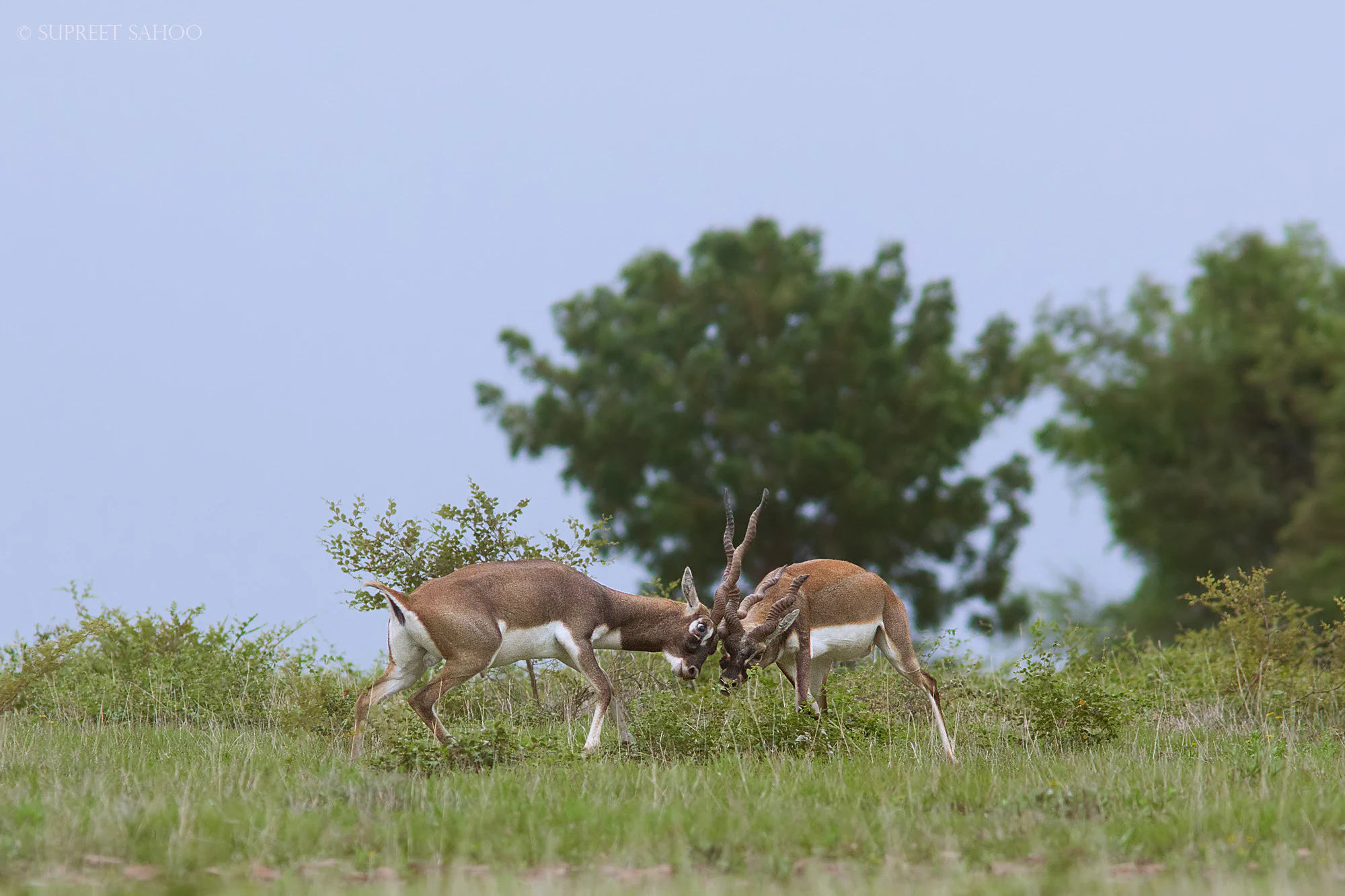
In the decades since, the sanctuary's fortunes have reversed in important ways. Blackbuck populations grew substantially inside the reserve, and their grazing reduced the grass cover on which bustards and floricans depend. Livestock grazing within the sanctuary added further pressure, while the linking of the nearby Alganur tank to the Telugu Ganga canal changed local hydrology and vegetation patterns. The bustard population, once the justification for the sanctuary's creation, has fallen sharply, and species such as the lesser florican, foxes, and greater short-toed larks have become difficult to find within the reserve.
Rollapadu Wildlife Sanctuary landscape and geographic character
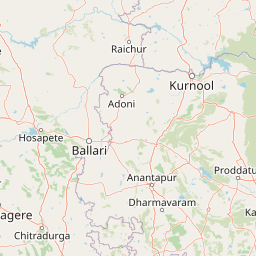
Rollapadu occupies a gently undulating semi-arid plain in the interior of Andhra Pradesh, not far from the Karnataka border. The terrain is mostly open, with subtle rises and falls rather than dramatic relief, and sits at an average elevation of around 290 meters above sea level. The climate is hot and dry for much of the year, with rainfall averaging around 450 millimeters annually and falling in an erratic, uneven pattern characteristic of the region.
Vegetation gives the landscape its character: extensive grasslands cover most of the sanctuary, broken by patches of dry forest and spiny shrubs that include species such as Ziziphus mauritiana, Cassia fistula, Acacia, and Butea monosperma. These woody elements are scattered rather than continuous and they help frame the views across the open plains. Beyond the reserve's edge, agricultural fields stretch outward, growing cotton, tobacco, and sunflower, creating a sharp human-wildlife boundary that shapes nearly every conservation challenge at the site.
Rollapadu Wildlife Sanctuary ecosystems, habitats, and plant life
The ecological identity of Rollapadu is defined by its grassland character. Unlike forested reserves, it protects an open habitat type that has become increasingly rare across India, where dry grassland supports a distinctive community of ground-nesting birds, mammals, and insects adapted to seasonal extremes.
The sanctuary's vegetation combines continuous grasslands with interspersed dry forest and thorny scrub. The agricultural matrix surrounding the reserve adds a second edge habitat, where wildlife regularly crosses between protected and cultivated land. The Alganur reservoir, adjacent to the sanctuary, plays a major ecological role by drawing migratory waterfowl each winter and temporarily increasing habitat diversity around the reserve. Together, these features make Rollapadu a small but unusually layered dryland ecosystem.
Rollapadu Wildlife Sanctuary wildlife and species highlights
Despite its limited area, Rollapadu supports a broad cast of fauna. Mammals recorded at the sanctuary include blackbuck, sloth bear, jungle cat, Indian jackal, fox, and bonnet macaque. Reptiles are represented by species such as the Russell's viper and the Indian cobra, both of which contribute to the grassland food web.
The sanctuary is, however, most famous for its birdlife. Around 132 bird species have been recorded here, with the great Indian bustard and lesser florican as the headline species. Migratory visitors such as bar-headed geese, demoiselle cranes, and greater flamingos frequent the Alganur reservoir, while resident birds include Indian rollers, several myna species, short-toed snake eagles, and Indian coursers that appear around the sanctuary during the monsoon. The interplay between bustards, floricans, blackbuck, and the grassland insects they share illustrates how tightly the site's wildlife is bound to its open habitat.
Rollapadu Wildlife Sanctuary conservation status and protection priorities
Rollapadu was established with a focused mission: to secure a safe haven for the great Indian bustard, a species now classified as critically endangered, and for the lesser florican. As Andhra Pradesh's only recognized bustard habitat, its conservation value extends well beyond its 6 square kilometers of area.
That mission is increasingly under strain. Bustard numbers have declined sharply in recent years, and the lesser florican, along with foxes and greater short-toed larks, has become hard to detect within the reserve. The sanctuary's conservation narrative is shaped by ecological conflict, as growing blackbuck populations have altered grassland structure, livestock grazing within the reserve has disrupted breeding, and hydrological changes linked to the Telugu Ganga canal have subtly reshaped both flora and surrounding agriculture. The deaths of harriers, likely tied to biomagnification, underscore how pressures from the wider landscape continue to reach into the protected area.
Top sights and standout views in Rollapadu Wildlife Sanctuary
Rollapadu's standout quality is its role as a dedicated refuge for the critically endangered great Indian bustard, combined with an unusually rich bird list for such a small reserve. The sanctuary's blend of open grassland, dry forest scrub, and a nearby reservoir used by migratory waterfowl makes it a compact but unusually varied destination for bird-focused visitors.
Equally distinctive is the sanctuary's conservation story. The interplay between blackbuck grazing, bustard decline, hydrological change, and human-wildlife conflict along agricultural edges makes Rollapadu a vivid case study in the challenges of protecting India's vanishing grasslands.
Best time to visit Rollapadu Wildlife Sanctuary
The cooler, drier winter months are generally the most rewarding time to visit Rollapadu, when migratory waterfowl such as bar-headed geese, demoiselle cranes, and greater flamingos gather at the Alganur reservoir and daytime temperatures are more comfortable for exploring open landscapes. Summers are intensely hot across this semi-arid region, making prolonged time in the field uncomfortable, while the monsoon brings short bursts of greenery along with bird activity from species such as the Indian coursers, though access can be affected by uneven rainfall. As always in a grassland reserve, the character of a visit depends heavily on seasonal timing, and visitors drawn by the bustard and florican will find the most activity around the cooler parts of the year.