A vast Idaho national forest shaped by the Salmon River, the Sawtooth and Lost River ranges, and some of the largest wilderness in the lower 48 states.
Salmon, Challis National Forest
Salmon–Challis National Forest is a large federally managed forest in east central Idaho, administered by the U.S. Forest Service since 1908. Covering more than 4.2 million acres, it ranks among the largest national forests in the contiguous United States. The forest spans rugged mountain terrain, high river valleys, and deep canyons, and contains most of the Frank Church–River of No Return Wilderness, the largest wilderness area south of Alaska.
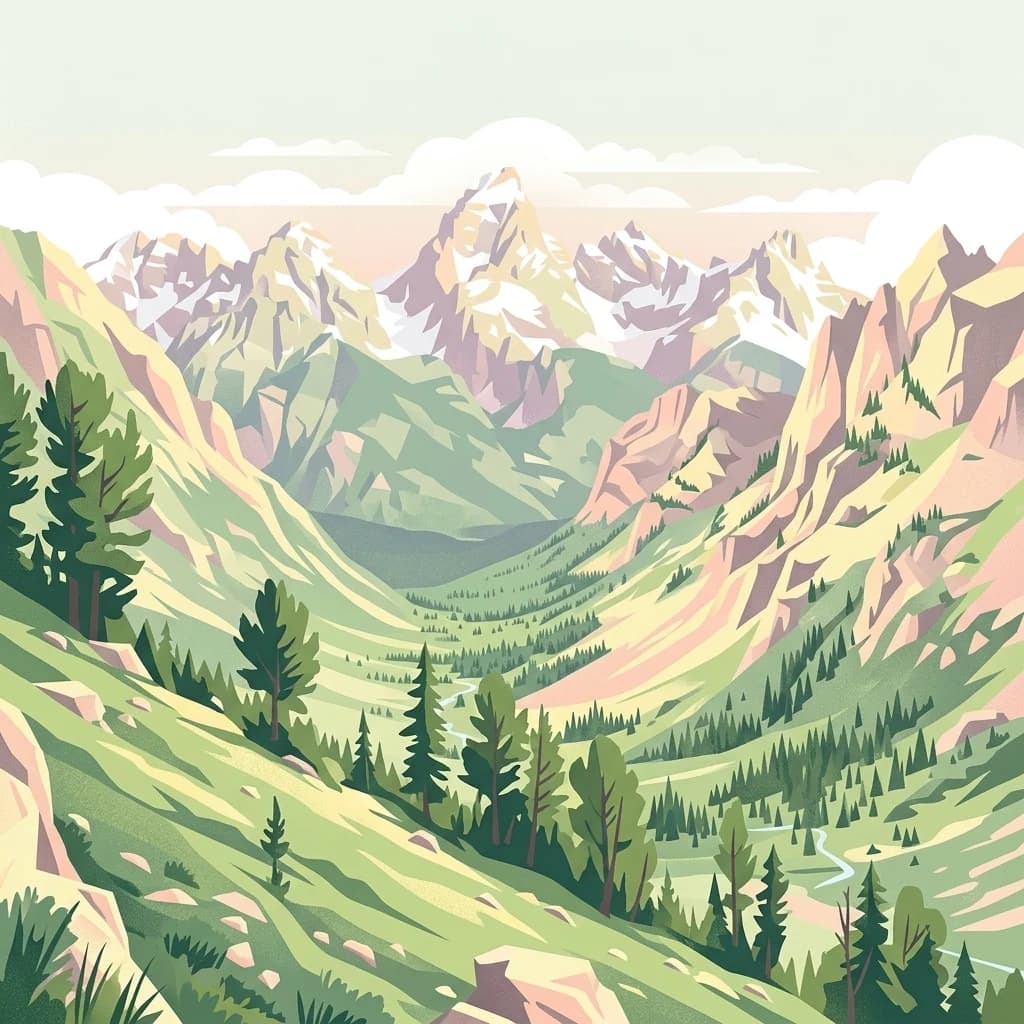
The landscape is defined by two of Idaho's most dramatic mountain environments: the Sawtooth Range in the north, where the Wild and Scenic Salmon River flows through jagged peaks, and the Lost River Range in the south, home to Borah Peak, the state's tallest mountain. These high country areas frame one of the most extensive and ecologically significant blocks of public land in the northern Rockies.
Salmon–Challis is not a single national park but a working landscape of forests, rivers, and wilderness that serves as a hub for backcountry recreation, wildlife habitat, and conservation in central Idaho. Its proximity to remote communities such as Salmon, Challis, Leadore, North Fork, Clayton, and Mackay ties the forest closely to the rural heritage of the region.