

Mori Atlas logo
National parkSanta Rosa National Park

Atlas exploration of mapped boundaries and regional natural geography.

Santa Rosa National Park: A Protected Landscape in Guanacaste Province

(Parque Nacional Santa Rosa)

Santa Rosa National Park stands as a significant protected area, offering a window into the natural landscapes of Guanacaste Province. This dedicated park page provides detailed insights into its mapped boundaries and geographic context. Users exploring this entity will gain a structured understanding of its place within the regional atlas, focusing on the park's distinct landscape identity and its role as a conservation area.

Tropical Dry ForestWorld Heritage SiteHistorical Battle SiteRamsar WetlandMangrove EcosystemGuanacaste Conservation Area

Santa Rosa National Park

National park

Park overview

Structured park overview, official facts, and landscape profile for Santa Rosa National Park

Santa Rosa National Park park facts, protected area profile, and essential visitor context
Review the core facts for Santa Rosa National Park, including designation, size, terrain, visitor scale, habitats, and operating context in one park-focused overview.

About Santa Rosa National Park

Santa Rosa National Park occupies a strategic position in northwestern Costa Rica, within the Guanacaste Province that forms the country's dry northwestern corridor. The park was created both to preserve the historical site of the Battle of Santa Rosa and to protect the region's unique natural ecosystems, which have faced significant pressure from agricultural expansion and development. The park's landscape ranges from lowland dry forests through coastal mangroves to Pacific shoreline, creating a mosaic of habitats that support remarkable biodiversity. The Guanacaste region represents one of the last remaining extensive tracts of tropical dry forest in Central America, and Santa Rosa serves as a core protected area within this ecosystem. The park's integration into the Area de Conservación Guanacaste World Heritage Site reflects its global significance as a conservation landscape, where ecological restoration and protection efforts have been ongoing for decades to reconnect fragmented habitats and preserve biological corridors.

Quick facts and research context for Santa Rosa National Park

Santa Rosa National Park is located in Guanacaste Province, Costa Rica, with its main entrance 36 kilometers north of Liberia on Route 1. The park covers nearly 400 square kilometers of terrestrial area plus marine coastal waters and was established on July 1, 1966. It is managed by SINAC, Costa Rica's National System of Conservation Areas, and contains two Ramsar-designated wetland sites: Laguna Respringue and Manglar de Potrero Grande. The park lies within the larger Guanacaste Conservation Area and is adjacent to Guanacaste National Park along the Pan-American Highway corridor.

Park context

Deeper park guide and search-rich context for Santa Rosa National Park

Santa Rosa National Park history, landscape, wildlife, and travel context
Explore Santa Rosa National Park through its history, landscape character, ecosystems, wildlife, conservation priorities, cultural context, and seasonal travel timing in a structured park guide built for atlas discovery and search intent.

Why Santa Rosa National Park stands out

Santa Rosa National Park is best known for its remarkable combination of historical significance and ecological diversity. The park protects the site of the 1856 Battle of Santa Rosa, a pivotal moment in Costa Rican history when national forces defeated William Walker's filibuster invasion in just 14 minutes. Ecologically, the park stands out for its extensive tropical dry broadleaf forest habitats, which are increasingly rare in Central America, and its coastal mangrove systems that support significant wildlife populations. The presence of all three Costa Rican monkey species, diverse felids including jaguars and ocelots, and important sea turtle nesting beaches further distinguish this protected area.

Santa Rosa National Park history and protected-area timeline

Santa Rosa National Park traces its origins to the historical hacienda lands that served as the stage for multiple significant military engagements in Costa Rican history. The property's most famous moment came on March 20, 1856, when Costa Rican forces attacked and defeated William Walker's filibuster forces stationed at the main farm building, known as La Casona. The battle lasted only 14 minutes but proved decisive in repelling the foreign invasion attempt. The site retained strategic importance in subsequent decades, hosting two additional battles in 1919 and 1955 against invading forces seeking to overthrow the Costa Rican government. The modern protected area was established in 1966 by decree 3694, recognizing both the site's historical importance and the need to preserve its remaining natural habitats. Today, the preserved hacienda building La Casona functions as a monument commemorating the fallen heroes of these historical battles.

Santa Rosa National Park landscape and geographic character

The physical landscape of Santa Rosa National Park encompasses diverse terrain characteristic of the Guanacaste dry forest region. The park features extensive tropical dry broadleaf forest covering rolling terrain, interspersed with savanna grasslands and deciduous woodland patches. Coastal areas give way to mangrove swamps where freshwater and saltwater environments meet, creating productive wetland habitats along the Pacific coast. The Route 1 corridor, part of the Pan-American Highway, runs along the park's eastern boundary, while Route 913 passes entirely within the protected area. The landscape transitions from the more humid forest zones in the western portions toward drier eastern areas, reflecting the rain shadow effects of the Guanacaste mountain ranges. The marine component of the park protects coastal waters and supports the mangrove ecosystems that fringe the shoreline.

Santa Rosa National Park ecosystems, habitats, and plant life

The ecological character of Santa Rosa National Park centers on its ten distinct natural habitats that together represent the diversity of Guanacaste's dry forest ecosystem. These habitats include tropical dry broadleaf forest, deciduous forest, savanna, marshlands, and mangrove woodlands. The park falls within the Central American dry forests biome and protects sections of the Isthmian-Pacific moist forests ecoregion where moisture gradients allow for more humid forest types. The mangrove systems along the coast represent the Moist Pacific Coast mangroves ecoregion, providing critical habitat for marine and semi-aquatic species. This ecological mosaic makes Santa Rosa particularly valuable for conservation, as it protects multiple habitat types within a single protected area and provides connectivity within the broader Guanacaste conservation landscape.

Santa Rosa National Park wildlife and species highlights

The wildlife community within Santa Rosa National Park reflects the park's diverse habitats and its position within the Guanacaste conservation corridor. The park supports all three primate species found in Costa Rica: Geoffroy's spider monkey, mantled howler, and the Panamanian white-faced capuchin. Large mammals include coyotes, peccaries, white-nosed coatis, and Baird's tapir, while the felid community features jaguarundi, ocelot, cougar, and jaguar, though these larger cats are rarely observed by visitors. Sea turtles and terrestrial turtles nest on the park's beaches and within its interior habitats. Approximately 250 bird species and 115 mammal species have been recorded within the park, though some figures in the source lack full citation. The mangrove ecosystems provide critical habitat for numerous aquatic and semi-aquatic species, while the forest interiors support the arboreal and terrestrial mammal communities.

Santa Rosa National Park conservation status and protection priorities

Santa Rosa National Park plays a central role in Costa Rica's conservation framework as a core protected area within the Area de Conservación Guanacaste World Heritage Site. The park's Ramsar designation for Laguna Respringue and Manglar de Potrero Grande recognizes the international significance of its wetland habitats and commits Costa Rica to their sustained protection under the Ramsar Convention. The Guanacaste Conservation Area represents decades of effort to restore degraded lands, reconnect fragmented habitats, and establish biological corridors that allow wildlife to move between protected areas. Santa Rosa's protection of tropical dry forest ecosystems is particularly important given the extensive agricultural conversion of such habitats throughout Central America, making these remaining forests increasingly valuable for biodiversity conservation. The park's dual mission of historical preservation and ecological protection creates a unique conservation context.

Santa Rosa National Park cultural meaning and human context

The cultural significance of Santa Rosa National Park extends beyond its ecological value to encompass pivotal moments in Costa Rican national history. The park preserves the site where Costa Rican forces achieved a decisive military victory over William Walker's filibuster forces on March 20, 1856, an event that helped shape the nation's identity and independence. The preserved hacienda building, La Casona, serves as the central monument to this history, commemorating the soldiers who died defending their country in the three battles fought at this location across the 19th and mid-20th centuries. This blend of natural and cultural heritage creates a distinctive protected area that tells the story of both Costa Rica's landscape and its historical development.

Top sights and standout views in Santa Rosa National Park

Santa Rosa National Park combines multiple dimensions of value that distinguish it within Costa Rica's protected area system. The park's historical significance as the site of the 1856 Battle of Santa Rosa, with its preserved hacienda monument La Casona, provides tangible connection to pivotal national history. The ecological highlights center on the extensive tropical dry forest ecosystem, now rare in Central America, and the two Ramsar-protected wetland sites of Laguna Respringue and Manglar de Potrero Grande. The park supports all three Costa Rican monkey species and provides habitat for jaguar, ocelot, and other felids within its forest interiors. Its integration into the World Heritage-listed Guanacaste conservation complex underscores its global significance.

Best time to visit Santa Rosa National Park

The optimal time to visit Santa Rosa National Park aligns with the dry season typical of Guanacaste Province, generally from December through April. During this period, rainfall is minimal and the forest landscape remains accessible for exploration, though the dry conditions mean some vegetation may appear brown and parched. The wet season from May through November brings rainfall that transforms the landscape, with green foliage returning and waterholes becoming productive for wildlife viewing. However, some trails may become difficult to navigate during heavier rains. The shoulder seasons of November and May offer a balance between weather conditions and fewer visitors, though seasonal variations can be unpredictable.
Park location guide

Geography guide, regional context, and park location map for Santa Rosa National Park

Santa Rosa National Park park geography, regions, and map view in Costa Rica
Understand where Santa Rosa National Park sits in Costa Rica through a broader geographic reading of the surrounding landscape, nearby location context, and its mapped position within the national park landscape.

How Santa Rosa National Park fits into Costa Rica

Costa Rica is a Central American country with coastlines on both the Caribbean Sea and Pacific Ocean. It gained independence from Spain in 1821 and operates as a unitary presidential republic with no standing military. The economy has diversified from agriculture into finance, pharmaceuticals, and ecotourism.

Wider geography shaping Santa Rosa National Park in Costa Rica

Costa Rica is located in Central America, bordered by Nicaragua to the north, the Caribbean Sea to the northeast, Panama to the southeast, and the Pacific Ocean to the southwest. It shares a maritime boundary with Ecuador. The terrain includes coastal plains, mountain ranges, and volcanic landscapes.

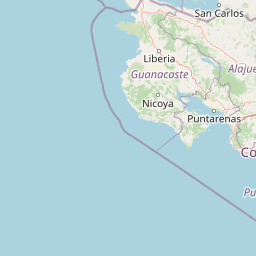
Map view of Santa Rosa National Park

Use this park location map to pinpoint Santa Rosa National Park in Costa Rica, understand its exact geographic position, and read its mapped placement within the surrounding landscape more clearly.

Pigeon | © OpenStreetMap contributors

Location context for Santa Rosa National Park

Guanacaste Province
Park atlas

Trace connected protected landscapes and other significant conservation sites across Costa Rica's Guanacaste region, ideal for geographic comparison.

Compare National Parks and Protected Areas Near Santa Rosa National Park in Costa Rica and the Guanacaste Region
After exploring Santa Rosa National Park, continue browsing nearby national parks and other protected areas within Costa Rica's Guanacaste Province, extending your geographic understanding. Compare their distinct ecosystems, historical significance, and diverse landscapes to deepen your grasp of the region's interconnected conservation geography.
National parkGuanacaste Province

Guanacaste National Park: A Protected Landscape within Guanacaste Province's Geography

Explore mapped park boundaries and regional natural landscape context.

Delve into the protected landscape of Guanacaste National Park, a significant national park located within Guanacaste Province. This entry provides a focused view of its geographic features, mapped protected areas, and its role within the regional terrain. Understand the park's specific natural landscape character and its placement in the broader atlas of conservation lands.

Area
340 km²
Established
1991
IUCN
II
Relief
Mixed relief
National parkGuanacaste Province

Rincón de la Vieja National Park: Costa Rican National Park Atlas Entry

Mapped protected landscape and regional geography.

Gain a structured understanding of Rincón de la Vieja National Park as a key protected area within Guanacaste Province. This detail page offers an atlas-focused perspective, highlighting its mapped boundaries and regional geographic significance. Explore how this national park contributes to the protected landscapes of Costa Rica, providing essential context for geographic discovery.

Area
141.61 km²
Established
1973
IUCN
II
Climate
Tropical
National parkGuanacaste Province

Las Baulas Marine National Park: Protected Marine Landscape Atlas in Guanacaste Province

Explore its mapped boundaries and regional geographic context.

Las Baulas Marine National Park represents a vital protected marine territory within Costa Rica. This entry offers an atlas-oriented perspective, detailing the park's geographic scope and its specific mapped boundaries. Users can explore its significance as a protected landscape, understand its relationship to the broader regional geography of Guanacaste Province, and utilize this information for structured natural landscape discovery.

Area
175 km²
Established
1991
IUCN
II
Relief
Mixed relief
National parkCosta Rica

Miravalles Jorge Manuel Dengo National Park: Costa Rica National Park Geographic Context

Mapped protected landscape and regional park geography.

Miravalles Jorge Manuel Dengo National Park offers a focused lens for understanding protected natural areas within Costa Rica. Explore its specific geographic footprint and the surrounding regional context to appreciate its significance as a mapped protected landscape. This detailed view supports a structured discovery of the park's identity, helping users grasp its place within the national atlas.

Area
43 km²
Established
2019
IUCN
II
Relief
Mountain
National parkCosta Rica

Palo Verde National Park: Costa Rica's Protected Landscape Geography and Map Context

Explore mapped park boundaries and regional natural landscapes.

Delve into the geographic identity of Palo Verde National Park, a protected area within Costa Rica. This detail entry focuses on its mapped landscape, providing context for its protected boundaries and regional setting. Understand how Palo Verde National Park fits into the broader atlas of Costa Rican geography, offering a factual basis for exploring its specific natural terrain and its significance as a national park within Central America's rich biodiversity.

Area
184 km²
Established
1978
IUCN
II
Relief
Lowland
National parkGuanacaste Province

Diriá National Park: Protected Landscape Atlas within Guanacaste Province

National Park geographic context and mapped terrain.

Examine Diriá National Park as a distinct protected area within Guanacaste Province. This detailed entry focuses on its geographic identity, mapped boundaries, and natural landscape characteristics. Understand how this national park contributes to the regional atlas, offering a clear view of its protected status and natural terrain features for focused discovery.

Area
28 km²
Established
1991
IUCN
II
Relief
Mountain
National parkCosta Rica

Barra Honda National Park: Costa Rican Protected Landscape and Geographic Atlas

Mapped boundaries and regional park geography.

Barra Honda National Park stands as a notable protected area, offering a distinct geographic profile within Costa Rica. Its designation as a national park underscores its importance for landscape conservation and atlas exploration. This entry details the park's mapped terrain and its contribution to understanding the regional geography, providing a focused view for those interested in protected land distribution and natural context.

Area
23 km²
Established
1974
IUCN
II
Relief
Mountain
National parkCosta Rica

Arenal Volcano National Park: Costa Rica National Park Atlas and Mapped Terrain

Detailed geography and protected landscape context for a Costa Rican national park.

Gain a structured understanding of Arenal Volcano National Park, a protected natural area situated in Costa Rica. This page provides detailed geographic information, focusing on its mapped boundaries and landscape characteristics. It serves as a key resource for exploring the park's specific regional context and its role within the country's network of protected lands.

Area
121.24 km²
Established
1991
IUCN
II
Relief
Mountain

Common questions about visiting, size, designation, and location context for Santa Rosa National Park

Santa Rosa National Park FAQs for park facts, access, geography, and protected area context
Find quick answers about Santa Rosa National Park, including protected-area facts, park geography, trail and visitor context, and how the park fits into its surrounding country and regional landscape.
MoriAtlas Explorer

Continue Your Protected Areas Search Across the Global Atlas

Deepen your exploration by continuing the structured search for national parks and protected areas worldwide. Utilize the comprehensive filtering capabilities to compare different conservation landscapes and refine your understanding of global park geography. Discover more about the distribution and characteristics of protected natural areas.

Global natural geography