
Why Sri Lankamalleswara Wildlife Sanctuary stands out
Sri Lankamalleswara is known worldwide first and foremost as the only known home of Jerdon's courser, a critically endangered nocturnal bird that was presumed extinct for more than a century before being rediscovered in this landscape. The sanctuary is therefore a site of singular importance for the global conservation of this single species. Beyond this flagship bird, the sanctuary is also recognized for its extensive dry deciduous mixed thorn forests, its deep gorges and steep slopes characteristic of the southern Eastern Ghats, and its population of Red Sanders, a regionally iconic and endemic tree. Together these elements make the park a defining example of the dry forest belt of interior Andhra Pradesh.
Sri Lankamalleswara Wildlife Sanctuary history and protected-area timeline
The history of Sri Lankamalleswara Wildlife Sanctuary is closely tied to the story of Jerdon's courser. The bird was first described in 1848 by the surgeon-naturalist Thomas C. Jerdon, who documented it from the scrub regions of what is now Andhra Pradesh. Despite this early record, the species was not seen again for more than a century and was widely believed to have gone extinct, slipping into the long list of Indian birds lost to habitat change and hunting pressure.
The turning point came in 1986, when Jerdon's courser was unexpectedly rediscovered in the scrub and dry forest habitat around what is now the sanctuary. The rediscovery confirmed that a small population had survived, hidden in terrain that had been poorly surveyed ornithologically. The ecological significance of the rediscovery site prompted authorities to designate the area as a wildlife sanctuary, giving the landscape formal protection status and bringing the region into the national conservation system.
Following its formal recognition, the sanctuary has continued to be managed primarily with the protection of Jerdon's courser and its dry forest habitat as a central objective. Its broader role in protecting Red Sanders forests and a representative mammal community has grown alongside this primary conservation mandate.
Sri Lankamalleswara Wildlife Sanctuary landscape and geographic character
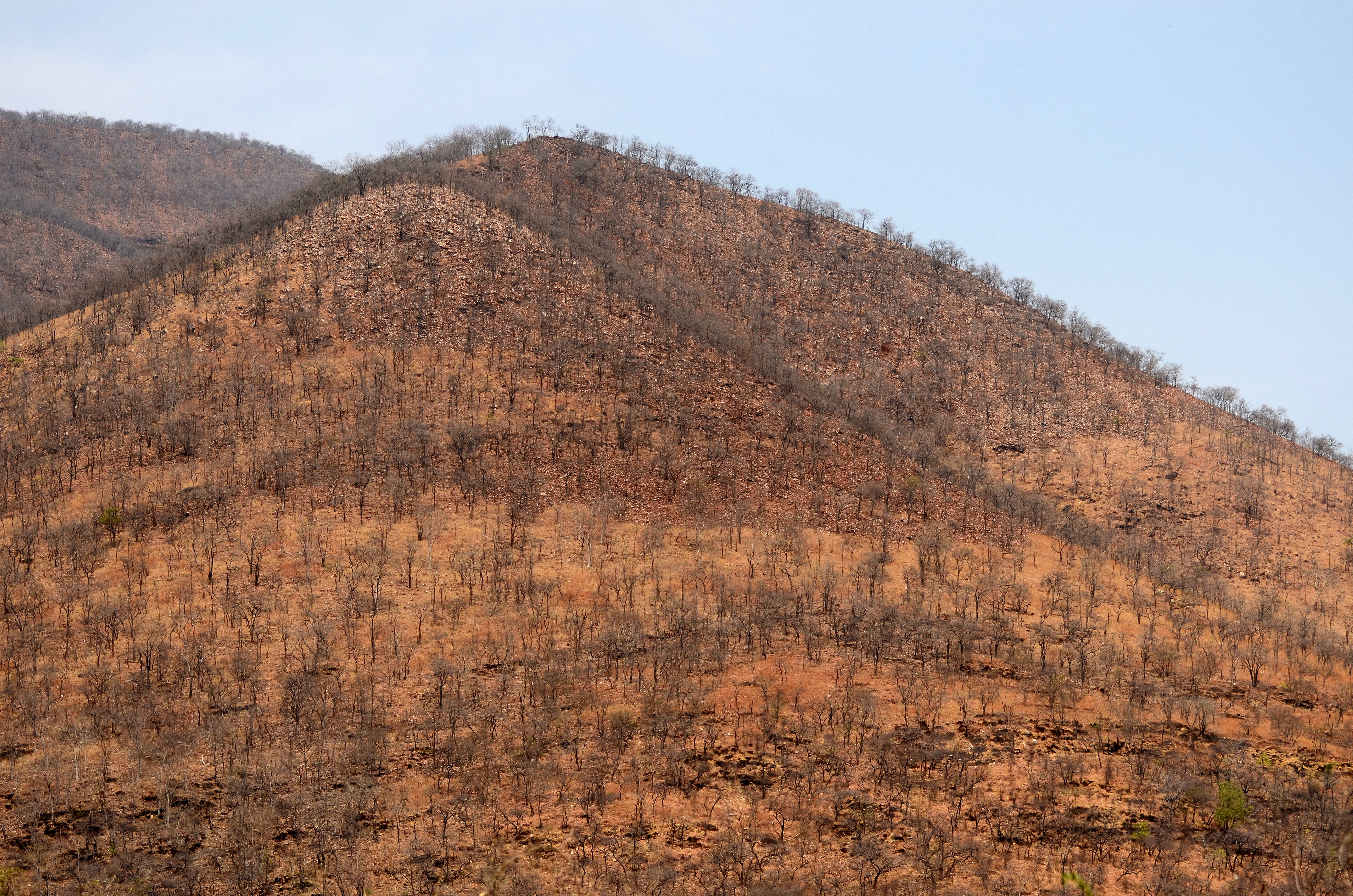
The landscape of Sri Lankamalleswara Wildlife Sanctuary is defined by the rugged interior terrain of the southern Eastern Ghats foothills. Steep slopes, rocky ridgelines, and deep gorges shape the topography, creating a landscape that is far more varied than its dry climate might suggest. Elevation changes and erosion patterns break the forest into a patchwork of habitats, with open scrub on exposed upper slopes and denser thorn forest in sheltered valleys and along drainage lines.
The terrain is predominantly dry, with thin soils covering much of the area. Rocky outcrops are a persistent feature of the scenery, and the gorges carved into the slopes add visual drama to what would otherwise be a flat, forested region. This combination of dryness, rock, and broken topography is a defining characteristic of the sanctuary and shapes both its vegetation patterns and its wildlife distribution.
The overall impression is of a tough, semi-arid forest landscape rather than lush greenery. Seasonal dryness dominates much of the year, and the visual character of the park shifts with the monsoon and post-monsoon periods, when foliage briefly greens up before the long dry season returns. This seasonal rhythm is an important part of the sanctuary's landscape identity.
Sri Lankamalleswara Wildlife Sanctuary ecosystems, habitats, and plant life
Ecologically, Sri Lankamalleswara belongs to the dry deciduous and thorn forest biome that characterises large parts of the interior Deccan and Eastern Ghats. The sanctuary's vegetation is dominated by dry deciduous mixed thorn forest, with species adapted to long dry seasons, rocky soils, and limited water availability. This habitat type is increasingly rare and fragmented across peninsular India, giving the sanctuary an outsized importance for regional biodiversity.
Botanical diversity at the site is substantial, with the source material indicating the presence of a large number of plant species and many families of vegetation. Among the most notable botanical features is Red Sanders, a tree endemic to a narrow stretch of the Eastern Ghats and significant both ecologically and in the context of international conservation and trade regulation. The presence of Red Sanders reinforces the sanctuary's role as a refuge for regionally endemic flora.
The vegetation mosaic is tightly linked to topography. Steeper, more exposed slopes tend to support sparser scrub cover, while valleys and shaded gorges retain denser forest stands. This variability creates a range of microhabitats that sustain both plant diversity and the animal communities that depend on them, allowing the sanctuary to support a richer fauna than its dry climate alone would suggest.
Sri Lankamalleswara Wildlife Sanctuary wildlife and species highlights
Sri Lankamalleswara is most famous for its birdlife, in particular Jerdon's courser, the sanctuary's flagship species and the reason for the area's protected status. Jerdon's courser is a nocturnal, ground-dwelling bird that inhabits sparse scrub and dry forest, a habitat preference that made its long-overlooked survival possible within this landscape. Every year the bird remains present, Sri Lankamalleswara continues to serve as the only confirmed site where the species exists in the wild.
The sanctuary's mammal community reflects the broader dry forest fauna of central and southern India. Leopard and sloth bear are among the larger carnivores recorded in or associated with the area, while herbivores include several deer species, nilgai, chinkara, and wild boar. Smaller carnivores such as fox are also part of the fauna, contributing to a balanced predator-prey community within the dry forest mosaic.
Together, the bird and mammal assemblages give the sanctuary a representative sample of the dry forest wildlife of the southern Eastern Ghats. The combination of a globally unique bird species and a typical, well-structured dry forest mammal community makes the area an unusually significant site for conservation in the region.
Sri Lankamalleswara Wildlife Sanctuary conservation status and protection priorities
Sri Lankamalleswara Wildlife Sanctuary's conservation importance is anchored in its role as the sole known refuge of Jerdon's courser. Because no other wild population of this critically endangered bird has been confirmed, the protection of the scrub and dry forest habitat within the sanctuary is effectively equivalent to the protection of the species itself. This makes the sanctuary a site of genuinely global conservation priority rather than merely regional interest.
Beyond the courser, the sanctuary contributes to the conservation of dry deciduous and thorn forest ecosystems that have been heavily reduced and degraded elsewhere in peninsular India. Its deep gorges, steep slopes, and remote stretches of forest make it a relatively undisturbed refugium, helping preserve ecological processes and species assemblages that are increasingly rare in the wider landscape.
The presence of Red Sanders adds a further conservation dimension. As an endemic species subject to international trade concerns, Red Sanders requires active protection, and the sanctuary provides one of the more secure strongholds for this tree. Combined with its role in protecting large mammal populations such as leopard, sloth bear, and several ungulate species, the sanctuary contributes meaningfully to biodiversity conservation in Andhra Pradesh and to broader dry forest protection efforts in India.
Sri Lankamalleswara Wildlife Sanctuary cultural meaning and human context
The sanctuary derives its name from Sri Lankamalleswara, a local Shaivite place of worship associated with the region. The cultural identity of the area is shaped by the rural and semi-arid landscape of Kadapa District and the wider Rayalaseema region, where temple sites, dry farming communities, and traditional livelihoods have long been intertwined with the surrounding scrub and forest landscape. Sacred groves and locally protected sites are a recurring feature of such regions in Andhra Pradesh, and the sanctuary's name reflects that cultural layering.
The broader human relationship with the area has historically involved forest use, grazing, and the collection of minor forest products, alongside the protection of culturally significant religious sites. The formal designation of the sanctuary, prompted by the rediscovery of Jerdon's courser, has also reshaped local relationships with the forest, introducing modern conservation priorities into a landscape with deep cultural roots.
Top sights and standout views in Sri Lankamalleswara Wildlife Sanctuary
Sri Lankamalleswara's standout quality is its status as the only known habitat of Jerdon's courser, a bird that survived obscurity for more than a century in this very landscape. That single fact places the sanctuary on the global stage for bird conservation.
The site also stands out for its extensive and largely intact dry deciduous mixed thorn forest, its dramatic gorges and steep slopes, its Red Sanders populations, and its diverse dry-forest mammal community, all of which together make it one of the most ecologically distinctive protected areas in southern Andhra Pradesh.
Best time to visit Sri Lankamalleswara Wildlife Sanctuary
The character of a visit to Sri Lankamalleswara is strongly shaped by the seasonal rhythm of this dry interior landscape. The post-monsoon and cooler months, roughly from late autumn through early spring, tend to bring milder temperatures, greener vegetation after the rains, and more comfortable conditions for moving through scrub and dry forest terrain. This period is often favoured for wildlife observation in similar dry forest habitats across the region.
The harshest conditions typically arrive with the peak of the dry season, when heat is intense and water sources become scarce, concentrating wildlife around the remaining water points. The late monsoon period transforms the landscape visually but can make access to remote and rugged terrain more difficult. Choosing a time outside the most extreme heat or the wettest monsoon weeks generally offers a more balanced experience of the sanctuary's landscape and wildlife.