Mori Atlas logo
Nature reserveSüdwest-Naturreservat

Discover the unique native plant conservation and diverse highland terrain of this Windhoek reserve

Südwest-Naturreservat Nature Reserve: A Protected Botanical Landscape in Windhoek, Namibia

(Nationaler Botanischer Garten)

Südwest-Naturreservat stands as a vital protected area in the heart of Windhoek, serving as a primary repository for Namibia's diverse native flora. Encompassing twelve hectares of varied highland terrain, this nature reserve integrates formal botanical displays with undisturbed natural vegetation. The site provides a critical urban sanctuary where visitors can engage with indigenous species, including the signature Windhoek Aloe, within a setting that highlights the botanical heritage of the Khomas Highland plateau.

botanical gardenurban nature reservenative floraarid ecosystemsucculentsaloes

Südwest-Naturreservat

Nature reserve

Park overview

Structured park overview, official facts, and landscape profile for Südwest-Naturreservat

Südwest-Naturreservat park facts, protected area profile, and essential visitor context

Review the core facts for Südwest-Naturreservat, including designation, size, terrain, visitor scale, habitats, and operating context in one park-focused overview.

About Südwest-Naturreservat

Südwest-Naturreservat occupies a distinctive niche among Namibia's protected areas. Rather than safeguarding a vast wilderness or remote desert expanse, it concentrates on preserving Namibia's native plant heritage within an intimate 12 hectare footprint in Windhoek, the country's administrative and cultural capital. Positioned on the boundary between Windhoek-Central and Klein Windhoek, the reserve functions as both a green lung for the urban area and a living museum of Namibian flora.

The reserve's identity is shaped by its dual character. One part consists of a formally designed garden that introduces visitors to curated plant displays, while the larger portion remains largely in its natural state, threaded with walking paths that allow close inspection of the landscape. This combination of formal and natural sections gives the site a layered experience: visitors move between educational collections and informal vegetation typical of the surrounding region.

What makes Südwest-Naturreservat particularly important from a botanical perspective is its focus on exclusively Namibian flora. The collection includes characteristic species of Namibia's arid and semi-arid environments, with a notable emphasis on the Windhoek Aloe (Aloe littoralis), quiver trees, and a variety of local lilies. The on-site desert greenhouse, often referred to as the Wüstenhaus, provides controlled conditions for species drawn from the broader Namib Desert, expanding the reserve's botanical reach beyond what the outdoor climate would otherwise allow.

The reserve is also valued as a habitat for small mammals, birds, reptiles, and insects that occupy the spaces between plantings, adding a wildlife dimension to what is primarily a botanical destination. Managed through the partnership of the Botanical Association of Namibia and the National Botanical Research Institute, Südwest-Naturreservat represents an intersection of conservation, scientific research, public recreation, and environmental education in a capital city setting.

Quick facts and research context for Südwest-Naturreservat

Südwest-Naturreservat, widely called the National Botanical Garden, is a 12 hectare protected landscape in Windhoek, Namibia. It sits directly between the Windhoek-Central and Klein Windhoek districts and has been classified as an IUCN Category V Protected Landscape. Established in 1970, it is administered by the Botanical Association of Namibia together with the National Botanical Research Institute.

The site functions primarily as a botanical conservation area for native Namibian flora, while also serving as a recreational and educational space. Its most recognizable feature is a dense stand of Aloe littoralis, known locally as the Windhoek Aloe, which is incorporated into the city's coat of arms. A dedicated desert greenhouse displays plant species from the wider Namib region.

Protection and recognition

Examine official terrestrial protection records and international recognition metrics.

Südwest-Naturreservat Protection Status and Documented Conservation Scope

Terrestrial protection status and formal conservation records outline the documented framework established for Südwest-Naturreservat. Verified administrative sources and baseline protection metrics provide clear reference data for global conservation analysis.

Protection details

Protection scope
Terrestrial
WDPA ID
30050
Park context

Deeper park guide and search-rich context for Südwest-Naturreservat

Südwest-Naturreservat history, landscape, wildlife, and travel context

Explore Südwest-Naturreservat through its history, landscape character, ecosystems, wildlife, conservation priorities, cultural context, and seasonal travel timing in a structured park guide built for atlas discovery and search intent.

Why Südwest-Naturreservat stands out

Südwest-Naturreservat is especially known for being one of Namibia's principal living collections of native plants, set in an urban context that is unusual for a country better known for vast desert reserves. Its signature attraction is a remarkable concentration of Aloe littoralis, the Windhoek Aloe, a species so emblematic of the capital that it appears in the city's official logo. Beyond the aloe population, the reserve is recognized for bringing together diverse Namibian flora in a single accessible site, including quiver trees and local lily species. The desert greenhouse dedicated to plants of the Namib Desert gives the garden a distinctive educational character that sets it apart from purely ornamental botanic gardens elsewhere in the region.

Südwest-Naturreservat history and protected-area timeline

The land that would become Südwest-Naturreservat was transferred from the administration of South West Africa to the City of Windhoek in 1969. Shortly after this handover, initial efforts began to establish walking paths through the site, but financial difficulties soon forced the project to be shelved.

The reserve's modern character emerged with the construction of a research institute on its edge. The associated National Botanical Research Institute took over management of the land and, working together with the Botanical Association of Namibia, gradually developed the site into a functioning botanical garden. This collaboration established the reserve's enduring mission: protecting and maintaining native Namibian flora while serving as a place of recreation and learning.

The reserve was formally established in 1970, and it has remained under the stewardship of the Botanical Association of Namibia ever since, evolving from a brief trail-building experiment into one of the country's most concentrated living collections of native plants.

Südwest-Naturreservat landscape and geographic character

Südwest-Naturreservat occupies a small but varied piece of terrain on the edge of central Windhoek, where the urban grid meets a more natural transitional zone between Klein Windhoek and the heart of the city. While modest in scale at 12 hectares, the site compresses a surprising diversity of landscape textures into its area.

The terrain incorporates both formally landscaped garden sections and rougher, largely undisturbed ground. Walking trails meander through the natural sections, allowing visitors to move through vegetation characteristic of Namibia's central highlands. The site's relatively gentle topography, shaped by Windhoek's position among the surrounding hills, gives it a calm, sheltered feel that contrasts with the rugged desert environments Namibia is better known for.

Although the reserve does not feature dramatic landforms, its particular landscape value lies in the way different vegetation zones, from curated garden beds to more natural stands of indigenous flora, are arranged in close proximity. The Wüstenhaus, or desert greenhouse, extends the landscape experience by recreating conditions of the broader Namib Desert, introducing a distinct visual layer to the otherwise highland botanical environment.

Südwest-Naturreservat ecosystems, habitats, and plant life

The ecological identity of Südwest-Naturreservat is tightly bound to its botanical mission. The reserve exists specifically to conserve and display the native flora of Namibia, concentrating plant species that are otherwise dispersed across the country's wide range of arid and semi-arid habitats. Vegetation within the reserve spans both formally curated plantings and informal stands that echo the broader regional ecosystem.

A defining feature of the site's ecology is its dense population of Aloe littoralis, a succulent species so closely associated with Windhoek that it features in the city's official symbols. Beyond the aloes, the reserve hosts notable examples of other characteristic Namibian plant groups, including quiver trees, locally referred to as Köcherbäume, and various lily species. These collections illustrate the botanical breadth of Namibia in microcosm.

The desert greenhouse adds a further ecological dimension by housing plants drawn from the Namib Desert ecosystem, allowing visitors to encounter plant forms adapted to one of the world's oldest and driest deserts within an otherwise urban setting. Together, the outdoor collections and the controlled greenhouse environment create a layered representation of Namibian plant habitats.

Südwest-Naturreservat wildlife and species highlights

Although Südwest-Naturreservat is primarily a botanical site, its varied plantings and natural vegetation zones provide habitat for a range of small wildlife. Between the formal garden beds and the more natural areas, visitors commonly encounter small mammals, reptiles, and a diversity of insects that occupy the reserve's sheltered microhabitats.

Birdlife contributes significantly to the reserve's wildlife character, with various species drawn to the mix of native plants, open walking trails, and edge habitat between the urban and natural sections. The combination of dense aloe stands, larger shrubs, and undisturbed ground cover creates niches that support a steady presence of typical small urban and peri-urban Namibian fauna.

Rather than presenting dramatic large-mammal viewing, the reserve's wildlife value lies in the opportunity to observe Namibia's smaller native species in close proximity and in a relatively undisturbed setting within the city.

Südwest-Naturreservat conservation status and protection priorities

Südwest-Naturreservat carries IUCN Category V Protected Landscape status, recognizing its dual role as a site of cultural and ecological significance that combines landscape protection with opportunities for public engagement. Its conservation value rests above all on its concentrated effort to preserve and showcase native Namibian plant species within a single accessible location.

The reserve's protection of Aloe littoralis and other characteristic flora gives it importance far beyond its small footprint. By maintaining a representative living collection of indigenous plants, including species from the broader Namib Desert in its controlled desert greenhouse, the reserve supports both in-situ and curated conservation of botanical diversity that is otherwise spread across vast, sparsely populated regions.

The involvement of the National Botanical Research Institute and the Botanical Association of Namibia gives the conservation work a strong scientific underpinning. Together they ensure that the reserve functions not only as a place of public recreation but also as a working reference collection for Namibia's native flora, contributing to research, education, and the long-term preservation of plant species that define the country's natural identity.

Südwest-Naturreservat cultural meaning and human context

Südwest-Naturreservat carries quiet cultural weight through its connection to the identity of Windhoek itself. The Windhoek Aloe (Aloe littoralis), one of the reserve's signature species, features directly in the city's coat of arms, embedding the botanical garden in the symbolic life of the capital.

The reserve also reflects Namibia's post-independence institutional development, having grown from a South West Africa-era land transfer into a modern collaboration between a national research institute and a botanical society. Today it represents a form of cultural-natural heritage where urban life, scientific research, and public education intersect around the country's distinctive native flora.

Top sights and standout views in Südwest-Naturreservat

Südwest-Naturreservat's strongest points of distinction are its dense Windhoek Aloe population, its curated living collection of exclusively Namibian native plants, and its accessible urban setting within Windhoek. The presence of characteristic species such as quiver trees and local lilies, combined with the desert greenhouse showcasing plants of the Namib Desert, gives the small reserve a botanical reach that extends well beyond its footprint.

Its role as a partnership between research and public engagement through the National Botanical Research Institute and the Botanical Association of Namibia further distinguishes it as a working site for conservation, science, and education in a capital city environment.

Best time to visit Südwest-Naturreservat

Südwest-Naturreservat can be visited year-round, as its urban location and mix of formal garden and natural areas make it accessible in every season. The cooler and drier months of the Namibian winter generally offer the most comfortable conditions for walking the site's trails, while the warmer and wetter summer months can bring out different foliage states and increased insect and bird activity.

Because the reserve combines outdoor plantings with the climate-controlled desert greenhouse, visitors can engage with the Namibian flora in any season regardless of broader weather conditions.
Monthly climate preview

Long-term monthly temperature ranges and precipitation patterns recorded at representative coordinates

Südwest-Naturreservat Climate Profile: Annual Temperature and Precipitation Normals

Südwest-Naturreservat experiences measured long-term temperature swings alongside distinct monthly precipitation rhythms across its representative coordinate point. Examining the complete twelve-month statistical record provides deeper insight into annual thermal variations and precipitation shifts.
Annual mean19 °C
12 °C24 °C
Jan24°
Feb23°
Mar22°
Apr19°
May16°
Jun13°
Jul12°
Aug15°
Sep20°
Oct22°
Nov23°
Dec24°
Warmest month
December

24.2 °C

Coolest month
July

12.3 °C

Wettest month
February

3 mm/day

Driest month
July

0 mm/day

Park location guide

Geography guide, regional context, and park location map for Südwest-Naturreservat

Südwest-Naturreservat park geography, regions, and map view in Namibia

Understand where Südwest-Naturreservat sits in Namibia through a broader geographic reading of the surrounding landscape, nearby location context, and its mapped position within the national park landscape.

How Südwest-Naturreservat fits into Namibia

Namibia is a sovereign country in Southern Africa that gained independence from South Africa in 1990. It is the driest country in sub-Saharan Africa, characterized by the Namib Desert along its coast. The population is approximately 3 million, with Windhoek as the capital and largest city. Namibia operates as a unitary semi-presidential republic with a multi-party system.

Wider geography shaping Südwest-Naturreservat in Namibia

Namibia occupies 825,615 km2 in Southern Africa, making it the 34th largest country in the world. It is bordered by the Atlantic Ocean to the west, Angola and Zambia to the north, Botswana to the east, and South Africa to the south. The country features the Namib Desert along its coastal region, with varied terrain including savannas, mountains, and plateaus inland. A notable geographic feature is that Zimbabwe lies less than 200 metres away along the Zambezi river near Kazungula in the northeast.

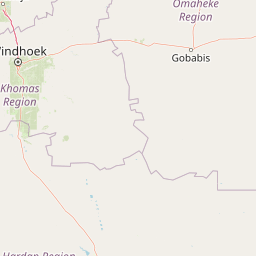
Map view of Südwest-Naturreservat

Use this park location map to pinpoint Südwest-Naturreservat in Namibia, understand its exact geographic position, and read its mapped placement within the surrounding landscape more clearly.

Pigeon | © OpenStreetMap contributors
Park atlas

Compare surrounding regional reserves and connected arid conservation landscapes.

Parks Near Südwest Naturreservat and Regional Protected Areas

Browsing parks near Südwest Naturreservat reveals a wider spectrum of native highland flora and protected botanical habitats. Expanding the regional comparison helps place urban conservation reserves within the broader geographic context of surrounding natural terrain.
A horizontal watercolor illustration of rolling hills, trees with soft pink and green foliage, and grassy foreground against a pale misty mountain background.
Protected areaNamibia
About 63 km away#1 closest

Northwest

Gross Barmen Protected Area: Landscape Geography and Thermal Spring Mapping in Namibia

Central Namibia thermal spring and historic natural monument

Gross Barmen is a state-managed recreation area in central Namibia, centered on a natural sulfurous spring that emerges within a flat thornveld landscape. This protected area acts as both a cultural heritage site and a geological feature, providing a clear window into the regional terrain of the Otjozondjupa area through its thermal waters and historical mission foundations.

Area
1 km²
Established
1968
Relief
Lowland
Climate
Arid
Protected landscapeOtjozondjupa
About 64 km away#2 closest

North

Von-Bach-Erholungsgebiet: A Protected Landscape of Dam Waters and Bushveld Terrain

Geographic overview of the Otjozondjupa recreation reserve.

The Von-Bach-Erholungsgebiet landscape defines a unique intersection between the northern Eros Mountain foothills and the Von-Bach Dam reservoir. Characterized by khaki bushveld, scattered acacia, and rolling ridges, this protected area serves as a primary hub for water-based recreation and bushland exploration in central Namibia.

Area
43 km²
Established
1972
IUCN
V
Relief
Upland
National parkNamibia
About 142 km away#3 closest

Southwest

Namib-Naukluft National Park: Namibia's Iconic Desert Landscape and Protected Terrain

Explore its ancient dunes, Naukluft mountains, and coastal geography.

Namib-Naukluft National Park is a colossal protected area in Namibia, holding the distinction of being Africa's largest national park. This park is renowned for its iconic sand dunes, particularly at Sossusvlei, which are among the highest in the world and display dramatic colors due to iron oxidation. The landscape also features the rugged Naukluft Mountains and vital coastal fog zones, creating a diverse arid environment. Delve into the mapped geography and unique terrain of this ancient desert setting, understanding its protected landscape significance within Namibia's atlas.

Area
49,768 km²
Established
1907
IUCN
II
Relief
Mixed relief
Wildlife reserveOtjozondjupa
About 185 km away#4 closest

North

Okonjati Game Reserve: Mapped Protected Landscapes and Wildlife Geography in Namibia

Ecological terrain and historical mountain setting in Otjozondjupa.

Situated in the heart of Namibia, Okonjati Game Reserve represents a significant private conservation effort centered on the Etjo massif. This 360 square kilometer protected landscape features a blend of rocky uplands and savanna plains, providing a unique habitat for rhinoceroses, elephants, and hippopotamuses while preserving fossilized dinosaur tracks and modern historical landmarks.

Area
360 km²
Established
1975
Relief
Upland
Climate
Arid
National parkNamibia
About 218 km away#5 closest

North

Waterberg Plateau Park: A Detailed Atlas of a Protected Table Mountain in Namibia

Geographic overview of the Kalahari plateau ecosystem and protected wilderness

Waterberg Plateau Park offers a deep look into one of Namibia's most recognizable natural landmarks, featuring a classic table mountain formation that rises dramatically from the savannah. This protected area provides a rich study of geological heritage, including ancient strata and isolated plateau ecosystems that support a wide range of bird species and rare fauna. The park serves as a foundational site for conservation, marking a contrast between the elevated plateau and the expansive plains below.

Area
405 km²
Established
1972
IUCN
II
Relief
Highland
National parkNamibia
About 219 km away#6 closest

West

Dorob National Park: Namibia's Expansive Coastal Desert and Protected Bird Habitat

Explore mapped landscapes and regional geography.

Dorob National Park is a prime example of a protected coastal desert landscape, stretching along Namibia's Atlantic coast. This national park is renowned for its significant bird populations, making it an Important Bird Area with extensive mapped habitats supporting diverse species. Understand the park's geographic context, from its dramatic dunes to its ephemeral river systems, and its role as a key conservation area within the region.

Area
107,540 km²
Established
2010
IUCN
II
Relief
Lowland
Watercolor illustration of a landscape with soft green and pink hues showing rolling hills and a pale sky
National parkNamibia
About 239 km away#7 closest

North

Waterberg Plateau Park: Mapped Geography and Protected Landscape Identity in Namibia

Central Namibia's ancient plateau and savanna terrain.

Waterberg Plateau Park stands as a defining geological feature of the Namibian landscape. This national park is centered on a dramatic table mountain that creates a distinct ecological island above the surrounding Kalahari basin. Renowned for its ancient rock formations and successful conservation efforts, the area provides a vital protected boundary for endangered species and a significant focus for regional geographic exploration.

Area
405 km²
Established
1972
IUCN
II
Relief
Mixed relief
National parkKgalagadi District
About 342 km away#8 closest

Southeast

Kgalagadi Transfrontier Park National Park: Explore Its Mapped Protected Landscape

Discover the desert geography and unique terrain of the southern Kalahari.

Kgalagadi Transfrontier Park is a monumental protected area within the Kgalagadi District, embodying the vastness and stark beauty of the Kalahari Desert. This national park page offers an atlas-centric view of its sweeping red dunes, sparse vegetation, and the crucial dry river systems that shape its arid environment. Understand the geographic scope and the protected landscape character of this significant cross-border conservation area, perfect for detailed map exploration and understanding regional desert ecosystems.

Area
38,000 km²
Established
2000
IUCN
II
Visitors
52.5K annual

Common questions about visiting, size, designation, and location context for Südwest-Naturreservat

Südwest-Naturreservat FAQs for park facts, access, geography, and protected area context

Find quick answers about Südwest-Naturreservat, including protected-area facts, park geography, trail and visitor context, and how the park fits into its surrounding country and regional landscape.
MoriAtlas Explorer

Continue Your Protected Areas Search Across the Global Atlas

Deepen your exploration by continuing the structured search for national parks and protected areas worldwide. Utilize the comprehensive filtering capabilities to compare different conservation landscapes and refine your understanding of global park geography. Discover more about the distribution and characteristics of protected natural areas.

Global natural geography