
Why Val Rosandra stands out
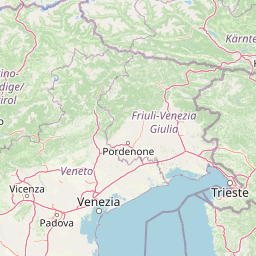
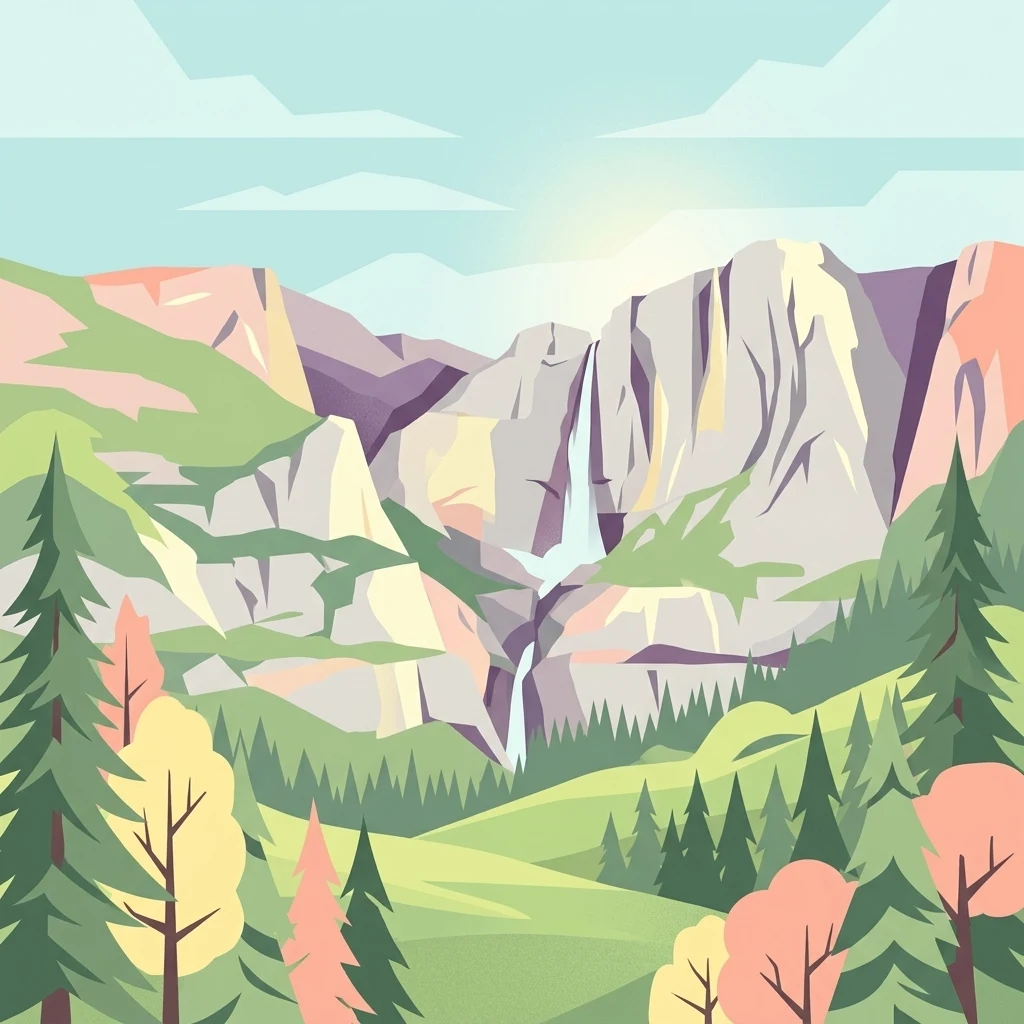
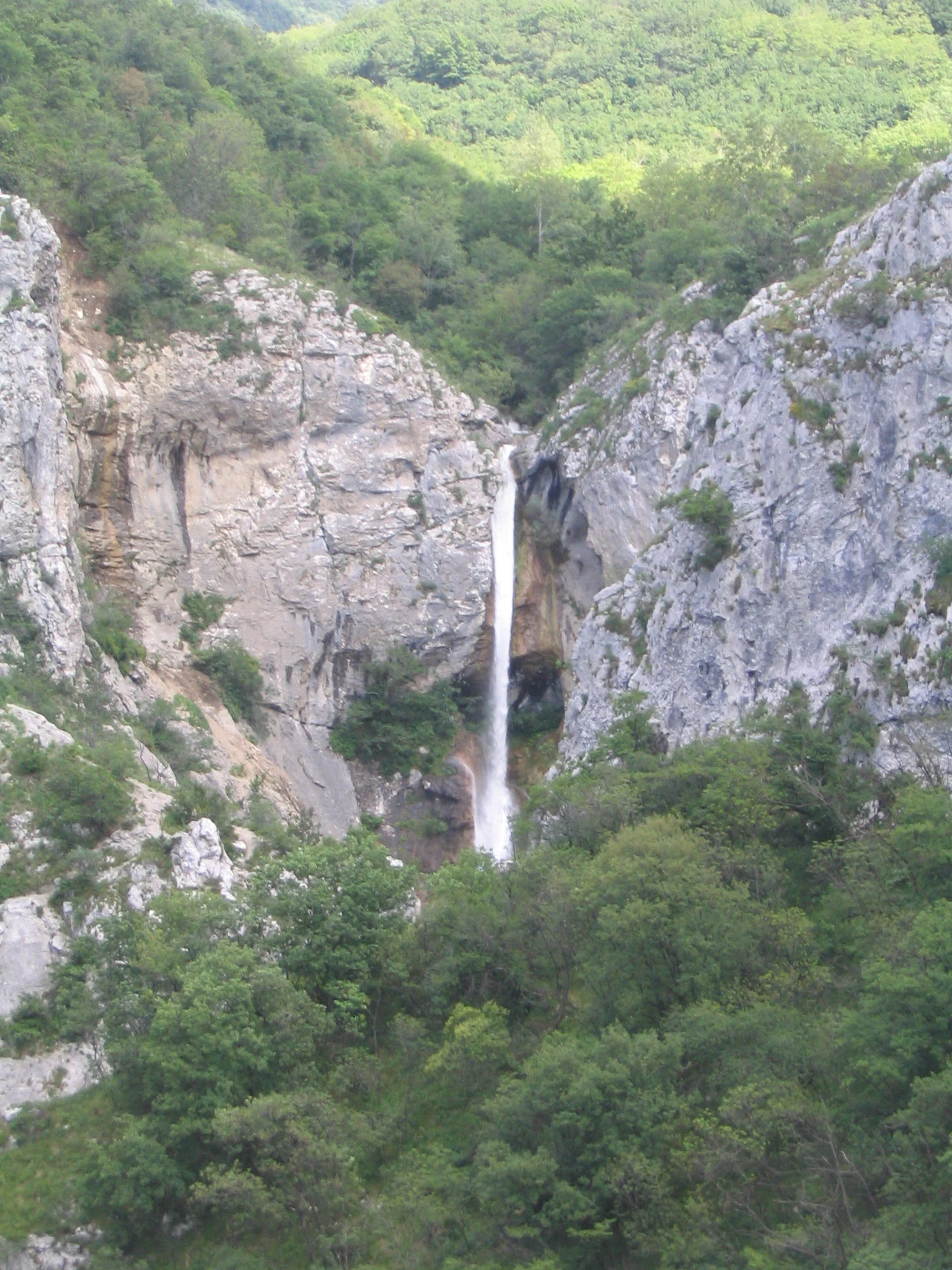
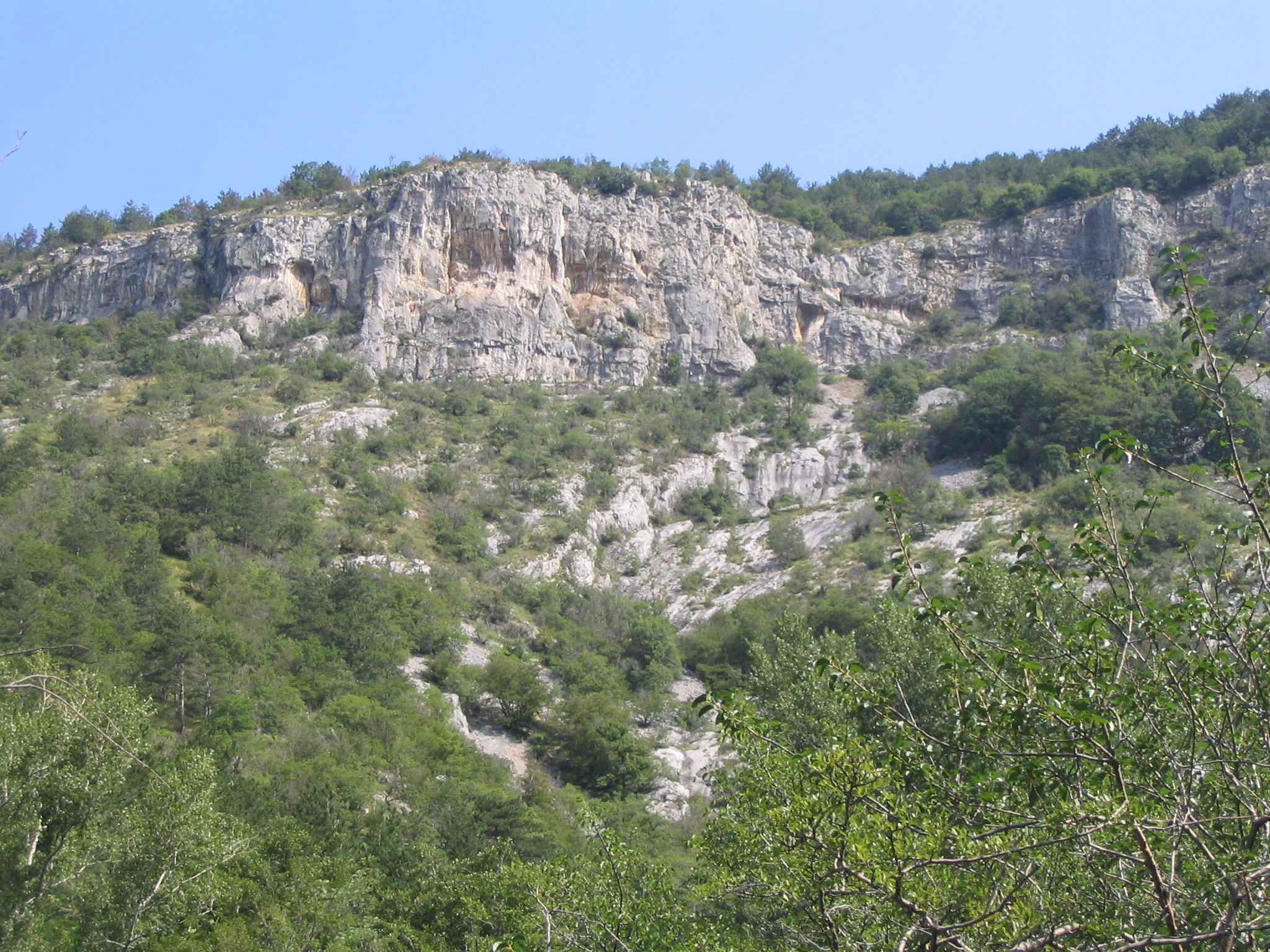
Val Rosandra is best known for being one of the rare places in Europe where subalpine and Mediterranean climates come together within a single small valley, producing an extraordinary concentration of plant and animal diversity. The valley is also famous among climbers and speleologists. Its walls, gorges, caves, and the Supet waterfall form an outdoor laboratory for karst studies, while the historic climbing school founded by Emilio Comici in 1929 attracts rock climbers from across Italy. The dramatic contrast between the continental upper valley and the Mediterranean lower valley gives Val Rosandra a strongly layered character that distinguishes it from the rest of the Trieste Karst.
Val Rosandra history and protected-area timeline
Val Rosandra has been a corridor of human activity since prehistoric times. Archaeological evidence shows human presence in the Neolithic, and finds from the horizontal caves on the right side of the valley, especially the Grotta delle Finestre, indicate continuous use of the landscape as shelter, storage, and refuge, although no permanent prehistoric settlement has been confirmed.
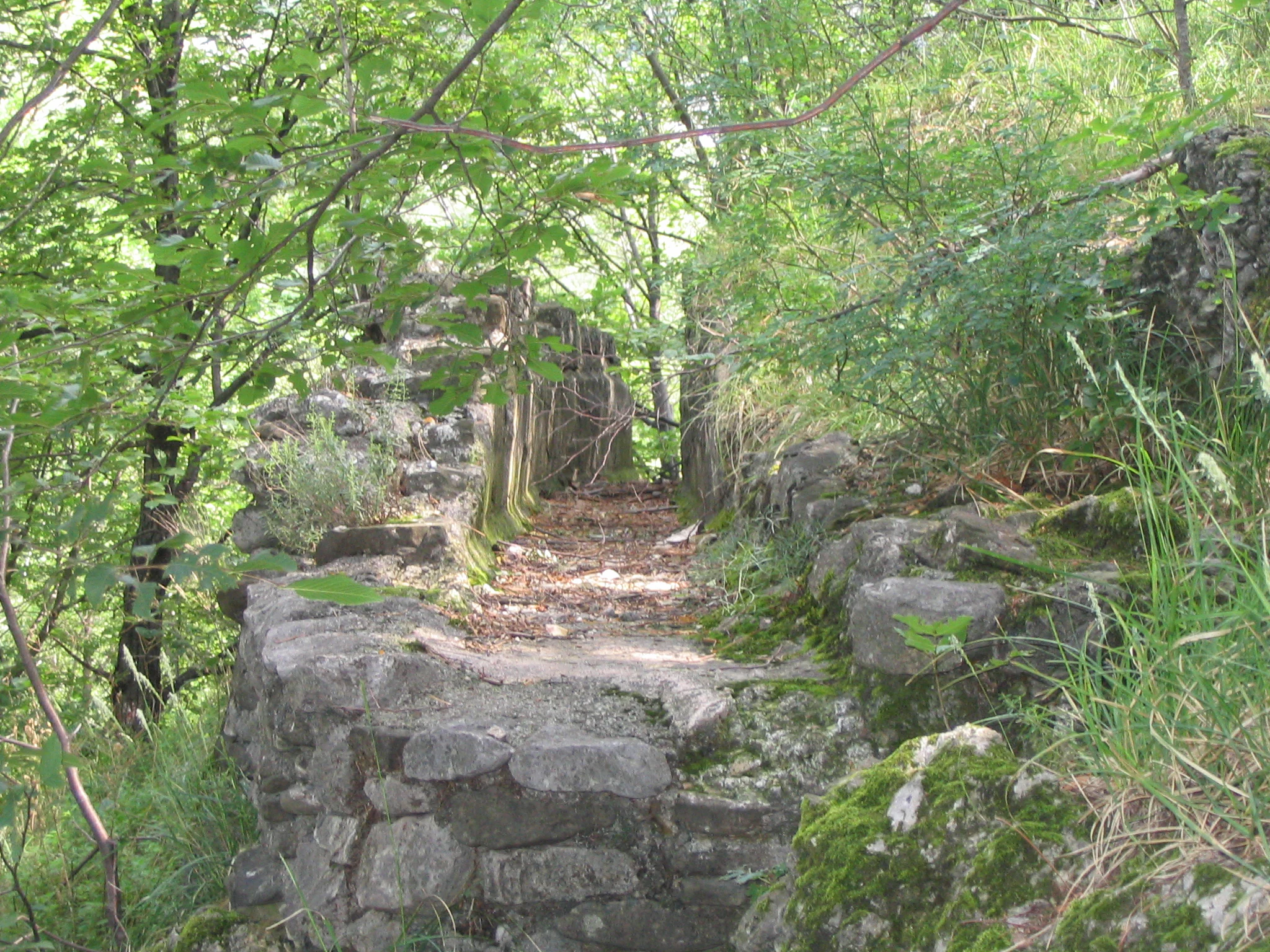
During the Roman period the valley became part of the city's infrastructure. The spring of the Rosandra, which Count Domenico Rossetti later named Fons Oppia, was tapped in the first century AD to feed a 14 kilometer aqueduct running into the center of Trieste. The aqueduct remained functional for centuries and may have survived in some form into the sixth or seventh century, when damage interrupted its use. Eighteenth century authorities still considered restoring it for the growing city of Trieste, but the proposal was abandoned when other local sources were developed instead. Only about one hundred meters of the Roman structure survive today.
In the medieval and early modern eras the valley defined Trieste's commercial lifeline. Large salt pans once lay near the mouth of the Rosandra, and the only natural route linking them to the inland markets ran through the valley, the so called salt road. This corridor was defended by fortifications including the castle of Moccò, later replaced by the customs stronghold of Fünfenberg, the Tabor di Draga built by local inhabitants against Turkish raids, and the castle of Vicumberg near Becca on the present-day Slovenian side. When Venice forced the destruction of the salt pans, the valley's commercial importance collapsed, Trieste opened new roads from the city center, and Val Rosandra gradually returned to a quieter, more agricultural rhythm.
Alongside the salt trade, the valley became a center of milling. A 1276 contract already records three mills along the Rosandra, which by 1757 had grown to sixteen mills driven by the torrent's steady flow. The mills processed spices and other goods arriving at the port of Trieste before distribution inland. Many of these structures were lost to war damage and neglect during the twentieth century.
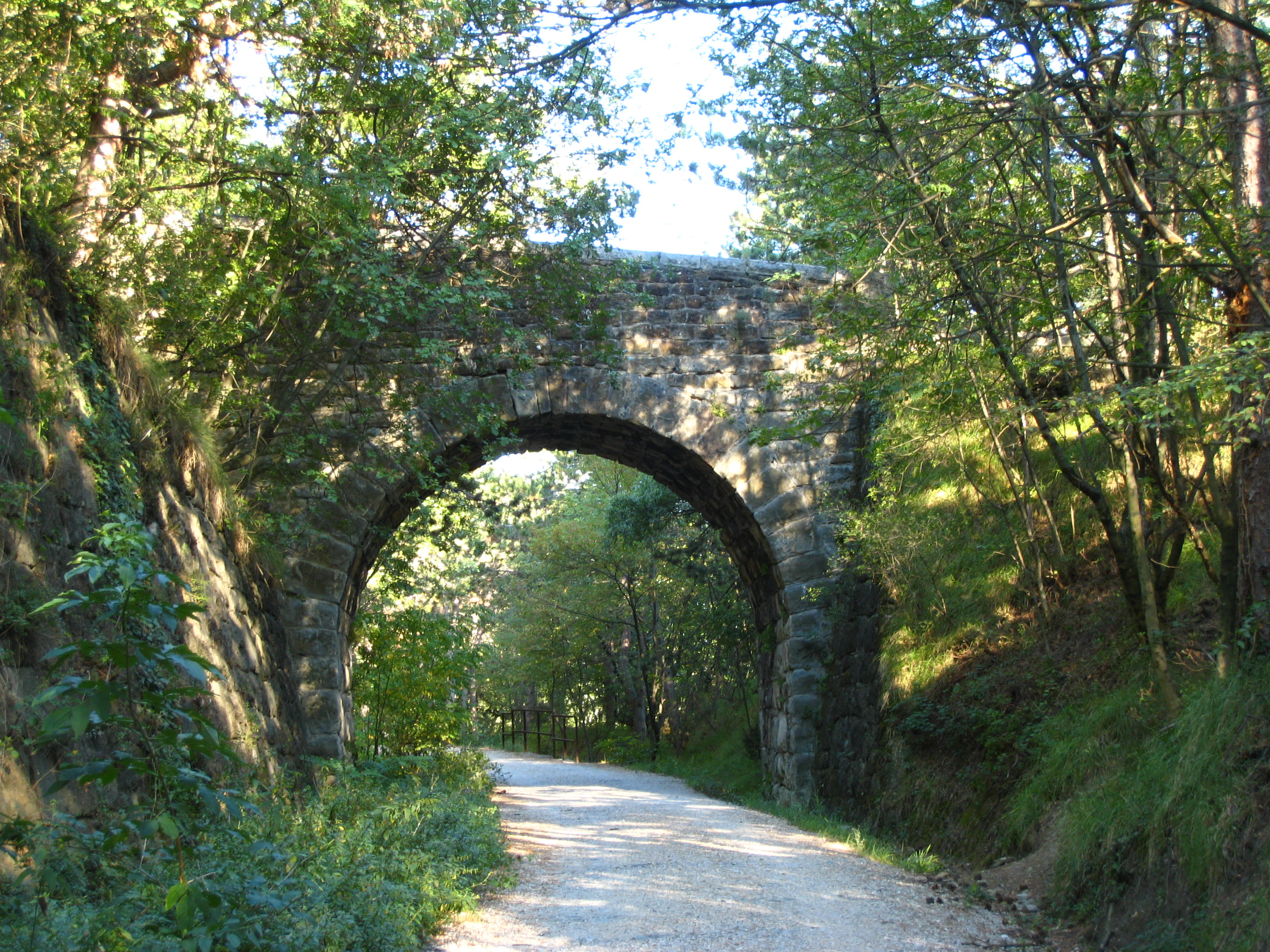
In 1887 the Austro-Hungarian Empire opened the short Trieste-Erpelle railway through the valley, designed to shorten the route between Trieste and Istria by 38 kilometers. Construction on the karst terrain was difficult, and during tunneling near Botazzo a sinkhole opened, killing three workers whose bodies were never recovered. The line survived into the postwar period, was finally closed in 1958, and had its tracks removed in 1966. Its alignment is now the Giordano Cottur pedestrian and cycling path. In 1996 the Friuli Venezia Giulia regional law formally established the Riserva naturale regionale della Val Rosandra, placing centuries of layered human history under modern nature protection.
Val Rosandra landscape and geographic character
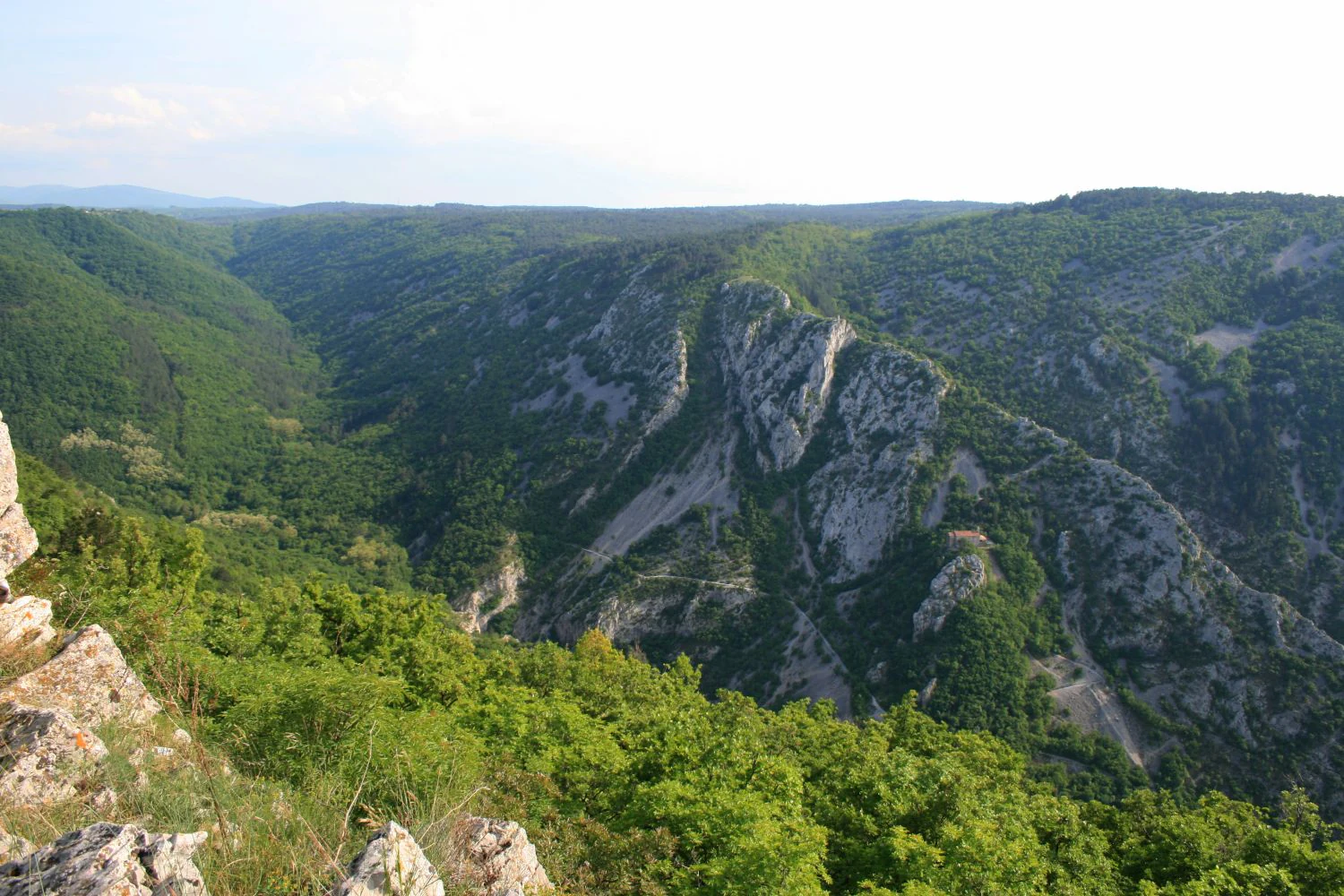
Val Rosandra cuts a sharp, irregular path through the limestone Carso plateau just behind Trieste, producing one of the most dramatic small-scale landscapes in the region. The upper valley, above the Supet waterfall, opens gently over softer flysch terrain with richer vegetation along both banks of the torrent. Below the waterfall, the character changes abruptly. The river plunges through tight gorges, vertical rock faces, and scree fields cut into pure karst limestone, with cliffs often dropping in sheer drops.
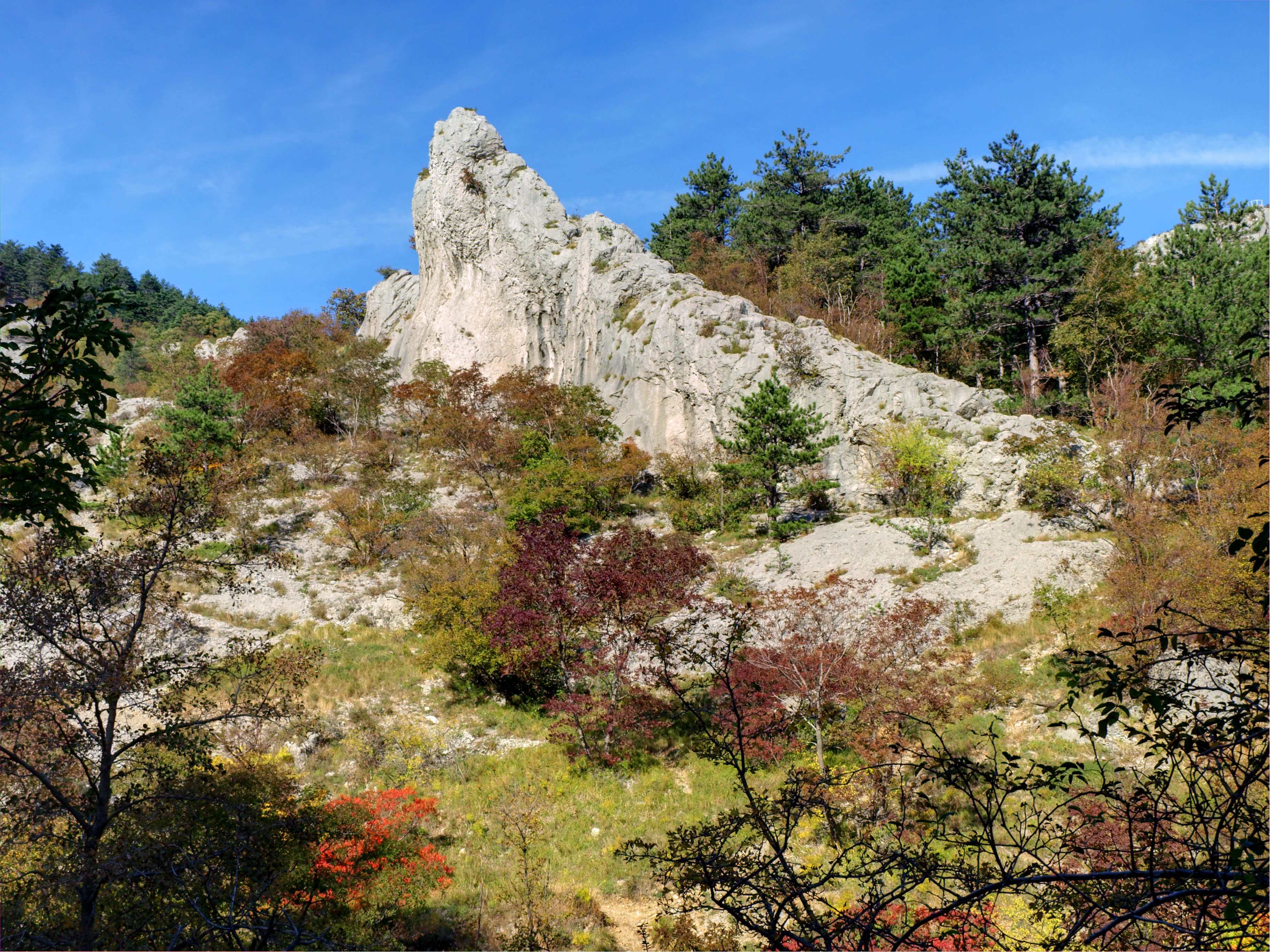
Geologically the valley shows two clearly contrasting sides. The left slope, on Monte Carso, is shaped by limestone layers dipping along the slope, producing unstable scree and shrubby patches. The right slope, on Monte Stena, has limestone dipping against the slope and exposes tall cliffs dotted with cyanobacteria, alternating with bands of woodland. The small flysch areas around Botazzo soften this contrast with rolling forms, denser green vegetation, and gentler agricultural use. Together these features give the valley a layered appearance that has been compared to the great Dinaric valleys of Dalmatia rather than to typical alpine scenery.
Val Rosandra ecosystems, habitats, and plant life
Val Rosandra is exceptional for the way it concentrates an enormous variety of habitats and species within a very small area. Surveys indicate around 988 vascular plant species, more than 1,000 fungi, around 300 lichens, about 150 bryophytes, and roughly 100 myxomycetes, giving a total of roughly 2,700 recorded biological entities. Many of the higher plants are endemics or regional rarities, some of them known in Italy only from this valley.
The climatic interplay between the continental upper valley and the Mediterranean lower valley is the driving force behind this diversity. Alpine relicts, Illyrian species, prealpine plants, and Mediterranean taxa all find refuges here because the valley escaped the worst effects of glaciation and because its bedrock alternates between water-retentive flysch and dry, fissured limestone. The flysch slopes near Botazzo show a softer, greener
Val Rosandra wildlife and species highlights
The wildlife profile of Val Rosandra is shaped by its unusually compressed climatic gradient and its mix of aquatic, rocky, and forested habitats. Reptiles and amphibians are particularly notable, with several species that are rare elsewhere in the region finding important populations in the valley. Among them is the grass snake, which feeds mainly on fish and small tree frogs and is known for feigning death and releasing a foul-smelling liquid when threatened. The yellow-bellied toad also occurs in the valley, displaying its bright ventral markings and emitting a repellent secretion when disturbed.
Birds are another important element, and the reserve's status as an Important Bird Area reflects the significance of the site for nesting, migrating, and feeding species around the Carso edge. The combination of cliffs, riverine vegetation, woodland patches, and open rocky slopes supports a varied bird community that includes both Mediterranean and Central European species. Smaller mammals, bats, and typical karst invertebrates also inhabit the numerous caves and fissures, contributing to the valley's broad faunal richness.
Val Rosandra conservation status and protection priorities
The conservation value of Val Rosandra rests on its concentration of relict species, its unusual coexistence of alpine and Mediterranean biota, and its intact karst morphology. The valley preserves numerous priority habitats at the European level, including vertical cliff communities, primary shrubland on scree, humid zones along the torrent, and old woodland on flysch that has resisted agricultural conversion.
This significance is reflected in its layered protection status. It is a regional nature reserve established in 1996, a Site of Community Importance, a Special Protection Area, and an Important Bird Area. These designations safeguard not only the biodiversity but also the geomorphological features that allow such diversity to persist. Concerns about conservation management have surfaced occasionally, notably in 2012 when a regional riverbed maintenance operation called Alvei puliti involved heavy clearing of riparian vegetation and triggered protests from environmental groups and parts of the local scientific community.
Val Rosandra cultural meaning and human context
Val Rosandra carries a layered cultural identity tied to its role as a borderland corridor. The valley has long been a meeting point of Italian and Slovenian populations, with bilingual place names such as Bagnoli della Rosandra, known locally as Boljunec, and the river itself called both Rosandra and Glinščica. This linguistic duality is part of the reserve's official identity, and the Slovenian name Naravni rezervat doline Glinščice is used alongside the Italian designation.
Culturally, the valley has shaped Trieste's identity as a gateway between the Adriatic and Central Europe. Roman engineers, medieval salt traders, Venetian administrators, Austrian railway builders, and twentieth-century climbers have all left marks on the landscape, from aqueduct fragments and ruined mills to the abandoned railway alignment now used as a cycling path. The little church of Santa Maria in Siaris, set against the Carso at the upper end of the valley, adds a spiritual layer to this heritage, while the long history of climbing at Val Rosandra, starting with Napoleone Cozzi and his Squadra Volante and culminating in the school founded by Emilio Comici in 1929, places the valley at the origins of modern Italian rock climbing.
Top sights and standout views in Val Rosandra
Val Rosandra stands out for the abrupt transition within a few hundred meters from a subalpine to a Mediterranean climate, a phenomenon that drives its extraordinary botanical richness and makes it a natural reference site for biogeographical study. The Supet waterfall, the narrow gorges below it, and the surrounding cliffs form one of the most compact karst landscapes in the Trieste region. The valley is also a cornerstone of Italian climbing history through the school founded by Emilio Comici, and remains an active training ground for climbers and speleologists.
Equally striking is the way human history is preserved in the landscape: fragments of a Roman aqueduct, the ruins of medieval salt mills, the fortified ridge of Tabor di Draga, and the cycling path that follows the old Trieste-Hrpelje railway together turn the reserve into an open-air record of Trieste's evolution from Roman port to Habsburg city to modern nature reserve.
Best time to visit Val Rosandra
Val Rosandra can be visited through much of the year, but spring is especially rewarding, when the difference between the Mediterranean lower slopes and the continental upper slopes produces overlapping bloom cycles and the fresh green of the flysch contrasts with the bright flowers on the limestone. Spring is also a good time for birdwatching and for enjoying cooler temperatures before the summer heat sets in along the exposed cliffs.
Autumn brings vivid color to the deciduous woodland on Monte Stena and along the river, and is a popular season for hikers and photographers. Summer visits are possible but can be hot in the lower valley, and the bora wind can be strong on exposed ridges. Winter tends to be quieter, with fewer visitors, and the lowest parts of the valley generally remain accessible while higher karst plateaus may be more exposed to cold and wind.