Why Volcán Nevado de Colima National Park stands out
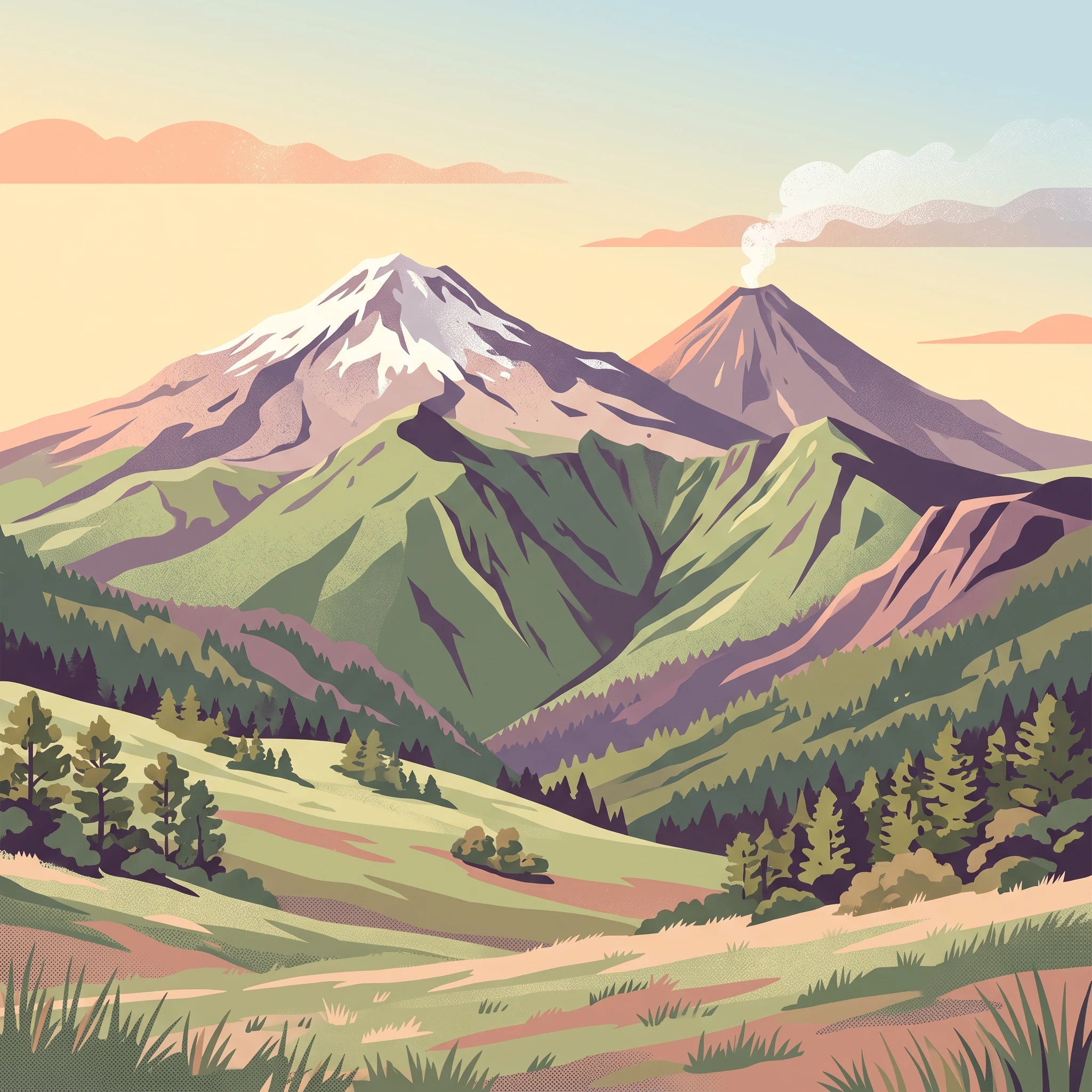
The park is most distinctive for protecting both Mexico's most active volcano and a significant dormant volcanic peak within a single protected area. Volcán de Colima (Volcán de Fuego) has a history of continuous activity including frequent Strombolian eruptions, ash emissions, and periodic larger eruptions such as the significant event in June 2005. The contrasting character of the two peaks, one perpetually active and the other a quiescent ancient massif, creates a striking visual landscape. The park also protects important high-elevation pine-oak forests and subalpine grasslands (zacatonal) that represent rare habitat types in western Mexico, as well as supporting the red warbler (Cardellina rubra), an endemic Mexican bird species that has been adopted as the park's symbolic species.
Volcán Nevado de Colima National Park history and protected-area timeline
The park was established through presidential decree on September 5, 1936, during the administration of President Lázaro Cárdenas del Río, making it one of the first national parks created in Mexico following the revolution. The original decree recognized the exceptional natural value of the volcanic landscape and the need to protect its forests and watersheds. In 1940, the Mexican government modified the original decree, establishing the current boundaries of the park and publishing the final designation in the Diario Oficial de la Federación on December 6, 1940. The establishment of the park predates modern conservation frameworks and reflects an early recognition by the Mexican government of the importance of preserving unique volcanic landscapes. Over the decades, the park has faced ongoing challenges including illegal hunting, deliberate wildfires, and unauthorized logging, but significant advances have also been made in conservation infrastructure and community engagement. The creation of the Centro de Educación Ambiental La Joya, featuring an audiovisual hall, interactive exhibits, and a botanical laboratory, represents a major investment in environmental education. Additionally, a high-altitude nursery unique in Mexico has been established, along with a Centro de Cultura Ambiental that supports research and visitor education. Organized civil society through the Patronato del Nevado de Colima y Cuencas Adyacentes now plays an active role in conservation decisions and fundraising.
Volcán Nevado de Colima National Park landscape and geographic character
The park's landscape is defined by its volcanic origins, featuring two prominent stratovolcanoes that rise dramatically from the surrounding terrain. Nevado de Colima presents an ancient, heavily eroded cone with a summit crater approximately 150 meters in diameter, its slopes carved by erosion into deep barrancas and ravines. The mountain's name (meaning snow-covered) reflects its occasional snow-capped appearance at higher elevations, though it has been dormant for millennia. In contrast, Volcán de Colima (Volcán de Fuego) is an active stratovolcano with a summit crater measuring 1,800 meters in diameter and 250 meters deep, continuously emitting gases and vapors. The two peaks lie approximately 9 kilometers apart, creating a distinctive twin-peak silhouette visible from throughout the region. The park's terrain includes steep volcanic slopes, rocky ridgelines, and meadow areas at the highest elevations. The soils are predominantly volcanic ash, with exposures of basalt, andesite, and pumice. At subalpine elevations, the terrain opens into rolling grasslands known as zacatonal, creating a stark contrast to the forested lower slopes.
Volcán Nevado de Colima National Park ecosystems, habitats, and plant life
The park protects a critical ecological transition zone that spans multiple biomes. Plant communities transition from mixed pine-oak forests at lower elevations through fir (oyamel) forests to subalpine grassland at the highest elevations. The lower slopes support mixed forests dominated by pine species along with oak, while the mid-elevations feature fir forests in the moister microclimates. At the summit levels, the zacatonal grassland community comprises grasses and herbaceous plants adapted to the cold, windy conditions. According to national biodiversity surveys, the park supports more than 940 species of plants and animals, with 63 species listed in some category of risk under Mexican environmental regulations and 12 exotic species recorded. The diversity of habitats, from cloud forest to subalpine meadow, contributes to the park's ecological significance within the Trans-Mexican Volcanic Belt.
Volcán Nevado de Colima National Park wildlife and species highlights
The park supports a diverse mammalian fauna adapted to the mountainous environment. Native mammals include white-tailed deer (Odocoileus virginianus), puma (Puma concolor), coyote (Canis latrans), and collared peccary (Pecari tajacu). Additional species documented in the Spanish source include armadillo, raccoon, squirrel, and the collared peccary (referred to as pecarí). The park is also traversed periodically by jaguar (Panthera onca) moving between mountain ranges, though it is not a resident species. Avian diversity is particularly notable, with 102 bird species recorded within the park. These include the long-tailed wood partridge (Dendrortyx macroura), white-striped woodcreeper (Lepidocolaptes leucogaster), russet nightingale-thrush (Catharus occidentalis), brown-backed solitaire (Myadestes occidentalis), gray silky-flycatcher (Ptiliogonys cinereus), chestnut-sided shrike-vireo (Vireolanius melitophrys), golden-browed warbler (Basileuterus belli), red warbler (Cardellina rubra), crescent-chested warbler (Oreothlypis superciliosa), rufous-capped brushfinch (Atlapetes pileatus), green-striped brushfinch (Arremon virenticeps), and collared towhee (Pipilo ocai). The red warbler holds special significance as an endemic species to Mexico that has been chosen as the park's symbolic species.
Volcán Nevado de Colima National Park conservation status and protection priorities
The park represents an important conservation unit within Mexico's protected areas system, safeguarding both geological and biological values. As a Category II protected area under IUCN classification, the park aims to protect natural ecosystems while allowing for sustainable visitor use. The protection of the volcanic complex is significant given the ongoing geological activity of Volcán de Colima and the need to manage both the volcanic hazards and the natural values. The park's elevation range and location in the Trans-Mexican Volcanic Belt position it to protect rare high-elevation habitats that are limited in western Mexico. The presence of 63 species in risk categories under Mexican law (NOM-059) underscores the conservation importance of the area. Recent conservation advances include the establishment of educational facilities and research infrastructure, though ongoing challenges from illegal hunting, logging, and fire remain significant management concerns.
Volcán Nevado de Colima National Park cultural meaning and human context
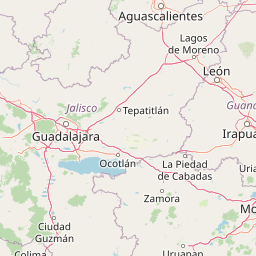
The park lies in a region with deep historical roots in western Mexico, where the volcanic peaks have cultural significance for local communities. The park encompasses portions of municipalities in both Jalisco (Zapotitlán de Vadillo, Tuxpan, Tonila) and Colima (Cuauhtémoc, Comala), reflecting the administrative boundary that follows the volcanic ridge. Access to the park is via the road from Ciudad Guzmán to El Grullo, a route that passes through traditional rural communities. The natural resources of the area have historically supported local economies through forestry, agriculture, and more recently, ecotourism. Educational visits by schools and institutions are common, with programs focused on environmental education and field study of the park's biodiversity.
Top sights and standout views in Volcán Nevado de Colima National Park
The park offers a unique combination of active volcanic activity and protected high-altitude ecosystems in western Mexico. Visitors can experience the dramatic contrast between the perpetually active Volcán de Fuego and the ancient, dormant Nevado de Colima. The subalpine zacatonal grasslands at high elevation represent rare habitat in the region, while the diverse bird communities, including the endemic red warbler, attract ornithologists and nature enthusiasts. The park's historical significance as one of Mexico's earliest national parks, combined with ongoing conservation infrastructure including environmental education centers, provides context for its value. Hiking, mountaineering, and mountain biking are popular activities, with designated camping areas at La Joya, La Caperuza, Curva del Leñador, and Paraje La Calle.
Best time to visit Volcán Nevado de Colima National Park
The park's high-elevation location means that temperature and weather conditions vary significantly by season. Winter months (December through February) bring cold temperatures that can drop below freezing at night, with occasional snow on the higher peaks, though daytime conditions can be clear and pleasant. The summer months from April through September bring warmer temperatures ranging from 16 to 34 degrees Celsius, with the rainy season providing lush vegetation but also afternoon thunderstorms. The spring months of March and April offer a balance of mild temperatures and clearer conditions, while the early dry season in November can provide good visibility for viewing the volcanic landscape. Visitors planning activities should be prepared for the rapid changes in weather that occur at high elevation, and those attempting to summit the peaks should be equipped for alpine conditions regardless of the season.