Why Wechiau Community Hippo Sanctuary stands out
Wechiau Community Hippo Sanctuary is best known as one of the last strongholds of the hippopotamus in Ghana and as a long-running example of community-led conservation in West Africa. The sanctuary is notable for tying the survival of a flagship megaherbivore directly to the governance decisions of local traditional leaders, rather than to a strictly enforced national park framework. The approach combines hippo population monitoring along the Black Volta with livelihood projects and inclusive governance support for the surrounding villages. This blend of cultural stewardship, river ecology, and ecotourism distinguishes the sanctuary from more conventional protected-area models in the region.
Wechiau Community Hippo Sanctuary history and protected-area timeline
The sanctuary was established in 1999 when local chiefs at Wechiau chose to set aside and manage a stretch of the Black Volta River in order to protect the hippo population that lived there. The decision came at a time when hippo numbers across Ghana had collapsed to just two remaining populations, making Wechiau's stretch of the Black Volta one of the country's last refuges for the species.
Following the chiefs' initial action, the project evolved into a more formalized community tourism and conservation initiative. International partners became involved over time, most notably the Wilder Institute, which has supported the sanctuary through habitat monitoring, governance support, and livelihood development programs. These partnerships have helped the sanctuary develop the capacity to monitor hippo populations, respond to threats along the river, and translate conservation outcomes into tangible benefits for the roughly twenty communities that live along the river corridor.
Over the years, the project has also become a recognizable destination for both Ghanaian and international travelers seeking an ecotourism experience that combines wildlife observation with local cultural heritage. The sanctuary's history is therefore as much about community decision-making and partnership-building as it is about the hippos themselves.
Wechiau Community Hippo Sanctuary landscape and geographic character
The sanctuary's landscape is defined by the Black Volta River, a broad, slow-moving waterway that forms part of the natural boundary between Ghana and neighboring countries in West Africa. Along the river's course, the surrounding terrain is a mix of seasonally dry savanna, riverine woodland, and exposed sandbanks, with vegetation patterns strongly influenced by seasonal rainfall and the annual rise and fall of the river.
Hippos shape much of the visible character of this river environment. Their regular paths between water and grazing areas have, across generations, cut distinct trails into the landscape, in places worn so deeply that they resemble elongated trenches. These trails, along with wallows, basking rocks, and shoreline feeding marks, are characteristic features of the Wechiau stretch of the Black Volta and give the landscape its distinctive texture.
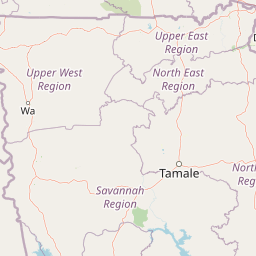
Beyond the river itself, the broader sanctuary area blends into the cultural and agricultural landscape of the Upper West Region. Farmland, settlements, and community lands sit close to the protected river corridor, meaning the sanctuary's landscape is best understood as a working cultural-natural mosaic rather than as an isolated wilderness block.
Wechiau Community Hippo Sanctuary ecosystems, habitats, and plant life
Ecologically, the sanctuary is anchored in a Black Volta River ecosystem, where freshwater and seasonally dry savanna environments meet. The river is the defining habitat, and its seasonal fluctuations in depth, flow, and water quality shape much of the area's ecological character. Riverine vegetation along the banks provides grazing for hippos and habitat for a wide range of other wildlife, while the wider savanna supports plant species adapted to a pronounced dry season.
The combination of river and savanna ecosystems contributes to a wide diversity of wildlife in and around the sanctuary, including both species that depend directly on the river and those that range across the broader Upper West landscape. The presence of hippos plays a particularly important ecological role, since their movement between water and land influences shoreline vegetation, water nutrient cycling, and the paths other animals use along the river.
The sanctuary's ecological identity is also shaped by the pressures it faces. Habitat loss, degradation, illegal hunting, illegal mining along the river, and the expansion of farmland into protected areas all influence the ecological health of the system. Climate change adds another layer, with rising temperatures and shifting rainfall patterns affecting both vegetation growth and the availability of water in the Black Volta, which in turn shapes habitat quality for hippos and the broader ecosystem.
Wechiau Community Hippo Sanctuary wildlife and species highlights
Wechiau Community Hippo Sanctuary is defined, first and foremost, by its hippopotamus population. Hippos are considered one of the world's most ecologically powerful large mammals because their daily movements between water and land quietly shape the structure of African river ecosystems. At Wechiau, hippos are central residents of the Black Volta and the focus of the sanctuary's monitoring and protection efforts.
Biodiversity monitoring at the sanctuary has indicated that the hippo population is increasing over time, even as broader threats continue. Beyond hippos, the area supports a wide diversity of wildlife drawn from both the river and the surrounding savanna, making the sanctuary an attractive destination for visitors interested in West African fauna as well as in the animals that live directly in and around the Black Volta.
The sanctuary's wildlife significance is intensified by the fact that the hippo population it protects is one of only two remaining in Ghana. This makes every sighting, breeding event, and individual animal of real national conservation value, and it underscores why the continued protection of the Black Volta corridor matters far beyond the immediate Upper West Region.
Wechiau Community Hippo Sanctuary conservation status and protection priorities
Wechiau Community Hippo Sanctuary occupies an important place in Ghanaian conservation because it protects one of only two remaining hippopotamus populations in the country. The survival of hippos in Ghana is fundamentally tied to the health of the Black Volta here, and the sanctuary's existence is in part a response to the dramatic decline of hippo populations elsewhere in the country.
Conservation at Wechiau is built around a community-led approach. Local chiefs were the original decision-makers in 1999, and roughly twenty communities remain directly involved in how the sanctuary is governed and how benefits from it are shared. This model is reinforced through partnerships with organizations such as the Wilder Institute, which contribute habitat monitoring, governance support, and livelihood development. The integrated approach of combining species monitoring with community benefit has become one of the sanctuary's defining conservation features.
Equally important is the long list of pressures the sanctuary must counter: habitat loss, habitat degradation, illegal hunting, illegal mining activity in the Black Volta, expansion of farmland into protected areas, and climate-related shifts in temperature, rainfall, vegetation cover, and water availability. Conservation at Wechiau therefore involves not only keeping hippos safe, but also working with surrounding communities to manage competing land and water uses along one of Ghana's last remaining hippo rivers.
Wechiau Community Hippo Sanctuary cultural meaning and human context
The sanctuary is deeply rooted in the cultural and traditional governance systems of the Upper West Region. Its creation in 1999 came about through a decision by local chiefs to manage the Black Volta in a way that protected hippos while supporting the communities that depend on the river. This founding act gives the sanctuary a distinctly traditional, locally led character that sets it apart from many state-administered protected areas in Ghana.
Since then, the cultural dimensions of the sanctuary have expanded well beyond the founding decision. Community involvement in governance, the development of cultural experiences for visitors, and the weaving of traditional livelihoods into the sanctuary's economy all reflect the broader identity of northwestern Ghana. Visitors to Wechiau encounter not only a wildlife experience but an opportunity to engage with the cultural life of the riverside communities, including crafts, daily activities, and local traditions tied to the Black Volta.
Top sights and standout views in Wechiau Community Hippo Sanctuary
Wechiau Community Hippo Sanctuary stands out for combining the protection of one of Ghana's last two hippopotamus populations with a long-standing community governance model. Its roughly 40-kilometer stretch of the Black Volta is shaped both by natural river dynamics and by decades of hippo movement between land and water, producing a landscape rich in ecological and cultural significance.
The sanctuary's strongest qualities include its origin in a 1999 decision by local chiefs, its multi-decade partnership with the Wilder Institute, and its ongoing work to link hippo conservation with tangible livelihoods for more than twenty communities. The combined experience of watching hippos in a West African river and engaging with the region's cultural heritage makes the sanctuary a distinctive destination for travelers interested in responsible ecotourism.
Best time to visit Wechiau Community Hippo Sanctuary
Visiting Wechiau is shaped strongly by the seasonal character of the Upper West Region and the Black Volta. The dry season, when river levels are lower and wildlife tends to concentrate around remaining water, is often the most reliable time for hippo viewing, while the wet season reshapes the river, vegetation, and accessibility of the surrounding landscape. Conditions along the Black Volta shift noticeably through the year, and the atmosphere of a visit can vary significantly between seasons, with cooler weather, clearer skies, and more open savanna landscapes during the dry months and a lusher, greener setting during the rains.
Travelers generally benefit from considering both ecological conditions, such as water levels and hippo activity, and cultural calendars in the surrounding communities when planning a visit, since local festivals, harvests, and community events can meaningfully shape the experience of time spent at the sanctuary.