Why Xinjiang Wenquan Xinjiang Salamander National Nature Reserve stands out
The reserve is best known as the principal protected home of the Xinjiang salamander, one of the most geographically restricted and evolutionarily distinctive amphibians in Central Asia. The species survives in cold spring outflows high on the western Tianshan, and the reserve was designed specifically to keep those spring systems intact. Its identity is also shaped by the unusual combination of a very small protected footprint with a very strong single-species conservation focus. Rather than defining a large landscape-scale ecosystem, the reserve concentrates on microhabitats: permanent alpine and subalpine springs, snowmelt seepage zones, and the grassy mountain slopes that surround them. This makes the site a textbook example of targeted habitat conservation for an extremely rare relict species.
Xinjiang Wenquan Xinjiang Salamander National Nature Reserve history and protected-area timeline
The reserve's history begins with the rediscovery of the Xinjiang salamander in Wenquan County in 1989, after decades during which the species was not observed inside China. Following the discovery of additional habitats in the 1990s, a prefectural-level nature reserve was formally established in 1997 to protect the species and its spring habitats.
For several years after its establishment, the reserve struggled with a lack of dedicated institutional management, and active conservation work remained limited. In 2005 the Xinjiang Uyghur Autonomous Region government transferred full responsibility for the reserve to the regional forestry bureau, giving it a clearer institutional home. A regional regulation specifically for the Wenquan Xinjiang Salamander Nature Reserve was passed in 2009 by the Bortala Mongol Autonomous Prefecture People's Congress and approved by the regional People's Congress Standing Committee, giving the site its first dedicated legal framework.
In 2013, a salamander conservation component was incorporated into a broader international initiative focused on the Ebinur Lake basin, supported by the Global Environment Facility. Beginning in 2015, significant central and local government investment funded a series of construction projects at the reserve, including a research and education center, fencing, water pipelines, and remote monitoring systems. In July 2017 the reserve was upgraded to a national-level nature reserve. Continued protection efforts from 2019 onward led to improvements in wild population numbers, the first successful artificial hatching of more than one hundred individuals, and broader protective measures including full grazing prohibition in sensitive areas.
Xinjiang Wenquan Xinjiang Salamander National Nature Reserve landscape and geographic character
The reserve sits within a transitional mountain landscape where the western Tianshan descends toward the Jungar Basin and the broader Central Asian steppe. Elevations within and around the protected area range from mid-mountain zones through subalpine meadows to high alpine grassland belts, with the principal salamander habitats located near the upper end of this gradient.
Water rather than terrain shapes the reserve's identity. The salamander habitats are tied to a network of cold-water springs and seepage zones that emerge from the mountainsides and flow through narrow grassy channels. These spring brooks remain active through much of the year because they are fed by snowmelt and deeper groundwater, and they create green corridors of lush vegetation set against the otherwise semi-arid mountain slopes.
The wider landscape is characterized by open grasslands, scattered shrub cover on steeper slopes, and coniferous vegetation in the mid-mountain belts. Annual precipitation increases with elevation, and snow cover can persist for part of the year in the higher habitats. The combination of cold flowing water, grassy banks, and surrounding alpine pasture creates the precise microclimate conditions the reserve is designed to protect.
Xinjiang Wenquan Xinjiang Salamander National Nature Reserve ecosystems, habitats, and plant life
Ecologically, the reserve is dominated by montane spring and meadow ecosystems. The vegetation record includes roughly 240 plant species across more than forty families, reflecting the moderate floristic diversity of the western Tianshan slopes. Plant communities shift from grassy alpine meadow at the highest salamander sites through taller herbaceous vegetation along the spring corridors to denser cover in the mid-mountain zones below.
The protected wildlife assemblage includes around 122 vertebrate species across multiple major groups, supported by the gradient from spring wetlands through meadows to forested slopes. The vegetation along the spring seeps is particularly important because it stabilizes banks, shades the water, and provides feeding and sheltering habitat for amphibians and invertebrates.
From a habitat perspective, the reserve is best understood as a set of narrowly defined wetland refuges embedded in a larger semi-arid mountain landscape. The integrity of these springs, including their flow, temperature, and surrounding vegetation, is the principal ecological factor governing the reserve's conservation value.
Xinjiang Wenquan Xinjiang Salamander National Nature Reserve wildlife and species highlights
The reserve's wildlife profile is centered on the Xinjiang salamander, an endangered amphibian found only along the China-Kazakhstan border and recognized as a regional relict species with strong evolutionary significance. The Wenquan County populations represent essentially the entire Chinese range of the species, which makes the site proportionally critical despite its small size.
Around the salamander habitats, the broader fauna includes typical western Tianshan mountain wildlife. The reserve supports a moderate vertebrate diversity spread across mammals, birds, and other groups adapted to montane wetland, meadow, and forest habitats. The spring corridors themselves host amphibian prey communities, aquatic invertebrates, and the small mammals and birds that use the green belts around the water sources.
Wildlife recovery has been a tangible outcome of the reserve's protection work. Wild Xinjiang salamander numbers have rebounded from low historical estimates after the reserve's establishment and subsequent management upgrades, and the first large-scale artificial hatching success in 2019 demonstrated that intensive intervention could complement in-situ recovery efforts.
Xinjiang Wenquan Xinjiang Salamander National Nature Reserve conservation status and protection priorities
The reserve's conservation significance rests on its role as the principal Chinese stronghold for the Xinjiang salamander, a species that was effectively lost from the country for about three decades before being rediscovered in 1989. Once population surveys confirmed how small the remaining Chinese range truly was, the site became a priority for active species recovery, not merely passive protection.
Protection efforts at the site have combined legal, institutional, and physical measures. A dedicated regional regulation established a legal framework specific to the reserve, and the site was progressively given stronger institutional oversight, eventually reaching national-level protected area status in 2017. On the ground, conservation work has focused on habitat stabilization: fencing sensitive zones, regulating grazing, maintaining spring flow through engineered water conveyance, and reducing threats from flooding and human disturbance.
Broader conservation relevance comes from the reserve's integration into the Ebinur Lake basin biodiversity project, which connected the salamander reserve to wider landscape-level conservation planning. Public awareness, community engagement, and long-term population monitoring by Xinjiang Normal University have added a research and education dimension, helping turn a small single-species reserve into a model for amphibian recovery in arid mountain regions.
Xinjiang Wenquan Xinjiang Salamander National Nature Reserve cultural meaning and human context
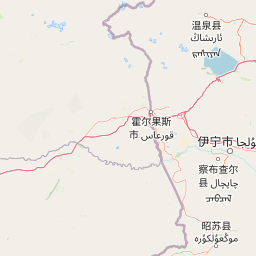
The reserve is located in Wenquan County, within the Bortala Mongol Autonomous Prefecture, a region characterized by Mongol, Kazakh, Uyghur, and Han cultural traditions. The county's name, which translates as 'hot springs,' reflects the long-standing human relationship with the area's geothermal and freshwater springs.
Local communities have historically interacted with the spring systems that the reserve now protects, and traditional use of the Xinjiang salamander as a folk medicine ingredient has been one of the historical pressures on the species. Conservation measures have gradually reduced these pressures through regulation, outreach, and the development of alternative livelihoods supported by the reserve's management programs. The combination of cultural traditions around the springs and modern conservation regulation now shapes how local communities experience the landscape.
Top sights and standout views in Xinjiang Wenquan Xinjiang Salamander National Nature Reserve
The reserve's standout qualities include its role as the principal Chinese refuge for the Xinjiang salamander and its unusually concentrated focus on spring-fed montane habitats. Despite covering only a few square kilometers, the reserve delivers an outsized conservation outcome by protecting the precise microhabitats on which the species depends.
Equally notable is the reserve's trajectory from a poorly managed local site in the late 1990s to a national-level protected area with a dedicated research center, active monitoring partnerships, and integration into a regional biodiversity project. The combination of small size, single-species focus, and strong recovery results makes it a distinctive model within China's protected-area system.
Best time to visit Xinjiang Wenquan Xinjiang Salamander National Nature Reserve
The reserve's character is strongly seasonal, with cold snowy winters and milder summers in the mountain zone where the salamander habitats are found. Late spring and summer are typically the most biologically active periods, when snowmelt sustains the spring flows, surrounding vegetation is most developed, and amphibians are most observable. Winter brings heavy snow cover at higher elevations and limited biological activity.
For visitors interested in the surrounding alpine meadows and mountain scenery generally, the warmer months also offer easier access and more comfortable conditions. Anyone visiting should keep in mind that the reserve is managed primarily for conservation, with regulated access, and that seasonal conditions in the western Tianshan can change rapidly at higher elevations.