
Why Altyn-Emel National Park stands out
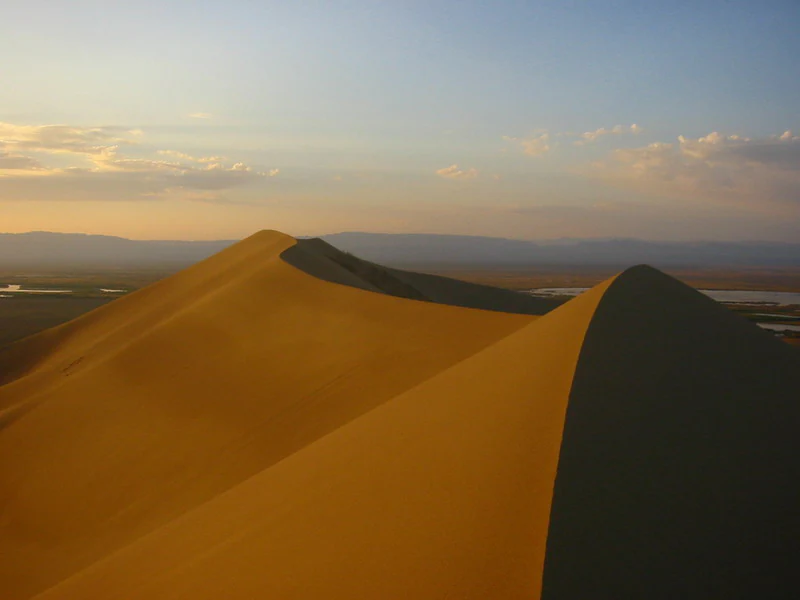
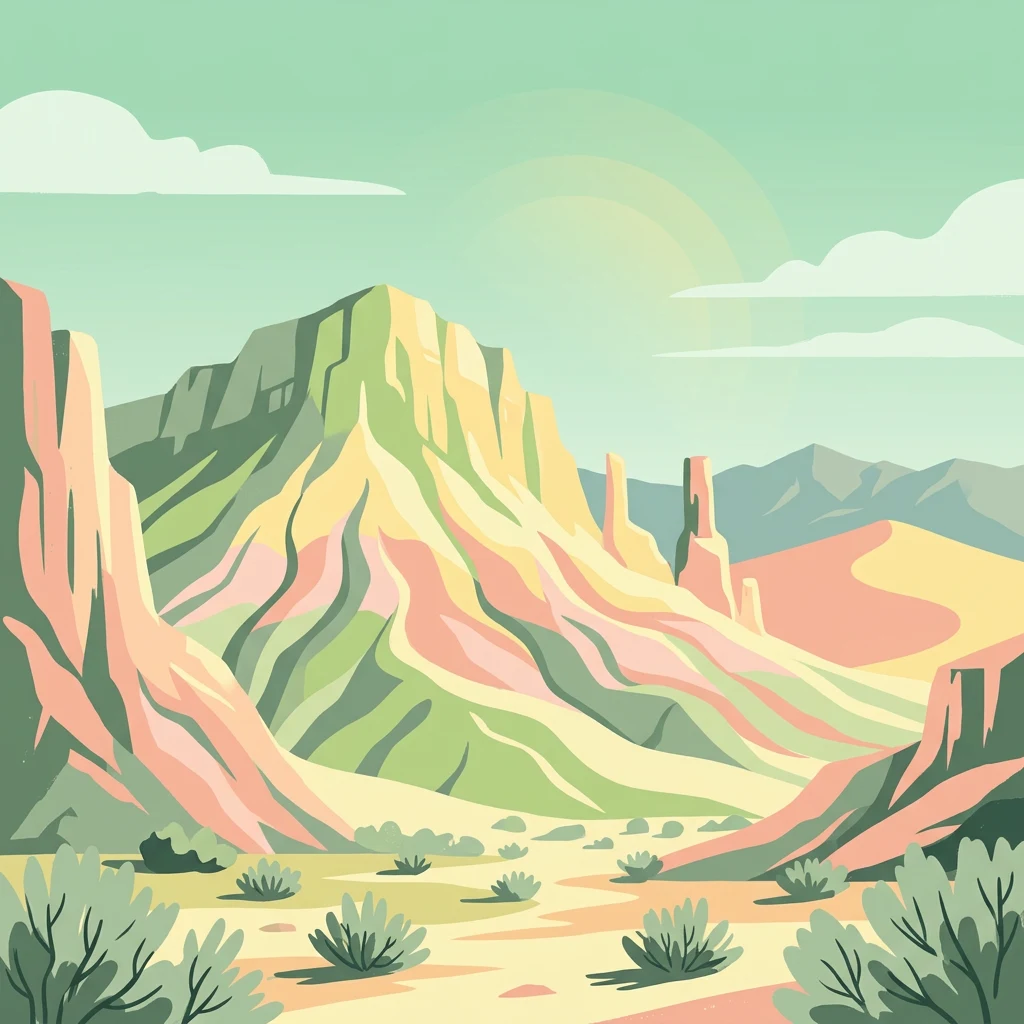
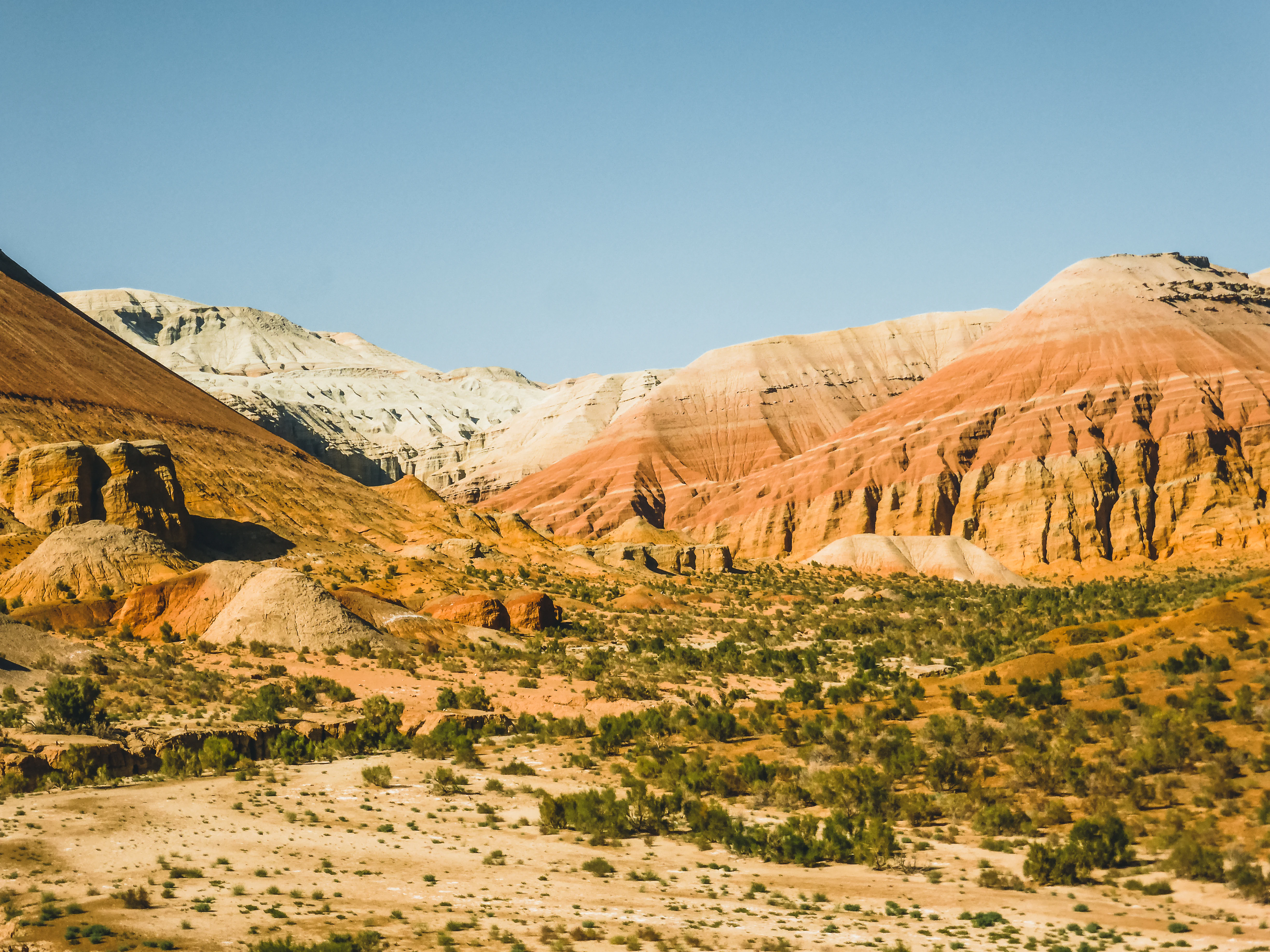
Altyn-Emel is best known for three distinctive features: the Singing Dunes, the Aktau mountains, and the Besshatyr Burial Ground. The Singing Dunes represent one of Central Asia's most remarkable acoustic phenomena, a crescent-shaped barchan dune roughly 1.5 kilometers long and 120 meters high that emits a deep rumbling sound when wind blows across its surface. The Aktau mountains, often described as "lunar mountains," feature striking multicolored rock formations created by mineral deposits. The Besshatyr Burial Ground contains ancient Saka kurgans from the Iron Age, yielding golden artifacts including trappings, adornments, weapons, and armor that illuminate the material culture of Central Asian nomadic peoples.
Altyn-Emel National Park history and protected-area timeline
Altyn-Emel National Park was established on April 10, 1996, with the purpose of preserving a natural park complex while also protecting archaeological and historical monuments. The park was created on the foundation of the former Kapchagai state hunting reserve, which provided initial protection for the region's wildlife and landscapes.
The establishment of the park marked a significant expansion of Kazakhstan's protected area network, making Altyn-Emel the largest reserve in the country. The selection of this particular area for protection reflected both its ecological significance as a representative example of Tian Shan foothill steppe ecosystems and its exceptional archaeological importance, particularly the Saka-period burial mounds at Besshatyr.
Since its creation, the park has served as a refuge for rare and endangered species and has been the subject of conservation and restoration efforts. In 2003, Przewalski horses were reintroduced to the park from Germany, contributing to global conservation efforts for this critically endangered species. The park continues to operate under the management of Kazakhstan's Committee of Forestry and Wildlife, maintaining its role as both a protected wilderness area and a repository of Central Asian cultural heritage.
Altyn-Emel National Park landscape and geographic character
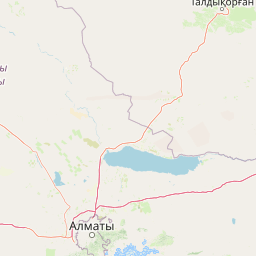
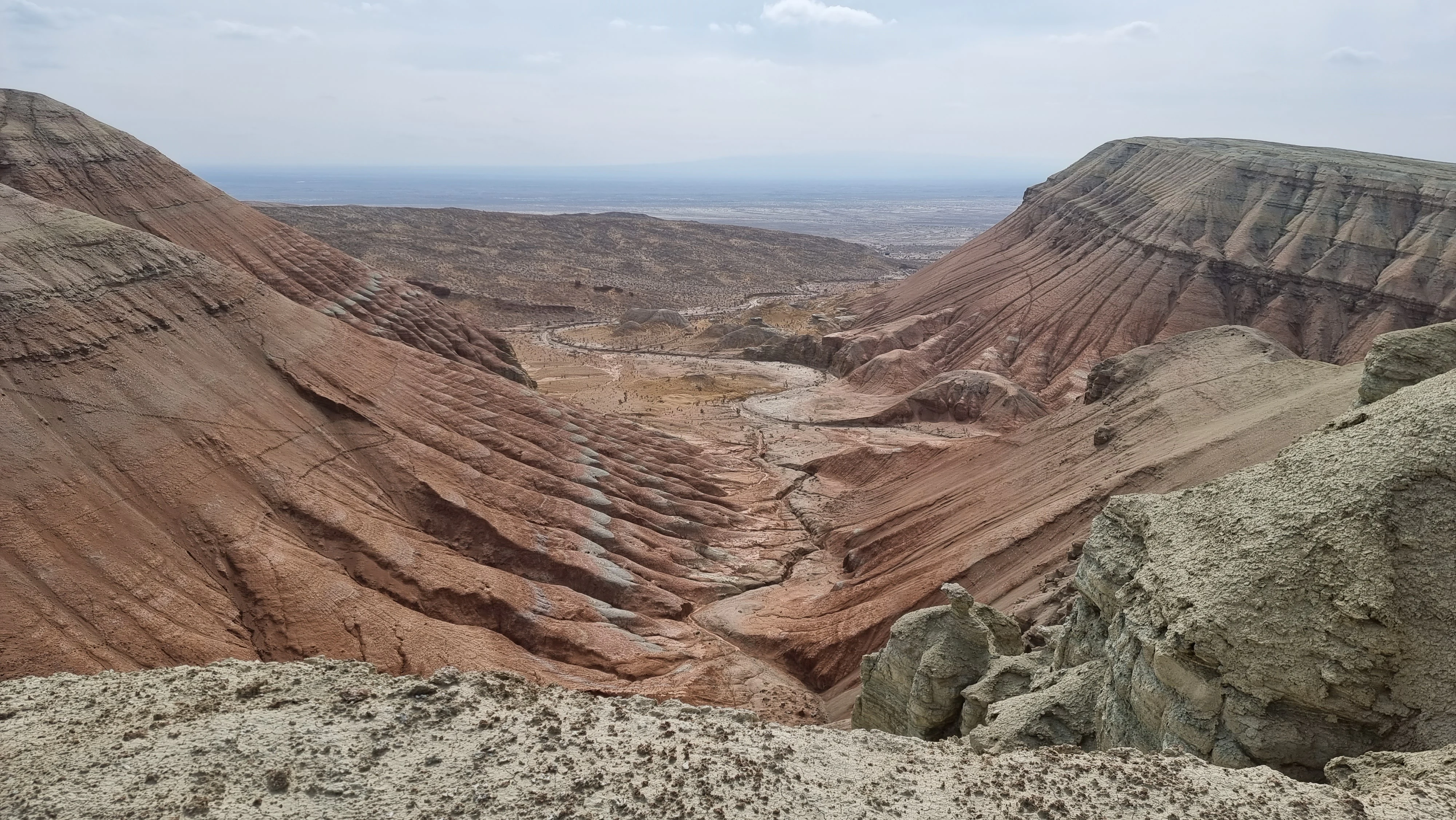
The landscape of Altyn-Emel National Park encompasses a remarkable diversity of terrain within a relatively compact area. The park is divided into two primary landscape zones: the flat desert plains adjoining the right bank of the Ili River, and the mountainous terrain comprising the spurs and foothills of the Dzungarian Alatau and the Altyn-Emel range. Between these major zones, smaller island mountain ranges rise dramatically from the desert floor, creating a landscape of contrast and visual interest.
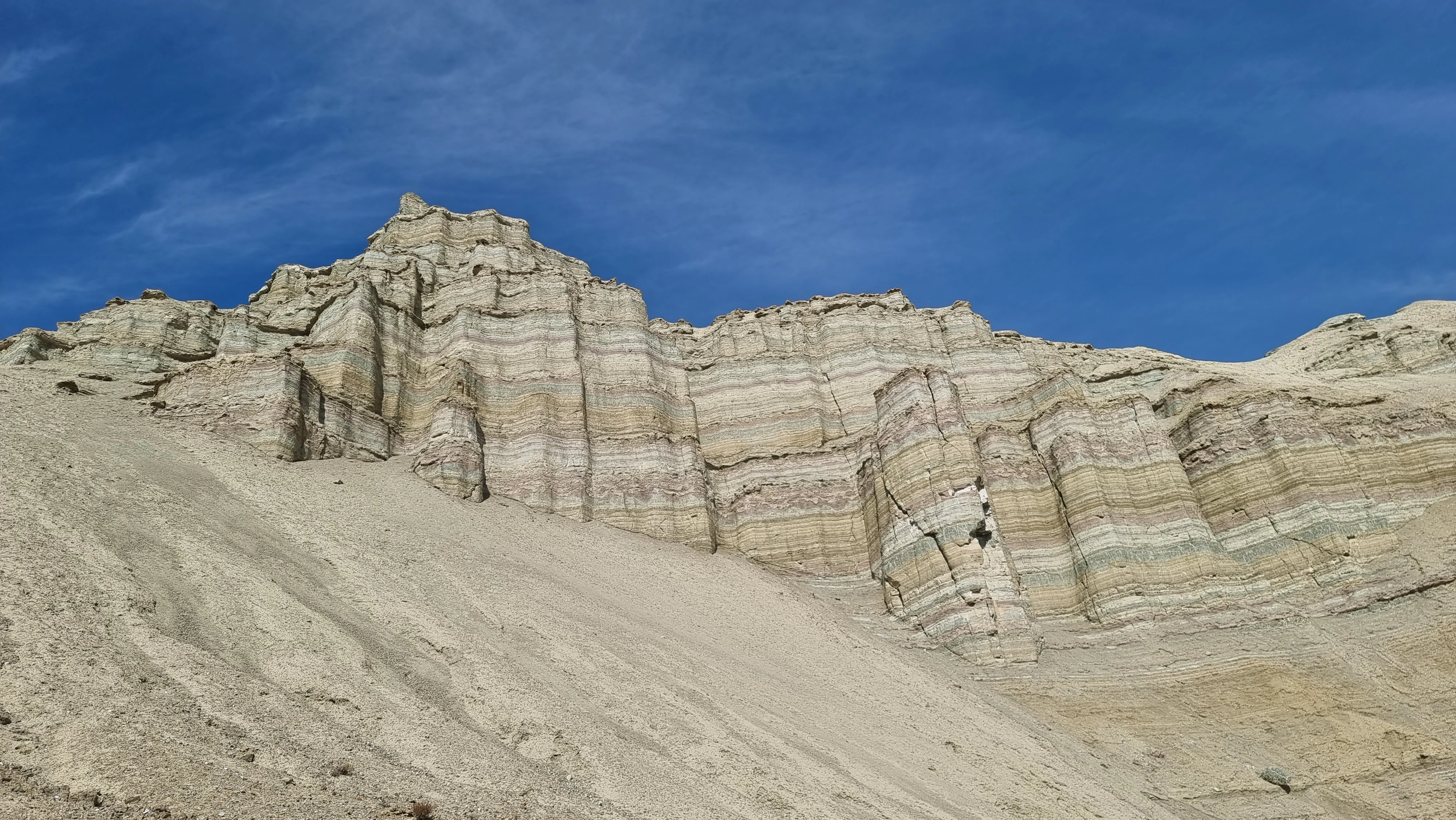
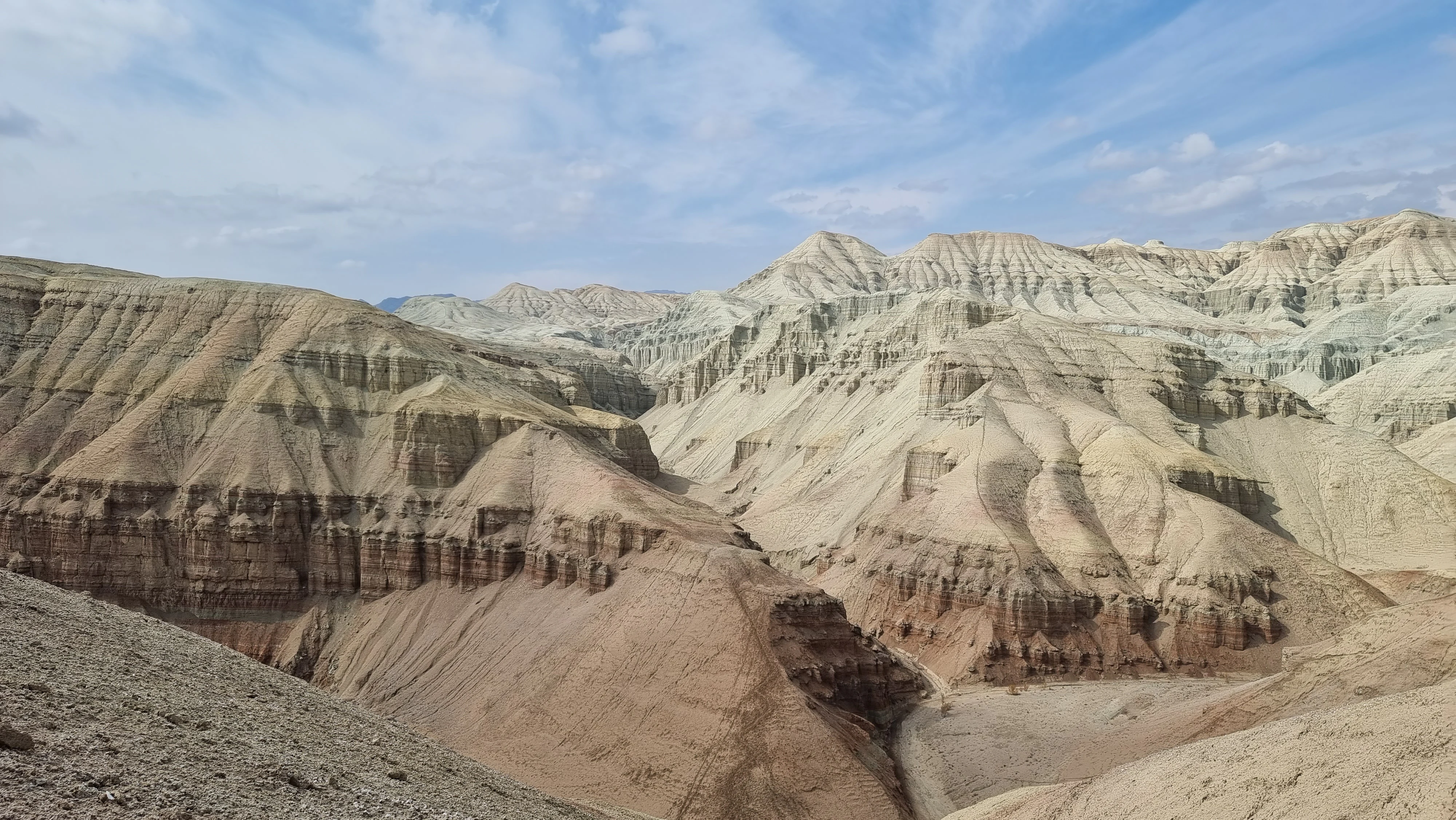
The desert portions of the park feature sand dunes, including the famous Singing Dune, which is a barchan formation approximately 1.5 kilometers in length and 120 meters in height. The Aktau mountains, also known as the "lunar mountains," represent one of the park's most distinctive landscape features, characterized by their unusual multicolored appearance resulting from mineral composition and weathering. These mountains provide dramatic contrast to the surrounding desert plains.
The mountain portions of the park contain rugged terrain with ancient rock formations dating back hundreds of millions of years. The rocky outcrops and cliffs provide habitat for mountain wildlife and create scenic viewpoints throughout the park. The combination of desert, mountain, and riparian environments along the Ili River creates a mosaic of habitats that supports the park's remarkable biodiversity.
Altyn-Emel National Park ecosystems, habitats, and plant life
Altyn-Emel National Park is situated within the Tian Shan foothill arid steppe ecoregion, characterized by a continental climate with significant seasonal temperature variation and relatively low precipitation. The climate classification is humid continental with warm summers (Köppen Dfb), featuring at least four months averaging above 10°C but no month averaging above 22°C.
The park's flora is remarkably diverse, with approximately 1,800 plant species documented, including 69 rare species. The vegetation reflects the park's transitional location between desert and mountain environments. Notable plant species include ancient saxaul (both white and black varieties), small groves of iron wood (Caucasian frame), and Sievers apple trees—the ancestor of modern cultivated apples. The desert portions support specialized xerophytic vegetation adapted to arid conditions, while the mountain slopes and riparian areas host different plant communities.
The park also includes the Kosbastau oasis, a unique feature consisting of a tree grove surrounding a warm radon spring. This oasis represents a distinct habitat within the desert environment and supports vegetation and wildlife found nowhere else in the park. The age of the willow trees at this site was determined through examination of tree trunks, branches, and roots, and the area has been designated as a specially protected natural area with nature protection and scientific institution status.
Altyn-Emel National Park wildlife and species highlights
The wildlife population of Altyn-Emel National Park is exceptionally diverse, with at least 260 animal species (excluding insects and fish) recorded within the park. Mammal diversity is particularly notable, with 78 species documented, of which 11 are recorded in the Red Book of Kazakhstan. The large mammal fauna includes several threatened and endangered species that find refuge within the park's protected boundaries.
Significant mammal species include argali (the largest wild sheep), dziggetai (Mongolian wild ass), and Persian gazelle (goitered gazelle). The park also supports populations of kulan (Turkmenian kulan) and Przewalski horses, both of which have been subjects of conservation and reintroduction programs. Other notable mammals include the Tien Shan brown bear, lynx, Bukhara deer, otter, stone marten, polecat, and the manul (Pallas cat). The park also supports the Asian barbastelle bat.
Birdlife is equally diverse, with approximately 200 species recorded, including 174 that nest within the park. Notable bird species include the black stork and imperial eagle, both rare and endangered. The park provides important habitat for steppe birds and raptors. Reptile fauna includes 25 species, while fish populations comprise 20 species, including three endemic forms. Amphibians include the endangered Siberian toad. The invertebrate fauna remains partially unexplored, though over 5,000 insect species have been identified, with 25 species appearing in Kazakhstan's Red Book.
Altyn-Emel National Park conservation status and protection priorities
Altyn-Emel National Park serves as a critical conservation area for Central Asia's threatened biodiversity and unique ecosystems. The park was established not only to protect natural landscapes but also to preserve rare and endangered plant and animal species within its boundaries. Its designation as an IUCN Category II protected area reflects its primary purpose of ecosystem conservation and recreation.
The park plays a particularly important role in the conservation of large mammals that have declined across much of their historic ranges. Populations of argali, wild ass, gazelle, and the reintroduced Przewalski horses find refuge within the park's boundaries. The protection of these species is essential for maintaining the ecological integrity of Central Asian steppe ecosystems.
In 2023, Altyn-Emel became part of the UNESCO World Heritage Site "Cold Winter Deserts of Turan," recognizing its significance as a representative example of the Turan plain's desert and steppe ecosystems. This international recognition underscores the park's importance in global conservation efforts and provides additional protection for its unique natural and cultural heritage.
Altyn-Emel National Park cultural meaning and human context
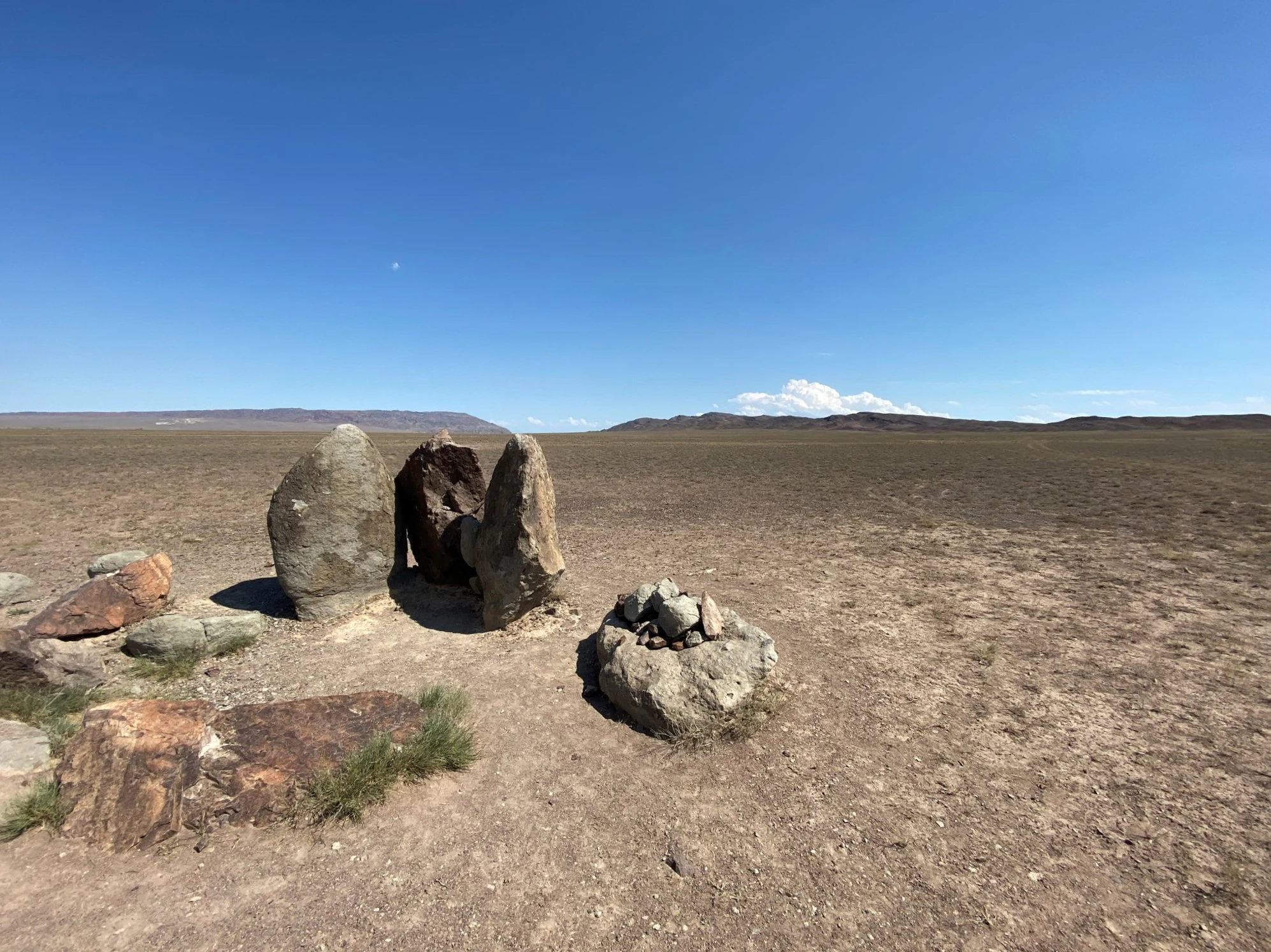
Altyn-Emel National Park contains significant cultural heritage dating from the Iron Age Saka period, representing the material culture of Central Asian nomadic peoples who inhabited the region over two millennia ago. The Besshatyr Burial Ground is among the most important archaeological monuments in the park, consisting of kurgans (burial mounds) constructed by Saka nomads. The artifacts recovered from these burial sites—including gold-plated trappings, golden adornments, weapons, and armor—provide invaluable evidence of Saka material culture and craftsmanship.
The park also contains rock art sites with petroglyphs depicting various animals, located in mountain valleys throughout the area. These ancient carvings provide insight into the relationship between early human inhabitants and the wildlife of this region. Additionally, the park contains numerous burial mounds from the 7th to 4th centuries BCE along the foothills near the Kapchagai Reservoir, including the notable Tigkhauda site.
The park also honors the memory of Shokan Valikhanov, a 19th-century Kazakh explorer and ethnographer, with a historical-memorial museum located within the park boundaries. This cultural dimension adds to the significance of Altyn-Emel as a destination that preserves both natural and cultural heritage.
Top sights and standout views in Altyn-Emel National Park
Altyn-Emel National Park offers visitors a combination of natural phenomena, geological wonders, and ancient cultural heritage unique within Central Asia. The Singing Dunes represent one of the world's few acoustic sand formations, producing an audible rumble that scientists believe results from electrification of sand particles during hot, dry weather. The Aktau mountains present a surreal landscape of multicolored rock formations unlike anything else in the region. The park's archaeological sites provide direct connection to the ancient Saka civilization, with the Besshatyr burial mounds yielding gold artifacts of remarkable craftsmanship. The presence of Przewalski horses and kulan allows visitors to observe endangered species in their natural habitat, while the diverse birdlife—including black storks and imperial eagles—attracts wildlife enthusiasts. The Kosbastau oasis offers a contrasting scene of green vegetation and warm springs amid the desert environment.