Why Yanesha Communal Reserve stands out
The Yanesha Communal Reserve is best known as a combined cultural and ecological reserve, where the protection of indigenous Yanesha territory and the conservation of Amazonian wildlife are pursued together. It illustrates the concept of a communal reserve in Peru, a category designed to recognize indigenous peoples' claims to land while maintaining the forest as a living, used landscape. Ecologically, the reserve is known for the humid tropical forests and river systems of the Palcazu basin, which support characteristic Amazonian mammals such as red brocket deer, peccaries, armadillos, and spider and woolly monkeys, along with birds like the Spix's guan and a variety of freshwater fish. This blend of cultural recognition and biodiversity makes the reserve a distinctive model among Peru's protected natural areas.
Yanesha Communal Reserve history and protected-area timeline
The Yanesha Communal Reserve was established under Peruvian law on April 28, 1988, as a communal reserve in Palcazu District, Oxapampa Province. Its creation reflected a broader Peruvian approach to conservation that, in the late twentieth century, began explicitly including indigenous territorial recognition as part of the national protected areas system.
The reserve was designed at a time when conservation policy in Peru was expanding beyond strictly uninhabited parks toward models that allowed indigenous peoples to remain on their traditional lands. By framing the protection of the Palcazu basin's forests together with the recognition of the Yanesha people's rights, the founding legislation set the reserve apart from many of the country's other natural areas.
Since its establishment, the reserve has continued to function under this dual mandate. Its category of IUCN category VI, denoting a protected area with sustainable use of natural resources, reflects a long-term commitment to maintaining the forest ecosystem while supporting the Yanesha way of life. The reserve therefore represents not only an ecological milestone but also an important step in the formal recognition of indigenous land tenure in Peru.
Yanesha Communal Reserve landscape and geographic character
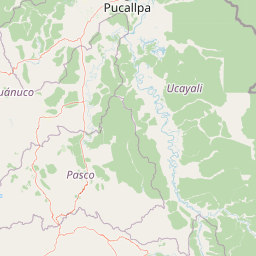
The landscape of the Yanesha Communal Reserve is defined by the steep, forested terrain of the Palcazu River basin, where the eastern Andes descend toward the Amazon basin. The result is a deeply dissected topography of ridges, ravines, and river valleys covered in tropical vegetation, with elevations that drop noticeably from the surrounding highlands into the warmer lowlands of central Amazonian Peru.
Water is a defining feature of the terrain. The Palcazu River and its tributaries shape much of the reserve's geography, carving through the forest and creating a network of channels, floodplains, and smaller streams that influence both the local vegetation and the distribution of wildlife. The humid climate supports dense, evergreen forest cover across most of the area.
This transitional setting, where Andean foothills meet Amazonian rainforest, gives the reserve a varied physical character. Forested slopes, river margins, and interior lowland terrain combine to create a landscape that is at once rugged, green, and ecologically rich, shaped as much by water and vegetation as by elevation.
Yanesha Communal Reserve ecosystems, habitats, and plant life
Ecologically, the Yanesha Communal Reserve belongs to the Amazonian forests of central Peru, occupying a transitional position between the Andean foothills and the lowland rainforest. The vegetation is dominated by humid tropical forest, much of it dense and evergreen, with characteristic patterns of trees, palms, and understory plants typical of the eastern slope. River corridors and seasonal flooding likely contribute to local habitat diversity along the streams that feed the Palcazu River.
This combination of watercourses and continuous forest creates the ecological conditions that support a wide variety of Amazonian species. The intact canopy and protected status of the reserve make it an important refuge for fauna that depend on unbroken forest cover, while the rivers sustain freshwater species that form part of both the local ecosystem and the traditional subsistence of the Yanesha people.
The reserve's ecological importance is closely tied to its location within the Palcazu watershed, a region recognized for its biological richness. By preserving a substantial block of forested habitat in an area of growing pressure from logging, agriculture, and other land uses, the reserve helps maintain ecological connectivity in a wider landscape that extends into protected areas such as the neighboring Yanachaga-Chemillén National Park.
Yanesha Communal Reserve wildlife and species highlights
Wildlife in the Yanesha Communal Reserve reflects the broader Amazonian fauna of the Palcazu basin. The reserve supports populations of medium and large mammals that are typical of neotropical rainforest, including the red brocket deer (Mazama americana), the collared peccary (Tayassu tajacu), the white-lipped peccary (Tayassu pecari), the nine-banded armadillo (Dasypus novemcinctus), and agoutis (Dasyprocta species). These species are important both ecologically and as part of the traditional hunting practices of the Yanesha people who live in the reserve.
Primates are also present in the reserve's forests. Spider monkeys (Ateles species) and woolly monkeys (Lagothrix species) inhabit the canopy, contributing to the reserve's significance for primate conservation in central Peru. Their presence is a strong indicator of relatively intact forest conditions.
Birds include the Spix's guan (Penelope jacquacu), a large cracid notable within the region. The rivers and streams of the reserve support a variety of freshwater fish species of ecological and subsistence importance, including the boquichico (Prochilodus species), the sábalo (Brycon melanopoterum), the palometa (Mylossoma aureum), the doncella (Pseudoplatystoma species), and the lisa (Leporinus species). Together, these mammals, birds, and fish give the reserve a rich and characteristic Amazonian fauna.
Yanesha Communal Reserve conservation status and protection priorities
The Yanesha Communal Reserve holds a distinctive place within Peru's conservation framework because it was created to protect both biodiversity and an indigenous way of life at the same time. Classified under IUCN category VI, a designation for protected areas that allow sustainable use of natural resources, the reserve embodies the idea that ecological protection can coexist with human presence and traditional practices.
Established in 1988, the reserve safeguards a substantial area of humid tropical forest in the Palcazu River basin, an area of recognized biological value within central Peru. By maintaining forest cover and protecting species such as red brocket deer, peccaries, primates, and the Spix's guan, the reserve helps reduce the loss of habitat in a region where forest conversion and resource extraction remain ongoing pressures.
Equally important, the reserve recognizes the Yanesha people's relationship with the land, integrating indigenous territorial rights into conservation policy. This dual focus on biodiversity and cultural heritage has made the reserve an important reference point within Peru's system of communal reserves and a model of how legal protection, sustainable resource use, and indigenous stewardship can be combined within a single protected landscape.
Yanesha Communal Reserve cultural meaning and human context
The cultural significance of the Yanesha Communal Reserve is central to its identity. The reserve was established not only to protect the forests and wildlife of the Palcazu basin but also to recognize the ancestral territory of the Yanesha, an indigenous Amazonian people with longstanding ties to the region.
Within the reserve, the Yanesha maintain traditional practices such as hunting, fishing, and gathering, using the forest's mammals, birds, and freshwater fish both as subsistence resources and as expressions of cultural continuity. The reserve's communal designation reflects an understanding that indigenous presence and forest stewardship are not in conflict but can be mutually reinforcing.
By linking cultural recognition with environmental protection, the reserve has become an important element of Yanesha identity and a notable example of indigenous-led conservation in Peru. Its ongoing function as a homeland, rather than as an exclusionary protected zone, shapes both its character and its meaning within the broader Peruvian cultural landscape.
Top sights and standout views in Yanesha Communal Reserve
The reserve's most distinctive features include its dual mandate of protecting both Amazonian wildlife and the homeland of the Yanesha people, a combination formalized under IUCN category VI. The forested landscapes of the Palcazu River basin, with their network of rivers, ridges, and humid tropical vegetation, give the reserve a strong ecological identity anchored in the transition between the Andes and the Amazon.
Its wildlife profile, featuring species such as red brocket deer, peccaries, spider and woolly monkeys, the Spix's guan, and a diversity of freshwater fish, underscores its value for biodiversity conservation. Combined with its cultural significance as a recognized indigenous territory, the Yanesha Communal Reserve stands out as a model of how legal protection, sustainable use, and indigenous heritage can be integrated within a single protected natural area.
Best time to visit Yanesha Communal Reserve
The Yanesha Communal Reserve lies in a region of central Peru with a humid tropical climate, where rainfall and river levels shape the rhythm of the landscape throughout the year. Periods with less rainfall generally offer drier trails and easier access through the forest, while wetter periods bring higher water levels, denser vegetation, and more challenging river crossings.
For visitors interested in observing forest wildlife and birds, the dry-season months tend to provide more comfortable conditions for walking through the reserve and for spotting animals along forest edges and riverbanks. The wetter months, by contrast, bring lush vegetation and active river systems, which can be appealing for visitors interested in freshwater ecosystems and the rainy character of the Amazonian foothills.