Protected landscapeCroatiaMountain
Medvednica Nature Park
Explore protected area boundaries and natural terrain.
Medvednica Nature Park, in Croatia. Landscapes: mountains, valleys, and forests.
1981TemperateModerate accessV

Discover national parks and regions where people and nature have created distinct ecological, cultural, and scenic value in Croatia.
Delve into Croatia's designation of Protected Landscape/Seascape areas, aligning with IUCN Category V. This route details regions where the enduring interplay between human activities and natural processes has sculpted unique environments, fostering significant ecological, cultural, and scenic importance across the country's geography. Understand the characteristics of these lived-in landscapes and seascapes and find specific protected areas within Croatia that embody this category.
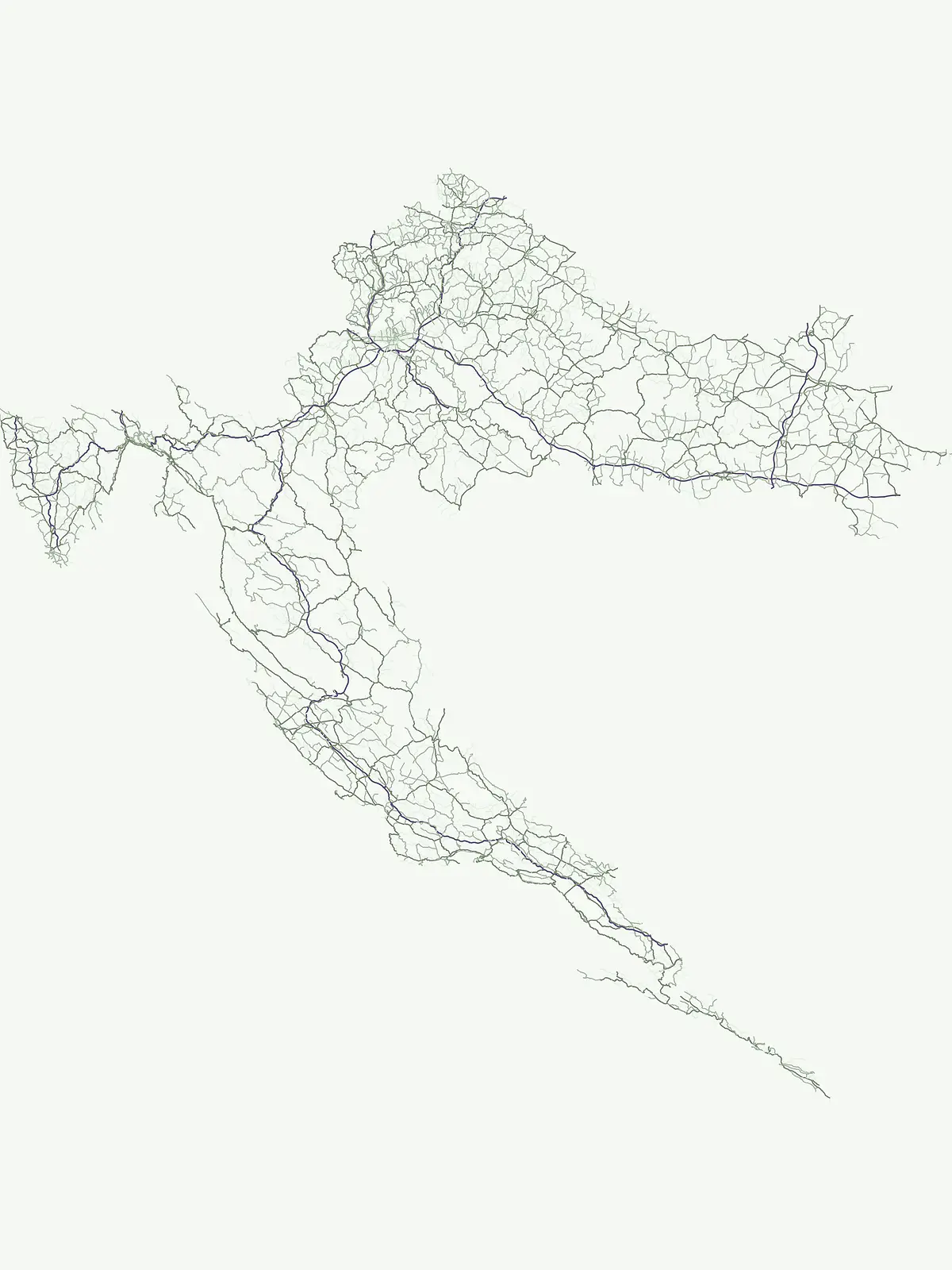
Explore Croatia's distinct protected landscapes, comparing their geographic distribution and unique ecological, cultural, and scenic values.
Explore protected area boundaries and natural terrain.
Medvednica Nature Park, in Croatia. Landscapes: mountains, valleys, and forests.
Mapped karst terrain, ancient architecture, and natural island geography.
Lastovo Nature Park, in Croatia. Landscapes: hills, islands, and caves.

Mapped natural terrain and protected landscape geography.
Delve into the protected landscape of Kopački Rit, a pivotal European wetland situated within Osijek-Baranja County, Croatia. This page offers a detailed look at its dynamic floodplain ecosystem, mapped water channels, marshes, and riparian forests, highlighting its importance for biodiversity and regional geography. Understand the park's extensive protected boundaries and its place in the broader continental atlas.
Explore Dalmatia's premier protected mountain range along the Adriatic.
Biokovo Nature Park is a striking protected landscape situated in the Dalmatia region of Croatia, characterized by its immense limestone massifs that create a formidable barrier between the coast and the continental interior. This protected area is defined by its classic karst topography, featuring a complex network of sinkholes and caves, and offers unparalleled views from peaks like Sveti Jure. MoriAtlas provides detailed geographic context for understanding Biokovo Nature Park's unique terrain, mapped boundaries, and its significant role in the regional landscape.
Mapped protected area with significant geological heritage in Slavonia.
Papuk Nature Park stands as a cornerstone of geological discovery in Croatia, celebrated as the nation's first UNESCO Global Geopark. Within Požega-Slavonia County, its mountainous terrain features dramatic ridgelines, ancient rock formations like Sokoline stijene, and extensive forests. This protected area offers a unique landscape context for atlas-driven exploration, detailing its mapped boundaries and its critical role in preserving Slavonia's highland geography and geological heritage.

Discover mapped natural landscapes and unique floodplain geography.
Lonjsko Polje, a significant protected landscape in Croatia's Sisak-Moslavina County, represents the largest inland wetland within the Danube basin. This area is characterized by its vast alluvial floodplain, shaped by seasonal river dynamics, which fosters diverse habitats for wildlife and preserves a rare example of traditional pastoral culture. Explore the mapped geography and understand the ecological importance of this unique wetland ecosystem through structured atlas-style content.
Mapping the unique park geography shaped by long-term human and natural interaction across Croatia.
Matching parks
6
These parks and protected areas currently define how Protected Landscape/Seascape appears across Croatia.
Category focus
A protected area where the long-term interaction of people and nature has created a distinct landscape or seascape with significant ecological, cultural, and scenic value.
Representative parks
People and nature
Definition
A Protected Landscape/Seascape is a protected area where the interaction of people and nature over time has produced an area of distinct character with significant ecological, biological, cultural, and scenic value, and where safeguarding the integrity of this interaction is vital to protecting and sustaining the area and its associated nature conservation and other values. The category is not defined by the absence of human presence, but by the quality and significance of a long-evolved relationship between communities, land or sea use, and nature.
Key characteristics
Category V areas are often recognizable as coherent lived-in landscapes or seascapes with strong identity and visible continuity between ecological systems and human practice. They may include traditional agricultural mosaics, terraced valleys, pastoral uplands, island seascapes, cultural coastlines, forest-agriculture patterns, or mixed landscapes where settlement, heritage, biodiversity, and scenic values reinforce one another. The conservation interest often lies not only in habitats or species, but also in the texture of the whole place: its land-use patterns, cultural memory, local management traditions, landscape form, ecological connectivity, and visual character. These areas are frequently more socially inhabited and economically active than stricter categories, but their management seeks to keep use compatible with long-term landscape quality and biodiversity.
Management focus
Management in Category V is usually integrative, collaborative, and place-based. Rather than separating conservation from human life, it aims to guide land and sea use so that ecological, scenic, and cultural values remain mutually supportive. This may involve planning controls, support for traditional management practices, restoration of degraded features, visitor management, heritage protection, sustainable local economies, and governance arrangements that work across public authorities, private owners, communities, and civil society. Because these places are often dynamic rather than static, management is less about freezing a landscape in time and more about steering change in ways that maintain its defining character, ecological function, and social meaning.
Protection purpose
The purpose of Category V is to conserve landscapes and seascapes where nature and people have shaped one another over time in ways that produce high ecological, cultural, and scenic value, and to keep that relationship viable into the future through careful stewardship.
Management objective
Typical objectives include maintaining the characteristic quality and identity of a landscape or seascape, sustaining biodiversity associated with traditional land or sea uses, supporting communities and stewardship practices compatible with conservation, protecting scenic and cultural heritage values, guiding development away from forms that would degrade landscape integrity, encouraging sustainable tourism and local economies, and strengthening long-term resilience of the whole area as a living conservation landscape.
Category history
Category V grew out of a broadening conservation understanding that not all valuable protected places are 'untouched' nature. In many parts of the world, especially in Europe and other long-settled regions, biodiversity and scenic identity are closely tied to long histories of farming, grazing, fishing, woodland use, settlement, and cultural adaptation. Conservation policy gradually moved toward recognizing that these lived-in landscapes could be worthy of protected status in their own right. The IUCN category system formalized this through Category V, giving international legitimacy to protected areas where the continuity of human-nature interaction is central rather than incidental. The category has become especially important for regional identity, connectivity, buffer functions, and conservation at the scale of working landscapes.
Global examples
Examples commonly linked with Category V include traditional mountain valleys, terraced agricultural regions, coastal cultural landscapes, island seascapes, mixed pastoral-woodland systems, and nationally designated protected landscapes where both biodiversity and long-shaped cultural scenery are central. In Europe in particular, many regional parks, protected landscapes, and protected seascapes align with Category V when their management focuses on maintaining a valued human-shaped landscape with strong ecological and cultural significance.
Trace Croatia's diverse protected area classifications, comparing national park geography and other conservation landscapes.
IUCN category ii
A large natural or near-natural protected area managed to safeguard ecological processes, characteristic species, and ecosystems while also supporting education, recreation, and compatible visitor use.
Example parks
Plitvice Lakes National Park, Paklenica National Park, Krka National Park, Brijuni Islands National Park, Kornati Islands National Park, Risnjak National Park, Northern Velebit National Park, Mljet National Park, Telašćica
IUCN category iv
A protected area managed mainly to protect particular species or habitats, often through targeted, regular, or adaptive conservation interventions.
Example parks
Mura-Drava-Danube
Explore key insights into Croatia's diverse protected landscapes, from Adriatic coastal areas to inland karst regions.
Open the park list for Croatia to explore locations and park characteristics.