Mori Atlas logo
National parkAgulhas National Park

Discover the mapped boundaries and regional geography of Agulhas National Park in Western Cape.

Agulhas National Park: National Park Protected Landscape and Geographic Atlas

Agulhas National Park represents a significant protected landscape within the Western Cape province of South Africa. This national park offers a distinct geographic identity, serving as a key entry for exploring its mapped boundaries and the surrounding regional terrain. Understanding Agulhas National Park through its atlas context reveals its role as a vital protected area within the diverse geography of the southern African continent.

Coastal Protected AreaFynbos BiomeWhale WatchingMarine ConservationBirdwatchingShipwreck History

Agulhas National Park

National park

Park overview

Structured park overview, official facts, and landscape profile for Agulhas National Park

Agulhas National Park park facts, protected area profile, and essential visitor context
Review the core facts for Agulhas National Park, including designation, size, terrain, visitor scale, habitats, and operating context in one park-focused overview.

About Agulhas National Park

Agulhas National Park occupies a distinctive place in South Africa's protected area network as the keeper of the nation's southernmost coastline. The park's terrain is characterized by a low-lying coastal plain that rises gently toward the inland mountains, creating a mosaic of habitats that support remarkable biodiversity despite the relatively limited area. The coastal ecosystem is dominated by fynbos vegetation, a fire-adapted Mediterranean-type shrubland unique to the Cape region and one of the world's richest floral kingdoms. Within the park's boundaries, visitors encounter a landscape shaped by the relentless convergence of ocean currents, where the warm Agulhas Current from the east meets the cold Benguela Current from the west, creating productive waters that sustain abundant marine life.

Quick facts and research context for Agulhas National Park

Located approximately 200 kilometres southeast of Cape Town along the Agulhas Plain, the park stretches between the coastal towns of Gansbaai and Struisbaai. Covering roughly 20,959 hectares, it protects the southern tip of Africa and encompasses the famous Cape Agulhas lighthouse, the second-oldest in South Africa. The park contains over 2,000 native plant species and features wetlands that serve as critical refuge areas for birds and amphibians. The coastline is historically significant for shipwrecks due to dangerous reefs, with several vessels including HMS Birkenhead and the Arniston lost to the treacherous waters near Cape Agulhas.

Park context

Deeper park guide and search-rich context for Agulhas National Park

Agulhas National Park history, landscape, wildlife, and travel context
Explore Agulhas National Park through its history, landscape character, ecosystems, wildlife, conservation priorities, cultural context, and seasonal travel timing in a structured park guide built for atlas discovery and search intent.

Why Agulhas National Park stands out

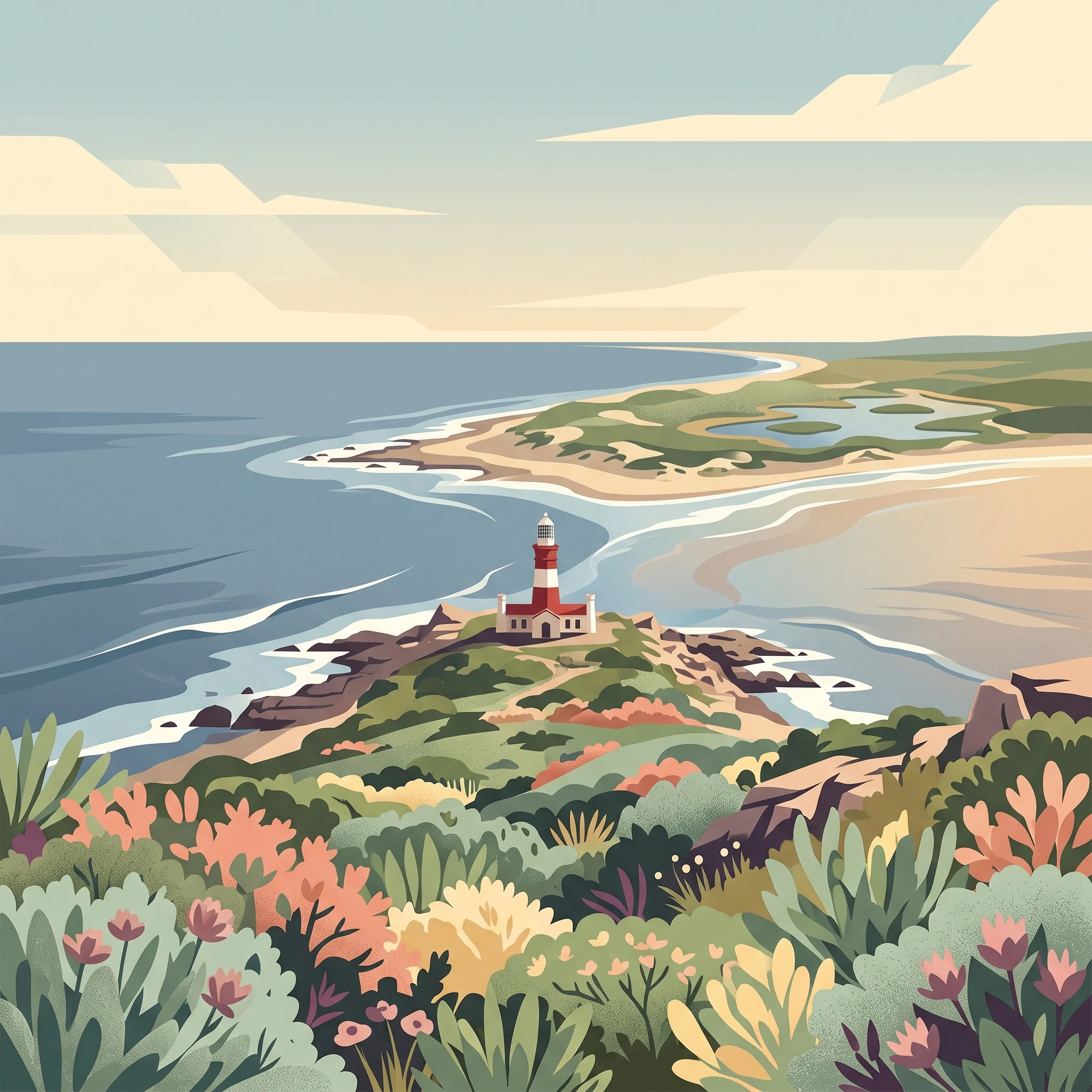
Agulhas National Park is best known for marking the precise southernmost point of Africa where the Atlantic and Indian Oceans officially meet, a geographic milestone that draws visitors seeking to stand at the continent's edge. The park's second-major attraction is the historic Cape Agulhas lighthouse, an icon of South Africa's maritime heritage and the second-oldest operating lighthouse in the country. The protected landscape also preserves one of the world's six floral kingdoms, the fynbos biome, with hundreds of endemic species carpeting the coastal slopes. The surrounding waters of the Agulhas Bank support productive fishing grounds and seasonal whale migrations, making the park a destination for marine wildlife observation.

Agulhas National Park history and protected-area timeline

The Agulhas area was recognized for its ecological and cultural significance long before formal protection was established. The Cape Agulhas lighthouse was constructed in 1848 to warn ships away from one of Africa's most dangerous coastlines, and the region's shipwreck history extends back centuries, with vessels like HMS Birkenhead and the Arniston becoming part of the area's maritime legacy. The surrounding agricultural community historically used the land for grazing and small-scale farming, but conservation concerns eventually led to the establishment of the national park in 1998. The creation of the park represented a collaborative effort between South African National Parks and local landowners to protect the ecologically sensitive Agulhas Plain while maintaining sustainable land use practices in the region.

Agulhas National Park landscape and geographic character

The park's landscape presents a striking contrast between the flat coastal plain and the dramatic oceanic boundary that defines its southern edge. Rolling fynbos-covered hills sweep toward the coastline, where rocky outcrops and sandy beaches alternate along the shore. The most prominent geographic feature is Cape Agulhas itself—a dramatic headland where visitors can observe the meeting of the Atlantic and Indian Oceans. Inland, seasonal wetlands fill with winter rains, creating shallow pans that attract waterfowl and provide breeding habitat for amphibians. The coastal cliffs and offshore reefs create the dangerous conditions that have claimed numerous vessels over centuries, contributing to the area's historical significance as both a navigational challenge and a maritime cemetery.

Agulhas National Park ecosystems, habitats, and plant life

The ecological character of Agulhas National Park is defined by the fynbos biome, a vegetation type remarkable for its species richness and high degree of endemism. Over 2,000 native plant species have been recorded within the park's boundaries, including numerous species of protea, erica, and restio that form the distinctive plant communities of this Mediterranean-type ecosystem. The wetlands scattered across the coastal plain provide crucial habitat for waterbirds and support amphibians that depend on seasonal water bodies for breeding. The offshore waters of the Agulhas Bank represent a distinct marine environment where the mixing of warm and cold ocean currents creates highly productive conditions for marine life.

Agulhas National Park wildlife and species highlights

The marine environment surrounding Agulhas National Park supports significant populations of cetaceans, with southern right whales migrating through the area between November and January to calve in the protected coastal waters. The rocky shoreline provides habitat for the African black oystercatcher, a threatened shorebird species that breeds along the coast. The Damara tern, a migratory seabird, uses the area during its breeding season, while the Cape platanna, a local amphibian species, inhabits the wetland areas. The park's waters support diverse marine fish species, and the productive Agulhas Bank fishing grounds attract both commercial and recreational fishing activity in the surrounding region.

Agulhas National Park conservation status and protection priorities

Agulhas National Park plays a vital role in protecting a small but ecologically significant portion of the fynbos biome, one of the world's six floral kingdoms and one of the most threatened ecosystems on Earth. The park safeguards critical habitat for numerous endemic plant species that occur nowhere else on the planet, contributing to global conservation efforts for Mediterranean-type ecosystems. The coastal wetlands provide protected habitat for waterbirds and amphibians, many of which face pressure from agricultural development across the Agulhas Plain. The marine environment, where two major ocean currents converge, represents a unique ecosystem that benefits from the park's coastal protection boundaries.

Agulhas National Park cultural meaning and human context

The Agulhas coastline carries deep historical significance as one of the most notorious stretches of shoreline in Southern African maritime history. The treacherous reefs off Cape Agulhas have claimed numerous vessels over centuries, giving the area a rich legacy of shipwreck lore and maritime tragedy. The Cape Agulhas lighthouse, built in 1848, stands as a testament to the region's importance in maritime navigation and remains an important cultural landmark. The nearby town of Bredasdorp houses a shipwreck museum that preserves artifacts from vessels lost along this dangerous coast, including relics from the HMS Birkenhead and Arniston disasters.

Top sights and standout views in Agulhas National Park

The defining experience for most visitors is standing at Cape Agulhas, the southernmost point of Africa, where markers indicate the exact meeting point of the Atlantic and Indian Oceans. The historic lighthouse offers panoramic views and houses a museum detailing the region's maritime history. Whale watching provides seasonal wildlife encounters from November through January when southern right whales congregate in the nearshore waters. The fynbos-covered landscapes, particularly impressive during the spring flowering season, showcase the extraordinary plant diversity of this unique biome.

Best time to visit Agulhas National Park

The park offers rewarding experiences throughout the year, though different seasons emphasize different aspects of its character. The austral spring months of September through November bring the fynbos into full bloom, with wildflowers carpeting the coastal slopes in vivid displays of color. Summer from December through February offers warm weather ideal for beach exploration but also brings higher visitor numbers. Whale watching is best from November through January when southern right whales are most active in the coastal waters. Winter rains transform the wetlands into vibrant bird habitat, though some coastal areas may experience windy conditions.
Park location guide

Geography guide, regional context, and park location map for Agulhas National Park

Agulhas National Park park geography, regions, and map view in South Africa
Understand where Agulhas National Park sits in South Africa through a broader geographic reading of the surrounding landscape, nearby location context, and its mapped position within the national park landscape.

How Agulhas National Park fits into South Africa

South Africa is the southernmost country in Africa, spanning 1.22 million km² with a population of over 63 million. The country operates with three capital cities, Pretoria (executive), Cape Town (legislative), and Bloemfontein (judicial), and is renowned for its biodiversity, national parks, and multicultural society.

Wider geography shaping Agulhas National Park in South Africa

South Africa occupies the southernmost region of Africa, with coastline along both the Atlantic Ocean to the west and the Indian Ocean to the east. The interior features elevated plateaus including the Highveld, with the Drakensberg escarpment marking the eastern highlands. The country shares borders with Namibia, Botswana, Zimbabwe, Mozambique, Eswatini, and Lesotho.

Map view of Agulhas National Park

Use this park location map to pinpoint Agulhas National Park in South Africa, understand its exact geographic position, and read its mapped placement within the surrounding landscape more clearly.

Pigeon | © OpenStreetMap contributors

Location context for Agulhas National Park

Western Cape
Park atlas

Explore the Geographic Spread and Diverse Coastal Protected Landscapes of South Africa's Southernmost Region

Discover Other Protected Areas and Nearby National Parks Near Agulhas National Park
Continue your exploration of Agulhas National Park by browsing other protected areas and national parks across the Southern Overberg region and coastal Western Cape. Compare diverse fynbos biomes, marine conservation zones, and critical coastal habitats within this unique geographic context.
National parkWestern Cape

Bontebok National Park: A Unique Protected Landscape in South Africa's Western Cape

Mapping the endemic bontebok's habitat and diverse fynbos.

Bontebok National Park represents a singular achievement in conservation, dedicated to protecting the rare bontebok antelope and showcasing the extraordinary biodiversity of the Cape Floristic Region. Located in the Western Cape, this smallest of South Africa's national parks features a landscape of fynbos-covered foothills beneath the Langeberg Mountains, with the Breede River defining its southern edge. Explore its mapped boundaries and unique ecosystems, offering a concentrated natural discovery experience within a UNESCO World Heritage Site.

Area
27.86 km²
Established
1931
IUCN
II
Relief
Mixed relief
Watercolor illustration showing a mountain range with green hills and pink flowers
National parkNorthern Cape

Tankwa Karoo National Park National Park: Mapped Protected Landscape in Northern Cape

Explore regional geography and protected area boundaries.

Tankwa Karoo National Park is a key protected area situated in the vast Northern Cape region of South Africa. This entry provides a detailed atlas perspective, focusing on the park's mapped geography and its significance as a national park. Understand the park's landscape context and its position within the broader regional geography for informed exploration and geographic discovery.

Area
1,436 km²
Established
1986
Relief
Upland
Climate
Arid
National parkSouth Africa

Garden Route National Park: South Africa's Protected Landscape and Forest Atlas

Explore indigenous forests, coastal cliffs, and lake systems.

Garden Route National Park is a key national park in South Africa, celebrated for its rich indigenous forests and dramatic coastline. As a protected landscape, it offers a unique geographic profile, blending ancient woodlands with rugged coastal terrain and interconnected lake systems. This page serves as an atlas entry, detailing the park's spatial extent and its significance as a conservation area within the broader geography of South Africa.

Area
1,210 km²
Established
2009
IUCN
II
Relief
Mixed relief
National parkWestern Cape

Wilderness National Park: National Park in Western Cape Province, South Africa

Explore mapped protected areas and regional geography.

Wilderness National Park stands as a significant protected area within the Western Cape province of South Africa. This page provides a detailed view of its role as a national park, emphasizing its geographic placement and mapped boundaries. Understand the park's contribution to the region's natural landscape and its significance within the broader atlas of protected lands.

Area
1,210 km²
Established
2009
Relief
Lowland
Access
Easy access
Wildlife reserveWestern Cape

Karoo National Park Wildlife Reserve: Mapped Boundaries and Geographic Context

Explore the protected landscape of this Western Cape wildlife reserve.

Karoo National Park stands as a protected wildlife reserve, offering insights into the natural geography of South Africa's Western Cape. This detail page provides an atlas view of its protected landscape, mapping its boundaries and situating it within its regional context. Engage with the park's identity as a conservation area and understand its geographic significance for dedicated exploration.

Area
767.9 km²
Established
1979
Relief
Mountain
Climate
Arid
National parkSouth Africa

Tsitsikamma National Park: South Africa's Protected Coastal Forest and Terrain

Explore the unique mapped landscape and protected area boundaries.

Tsitsikamma National Park in South Africa is defined by its striking coastal geography, where ancient indigenous forests descend towards rugged shores. This national park is a prime example of a protected landscape that showcases the dynamic interface between land and sea, featuring dramatic cliffs and iconic river mouths. Understanding its mapped boundaries and diverse terrain provides critical context for regional geographic exploration and the study of conservation areas within South Africa.

Established
2009
IUCN
II
Relief
Mixed relief
Climate
Mediterranean
Watercolor illustration of rolling hills and scattered trees under a pale sky
National parkNorthern Cape

Meerkat National Park National Park: Geographic Atlas and Protected Landscape Details

Explore the mapped boundaries and regional geography of Meerkat National Park.

Meerkat National Park is a significant protected area identified as a national park within the expansive Northern Cape region of South Africa. This detail page offers insight into its specific landscape character and mapped geographic extent, serving as a crucial node for atlas-based exploration. Understand the park's role as a protected national landscape and its relationship to the broader regional geography of Northern Cape, contributing to a structured understanding of conservation areas.

Area
1,352.45 km²
Established
2020
IUCN
II
Relief
Lowland
National parkEastern Cape

Camdeboo National Park: Protected Landscape Atlas and Eastern Cape Geographic Context

Discover the mapped geography and protected area identity of this Eastern Cape national park.

Camdeboo National Park represents a key protected landscape within the Eastern Cape province of South Africa. This entry provides essential details for understanding its protected-area status, geographic footprint, and its role within the regional atlas. Examine its mapped boundaries and explore the unique natural terrain it encompasses, gaining specific insight into its protected landscape characteristics.

Area
194.05 km²
Established
2005
Relief
Mountain
Climate
Arid

Common questions about visiting, size, designation, and location context for Agulhas National Park

Agulhas National Park FAQs for park facts, access, geography, and protected area context
Find quick answers about Agulhas National Park, including protected-area facts, park geography, trail and visitor context, and how the park fits into its surrounding country and regional landscape.
MoriAtlas Explorer

Continue Your Protected Areas Search Across the Global Atlas

Deepen your exploration by continuing the structured search for national parks and protected areas worldwide. Utilize the comprehensive filtering capabilities to compare different conservation landscapes and refine your understanding of global park geography. Discover more about the distribution and characteristics of protected natural areas.

Global natural geography