
Mori Atlas logo
National parkMeerkat National Park

Mapping the protected boundaries and natural terrain of this national park in Northern Cape.

Meerkat National Park National Park: Protected Landscape and Geographic Atlas Exploration

Meerkat National Park represents a key protected area within South Africa's vast Northern Cape province, an arid region known for its expansive natural landscapes. This page serves as an entry point for understanding the park's specific geographic context, its mapped protected boundaries, and its role as a national park within the broader regional atlas. Explore the terrain and conservation landscape that defines Meerkat National Park, providing a foundation for structured geographic discovery.

Radio AstronomyKaroo BiomeQuiver TreesBirdwatchingEndemic SpeciesSemi-Desert
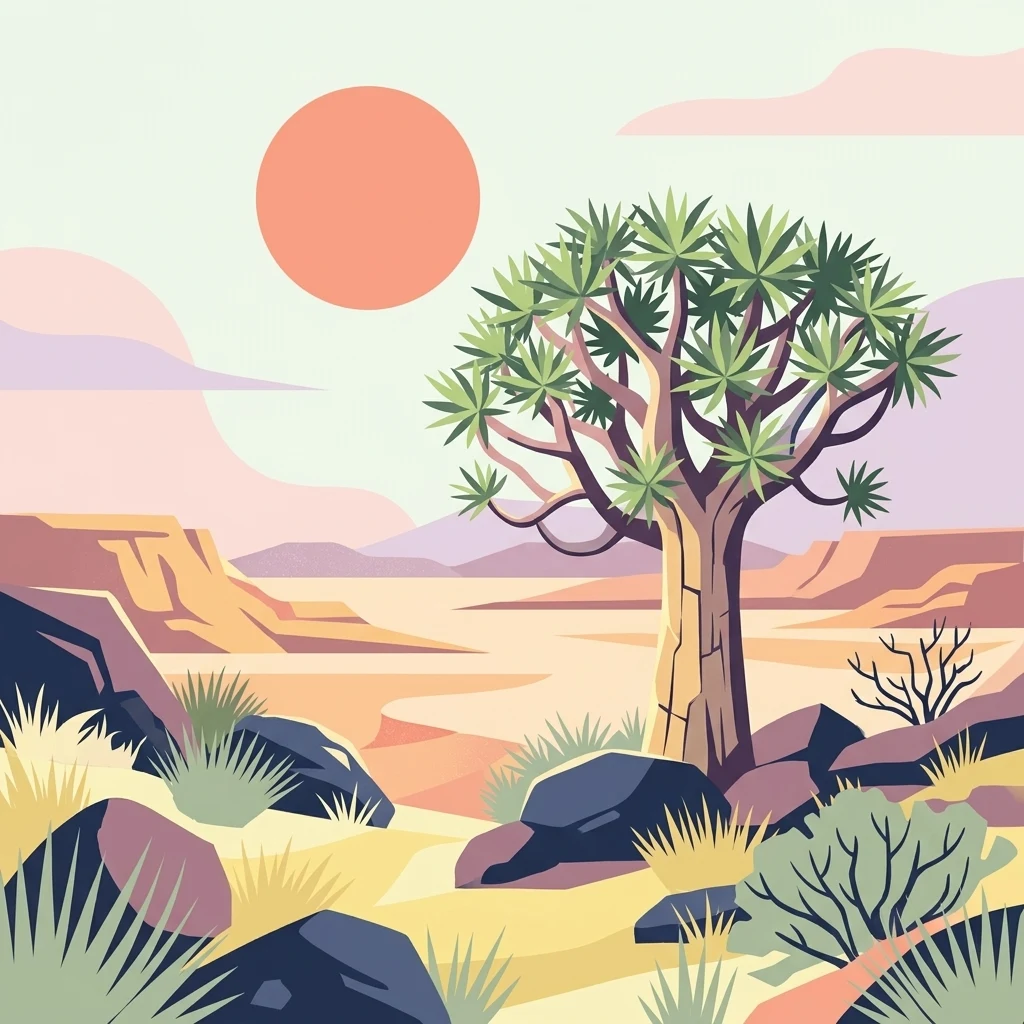
Digital illustration of desert landscape with quiver tree, rocks, and distant mountains under orange sun

Meerkat National Park

National park

Park overview

Structured park overview, official facts, and landscape profile for Meerkat National Park

Meerkat National Park park facts, protected area profile, and essential visitor context
Review the core facts for Meerkat National Park, including designation, size, terrain, visitor scale, habitats, and operating context in one park-focused overview.

About Meerkat National Park

Meerkat National Park represents a pioneering model that integrates world-class scientific infrastructure with landscape-scale ecological conservation. The park's creation was driven by the need to protect the Karoo's radio frequency environment, which is uniquely suitable for radio astronomy due to its low levels of human-made electromagnetic interference. The South African government designated the area under the Astronomy Geographic Advantage Act of 2007, recognizing its strategic importance for international astronomical research. Beyond its scientific mandate, the park provides critical habitat protection for three previously unprotected ecoregions, notably expanding protection of the Nama Karoo from approximately 1.5 percent to 2 percent of its original extent. The park is administered by South African National Parks in partnership with the National Research Foundation, with access restricted to pre-selected days throughout the year to minimize disturbance to both wildlife and astronomical operations.

Quick facts and research context for Meerkat National Park

Meerkat National Park spans 135,245 hectares in the Northern Cape, making it one of South Africa's larger national parks. Located in the Karoo Hoogland and Kareeberg municipalities, the park is situated near the town of Carnarvon. The area was designated as a national park in March 2020 through a partnership between the National Research Foundation, the Square Kilometre Array project, and South African National Parks. The park's primary purpose is dual: protecting the sensitive radio astronomy environment necessary for the Square Kilometre Array while preserving the Karoo's unique ecological systems and species.

Park context

Deeper park guide and search-rich context for Meerkat National Park

Meerkat National Park history, landscape, wildlife, and travel context
Explore Meerkat National Park through its history, landscape character, ecosystems, wildlife, conservation priorities, cultural context, and seasonal travel timing in a structured park guide built for atlas discovery and search intent.

Why Meerkat National Park stands out

Meerkat National Park is best known for hosting the MeerKAT array, a cutting-edge radio telescope facility that forms the southern component of the Square Kilometre Array. Beyond its astronomical significance, the park protects some of the last remaining quiver tree forests in the region, a vulnerable species that has become emblematic of the Nama Karoo. The park also stands out for its exceptional bird diversity, with between 215 and 264 bird species recorded, including two endemic species: the red lark and Sclater's lark. Its location within an internationally recognized radio quiet zone makes it one of the few places on Earth where sensitive astronomical observations can be conducted with minimal interference.
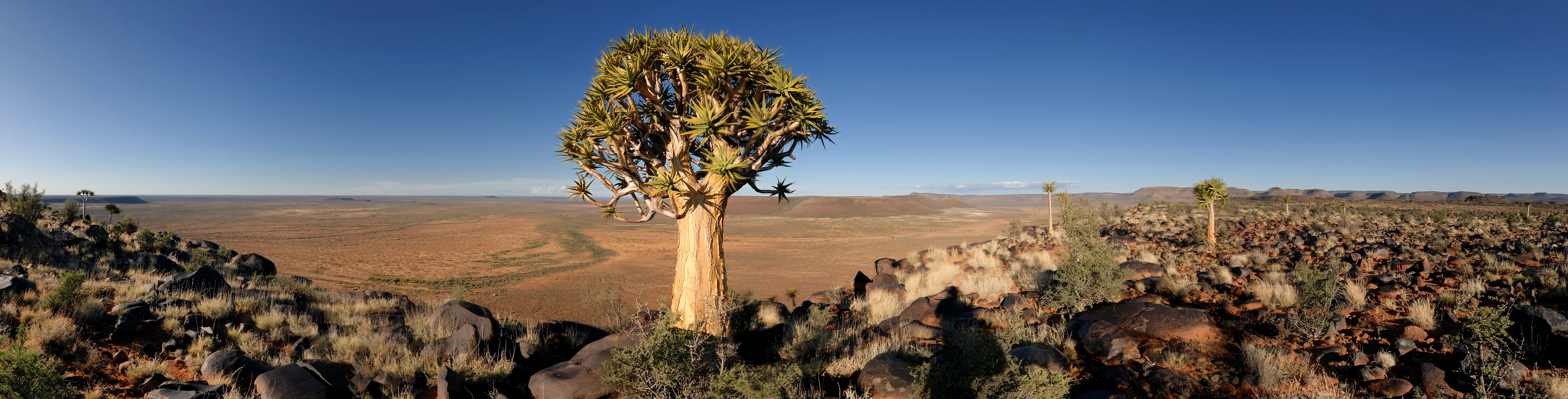
A quiver tree stands prominently in the foreground of a vast open landscape with rocky outcrops and a clear blue sky in Meerkat National Park, South Africa.
Spectacular landscape in Meerkat National Park featuring a quiver tree and vast open plains under a clear blue sky.

Meerkat National Park history and protected-area timeline

The establishment of Meerkat National Park represents a landmark achievement in South African conservation history. The National Research Foundation purchased privately owned rangeland in the Karoo region and removed livestock from the area before placing it under the protection of South African National Parks. In March 2020, the park was formally declared, adding 3.4 percent to South Africa's national park estate in a single designation. The creation was the result of a partnership between the National Research Foundation, the Square Kilometre Array organization, and South African National Parks. The timing coincided with the expansion of the MeerKAT telescope array, which had been operational since 2018. One of the key objectives driving the park's establishment was the protection of three vulnerable ecoregions, particularly the Nama Karoo, along with the conservation of quiver tree forests and other threatened species in the region.

Meerkat National Park landscape and geographic character

The park occupies a dramatic expanse of semi-arid Karoo terrain characterized by vast, open plains, ancient geological formations, and sparse but resilient vegetation. The landscape features gently undulating terrain interspersed with rocky outcrops and occasional drainage lines. The region lies at elevations suitable for astronomical observation, with clear, dark skies that are essential for radio astronomy. Five distinct vegetation types occur within the park boundaries: Bushmanland Basin Shrubland, the aquatic Bushmanland Vloere zone, Northern Upper Karoo, Upper Karoo Hardeveld, and Western Upper Karoo vegetation. The park's visual character is defined by the iconic quiver tree, an aloe species that forms distinctive forests in certain areas, creating one of the most photographically recognizable landscapes in the Karoo. The geological substrate contributes to the park's stark beauty, with exposures of ancient rock formations visible across the terrain.

Meerkat National Park ecosystems, habitats, and plant life

The ecological character of Meerkat National Park is defined by its position within the Nama Karoo, a semi-desert biome known for its high degree of endemism. The park supports five principal vegetation types, each adapted to the region's low rainfall and extreme temperature variations. A total of 223 plant species have been documented within the park boundaries, representing the diversity of this harsh but biologically significant environment. The removal of livestock and invasive mesquite trees during the park's establishment has allowed natural vegetation communities to recover, contributing to improved ecosystem function. The park's aquatic zones, though limited, provide important habitat for specialized species. The quiver tree forests represent a particularly significant vegetation feature, as these populations face vulnerability from climate change and habitat degradation across their range.

Meerkat National Park wildlife and species highlights

Meerkat National Park supports remarkable biodiversity despite its harsh environmental conditions. The park hosts between 215 and 264 bird species, including 25 near-endemic species and two entirely endemic species: the red lark and Sclater's lark. Notable bird species include the black harrier, kori bustard, martial eagle, secretarybird, and Verreaux's eagle. Mammal diversity includes 29 documented species, among them aardvark, aardwolf, black-backed jackal, caracal, crested porcupine, rock hyrax, springbok, and steenbok. The herpetofauna is particularly well-represented with 29 species, including six amphibian species and 23 reptile species. Reptile diversity includes multiple tortoise species, geckos, snakes, and lizards adapted to the Karoo's extreme conditions.

Meerkat National Park conservation status and protection priorities

The establishment of Meerkat National Park represents a significant conservation achievement for South Africa. The park was created with the explicit goal of expanding protection for three ecoregions that were severely under-protected, particularly the Nama Karoo, which had only 1.5 percent of its original extent in protected status before this designation. The addition of the park increased national parks coverage by 3.4 percent in a single expansion. The park protects vulnerable quiver tree forests and other threatened species within its boundaries. Additionally, the protection of the radio quiet zone supports scientific research that requires the world's clearest electromagnetic environment, creating a unique conservation rationale that extends beyond terrestrial ecology to encompass astronomical science.

Meerkat National Park cultural meaning and human context

While Meerkat National Park is primarily defined by its scientific and ecological significance, the Karoo landscape has been inhabited by indigenous peoples for millennia. The region holds archaeological evidence of human occupation, and the Nama language names for local features reflect deep historical connections to the land. The park's establishment also represents a more recent chapter in South Africa's scientific heritage, positioning the country as a hub for international astronomical research through the Square Kilometre Array project.

Top sights and standout views in Meerkat National Park

The MeerKAT radio telescope array stands as the park's most distinctive feature, a world-leading scientific instrument that has already delivered groundbreaking astronomical discoveries. The quiver tree forests provide a visually striking counterpoint to the technological landscape, representing natural heritage spanning thousands of years. The exceptional bird diversity, particularly the endemic lark species, makes the park significant for ornithologists and birdwatchers. The park's role in expanding Karoo ecosystem protection addresses a critical conservation gap in South Africa's protected area network.

Best time to visit Meerkat National Park

The Karoo experiences extreme seasonal variation, with hot summers and cold winters. The most comfortable time for visiting is during the cooler months from April to September, when daytime temperatures are moderate and conditions are suitable for outdoor exploration. Summer months from October to March can bring intense heat, though this is also when the park's vegetation is most vibrant. Visitors should note that access to the park is restricted to pre-selected days throughout the year, requiring advance planning. The dry winter months often provide clearer skies, though the primary astronomical operations continue year-round regardless of season.
Park location guide

Geography guide, regional context, and park location map for Meerkat National Park

Meerkat National Park park geography, regions, and map view in South Africa
Understand where Meerkat National Park sits in South Africa through a broader geographic reading of the surrounding landscape, nearby location context, and its mapped position within the national park landscape.

How Meerkat National Park fits into South Africa

South Africa is the southernmost country in Africa, spanning 1.22 million km² with a population of over 63 million. The country operates with three capital cities, Pretoria (executive), Cape Town (legislative), and Bloemfontein (judicial), and is renowned for its biodiversity, national parks, and multicultural society.

Wider geography shaping Meerkat National Park in South Africa

South Africa occupies the southernmost region of Africa, with coastline along both the Atlantic Ocean to the west and the Indian Ocean to the east. The interior features elevated plateaus including the Highveld, with the Drakensberg escarpment marking the eastern highlands. The country shares borders with Namibia, Botswana, Zimbabwe, Mozambique, Eswatini, and Lesotho.

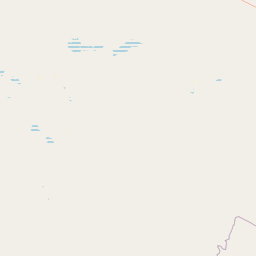
Map view of Meerkat National Park

Use this park location map to pinpoint Meerkat National Park in South Africa, understand its exact geographic position, and read its mapped placement within the surrounding landscape more clearly.

Pigeon | © OpenStreetMap contributors

Location context for Meerkat National Park

Northern Cape

Discover the distinctive semi-arid Karoo terrain, iconic quiver tree forests, and diverse habitats of this South African protected area through imagery.

Meerkat National Park Photos and Scenery: Explore Karoo Landscapes and Protected Area Visuals
Browse a curated collection of Meerkat National Park photos to visually grasp its vast semi-arid Karoo landscapes and distinctive features. These images provide essential geographic context, revealing the unique geological formations, sparse vegetation, and the iconic quiver tree forests that define this significant South African protected area.

A quiver tree stands prominently in the foreground of a vast open landscape with rocky outcrops and a clear blue sky in Meerkat National Park, South Africa.

Park atlas

Compare regional protected areas, trace mapped geography, and discover adjacent conservation landscapes near Meerkat National Park.

Explore Other National Parks and Protected Areas Near Meerkat National Park in the Karoo
Expand your view beyond Meerkat National Park to browse other national parks and protected areas across South Africa's Karoo region and Northern Cape province. Compare distinct ecological zones, unique geological formations, and the broader geographic context of these conservation landscapes, aiding a deeper atlas-style park discovery.
Wildlife reserveWestern Cape

Karoo National Park Wildlife Reserve: Mapped Boundaries and Geographic Context

Explore the protected landscape of this Western Cape wildlife reserve.

Karoo National Park stands as a protected wildlife reserve, offering insights into the natural geography of South Africa's Western Cape. This detail page provides an atlas view of its protected landscape, mapping its boundaries and situating it within its regional context. Engage with the park's identity as a conservation area and understand its geographic significance for dedicated exploration.

Area
767.9 km²
Established
1979
Relief
Mountain
Climate
Arid
Watercolor illustration showing a mountain range with green hills and pink flowers
National parkNorthern Cape

Tankwa Karoo National Park National Park: Mapped Protected Landscape in Northern Cape

Explore regional geography and protected area boundaries.

Tankwa Karoo National Park is a key protected area situated in the vast Northern Cape region of South Africa. This entry provides a detailed atlas perspective, focusing on the park's mapped geography and its significance as a national park. Understand the park's landscape context and its position within the broader regional geography for informed exploration and geographic discovery.

Area
1,436 km²
Established
1986
Relief
Upland
Climate
Arid
National parkNorthern Cape

Augrabies Falls National Park: A South African National Park Defined by Granite Gorge and Semi-Desert Terrain

Explore the mapped natural landscape and protected boundaries.

Augrabies Falls National Park in South Africa's Northern Cape Province is a key protected area known for its thundering waterfall on the Orange River and the profound granite gorge carved over millennia. The park's semi-desert environment showcases the distinctive quiver trees and geological landmarks like Moon Rock, offering a unique landscape context. Understand its protected status and geographic significance within the arid Nama-Karoo biome through detailed mapping and landscape information.

Area
820 km²
Established
1966
IUCN
II
Relief
Upland
National parkEastern Cape

Camdeboo National Park: Protected Landscape Atlas and Eastern Cape Geographic Context

Discover the mapped geography and protected area identity of this Eastern Cape national park.

Camdeboo National Park represents a key protected landscape within the Eastern Cape province of South Africa. This entry provides essential details for understanding its protected-area status, geographic footprint, and its role within the regional atlas. Examine its mapped boundaries and explore the unique natural terrain it encompasses, gaining specific insight into its protected landscape characteristics.

Area
194.05 km²
Established
2005
Relief
Mountain
Climate
Arid
National parkNorthern Cape

Namaqua National Park: Protected Landscape and Geographic Atlas Details

Explore Northern Cape's National Park mapped context.

Gain insight into Namaqua National Park, a protected national park situated in the expansive Northern Cape region of South Africa. This resource provides detailed geographic context, focusing on its mapped protected landscape and unique regional features. Understand its role as a distinct natural area for atlas-based exploration and geographic discovery within South Africa's diverse terrain.

Area
1,368.18 km²
Established
2001
Climate
Arid
Access
Moderate access
National parkWestern Cape

Bontebok National Park: A Unique Protected Landscape in South Africa's Western Cape

Mapping the endemic bontebok's habitat and diverse fynbos.

Bontebok National Park represents a singular achievement in conservation, dedicated to protecting the rare bontebok antelope and showcasing the extraordinary biodiversity of the Cape Floristic Region. Located in the Western Cape, this smallest of South Africa's national parks features a landscape of fynbos-covered foothills beneath the Langeberg Mountains, with the Breede River defining its southern edge. Explore its mapped boundaries and unique ecosystems, offering a concentrated natural discovery experience within a UNESCO World Heritage Site.

Area
27.86 km²
Established
1931
IUCN
II
Relief
Mixed relief
National parkSouth Africa

Garden Route National Park: South Africa's Protected Landscape and Forest Atlas

Explore indigenous forests, coastal cliffs, and lake systems.

Garden Route National Park is a key national park in South Africa, celebrated for its rich indigenous forests and dramatic coastline. As a protected landscape, it offers a unique geographic profile, blending ancient woodlands with rugged coastal terrain and interconnected lake systems. This page serves as an atlas entry, detailing the park's spatial extent and its significance as a conservation area within the broader geography of South Africa.

Area
1,210 km²
Established
2009
IUCN
II
Relief
Mixed relief
National parkWestern Cape

Wilderness National Park: National Park in Western Cape Province, South Africa

Explore mapped protected areas and regional geography.

Wilderness National Park stands as a significant protected area within the Western Cape province of South Africa. This page provides a detailed view of its role as a national park, emphasizing its geographic placement and mapped boundaries. Understand the park's contribution to the region's natural landscape and its significance within the broader atlas of protected lands.

Area
1,210 km²
Established
2009
Relief
Lowland
Access
Easy access

Common questions about visiting, size, designation, and location context for Meerkat National Park

Meerkat National Park FAQs for park facts, access, geography, and protected area context
Find quick answers about Meerkat National Park, including protected-area facts, park geography, trail and visitor context, and how the park fits into its surrounding country and regional landscape.
MoriAtlas Explorer

Continue Your Protected Areas Search Across the Global Atlas

Deepen your exploration by continuing the structured search for national parks and protected areas worldwide. Utilize the comprehensive filtering capabilities to compare different conservation landscapes and refine your understanding of global park geography. Discover more about the distribution and characteristics of protected natural areas.

Global natural geography