Mori Atlas logo
National parkGashaka Gumti National Park

Discover the mapped boundaries and regional natural context of Gashaka-Gumti National Park.

Gashaka-Gumti National Park: A National Park in Nigeria with Unique Protected Landscape Geography

Gashaka-Gumti National Park represents a significant protected area within Nigeria, offering a distinct focus for atlas-based exploration of its natural landscape. As a designated national park, it provides a crucial point for understanding the distribution of protected lands and the specific geography that defines this Nigerian conservation landscape. Users can delve into the mapped features and regional context to appreciate Gashaka-Gumti National Park's role in the country's natural heritage.

National ParkMountainous TerrainMontane ForestSavannaImportant Bird AreaPrimate Conservation

Gashaka Gumti National Park

National park

Park overview

Structured park overview, official facts, and landscape profile for Gashaka Gumti National Park

Gashaka Gumti National Park park facts, protected area profile, and essential visitor context
Review the core facts for Gashaka Gumti National Park, including designation, size, terrain, visitor scale, habitats, and operating context in one park-focused overview.

About Gashaka Gumti National Park

Gashaka Gumti National Park represents Nigeria's most significant protected area and one of West Africa's most important conservation landscapes. Located in the country's eastern border regions spanning Taraba and Adamawa States, the park encompasses a dramatic mosaic of ecosystems that transition from flat savanna plains in the north to some of Nigeria's most rugged mountainous terrain in the south. The park's establishment in 1991 marked the culmination of decades of conservation advocacy, building upon earlier game reserve designations from 1972 that sought to protect the region's rich biodiversity and critical watershed functions. The park's ecological significance extends beyond its borders as a vital catchment area for the Benue River, Nigeria's largest tributary system, ensuring water security for downstream communities and agricultural areas. The protection of this landscape addresses multiple conservation imperatives, from preserving viable populations of large mammals and primates to maintaining the forest cover that regulates water flow across seasonal cycles. Management of the park is conducted through partnership between the Nigerian Conservation Foundation and state wildlife authorities, working to balance conservation objectives with the needs of communities who inhabit enclaves within the park boundary. The park's position along the Cameroon border places it within a transboundary conservation context, supporting broader efforts to protect Afromontane forest ecosystems that span the regional highlands.

Quick facts and research context for Gashaka Gumti National Park

Gashaka Gumti National Park covers 6,402 km² across Taraba and Adamawa States in northeastern Nigeria, bordering Cameroon. The park was officially designated in 1991, making it Nigeria's largest national park. Altitude ranges from 457 meters in the northern savanna to 2,419 meters at Chappal Waddi, the country's highest peak. The southern sector features mountainous terrain with montane forests, while the northern portion consists of Guinea savanna grassland. The park serves as a critical watershed for the Benue River and contains enclaves where local Fulani pastoralists practice farming and grazing within the protected boundary.

Park context

Deeper park guide and search-rich context for Gashaka Gumti National Park

Gashaka Gumti National Park history, landscape, wildlife, and travel context
Explore Gashaka Gumti National Park through its history, landscape character, ecosystems, wildlife, conservation priorities, cultural context, and seasonal travel timing in a structured park guide built for atlas discovery and search intent.

Why Gashaka Gumti National Park stands out

Gashaka Gumti is most notable for its exceptional biodiversity and status as Nigeria's premier primate habitat. The park holds the largest population of common chimpanzees in Nigeria and supports a remarkable assemblage of over 103 mammal species including African bush elephants, African wild dogs, leopards, lions, and populations of giant elands and roan antelope. The park is recognized as an Important Bird Area with more than 500 bird species recorded, including the red-faced lovebird found nowhere else in Nigeria. The southern montane forests harbor unique plant species including the newly discovered red sunbird bush, while the dramatic landscapes around Chappal Waddi offer Nigeria's highest summit and rugged highland environments rarely found elsewhere in the country.

Gashaka Gumti National Park history and protected-area timeline

The foundation for Gashaka Gumti National Park was laid in the late 1960s when growing recognition of the region's biodiversity value prompted systematic conservation planning. A 1966 land systems survey conducted by Mike Bawden and Paul Tuley highlighted the urgent need to protect the forested mountain watersheds that supplied the Taraba River, establishing the ecological rationale for protected area status. A 1969 assessment by a United Nations Food and Agriculture Organization wildlife expert recommended creation of a game reserve or national park to safeguard local wildlife resources, coinciding with Nigeria's post-independence prioritization of natural resource management. In 1972, the Government of the North-East State established three game sanctuaries at Serti, Gashaka, and Gumti through collaboration with local governments and traditional chiefs, marking the first formal protection for the area. The park faced significant challenges during the economic difficulties of the early 1980s when conservation budgets were drastically reduced, leading to infrastructure decline and reduced patrolling capacity. A devastating rinderpest outbreak in 1983-84 decimated ungulate populations and triggered increased poaching pressure. The late 1980s brought renewed support through the Department for International Development and advocacy from the Nigerian Conservation Foundation, which identified eleven key reasons for national park designation ranging from watershed protection to ecotourism potential. In 1991, Gashaka Gumti National Park was officially established under new legislation, with management responsibilities shared between the Nigerian Conservation Foundation and state wildlife authorities.

Gashaka Gumti National Park landscape and geographic character

The physical landscape of Gashaka Gumti National Park exhibits dramatic variation across its extensive area, creating distinct environmental zones that support different ecological communities. The northern sector presents a relatively flat terrain of savanna grassland characterized by broad leaved woodlands and scattered acacia species, providing open scenery that contrasts sharply with the southern highlands. The southern portion of the park transforms into rugged mountain terrain dominated by very steep slopes, deep valleys, and dramatic gorges that cut through the landscape. This mountainous area contains montane forest ecosystems that develop at higher elevations, creating a vertical zonation of vegetation types across relatively short horizontal distances. Chappal Waddi, Nigeria's highest mountain, rises to 2,419 meters within the park's southern sections, offering dramatic summit views and representing a significant geographical landmark for the nation. The park's hydrological importance derives from its function as a catchment area for the Benue River system, with abundant river flow maintained even during the marked dry season, supporting both ecological processes and human water needs downstream.

Gashaka Gumti National Park ecosystems, habitats, and plant life

The ecological character of Gashaka Gumti spans multiple distinct habitat types that together create one of West Africa's most biodiverse protected landscapes. The northern savanna zone supports grassland and woodland communities dominated by species such as Acacia, Afzelia africana, Khaya senegalensis, and Isoberlinia doka, creating habitat for savanna-adapted wildlife including various antelope species and grassland birds. The southern highlands support montane forest ecosystems characterized by different tree species including Triplochiton scleroxylon and Symphonia globulifera, with forest patches extending into higher elevations where unique microclimates support specialized plant communities. A notable botanical discovery occurred in 2002 when an isolated population of the red sunbird bush was identified in the Leinde Fadale forest, representing a significant range extension for this ornate acanthus family species found at 1,600 to 1,670 meters elevation. The park's position and diverse habitats contribute to its role as a critical watershed area, with forest cover and vegetation communities playing essential functions in water regulation and soil conservation across the Benue River catchment.

Gashaka Gumti National Park wildlife and species highlights

Gashaka Gumti supports exceptional mammalian biodiversity with 103 species recorded within park boundaries, representing one of the most diverse faunal assemblages in Nigeria. The park holds particular significance for primate conservation as it contains the largest population of common chimpanzees in Nigeria, supported by the Gashaka Primate Project that works to protect these endangered populations. Large mammals are well represented, with populations of African bush elephants, African buffalo, giant elands, roan antelope, hartebeests, and various antelope species including kob, oribi, and the rare mountain reedbuck. Predator species include lions, leopards, and African wild dogs, maintaining ecological balance within the park's trophic systems. The bird fauna is exceptionally rich with over 500 species recorded and population estimates reaching one million individual birds, earning the park designation as an Important Bird Area. The red-faced lovebird represents a particularly significant finding, being found in Nigeria only within this park and otherwise restricted to the Bamingui-Bangoran National Park in the Central African Republic.

Gashaka Gumti National Park conservation status and protection priorities

Gashaka Gumti National Park faces significant conservation challenges despite its protected status and ecological importance. Illegal logging, particularly for rosewood (pterocarpus erinaceous), has emerged as a serious threat since the species' discovery in the region around 2014-2015, with loggers responsible for the deaths of at least nine park rangers in recent years. Additional pressures include illegal grazing within the park boundary, poaching, and broader insecurity affecting the northeastern region of Nigeria. The park management works with traditional leaders and local communities to address these threats, with commemorations of World Rangers Day honoring those who have died in service of conservation. The establishment of the Gashaka Primate Project demonstrates targeted conservation action for specific species, while the park's Important Bird Area designation recognizes its continental significance for avian conservation. Watershed protection remains a core conservation function, with the park's forest cover essential for maintaining water security downstream.

Gashaka Gumti National Park cultural meaning and human context

Gashaka Gumti National Park exists within a landscape shaped by human communities whose presence predates formal protected area designation. Fulani pastoralist communities maintain enclaves within the park boundary where they practice traditional grazing and farming activities, representing a long-standing relationship between local populations and the land. Approximately 25 communities reside in the immediate surroundings of the park, creating interfaces where human activities and wildlife conservation intersect. Traditional leadership, including the Lamdo Gashaka, plays important roles in mobilizing local support for conservation and addressing conflicts between community needs and protection objectives. The park contains historical sites of colonial-era significance, including the German Forte representing pre-colonial European presence in the region. Tourism activities including cultural interpretation through the park museum and engagement with local communities contribute to the economic value of the park for surrounding populations.

Top sights and standout views in Gashaka Gumti National Park

Gashaka Gumti offers diverse attractions spanning wildlife viewing, landscape exploration, and cultural heritage. The Hippo Pool provides opportunities to observe hippos in their natural habitat, while the primate watching program showcases chimpanzee populations that represent Nigeria's most significant primate stronghold. The park's status as an Important Bird Area makes birdwatching a major draw, with over 500 species including the endemic red-faced lovebird. The Mayo Kam River supports sport fishing activities during the dry season, and the Kiri Waterfall offers scenic beauty in the northern sector. Mountaineering opportunities at Chappal Waddi provide access to Nigeria's highest summit, while the German Forte and GGNP Museum connect visitors to historical and cultural narratives. The German Forte, a historic pre-colonial German fort, adds historical depth to the visitor experience, complementing natural attractions with cultural exploration opportunities.

Best time to visit Gashaka Gumti National Park

Gashaka Gumti National Park can be visited throughout the year, though certain periods offer more favorable conditions for specific activities. The climate data indicates that January, February, June, July, August, September, October, November, and December are widely considered peak visitation periods, with the park experiencing a steppe climate characterized by minimal precipitation for much of the year. The wet season peaks in August with approximately 130mm of rainfall, creating lush green conditions but potentially restricting some access. The dry season from November through April offers easier movement through the park and clearer visibility for wildlife viewing, though water sources become more concentrated and wildlife may be easier to locate around remaining water points. Temperature ranges from mild minimums around 16°C in January to maximums reaching 38°C in April and May, with the cooler highland areas in the south providing refuge from peak heat.

Park location guide

Geography guide, regional context, and park location map for Gashaka Gumti National Park

Gashaka Gumti National Park park geography, regions, and map view in Nigeria
Understand where Gashaka Gumti National Park sits in Nigeria through a broader geographic reading of the surrounding landscape, nearby location context, and its mapped position within the national park landscape.

How Gashaka Gumti National Park fits into Nigeria

Nigeria is a West African federal republic spanning 923,769 km² between the Sahel and the Gulf of Guinea. It is Africa's most populous nation with over 236 million residents, composed of diverse ethnic groups including Hausa, Yoruba, Igbo, and numerous others. The country operates as a federal presidential republic with 36 states and the Federal Capital Territory, using English as its official language and possessing significant linguistic diversity with over 525 indigenous languages.

Wider geography shaping Gashaka Gumti National Park in Nigeria

Nigeria occupies West Africa between the Sahel region to the north and the Gulf of Guinea in the Atlantic Ocean to the south. It shares borders with Niger to the north, Chad to the northeast, Cameroon to the east, and Benin to the west. The country covers an area of 923,769 square kilometres.

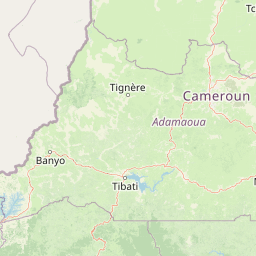
Map view of Gashaka Gumti National Park

Use this park location map to pinpoint Gashaka Gumti National Park in Nigeria, understand its exact geographic position, and read its mapped placement within the surrounding landscape more clearly.

Pigeon | © OpenStreetMap contributors

Location context for Gashaka Gumti National Park

Adamawa StateTaraba State
Park atlas

Explore adjacent protected landscapes and trace regional park geography in the surrounding West African savanna and Afromontane zones

Discover Nearby National Parks and Protected Areas Beyond Gashaka-Gumti National Park's Diverse Landscapes
After exploring Gashaka-Gumti National Park, trace other national parks and protected areas across Nigeria and the broader West African region. This curated selection helps compare diverse savanna, montane forest, and river ecosystems, offering valuable context for regional conservation landscapes and park geography.
National park

Faro National Park: Central Africa's Largest Hippo Population within Sudano-Sahelian Protected Landscape

Explore mapped boundaries and regional geography of this vital national park.

Faro National Park stands as a critical protected area within Cameroon, celebrated for its immense hippopotamus population and its role in conserving large mammals across the Sudano-Sahelian zone. The park's landscape comprises undulating savanna plains, river valleys, and elevated hilltops, offering a diverse geographic context for conservation. Its inclusion in a transboundary protected network highlights its importance for regional landscape mapping and ecological continuity. Understanding Faro National Park involves appreciating its unique habitat mosaic and its contribution to the protected areas atlas.

Area
3,418 km²
Established
1989
IUCN
II
Relief
Upland
National parkCentre Region

Mpem and Djim National Park: Protected Landscape and Regional Geographic Atlas

Explore the mapped terrain and protected boundaries of this national park.

Mpem and Djim National Park is a protected natural area situated within Cameroon's Centre Region. This detail entry provides an atlas-focused view, emphasizing the park's protected landscape characteristics and its position within the regional geography. Understand the mapped context and discover the identity of Mpem and Djim National Park as a key protected area.

Area
974.8 km²
Established
2004
IUCN
II
Relief
Upland
Watercolor illustration of a landscape with rolling hills, a winding river, and varied terrain in soft colors
National parkBénoué Department

Bénoué National Park: Protected Landscape Atlas in Bénoué Department, Cameroon

Explore savanna woodland, riparian ecosystems, and geographic context.

Bénoué National Park is a vast protected landscape in Cameroon, defined by its Sudanian savanna woodland and significant frontage along the Bénoué River. Recognized as a UNESCO Biosphere Reserve, it offers critical insights into regional geography, habitat diversity, and the broader atlas of conservation lands in West Africa. Users can explore its varied terrain, from riverine zones to higher massifs, gaining a detailed understanding of this important protected area.

Area
1,800 km²
Established
1968
IUCN
II
Relief
Mixed relief
National park

Deng Deng National Park: Protected Landscape & Gorilla Habitat in East Cameroon

Discover the mapped geography and conservation significance of this national park.

Deng Deng National Park in Cameroon's East Region offers a unique glimpse into the Northern Congolian forest-savanna mosaic ecoregion. Spanning about 683 square kilometers and shaped by the Sanaga River, it is critically important as the northernmost known habitat for western lowland gorillas. Its diverse terrain supports not only gorillas but also elephants, chimpanzees, and pangolins, highlighting its role in Central African biodiversity and regional landscape context.

Area
682.64 km²
Established
2010
IUCN
II
Climate
Tropical
National parkCameroon

Bakossi National Park: Detailed Protected Area Map and Geographic Identity in Cameroon

Explore the mapped landscape and regional context of this Cameroonian national park.

Bakossi National Park is an important protected area situated within Cameroon, functioning as a national park dedicated to conservation and geographic study. This page provides essential details on its mapped boundaries, regional setting, and the natural landscape it represents. It serves as a foundational element for understanding protected areas in Central Africa and their broader geographical significance.

Area
293.2 km²
Established
2008
Relief
Mountain
Climate
Tropical
National parkCameroon

Bouba Njida National Park: A Protected Landscape within Cameroon's National Park Atlas

Discover its mapped geography and regional context.

Bouba Njida National Park represents a key component of Cameroon's protected lands, contributing essential context to any atlas of Central African geography. As a designated national park, it offers a distinct focus for understanding mapped landscape features and the distribution of protected areas within the country. This park serves as a vital point of reference for exploring the nation's natural terrain and its significance within the broader context of regional conservation efforts.

Area
2,200 km²
Established
1980
IUCN
II
Relief
Upland
Watercolor illustration of a forested landscape with pink flowering plants, a winding river, and mountain ranges in the background
National park

Korup National Park: Cameroon's Ancient Tropical Rainforest Protected Area Exploration

Explore its rich biodiversity and unique geographic landscape.

Korup National Park is a significant protected area in Cameroon, covering 1,260 square kilometers of what is considered one of Africa's oldest and most biodiverse tropical rainforests. Established in 1986, this national park is renowned for its exceptional primate populations, extensive plant species, and its role as a critical conservation landscape. The park's terrain transitions from lowlands to hilly areas, with a dense network of streams, offering a rich subject for geographic and protected-area study.

Area
1,260 km²
Established
1986
IUCN
II
Relief
Mixed relief
National park

Douala-Edéa National Park: Coastal Mangrove and Tropical Forest Protected Landscape

Explore Cameroon's vital protected national park geography.

Douala-Edéa National Park is a protected national park in Cameroon's Littoral Region, defined by its extensive coastal geography where tropical lowland equatorial forests merge with significant Atlantic mangrove ecosystems. This area, encompassing roughly 2,715 square kilometers along the Bight of Biafra and the Sanaga River estuary, offers rich context for understanding Central Africa's coastal protected lands and diverse natural landscapes.

Area
2,715.12 km²
Established
2018
IUCN
II
Relief
Lowland

Common questions about visiting, size, designation, and location context for Gashaka Gumti National Park

Gashaka Gumti National Park FAQs for park facts, access, geography, and protected area context
Find quick answers about Gashaka Gumti National Park, including protected-area facts, park geography, trail and visitor context, and how the park fits into its surrounding country and regional landscape.
MoriAtlas Explorer

Continue Your Protected Areas Search Across the Global Atlas

Deepen your exploration by continuing the structured search for national parks and protected areas worldwide. Utilize the comprehensive filtering capabilities to compare different conservation landscapes and refine your understanding of global park geography. Discover more about the distribution and characteristics of protected natural areas.

Global natural geography