Mori Atlas logo
National parkGolestan National Park

Discover the geographic context and protected area boundaries of this national park.

Golestan National Park: Iran's Mapped Protected Landscape in Golestan Province

Golestan National Park represents a significant protected landscape within the atlas of Iran, situated in Golestan province. This entry provides detailed geographic context, focusing on the park's mapped boundaries and its place within regional natural terrain. Users exploring this park detail page can understand its specific protected-area identity and landscape characteristics, contributing to a broader understanding of Iran's natural geography.

national parkforest protected areaUNESCO World Heritage SiteHyrcanian forestsbig cat habitatPersian leopard

Golestan National Park

National park

Park overview

Structured park overview, official facts, and landscape profile for Golestan National Park

Golestan National Park park facts, protected area profile, and essential visitor context
Review the core facts for Golestan National Park, including designation, size, terrain, visitor scale, habitats, and operating context in one park-focused overview.

About Golestan National Park

Golestan National Park represents a cornerstone of Irans protected area system and stands as the country oldest national park, established in 1957 to preserve the exceptional Hyrcanian forest ecosystem. The park straddles three northeastern provinces, creating a protected corridor that spans from the Caspian lowlands to mountain elevations exceeding 2,400 meters. This dramatic altitudinal range supports a remarkable diversity of habitats, from dense deciduous woodlands in the lower reaches to alpine meadows and rocky outcrops at higher elevations. The Hyrcanian forests themselves are a biological treasure, representing a relict ecosystem that survived the Pleistocene glaciations and now exists as a narrow band along the southern Caspian coast. These forests support extraordinary species richness, including several endemic plant species and numerous mammal species that depend on the forest structure for survival. Golestan designation as a UNESCO World Heritage Site in 2019 reflects its global significance and the international recognition of the Hyrcanian forests as a natural heritage of outstanding value.

Quick facts and research context for Golestan National Park

Golestan National Park spans approximately 919 square kilometers across three provinces in northeastern Iran, making it one of the largest and oldest protected areas in the country. The park encompasses the easternmost extent of the Hyrcanian forests, a UNESCO World Heritage Site recognized in 2019 for its outstanding universal value as a unique ancient woodland ecosystem. Elevation within the park ranges from 450 meters in the lowland forest zones to 2,411 meters in the higher mountain habitats, creating diverse ecological niches. The protected area is managed by Irans Department of the Environment and holds IUCN category II designation as a national park.

Park context

Deeper park guide and search-rich context for Golestan National Park

Golestan National Park history, landscape, wildlife, and travel context
Explore Golestan National Park through its history, landscape character, ecosystems, wildlife, conservation priorities, cultural context, and seasonal travel timing in a structured park guide built for atlas discovery and search intent.

Why Golestan National Park stands out

Golestan National Park is best known for protecting one of the last remaining expanses of the ancient Hyrcanian forests, a ecosystem that dates back millions of years and supports remarkable biodiversity. The park is renowned for its population of Persian leopards, making it one of the most important leopard habitats in Iran. It also protects significant herds of Caspian red deer, a subspecies of red deer that was nearly driven to extinction in the 20th century. The combination of old-growth forest, diverse topography, and the presence of apex predators makes Golestan a cornerstone of Iranian conservation efforts.

Golestan National Park history and protected-area timeline

Golestan National Park was established in 1957, making it the oldest national park in Iran and one of the earliest protected areas in the Middle East. The parks creation came at a critical time when the Hyrcanian forests faced significant pressure from logging, agricultural expansion, and human settlement. Early conservation efforts focused on protecting the remaining old-growth forests and the wildlife populations they supported. Over the decades, the parks boundaries have been refined and management has evolved under the oversight of Irans Department of the Environment. The successful inscription of the Hyrcanian forests as a UNESCO World Heritage Site in 2019, with Golestan as a core component, marked a major milestone in the parks conservation history and elevated its international recognition. This designation followed years of scientific assessment and collaborative efforts between Iranian authorities and international conservation organizations.

Golestan National Park landscape and geographic character

The landscape of Golestan National Park is characterized by a dramatic topographic gradient that creates diverse visual and ecological zones throughout the protected area. The lower elevations feature rolling terrain covered in dense deciduous forest, primarily composed of hornbeam, oak, and beech species that form a multi-layered canopy. As elevation increases, the forest transitions through various compositional stages until reaching the subalpine zone where trees give way to shrublands and grassy meadows. Rocky outcrops and cliff faces punctuate the terrain, particularly in the higher elevations where erosion has carved distinctive features into the landscape. The park encompasses valleys, ridges, and ephemeral streams that drain toward the Caspian basin, adding hydrological diversity to the terrain. The contrast between the verdant forest-covered slopes and the more austere rocky zones creates a visually rich landscape that reflects the ecological complexity of the Hyrcanian region.

Golestan National Park ecosystems, habitats, and plant life

The nature of Golestan National Park is defined by the Hyrcanian forest ecosystem, one of the oldest and most biodiverse forests in the Northern Hemisphere. These forests represent a temperate deciduous woodland that has persisted since before the Pleistocene epoch, making them a living repository of evolutionary history. The forest composition includes a mix of deciduous species that create a complex structure with canopy, understory, and forest floor layers. Beyond the forested zones, the park contains grassland and shrubland habitats that provide important ecological functions and support different species assemblages. The elevation range within the park creates a vertical zonation of vegetation, with different species adapted to specific altitude ranges. This mosaic of habitats within a relatively compact area makes Golestan exceptionally valuable for biodiversity conservation, as it supports species requiring different environmental conditions within a single protected boundary.

Golestan National Park wildlife and species highlights

Golestan National Park supports a remarkable mammalian fauna that reflects the ecological diversity of the Hyrcanian forest ecosystem. The parks most iconic resident is the Persian leopard, a large predator that persists in viable populations within the protected forest habitats. Other significant predators include the Indian wolf and brown bear, both of which maintain presence in the park despite historical persecution elsewhere in their ranges. The park provides critical habitat for the Caspian red deer, a subspecies that was saved from near extinction through conservation efforts in Iran and represents a conservation success story. Herbivore species including roe deer, urial, wild goat, and goitered gazelle occupy different ecological niches within the park, from forest glades to alpine meadows. The presence of a complete predator-prey system within Golestan makes it one of the most ecologically functional protected areas in Iran. Smaller mammals such as wild boar and golden jackal complete the mammalian community, demonstrating the parks ecological integrity.

Golestan National Park conservation status and protection priorities

Golestan National Park holds exceptional conservation significance as Irans oldest protected area and a core component of the UNESCO World Heritage-listed Hyrcanian forests. The parks inclusion in the world heritage inscription in 2019 reflects international recognition of its outstanding universal value as a ancient forest ecosystem with exceptional biodiversity. The Hyrcanian forests represent a biodiversity hotspot that supports numerous endemic species found nowhere else on Earth. Golestan serves as a genetic reservoir and population source for species like the Persian leopard and Caspian red deer that have been extirpated from much of their historic ranges. The parks multi-elevation profile ensures protection of entire ecological gradients, from lowland forest to subalpine zones, which is increasingly important as climate change alters habitat availability. Effective conservation in Golestan requires managing the interface between the protected core and surrounding landscapes, addressing threats from habitat fragmentation and human-wildlife conflict.

Golestan National Park cultural meaning and human context

The Golestan region has a long human history intertwined with the forest landscape, though the parks primary significance lies in its natural values. Local communities in the surrounding provinces have traditionally used forest resources and grazed livestock in areas now within and adjacent to the park boundaries. The parks establishment created new relationships between these communities and the protected landscape, requiring adjustments to traditional land use practices. The Persian name of the park, Park-e Meli-ye Golestan, reflects its national importance within Iranian conservation policy. The parks location near the historic Silk Road trade routes gives it some connection to regional cultural history, though the protected area itself is managed primarily for its natural values rather than cultural heritage.

Top sights and standout views in Golestan National Park

Golestan National Park stands out as the oldest national park in Iran, established in 1957 to protect one of the most biologically significant forest ecosystems in western Asia. The park contains the easternmost portion of the Hyrcanian forests, a UNESCO World Heritage Site recognized for its ancient origins and exceptional biodiversity. Visitors and researchers find here one of the best opportunities to observe Persian leopards in the wild within a protected landscape. The elevation range from 450 to 2,411 meters creates remarkable habitat diversity within a single protected area, supporting species from lowland forest dwellers to alpine grazers. The parks successful conservation of the Caspian red deer demonstrates the value of long-term protected area management in recovering threatened species.

Best time to visit Golestan National Park

The best time to visit Golestan National Park depends on the specific interests and tolerances of visitors, with each season offering distinct advantages. Spring and early summer bring lush forest growth, flowing streams, and active wildlife as animals emerge from winter dormancy. The forest canopy reaches full density in summer, creating shaded conditions that can be pleasant but also limiting wildlife visibility. Autumn offers spectacular fall coloration as the deciduous trees change, and animal activity increases as species prepare for winter. Winter brings snow to higher elevations and reduced visitor access, but offers opportunities to track wildlife in the lower forest zones. The moderate climate of the Caspian lowlands makes Golestan accessible during shoulder seasons when conditions are comfortable and landscape beauty is high.
Park location guide

Geography guide, regional context, and park location map for Golestan National Park

Golestan National Park park geography, regions, and map view in Iran
Understand where Golestan National Park sits in Iran through a broader geographic reading of the surrounding landscape, nearby location context, and its mapped position within the national park landscape.

How Golestan National Park fits into Iran

Iran is a West Asian nation with a population exceeding 92 million, making it the 17th most populous country globally. It borders seven countries and has coastlines along the Caspian Sea, Persian Gulf, and Gulf of Oman. Tehran is the capital and largest city, while Persian is the official language.

Wider geography shaping Golestan National Park in Iran

Iran occupies a strategic position in West Asia, bordering Iraq to the west, Turkey, Azerbaijan, and Armenia to the northwest, Turkmenistan to the northeast, Afghanistan to the east, and Pakistan to the southeast. It has coastlines along the Caspian Sea to the north, the Persian Gulf to the south, and the Gulf of Oman to the southeast. The terrain includes mountain ranges such as the Zagros and Alborz, as well as arid desert areas.

Map view of Golestan National Park

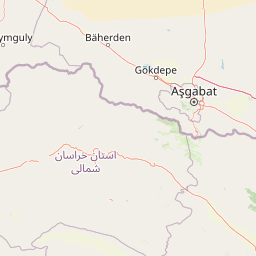
Use this park location map to pinpoint Golestan National Park in Iran, understand its exact geographic position, and read its mapped placement within the surrounding landscape more clearly.

Pigeon | © OpenStreetMap contributors

Location context for Golestan National Park

Golestan provinceNorth Khorasan provinceSemnan Province
Park atlas

Trace regional protected landscapes, compare park geography, and discover adjacent conservation areas

Other National Parks and Protected Areas Near Golestan National Park for Further Exploration
After exploring Golestan National Park, delve into a curated atlas of nearby national parks and protected areas, mapping their geographic spread across the region. Compare the varied terrain, conservation landscapes, and unique ecological characteristics of these protected zones, extending your understanding of connected biodiversity.
Watercolor illustration of a rolling landscape with scattered trees and distant hills
National parkIran

Tandooreh National Park: National Park in Iran with Detailed Geographic and Landscape Context

Explore protected area boundaries and regional terrain within Iran's geography.

Tandooreh National Park offers a distinct geographic identity within Iran's expansive natural atlas. As a designated national park, it serves as a vital point for understanding mapped protected landscapes, analyzing regional terrain patterns, and appreciating the country's commitment to conservation. This entry provides the structured geographic details necessary for exploring the park's specific landscape characteristics and its place within the broader Iranian context.

Area
355.4 km²
Established
1982
IUCN
II
Relief
Mountain
National parkTehran Province

Sorkheh Hesar National Park: Protected Mountain Forest Landscape Near Tehran

Explore its mapped terrain and regional protected area context.

Sorkheh Hesar National Park stands as a significant protected forest area within Tehran Province, Iran. Spanning 9,380 hectares, this mountainous national park is characterized by its unique semi-arid climate and crucial role in conserving threatened species, including the Persian fallow deer and Persian leopard. The Jajrood River flows through its landscape, enhancing biodiversity and supporting a rich forest ecosystem. Its proximity to Tehran makes it a notable example of urban-adjacent conservation, offering valuable insights into protected land management and regional geography.

Area
93.8 km²
Established
1980
IUCN
II
Climate
Arid
National parkIran

Kavir National Park: A Major Protected Desert Landscape in Iran

Explore its arid terrain, conservation significance, and mapped boundaries.

Kavir National Park stands as a significant protected area within Iran, encompassing a vast 4,000 square kilometer expanse of desert and steppe landscapes on the western flank of the Kavir Desert. Designated as a national park, it plays a crucial role in preserving one of the Middle East's most extensive arid ecosystems and serves as a critical sanctuary for endangered species, including the Asiatic cheetah and Persian leopard. Its stark, open terrain offers a profound example of Iran's natural heritage and provides essential data for understanding regional geography and protected land distribution.

Area
4,000 km²
Established
1982
IUCN
II
Relief
Lowland
Watercolor painting of rolling hills, a body of water, and vegetation
National parkBaku

Absheron National Park: Coastal Azerbaijan National Park with Caspian Seal Habitats

Explore mapped geography and semi-desert terrain near Baku.

Absheron National Park, located near Baku on the Absheron Peninsula, is a significant national park safeguarding coastal Caspian Sea environments. Its protected landscapes feature semi-arid terrain and are vital for the conservation of Caspian seals and migratory waterbirds. MoriAtlas provides a structured overview of this unique protected area, focusing on its geographic features, ecological importance, and its role as a key national park within Azerbaijan's atlas of natural reserves.

Area
7.83 km²
Established
2005
IUCN
II
Relief
Lowland
National parkAzerbaijan

Shirvan National Park: Azerbaijan's Unique Protected Semi-Desert Ecosystem and Geography

Discover the mapped landscape, gazelle habitats, and wetland geography.

Shirvan National Park, located in Azerbaijan's Shirvan Lowland, safeguards a remarkable semi-desert environment situated on a former Caspian Sea floor. This protected area is distinguished by its low-lying terrain, ancient coastal ridges, and dune formations, providing essential habitat for the world's largest concentration of goitered gazelles. Wetlands around Çala Lake also support significant migratory bird populations, making Shirvan a crucial protected landscape for both terrestrial and avian wildlife and a key site for regional geographic study.

Area
543.735 km²
Established
2003
IUCN
II
Relief
Lowland
Watercolor painting showing rolling green hills, a body of water, and distant mountains
National parkLankaran Rayon

Hirkan National Park: Ancient Hyrcanian Forest Protected Area in Lankaran Rayon

Explore mapped boundaries and unique regional geography.

Hirkan National Park stands as a significant protected area in Azerbaijan, renowned for its extensive old-growth Hyrcanian forests. This national park offers a unique window into ancient temperate rainforest ecosystems, featuring remarkable vertical forest zonation and a high concentration of endemic species within the Talysh Mountains and Lankaran Lowland. Its designation as part of the UNESCO World Heritage Hyrcanian Forests underscores its global importance for conservation and atlas-based geographic exploration of unique, relic landscapes.

Area
403.58 km²
Established
2004
IUCN
II
Relief
Mixed relief
National parkAzerbaijan

Altyaghach National Park: Azerbaijan's Protected Natural Area & Forested Geography

Explore the mapped boundaries and temperate deciduous forests.

Altyaghach National Park is a key protected area in Azerbaijan, safeguarding a significant portion of the Greater Caucasus's temperate deciduous broadleaved forest ecosystems. Covering over 11,000 hectares, the park is instrumental in preserving biodiversity and restoring natural habitats, notably providing refuge for the rare East Caucasian tur and other protected species. Its landscape, characterized by rolling to steep terrain and diverse forest cover reaching approximately 941 meters in elevation, makes it a representative example of Caucasus mountain conservation within the country.

Area
110.35 km²
Established
2004
IUCN
II
Relief
Mixed relief
Watercolor painting of layered mountains with green, yellow, and pink hues.
National parkAzerbaijan

Shahdag National Park: Azerbaijan's Largest National Park and Highest Mountain Landscape

Explore the Greater Caucasus protected area and its unique ecosystems.

Shahdag National Park is the largest protected area in Azerbaijan, encompassing a significant portion of the Greater Caucasus mountain range. This national park is renowned for its dramatic elevation changes, creating diverse ecosystems that transition from dense, old-growth montane forests to high-alpine meadows and rugged, rocky summits. The park's landscape is defined by its towering peaks, including Mount Bazardüzü, the nation's highest point, and provides critical habitat for endemic species like the East Caucasian tur. Use this page to begin your atlas-based exploration of Shahdag National Park's protected geography and its distinctive natural terrain.

Area
1,305.08 km²
Established
2006
IUCN
II
Relief
Mountain

Common questions about visiting, size, designation, and location context for Golestan National Park

Golestan National Park FAQs for park facts, access, geography, and protected area context
Find quick answers about Golestan National Park, including protected-area facts, park geography, trail and visitor context, and how the park fits into its surrounding country and regional landscape.
MoriAtlas Explorer

Continue Your Protected Areas Search Across the Global Atlas

Deepen your exploration by continuing the structured search for national parks and protected areas worldwide. Utilize the comprehensive filtering capabilities to compare different conservation landscapes and refine your understanding of global park geography. Discover more about the distribution and characteristics of protected natural areas.

Global natural geography