
Why Goravan Sands Sanctuary stands out
The sanctuary is best known for being the only place in Armenia where the relict phog shrub Calligonum polygonoides grows, a leafless, sand-stabilizing species also tied ecologically to an endemic Caucasian butterfly. It is likewise recognized as the richest area in Armenia for rare and endangered vascular plants when measured against the Yerevan floristic region. Beyond its botanical importance, Goravan Sands is valued for preserving a relict sandy semi-desert ecosystem within an arid, cold-winter climate zone. The presence of psammophilic plants, specialized sand lizards, and an unusually diverse invertebrate fauna, including 12 beetle species endemic to Armenia, makes it a reference site for South Caucasus sandy-desert ecology.
Goravan Sands Sanctuary history and protected-area timeline
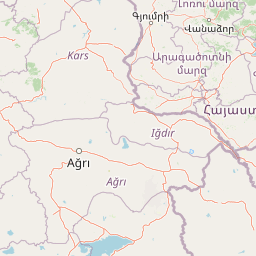
The Goravan Sands Sanctuary was created in 1959 by decision of the Council of Ministers of the Armenian Soviet Republic, with the explicit goal of conserving the sandy semi-desert adjacent to the village of Goravan in the Ararat plain. The original decree described a 200-hectare reserve between approximately 900 and 950 meters of elevation, but the boundaries were never mapped precisely and later field surveys have revealed that the actual sandy habitat is patchier and totals closer to 175 hectares across more than ten fragments.
For decades the reserve existed largely on paper, without a formal administration or effective on-the-ground control. During the 1990s and 2000s the territory was subject to widespread grazing, sand and travertine mining, garbage dumping, military vehicle use, and small-scale agriculture, alongside unregulated collection of plants and animals, with documented damage to several Red List species.
In 2007 the Government of Armenia confirmed a new set of regulations for the sanctuary and, without changing its protected status, transferred its administration to the Khosrov Forest State Reserve under the Ministry of Nature Protection in order to strengthen conservation and restoration work. In 2011 a formal description of the sanctuary's boundaries and a schematic map were approved, bringing the long-running boundary dispute closer to resolution and reducing the official area to roughly 95 to 96 hectares of clearly protected land, with a wider buffer zone of additional protection around it.
Goravan Sands Sanctuary landscape and geographic character
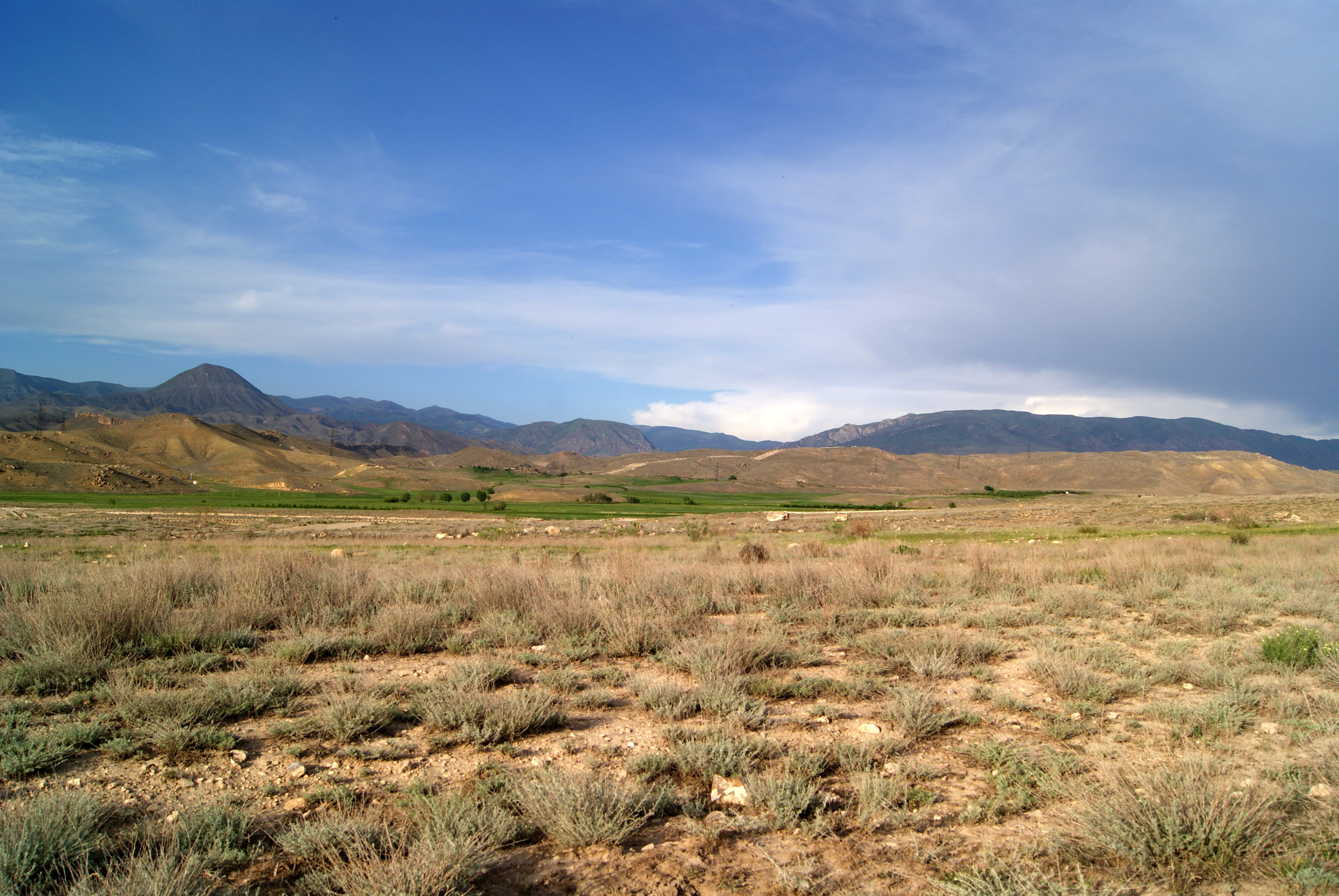
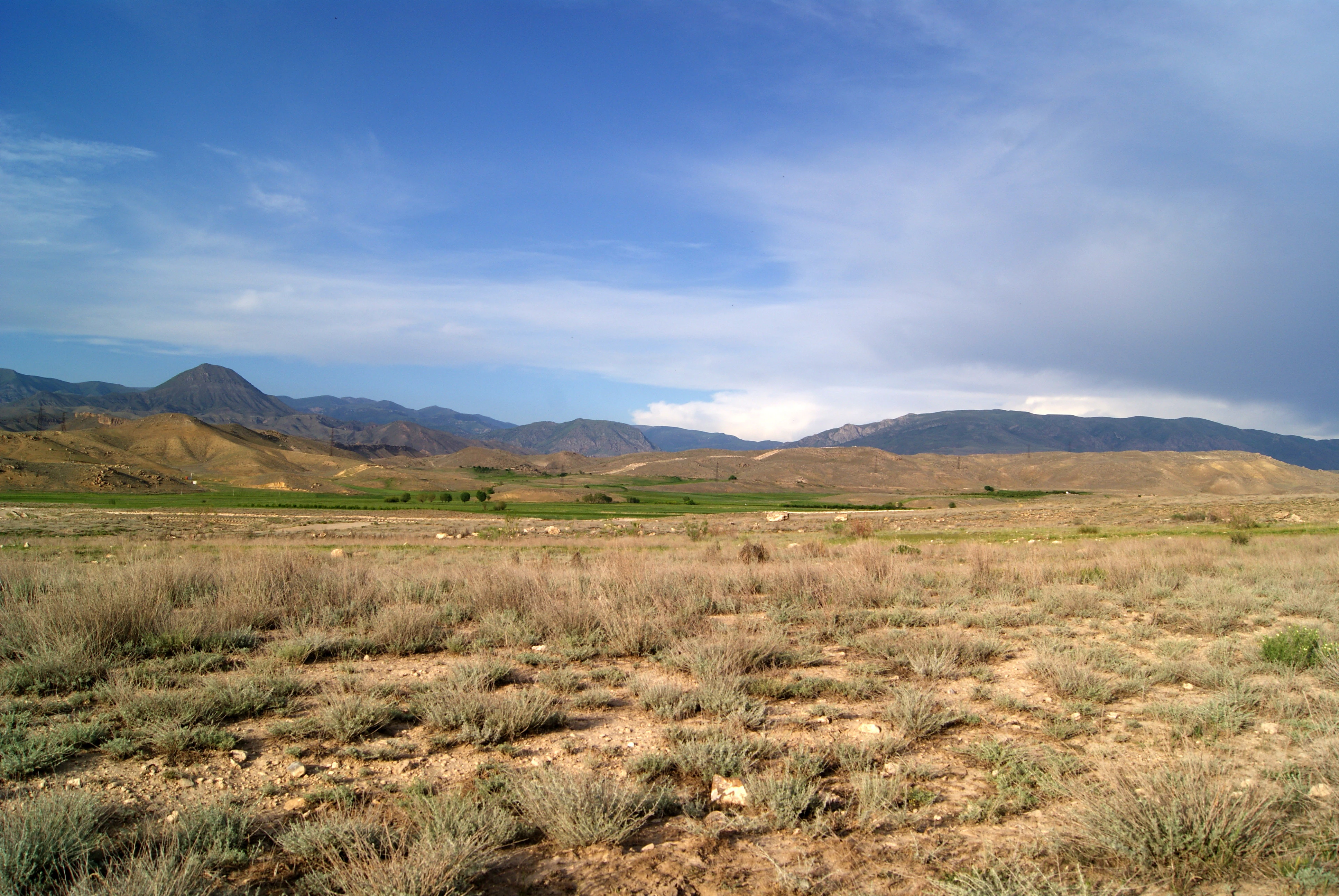
The landscape of Goravan Sands Sanctuary is unusually varied for such a compact area. The reserve lies on the northwestern, mostly dry slopes of the Urtz mountain ridge, where sandy Pleistocene alluvial deposits sit atop Paleozoic limestone, including the local Ararat travertine. Over time, tectonic movements, water erosion, and wind action have produced the mosaic that visitors and researchers see today.
The single most striking physical feature is a broad, ash-grey sandy plain that resembles an ancient shoreline, even though the reserve is now more than 100 kilometers from any large body of water. Diatomite layers embedded in the sand point to a lacustrine or marine past. To the north and west, the sandy habitats meet the orchards, fields, and cemetery of the village of Goravan, while to the south and east the sands blend gradually with dry, slender limestone ridges;
Scattered limestone outcrops and their rocky shells protect the soil from rapid drying and provide shelter for plants and larger animals, creating a phryganoid vegetation cap of tough, drought-resistant shrubs. The tertiary clay semi-desert forms a narrower, less biodiverse fringe around the rocky zones. A few ephemeral springs at the bottoms of the deepest limestone canyons provide the only surface water within the reserve, sustaining small patches of tamarisk and other moisture-loving vegetation that function as green oases inside an otherwise dry landscape.
Goravan Sands Sanctuary ecosystems, habitats, and plant life
Ecologically, Goravan Sands Sanctuary is best understood as a tight mosaic of arid and semi-arid habitats compressed into a small space, which together support an unusually high concentration of rare and endemic species for Armenia.
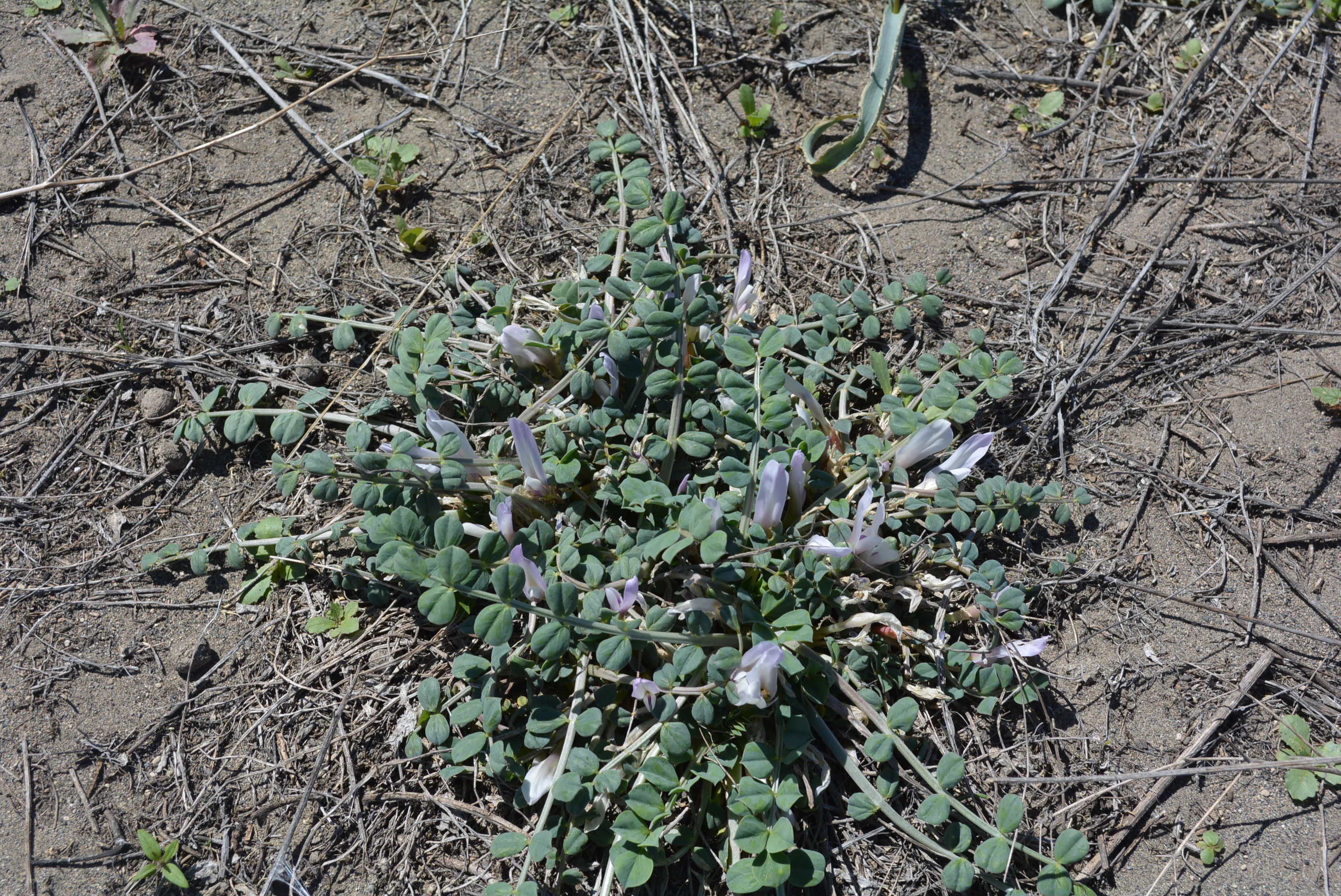
The sandy semi-desert is the reason the reserve was created in the first place. It supports psammophilic, or sand-loving, plants such as the relict phog Calligonum polygonoides, milfoil Achillea tenuifolia, Bassia prostrata, Noaea mucronata, Euphorbia marschalliana, Astragalus paradoxus, Ziziphora tenuior, and Ceratocarpus arenarius. Many of these species are tightly tied to the physical properties of the sand, including its depth and grain composition, and disappear where the substrate changes.
The Artemisia semi-desert on surrounding plains contributes cold- and drought-resistant generalist species, frequently forming associations of Artemisia fragrans with different saltworts of the Salsola genus. Limestone outcrops host phryganoid shrubs including Pallas's buckthorn, white-hair cherry Prunus incana, and dragon-head sage Salvia dracocephaloides. Humid microhabitats along intermittent water lines support Tamarix species and a few amphibians and striped lizards that depend on moisture.
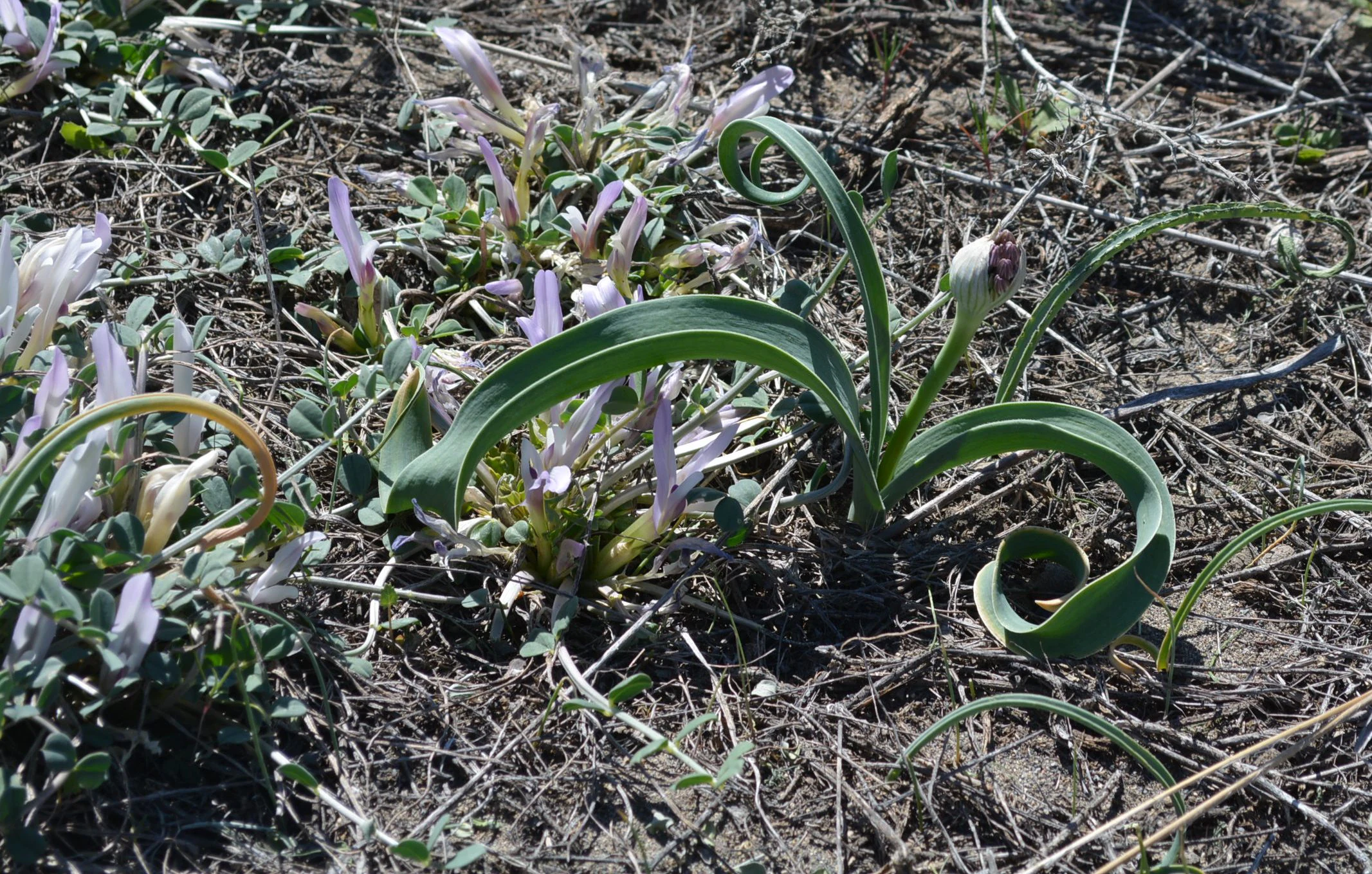
The flora as a whole includes approximately 160 vascular plant species across some 125 genera and 39 families, with twelve or more Red List species and several Caucasus endemics. Among the most notable endemics tied to the reserve are Scorzonera gorovanica and Acantholimon araxanum, while Fritillaria gibbosa and Tulipa biflora are emblematic spring ephemeroids of the sandy soils.
Goravan Sands Sanctuary wildlife and species highlights
Animal life at Goravan reflects the same pattern seen in the flora: relatively few species overall, but a high proportion of specialists and Red List entries. The documented vertebrate fauna includes roughly 33 to 36 species spanning about two dozen families, with reptiles the best-studied group at thirteen or more species across twelve genera and seven families.
Several reptiles are tightly bound to specific habitats within the reserve. Caucasian agamas, golden grass skinks, and Schneider's skinks rely on rock outcrops for shelter against predators and heat; Strauch's racerunner is a habitat generalist that moves across rocks, sand, clay, and brown soils; and two smaller sand specialists, Horvath's sun-watcher lizard and the Transcaucasian racerunner, are restricted almost entirely to the sandy habitats. The snake-eyed lizard uses stony ground, while the Caucasus emerald lizard is found mainly near streambeds and disturbed, urban-edge habitats.
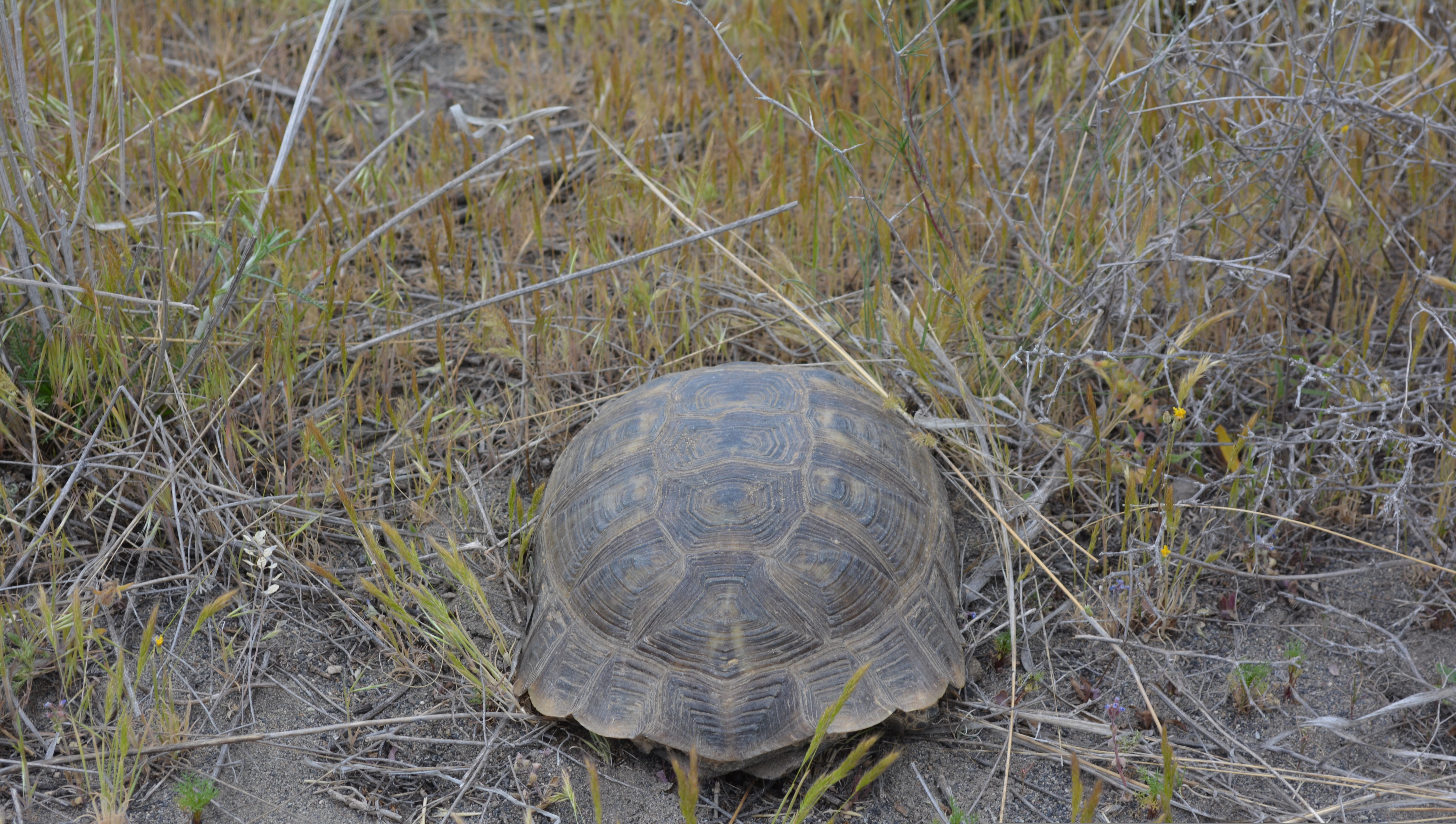
Mammals include fox, which use the rocky outcrops for permanent dens, and Dahl's jird, a gerbil with a very limited range. The Armenian tortoise is a widespread presence on rocky slopes and sandy areas. Among birds, the trumpeter finch stands out as a rare species of the reserve's arid scrub.
Invertebrate diversity is rich and is dominated by insects. The sanctuary hosts roughly seven hundred invertebrate species; beetles alone account for about two hundred, of which twelve are endemic to Armenia, including species such as the Ararat ground beetle Zuphium araxidis and the Caucasian pharaoh beetle Pharaonus caucasicus, the latter ecologically linked to the phog shrub. Orthoptera, butterflies, and mollusks are also documented, though not yet fully summarized in the published literature.
Goravan Sands Sanctuary conservation status and protection priorities
Goravan Sands Sanctuary matters for conservation well beyond its modest size because it preserves one of the last intact sandy semi-desert ecosystems of the South Caucasus and concentrates an exceptionally high share of Armenia's rare plant species into a tiny footprint. It is listed among areas of national priority in the Biodiversity of the Caucasus Ecoregion and recognized by WWF as part of the Caucasus Biodiversity Hotspot.
The reserve's conservation profile is, however, a study in tension. Field surveys across 1998 to 2008 showed that, in the absence of on-site management, overgrazing, sand and travertine mining, dumping, military vehicle activity, agriculture, and unregulated collection of plants and animals had all occurred within and around the reserve. Each of these pressures degrades a specific slice of habitat: sand mining hits psammophilic plants and sand lizards, travertine mining destroys rockland shelter for reptiles and bulbs, overgrazing damages sandy ephemeroids and crushes juvenile tortoises.
The 2007 transfer of the sanctuary into the management structure of the Khosrov Forest State Reserve and the 2011 definition of a 100-meter-wide protection zone around the core area represent meaningful steps toward recovery. Continued redefinition of boundaries, restoration of sandy habitat, and active control of grazing and collection are widely seen as essential if Goravan's relict phog populations and the species that depend on them are to survive in the long term.
Goravan Sands Sanctuary cultural meaning and human context
The village whose name the sanctuary carries, Goravan, is the anchor community for the landscape and also the main source of historic pressure on it. Local residents have long harvested branches and roots of the phog shrub for fuel, grazed domestic goats and sheep across the sandy plains, and gathered wild foods such as Achillea tenuifolia milfoil, wild onions of the Allium genus, Scorzonera roots, and aromatic Lamiaceae and Apiaceae species. These traditional uses are part of why the area was protected, but they also explain several of the conservation challenges the reserve still faces.
Beyond the practical ties to the village, the reserve holds cultural value as one of the few surviving witnesses to an older natural heritage of the Ararat plain. The presence of relict species like Calligonum polygonoides gives the area a significance that goes beyond its small size, anchoring local identity to a landscape with deep ecological memory.
Top sights and standout views in Goravan Sands Sanctuary
Standout qualities of Goravan Sands Sanctuary include its role as the only Armenian habitat of the relict phog shrub Calligonum polygonoides; the unusually dense concentration of rare and endemic vascular plants for such a small reserve; the layered mosaic of sandy, rocky, clay, and humid microhabitats within walking distance of each other; the rich reptile community, with thirteen or more species concentrated on arid slopes; and the abundance of endemic invertebrates, particularly twelve beetle species found nowhere else in Armenia.
Best time to visit Goravan Sands Sanctuary
The climate of the Goravan Sands Sanctuary is arid, with cold winters and hot, dry summers; air temperatures can swing from roughly minus twenty-five degrees Celsius in the harshest winter cold to over forty degrees Celsius at the summer peak. Late spring, roughly from April to mid-May, brings the brief wildflower window, when ephemeroids such as Fritillaria gibbosa and Tulipa biflora flower among dry grasses and Artemisia, and reptiles, including the Armenian tortoise, become active after winter.
Early to mid-autumn, after the worst of the summer heat, is similarly rewarding. In both seasons visitors are likely to see more active wildlife than in midsummer, when heat and dryness limit activity, or in winter, when the sandy landscape is snow-dusted and animal movement is reduced. Any visit should keep in mind that the area is exposed, with little shade and no surface water inside the reserve.