Mori Atlas logo
Nature reserveGrande Montagne Nature Reserve

Mapping the volcanic ridges and endemic woodland of this critical conservation territory

Grande Montagne Nature Reserve: A Protected Upland Forest Landscape in Rodrigues

Grande Montagne Nature Reserve sits within the central eastern highlands of Rodrigues, preserving a vital fragment of the native upland forest that once defined the island landscape. This protected area serves as a primary refuge for rare endemic species, including the Rodrigues Fruit Bat and the Rodrigues Fody, while demonstrating the success of ongoing habitat restoration across steep volcanic terrain. Visitors can trace the park boundaries and explore the ecological contrast between dense, regenerated woodland and the surrounding coastal plains.

endemic forestisland conservationhabitat restorationRodriguesMauritian Wildlife Foundationhighland reserve
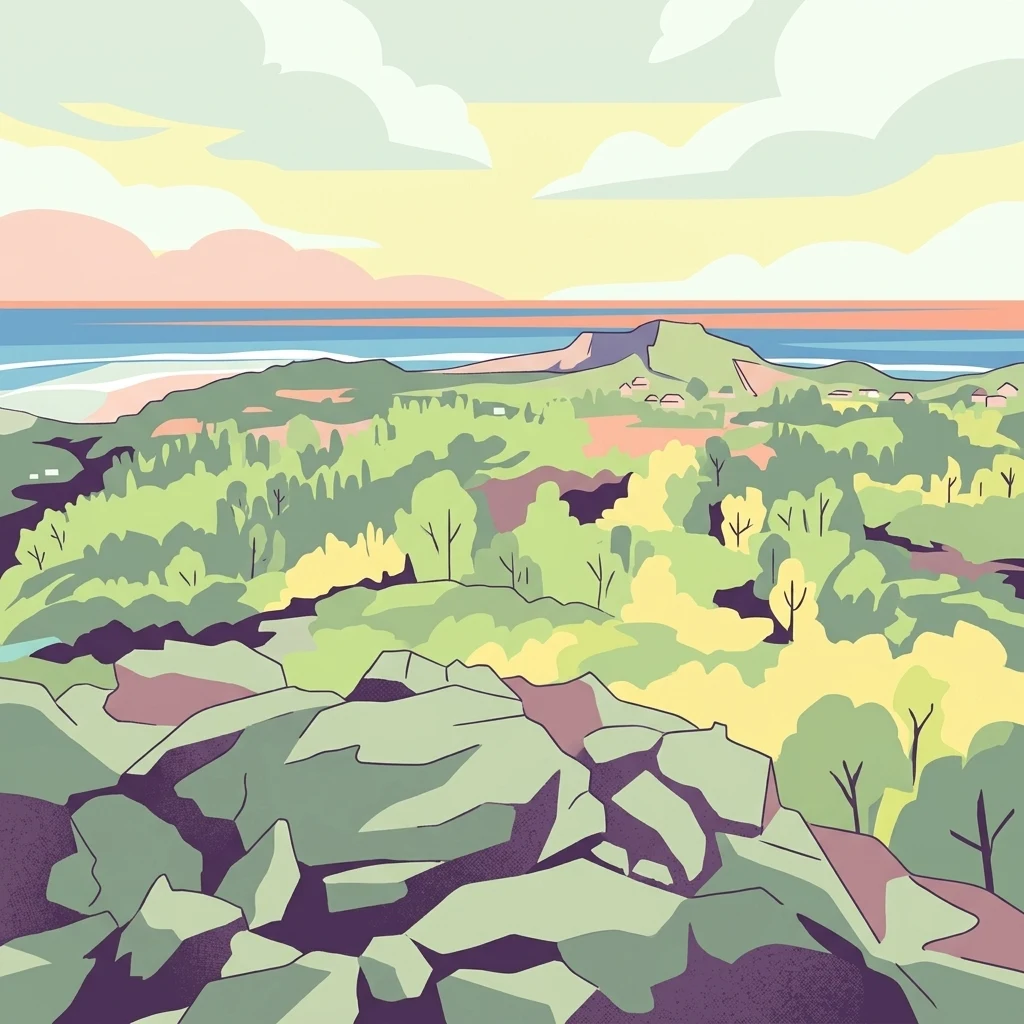
An illustration showing a rocky foreground overlooking a green forest and a distant sea horizon under a pastel sky.

Grande Montagne Nature Reserve

Nature reserve

Park overview

Structured park overview, official facts, and landscape profile for Grande Montagne Nature Reserve

Grande Montagne Nature Reserve park facts, protected area profile, and essential visitor context

Review the core facts for Grande Montagne Nature Reserve, including designation, size, terrain, visitor scale, habitats, and operating context in one park-focused overview.

About Grande Montagne Nature Reserve

Grande Montagne Nature Reserve sits on a high ridge in the interior of Rodrigues, an autonomous outer island of Mauritius deep in the Indian Ocean. Although the reserve itself is small, on the order of a few dozen hectares, it occupies an outsized place in the conservation story of the island. Rodrigues was once covered in native vegetation, but centuries of clearance for agriculture, fuelwood, and grazing reduced the original forest to scattered fragments, leaving the island extraordinarily poor in endemic plants and animals.

Within this context, Grande Montagne came to represent the last substantial patch of upland endemic forest on Rodrigues, climbing above the surrounding lowlands in the central eastern part of the island. Its forest is dense, evergreen, and made up largely of species found nowhere else in the world. Walking through the reserve feels distinctly different from the open coastal and agricultural landscapes that dominate the rest of Rodrigues, and the reserve has been highlighted as the single best place on the island to experience its native botanical heritage.

The reserve is managed as a working conservation project rather than a passive protected area. Restoration teams have planted tens of thousands of native trees and shrubs, gradually reconnecting the forest canopy and bringing back the structural complexity needed by endemic birds, bats, and insects. An on-site education and information centre introduces visitors to Rodrigues' natural and cultural history, including the vanished Solitaire bird and giant tortoises whose remains are preserved within the reserve. Information signs along the trail network explain the work being done and the species being protected.

Equally important is the social dimension of the reserve. The project provides employment to local restoration workers from nearby villages and runs working days with grassroots associations, embedding the forest in the life of the surrounding community. As the last fragment of endemic forest on Rodrigues, Grande Montagne has a significance far beyond its small footprint: it is the de facto ark for the island's surviving endemic biodiversity and a model for community-engaged island restoration.

Quick facts and research context for Grande Montagne Nature Reserve

Grande Montagne Nature Reserve is located in the high Grand Montagne mountains of central eastern Rodrigues, an outer island of the Republic of Mauritius. The fenced core area covers about 25.5 hectares, of which roughly 84 percent has been actively restored to native forest, with over 156,000 endemic plants reintroduced through restoration work led by the Mauritian Wildlife Foundation since the 1980s.

It functions simultaneously as a conservation site, a habitat restoration project, an environmental education center, and a community-based ecotourism destination. The reserve is the last home of several endemic bird and bat species of Rodrigues and hosts forty rare plant species that are successfully conserved on site.

Protection and recognition

Examine documented terrestrial protection scope and official conservation designations.

Grande Montagne Nature Reserve Protection Status and International Recognition

Grande Montagne Nature Reserve maintains a documented terrestrial protection scope within the global conservation network. Review structured designation records, management parameters, and international recognition details.

Protection details

Protection scope
Terrestrial
Transboundary protection
No
Park context

Deeper park guide and search-rich context for Grande Montagne Nature Reserve

Grande Montagne Nature Reserve history, landscape, wildlife, and travel context

Explore Grande Montagne Nature Reserve through its history, landscape character, ecosystems, wildlife, conservation priorities, cultural context, and seasonal travel timing in a structured park guide built for atlas discovery and search intent.

Why Grande Montagne Nature Reserve stands out

Grande Montagne is best known for being the last remaining stronghold of Rodrigues' endemic upland forest and the species that depend on it. It is the only surviving habitat of the Rodrigues Aloe and serves as the principal refuge for the Rodrigues Fruit Bat, the Rodrigues Fody, and the Rodrigues Warbler. The reserve is also recognized as one of the most visible examples of island ecosystem restoration in the western Indian Ocean, where decades of replanting have turned former grazing and degraded land back into functional native forest. Visitors and researchers often associate Grande Montagne with forest regeneration success stories, the recovery of small endemic bird populations, and the discovery of subfossil remains of extinct species such as the Rodrigues Solitaire and giant tortoises.
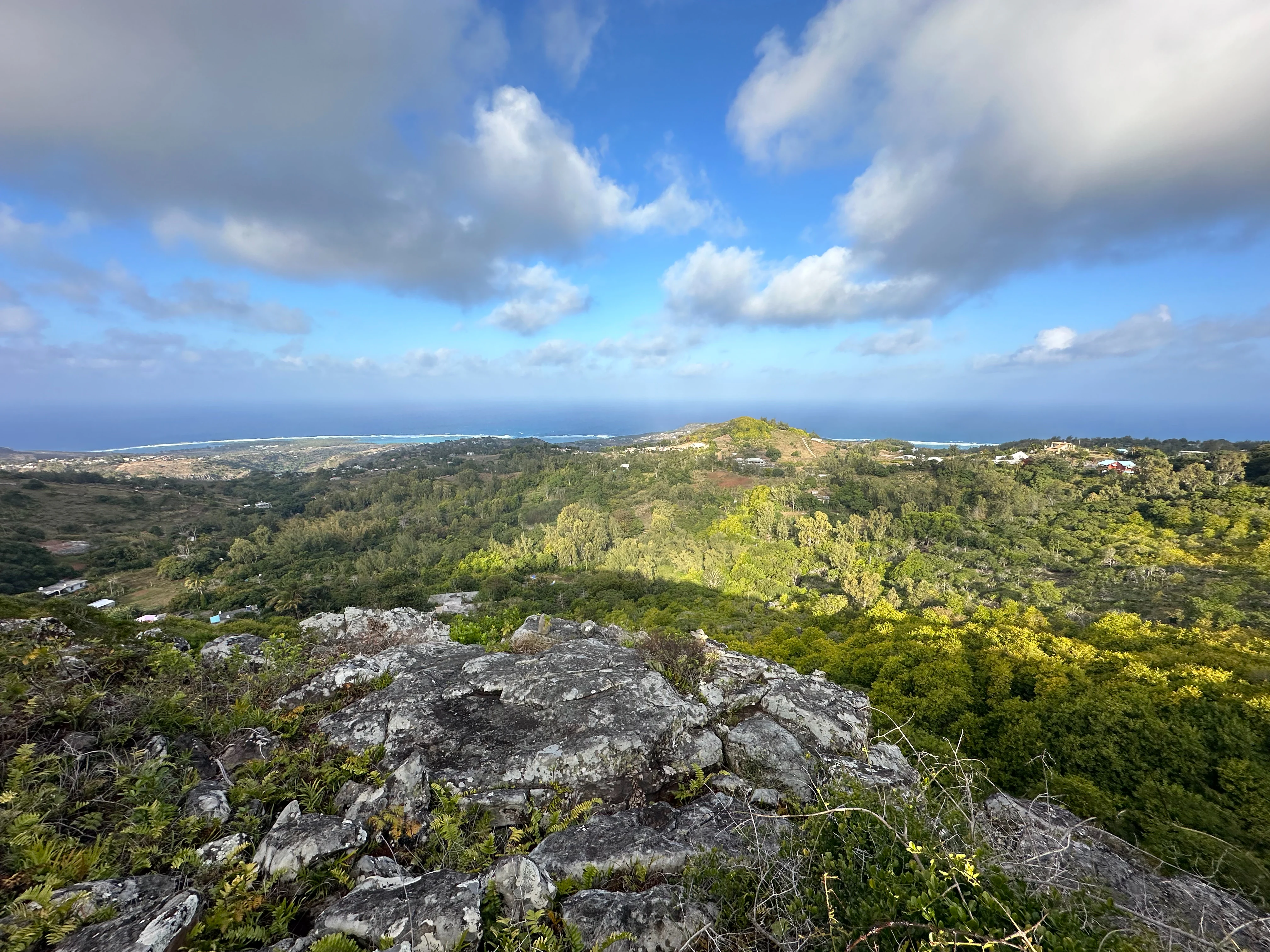
High angle panoramic view from a rocky ridge looking over lush green hills and forests toward the distant blue ocean and island coastline.
Panoramic view over the endemic forest and coast from the Grande Montagne Nature Reserve in Rodrigues.

Grande Montagne Nature Reserve history and protected-area timeline

Grande Montagne began to assume its modern conservation role in the 1980s, when the Mauritian Wildlife Foundation, working alongside the Rodrigues Forestry Services, initiated systematic habitat restoration on what had become badly degraded upland land. Earlier centuries had seen native forest on Rodrigues reduced to tiny remnants through clearance for agriculture and fuel, and the central highland area around Grande Montagne was identified as the priority site for repair.

Restoration work has continued for several decades, with hundreds of thousands of native plants reintroduced over time. A network of trails, lookout points, and an information centre were added to support both management and public engagement. By the early 2010s, the Rodrigues Regional Assembly formally approved plans for the Mauritian Wildlife Foundation to conduct ecotourism activities in the reserve, marking a new phase in which the site became a focal point for environmental education and community involvement on the island.

Although Grande Montagne itself is a relatively recent protected entity, the biodiversity it preserves represents a longer natural history spanning millions of years of island evolution in the western Indian Ocean, including species whose ancestors inhabited Rodrigues long before human arrival.

Grande Montagne Nature Reserve landscape and geographic character

The reserve occupies the upper slopes of the Grand Montagne range in the central eastern highlands of Rodrigues. Its terrain consists of steep ridges and rounded hill crests rising above the surrounding lowlands and the coastal plains to the east. The underlying geology is volcanic, and the deep red and brown soils weathered from basalt shape both the vegetation and the character of the walking trails.

The slopes are covered in regenerating native forest that stands out clearly against the more open agricultural and developed landscapes of lowland Rodrigues. Several lookout points along the trail network offer wide views over the eastern part of the island, down toward the coast and out across the lagoon toward the open Indian Ocean. The combination of elevated terrain, dense forest cover, and commanding viewpoints gives the reserve a strong sense of topographic contrast within an otherwise small and relatively flat island.
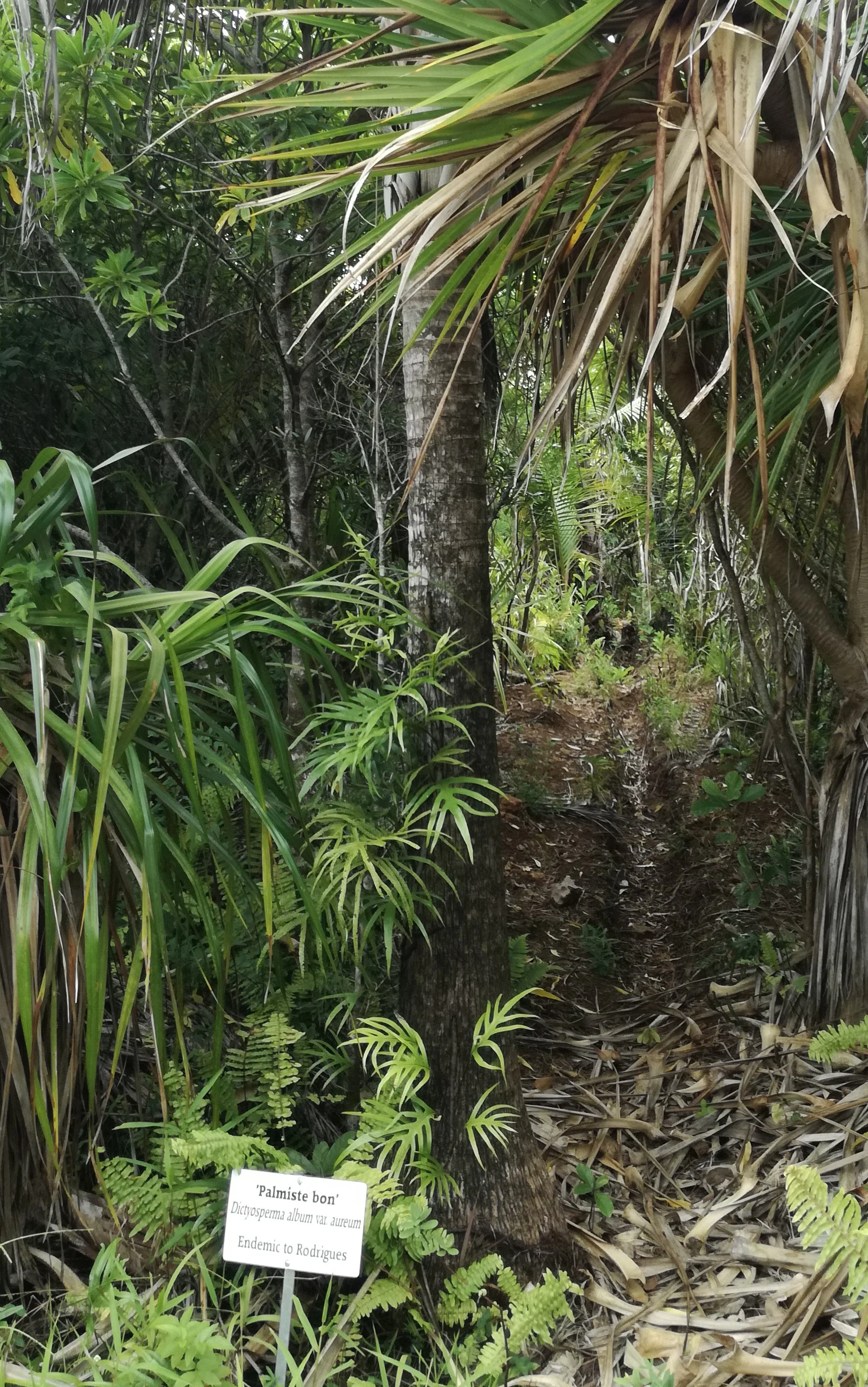
A tall palm tree trunk in a forest with a small identification sign in the foreground, labeled with its name and status as endemic to Rodrigues.
A specimen of the endemic Dictyosperma album var. aureum, also known as the cyclone palm, in the Grande Montagne Nature Reserve.

Grande Montagne Nature Reserve ecosystems, habitats, and plant life

Grande Montagne is ecologically significant as the largest surviving block of native upland forest on Rodrigues and as the only habitat supporting the island's most threatened endemic species. The forest is dominated by indigenous hardwoods, shrubs, palms, and understory plants typical of the Mascarenes, many of which are restricted to Rodrigues or to this single reserve.

The reserve conserves a dense concentration of rare and endemic plants, including the Rodrigues Aloe, a succulent found nowhere else in the wild. Around forty rare Rodriguan plant species are successfully maintained on site. The vegetation is layered, with a relatively low but increasingly closed canopy, an understory of shrubs and ferns, and ground cover that responds visibly to seasonal rainfall patterns. This habitat mosaic supports the small surviving endemic animals whose populations had collapsed elsewhere on the island.
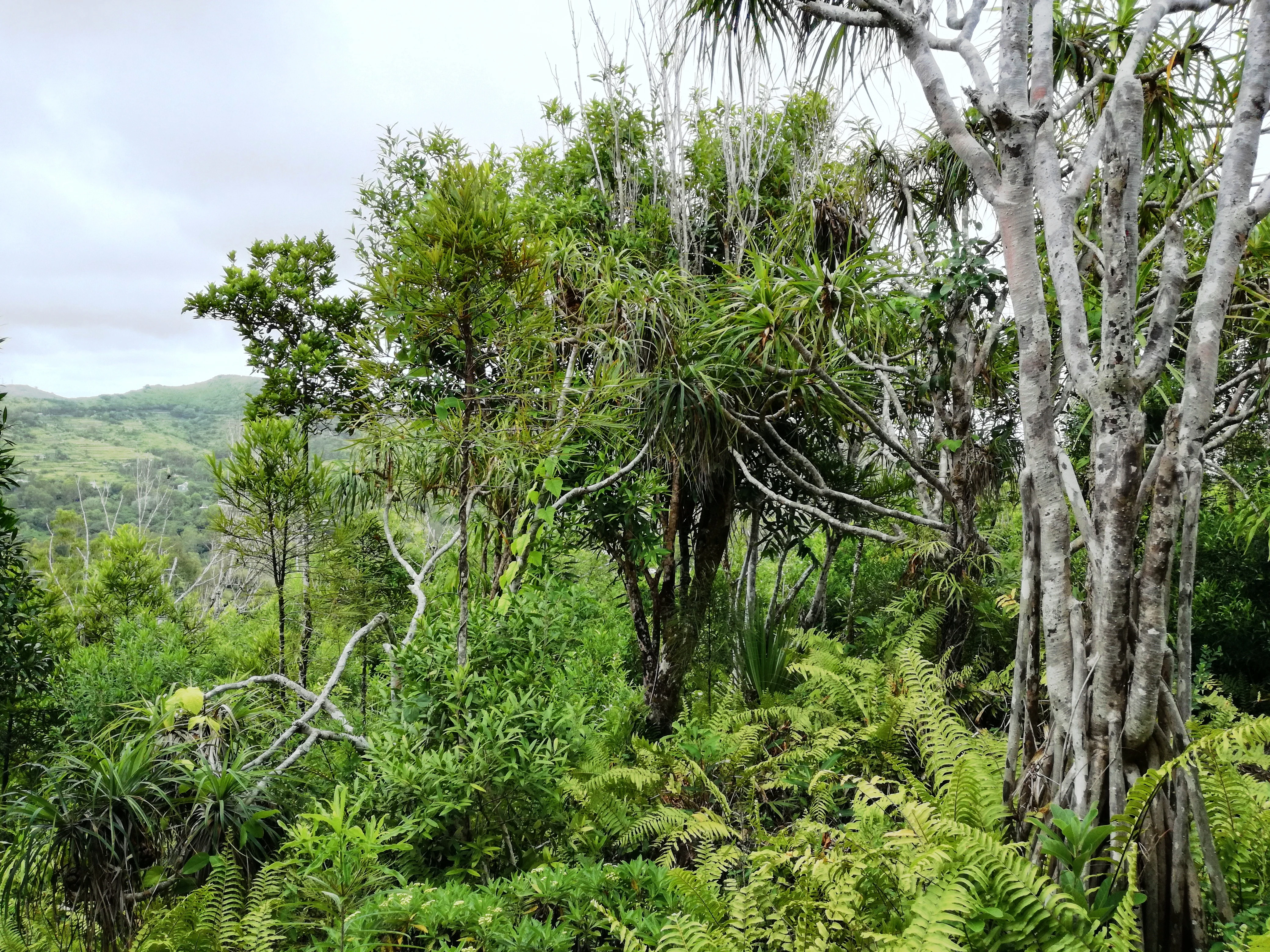
A view of dense forest foliage, featuring ferns, shrubs, and trees with light grey trunks, set against a background of green hills under an overcast sky.
Endemic vegetation within the Grande Montagne Nature Reserve, showcasing the island's unique forest ecosystem.

Grande Montagne Nature Reserve wildlife and species highlights

The reserve is the last reliable habitat for several of Rodrigues' endemic animals. The Rodrigues Fruit Bat, one of the largest fruit bats in the region, roosts and forages in the forest canopy. Two endemic passerine birds, the Rodrigues Fody and the Rodrigues Warbler, depend almost entirely on the regenerating native vegetation for nesting and feeding.

Earlier records suggested that the Fody had declined to as few as about thirty individuals, but by 2010 the population had recovered to several thousand birds, and the warbler had risen to a similar order of magnitude, with much of that recovery attributed to habitat restoration at Grande Montagne. The reserve also shelters native insects and other invertebrates tied to the endemic flora, and its subfossil deposits have revealed the former presence of the Rodrigues Solitaire, a large flightless relative of the pigeon, and giant tortoises, both of which have since gone extinct.

Grande Montagne Nature Reserve conservation status and protection priorities

Grande Montagne's conservation importance lies in its role as the de facto ark for Rodrigues' endemic biodiversity. Almost every surviving endemic bird, bat, and rare plant species on the island has at least part of its future tied to the health of this small patch of forest. The reserve demonstrates how an island ecosystem that had collapsed under prolonged human pressure can, with sustained effort, be reassembled.

Restoration results are unusually well documented: a fenced core area of about 25.5 hectares, more than four-fifths restored, with planting totals exceeding 156,000 individual native plants. Recovery figures for endemic birds underscore the ecological return on that work. The reserve is also central to environmental education on the island, hosting school visits and acting as a demonstration site for habitat restoration methods that can be replicated elsewhere in the Mascarenes.

Grande Montagne Nature Reserve cultural meaning and human context

The reserve is closely woven into the life of the surrounding highland villages of Rodrigues. Local people work as restoration laborers, and grassroots associations organize working days on site, making the forest both a place of employment and an object of local pride. Its inclusion in the Rodrigues Environmental Education Programme means that schoolchildren from across the island visit the reserve to learn about native species, restoration, and the broader natural heritage of Rodrigues.

The presence of subfossil remains of the extinct Rodrigues Solitaire and giant tortoises also gives the site a layered cultural resonance, reminding visitors of the vanished species that once lived alongside the ancestors of the modern Rodriguan community. By combining traditional ecological connection with modern conservation practice, Grande Montagne carries a strong community identity on the island.

Top sights and standout views in Grande Montagne Nature Reserve

Standout qualities of Grande Montagne include its position as the last surviving fragment of native upland forest on Rodrigues, making it the single most important site for the island's endemic biodiversity. It concentrates an unusual density of rare plants and animals into a very small area, including flagship species such as the Rodrigues Fruit Bat, the Rodrigues Fody, the Rodrigues Warbler, and the Rodrigues Aloe.

Equally distinctive is the visible restoration journey underway on the site. Visitors move between patches of mature regenerating forest, more recently replanted areas, and zones where work continues, giving the walk an instructive, almost narrative quality. Combined with sweeping viewpoints over the eastern coast and lagoon, this makes Grande Montagne a compact but unusually rich highlight of any visit to Rodrigues.

Best time to visit Grande Montagne Nature Reserve

The character of Grande Montagne shifts noticeably with the seasons, following the tropical climate of Rodrigues. The cooler and drier months tend to make walking the trails and visiting the viewpoints more comfortable, with clearer skies and better visibility out across the eastern coast and lagoon. Bird and bat activity remains a constant presence throughout the year, but periods when fruiting trees and flowering plants are most active tend to make wildlife encounters particularly rewarding.

The wetter months bring lusher foliage and more vigorous growth in the regenerating forest, but also heavier paths and more variable viewpoint conditions. Because the reserve sits on a ridge, rainfall and storms can close off or limit access to exposed trails; visiting in calmer, drier periods generally offers the most reliable combination of comfortable walking conditions, clear panoramas, and active forest life.
Monthly climate preview

Track long term monthly temperature averages and precipitation patterns for Rodrigues

Grande Montagne Nature Reserve Annual Climate Normals and Temperature Rhythms

Representative coordinate records show measured monthly temperature ranges and precipitation rhythms across the protected landscape from 1991 to 2020. Opening the complete twelve month profile provides granular data for comparing historical weather variations throughout the year.
Annual mean25 °C
23 °C27 °C
Jan27°
Feb27°
Mar27°
Apr26°
May25°
Jun24°
Jul23°
Aug23°
Sep23°
Oct23°
Nov24°
Dec26°
Warmest month
March

27 °C

Coolest month
August

22.6 °C

Wettest month
February

3.4 mm/day

Driest month
August

0.3 mm/day

Park location guide

Geography guide, regional context, and park location map for Grande Montagne Nature Reserve

Grande Montagne Nature Reserve park geography, regions, and map view in Mauritius

Understand where Grande Montagne Nature Reserve sits in Mauritius through a broader geographic reading of the surrounding landscape, nearby location context, and its mapped position within the national park landscape.

How Grande Montagne Nature Reserve fits into Mauritius

Mauritius is an island nation in the Indian Ocean and part of the Mascarene Islands. The country gained independence from Britain in 1968 and became a republic in 1992. It is characterized by a diverse population of primarily Indian and Creole descent, with English and French as official languages and Mauritian Creole as the dominant spoken language.

Wider geography shaping Grande Montagne Nature Reserve in Mauritius

Mauritius is located in the Indian Ocean approximately 2,000 km east of Africa and east of Madagascar. The main island is volcanic in origin, and the country also includes the islands of Rodrigues, Agaléga, and St. Brandon (Cargados Carajos shoals). The territory is part of the Mascarene Islands, with nearby Réunion being a French overseas department.

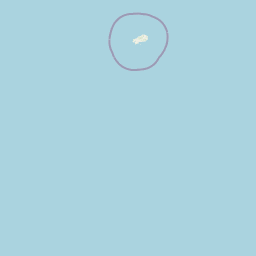
Map view of Grande Montagne Nature Reserve

Use this park location map to pinpoint Grande Montagne Nature Reserve in Mauritius, understand its exact geographic position, and read its mapped placement within the surrounding landscape more clearly.

Pigeon | © OpenStreetMap contributors

Location context for Grande Montagne Nature Reserve

Rodrigues

Visualizing the upland forest terrain, rare flora, and restored habitats of Rodrigues

Grande Montagne Nature Reserve Photos and Scenic Protected Area Landscapes

Visual documentation of Grande Montagne Nature Reserve reveals the steep volcanic ridges and dense native forest canopy that characterize this highland refuge. Examining protected area imagery provides a clear perspective on active island restoration efforts and rare endemic habitats across Rodrigues.

High angle panoramic view from a rocky ridge looking over lush green hills and forests toward the distant blue ocean and island coastline.

A two-story, yellow, colonial-style building housing the visitor center and museum of the Grande Montagne Nature Reserve, nestled at the base of a forested hillside.

A tall palm tree trunk in a forest with a small identification sign in the foreground, labeled with its name and status as endemic to Rodrigues.

A view of dense forest foliage, featuring ferns, shrubs, and trees with light grey trunks, set against a background of green hills under an overcast sky.

Park atlas

Compare surrounding regional geography and connected island conservation landscapes

Parks Near Grande Montagne Nature Reserve and Related Protected Areas

Continue exploring protected areas near Grande Montagne Nature Reserve by browsing adjacent volcanic highland reserves and forest restoration zones. Comparing these regional environments provides deeper context for island biodiversity and regional conservation efforts.
Nature reserveRodrigues
About 11 km away#1 closest

Southwest

François Leguat Giant Tortoise and Cave Reserve: Coastal Karst and Island Conservation Mapping

Protected nature reserve and rewilding landscape in Rodrigues

Gain insights into the geographic and ecological structure of the François Leguat Giant Tortoise and Cave Reserve. This protected area on the Anse Quitor peninsula offers a look at reclaimed limestone terrain, expansive show caves, and the intentional rewilding of indigenous coastal vegetation across a significant fragment of the original island environment.

Established
2007
Relief
Lowland
Access
Easy access
Scope
Terrestrial
A horizontal watercolor painting showing a calm bay with green islands in the distance and a single white bird in flight against a pale sky.
Nature reserveMauritius
About 596 km away#2 closest

West

Round Island Nature Reserve: Protected Volcanic Landscape and Geography of Mauritius

Rugged volcanic terrain and endemic restoration site

Located north of the main Mauritian landmass, Round Island functions as a significant protected nature reserve. This volcanic islet is characterized by dramatic sea cliffs, steep slopes, and recovering palm forest habitats that support a high density of endemic reptiles and birds within its small geographic footprint.

Area
1.69 km²
Established
1957
Relief
Upland
Access
Highly restricted
A horizontal watercolor painting showing green coastal vegetation, a small waterway, and distant hills under a soft sky.
National parkMauritius
About 600 km away#3 closest

West

Île aux Fouquets National Park: Coral Islet Geography and Lighthouse Heritage in Mauritius

Protected maritime landscape and offshore reef terrain

This compact coral island represents a critical piece of the national park system in Mauritius. Known for its distinct limestone geology and nineteenth-century lighthouse ruins, it provides a unique window into the maritime history and offshore reef ecosystems of the Indian Ocean, contrasting with the volcanic landforms of the mainland.

Area
0.025 km²
Established
2004
Relief
Lowland
Access
Remote access
Watercolor illustration of a forest scene with trees, ferns, and distant mountains
National parkMauritius
About 603 km away#4 closest

West

Bras d'Eau National Park: Mauritius National Park Protected Landscape Discovery

Explore coastal terrain, endemic species habitats, and wetland geography.

Bras d'Eau National Park, situated on Mauritius, offers an in-depth look at a protected coastal lowland landscape vital for conservation. This national park showcases remnant forest patches critical for endemic flora and fauna, complemented by a unique system of four mares, including the mangrove-rich Mare sarcelle. Its mapped geography provides context for island ecosystems and serves as a key location for understanding Mauritius's protected natural areas.

Area
4.97 km²
Established
2011
Relief
Lowland
Climate
Tropical
Nature reserveMauritius
About 605 km away#5 closest

West

Ile aux Aigrettes: Exploring the Protected Coral Coastal Landscape of Mauritius

A critical nature reserve and rewilding site in the Grand Port bay

Ile aux Aigrettes represents a unique geographic outpost off the south-east coast of Mauritius, defined by its flat coral limestone terrain. As a protected nature reserve, it offers insights into the recovery of rare dry coastal forest ecosystems and the ongoing scientific efforts to maintain endemic biodiversity on a small maritime scale.

Area
0.27 km²
Established
1965
Relief
Lowland
Access
Easy access
Nature reserveGrand Port District
About 607 km away#6 closest

West

Vallée de Ferney Nature Reserve: Protected Mountain Landscapes in the Grand Port District

Indigenous rainforest, volcanic terrain, and conservation refuge

Located in the Bambou mountains of southeastern Mauritius, Vallée de Ferney is a 200-hectare nature reserve known for its protected indigenous rainforest and ongoing rewilding projects. As a key conservation site in the Grand Port District, the reserve offers a look at rare endemic species and the unique moisture-loving vegetation of the island's eastern volcanic series. Explore the mapped boundaries and natural terrain of this significant protected landscape.

Area
2 km²
Established
2006
Relief
Mountain
Climate
Tropical
A minimalist, flat vector illustration showing a colorful island scene with a waterfall, forest, and surrounding water.
Protected areaRivière du Rempart District
About 608 km away#7 closest

West

Île Plate: Protected Area Geography and Natural Features in Rivière du Rempart District

Island biodiversity and volcanic landscapes in northern Mauritius

Île Plate is a compact island covering approximately 2.5 square kilometres, notable for its basalt geology and status as a protected area. It anchors a wider system of islets, offering a rich study of indigenous vegetation, seabird habitats, and tangible maritime history in the Indian Ocean.

Area
2.53 km²
Relief
Lowland
Access
Moderate access
Scope
Mixed
A minimalist watercolor painting showing green rolling hills and distant terrain on a white background.
Nature reserveMoka District
About 624 km away#8 closest

West

Le Pouce Nature Reserve: Volcanic Geography and Protected Upland Habitat in Mauritius

A rugged basalt peak in the Moka District mountain range.

Le Pouce Nature Reserve guards a critical 0.69 square kilometer patch of upland forest on the slopes of the third highest mountain in Mauritius. This protected area is recognized for its dramatic volcanic terrain and as the rare surviving home for the critically endangered Le Pouce Mountain Screwpine, providing an essential window into the island's unique ecological and geological history within the Moka Range.

Area
0.69 km²
Established
1951
Relief
Mountain
Climate
Tropical

Common questions about visiting, size, designation, and location context for Grande Montagne Nature Reserve

Grande Montagne Nature Reserve FAQs for park facts, access, geography, and protected area context

Find quick answers about Grande Montagne Nature Reserve, including protected-area facts, park geography, trail and visitor context, and how the park fits into its surrounding country and regional landscape.
MoriAtlas Explorer

Continue Your Protected Areas Search Across the Global Atlas

Deepen your exploration by continuing the structured search for national parks and protected areas worldwide. Utilize the comprehensive filtering capabilities to compare different conservation landscapes and refine your understanding of global park geography. Discover more about the distribution and characteristics of protected natural areas.

Global natural geography