
Why Grande Montagne Nature Reserve stands out
Grande Montagne is best known for being the last remaining stronghold of Rodrigues' endemic upland forest and the species that depend on it. It is the only surviving habitat of the Rodrigues Aloe and serves as the principal refuge for the Rodrigues Fruit Bat, the Rodrigues Fody, and the Rodrigues Warbler. The reserve is also recognized as one of the most visible examples of island ecosystem restoration in the western Indian Ocean, where decades of replanting have turned former grazing and degraded land back into functional native forest. Visitors and researchers often associate Grande Montagne with forest regeneration success stories, the recovery of small endemic bird populations, and the discovery of subfossil remains of extinct species such as the Rodrigues Solitaire and giant tortoises.
Grande Montagne Nature Reserve history and protected-area timeline
Grande Montagne began to assume its modern conservation role in the 1980s, when the Mauritian Wildlife Foundation, working alongside the Rodrigues Forestry Services, initiated systematic habitat restoration on what had become badly degraded upland land. Earlier centuries had seen native forest on Rodrigues reduced to tiny remnants through clearance for agriculture and fuel, and the central highland area around Grande Montagne was identified as the priority site for repair.
Restoration work has continued for several decades, with hundreds of thousands of native plants reintroduced over time. A network of trails, lookout points, and an information centre were added to support both management and public engagement. By the early 2010s, the Rodrigues Regional Assembly formally approved plans for the Mauritian Wildlife Foundation to conduct ecotourism activities in the reserve, marking a new phase in which the site became a focal point for environmental education and community involvement on the island.
Although Grande Montagne itself is a relatively recent protected entity, the biodiversity it preserves represents a longer natural history spanning millions of years of island evolution in the western Indian Ocean, including species whose ancestors inhabited Rodrigues long before human arrival.
Grande Montagne Nature Reserve landscape and geographic character
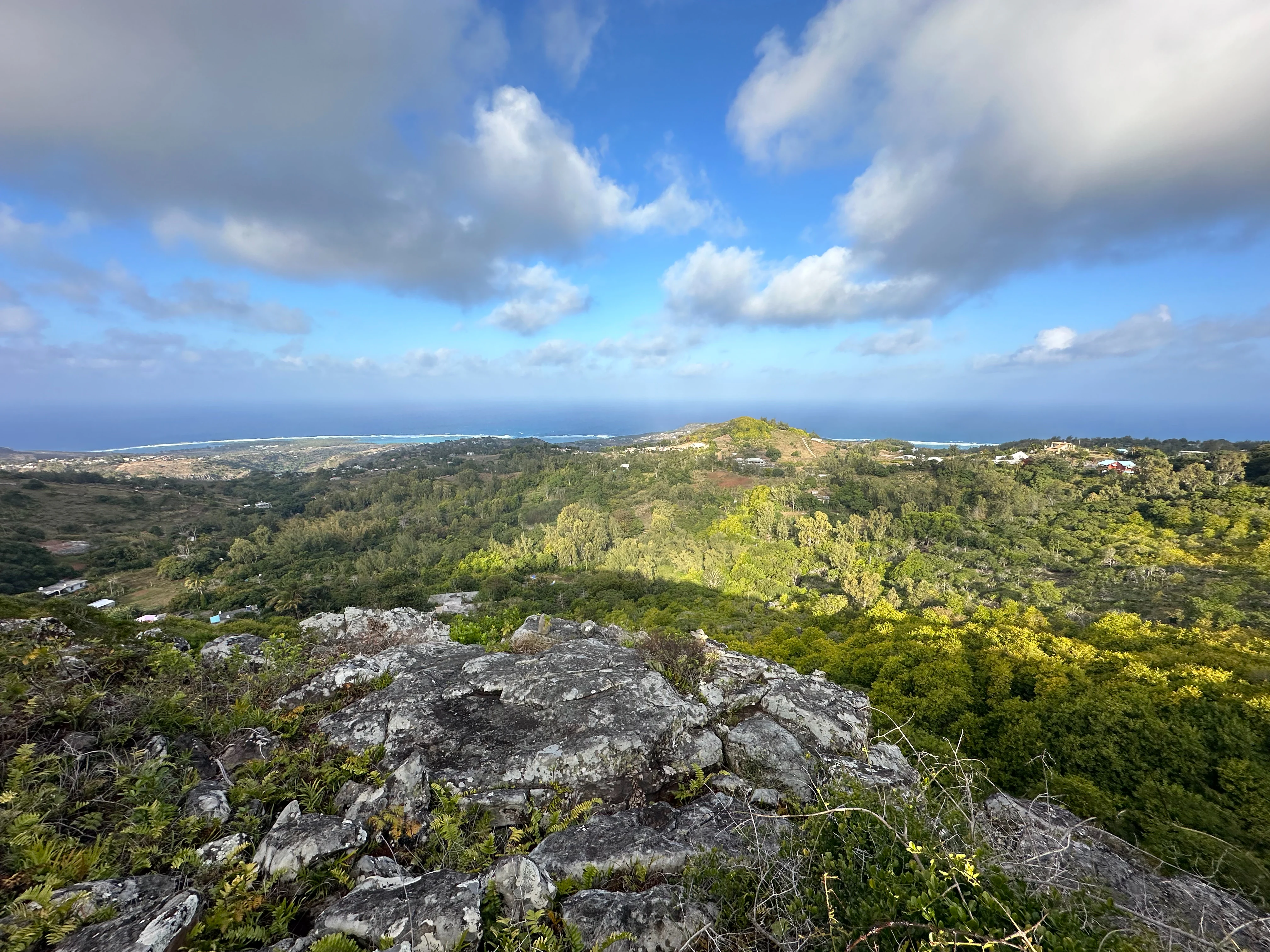
The reserve occupies the upper slopes of the Grand Montagne range in the central eastern highlands of Rodrigues. Its terrain consists of steep ridges and rounded hill crests rising above the surrounding lowlands and the coastal plains to the east. The underlying geology is volcanic, and the deep red and brown soils weathered from basalt shape both the vegetation and the character of the walking trails.
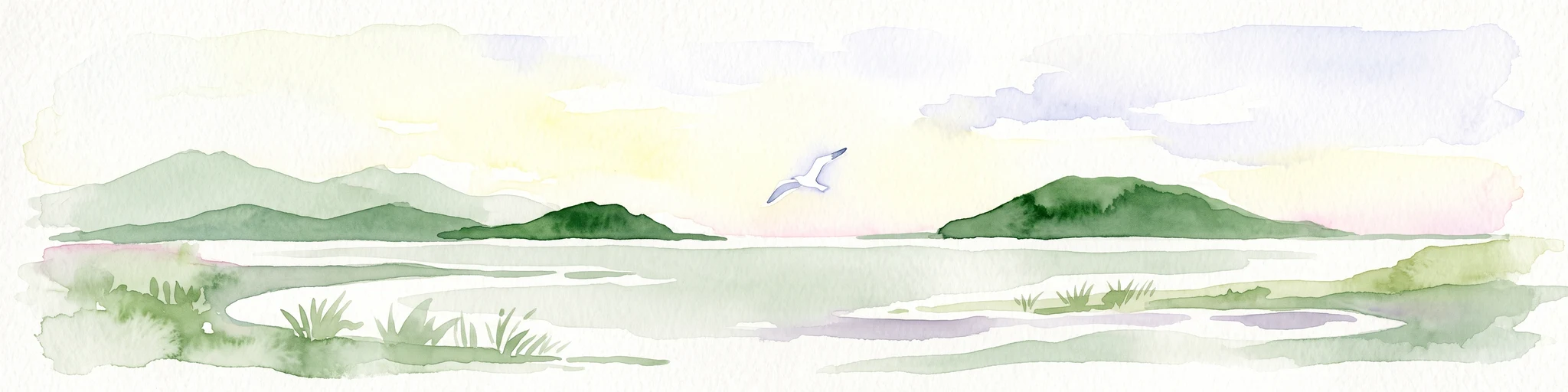
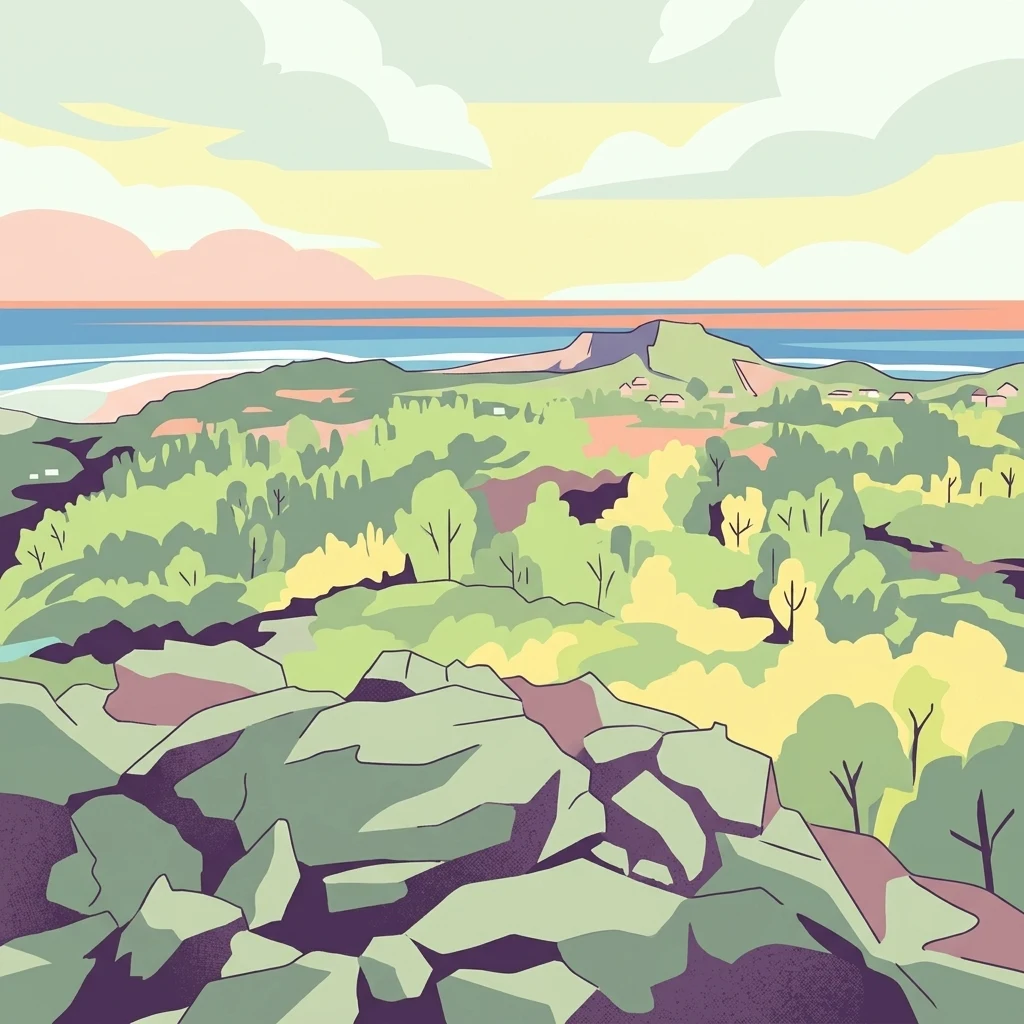
The slopes are covered in regenerating native forest that stands out clearly against the more open agricultural and developed landscapes of lowland Rodrigues. Several lookout points along the trail network offer wide views over the eastern part of the island, down toward the coast and out across the lagoon toward the open Indian Ocean. The combination of elevated terrain, dense forest cover, and commanding viewpoints gives the reserve a strong sense of topographic contrast within an otherwise small and relatively flat island.
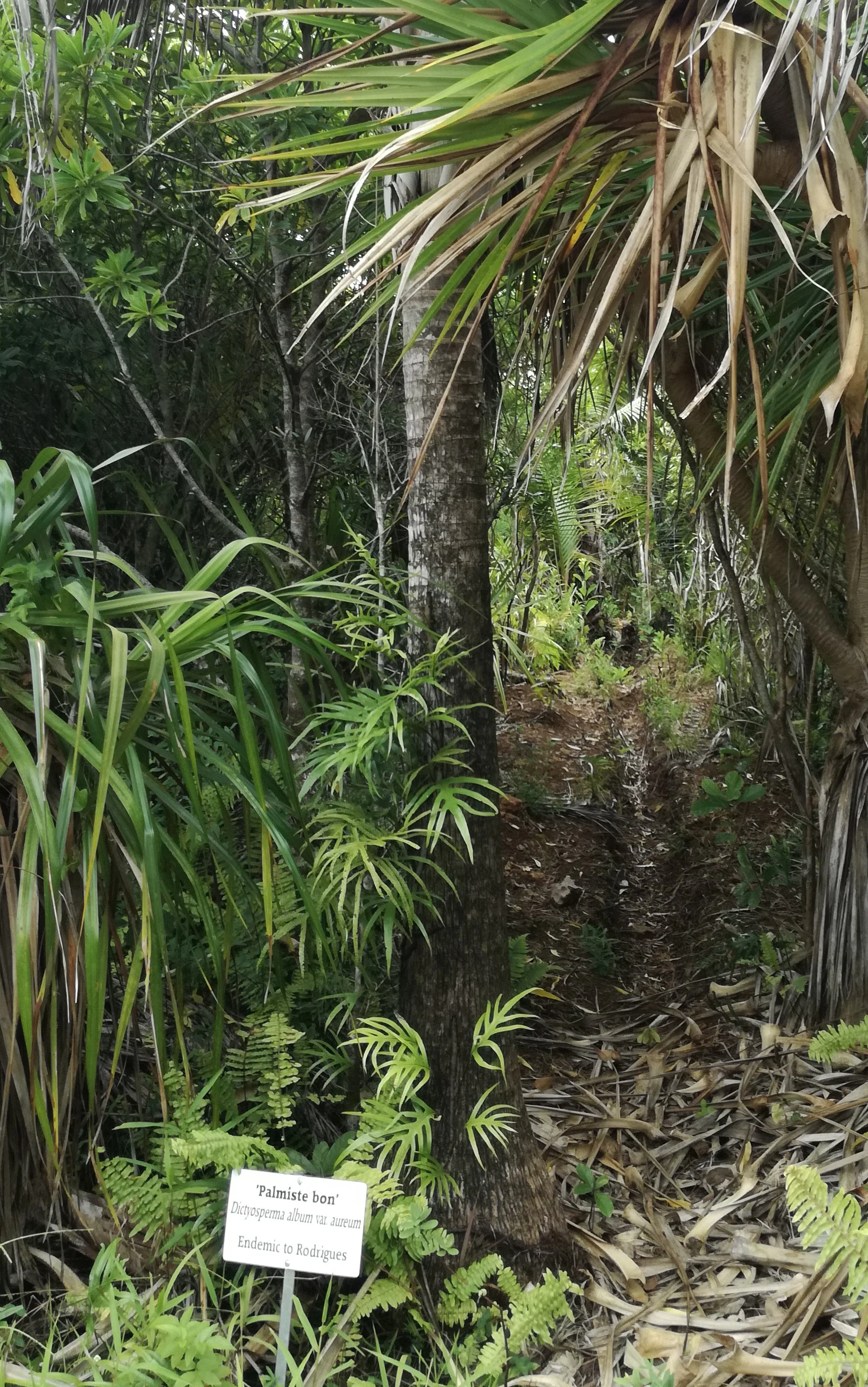
Grande Montagne Nature Reserve ecosystems, habitats, and plant life
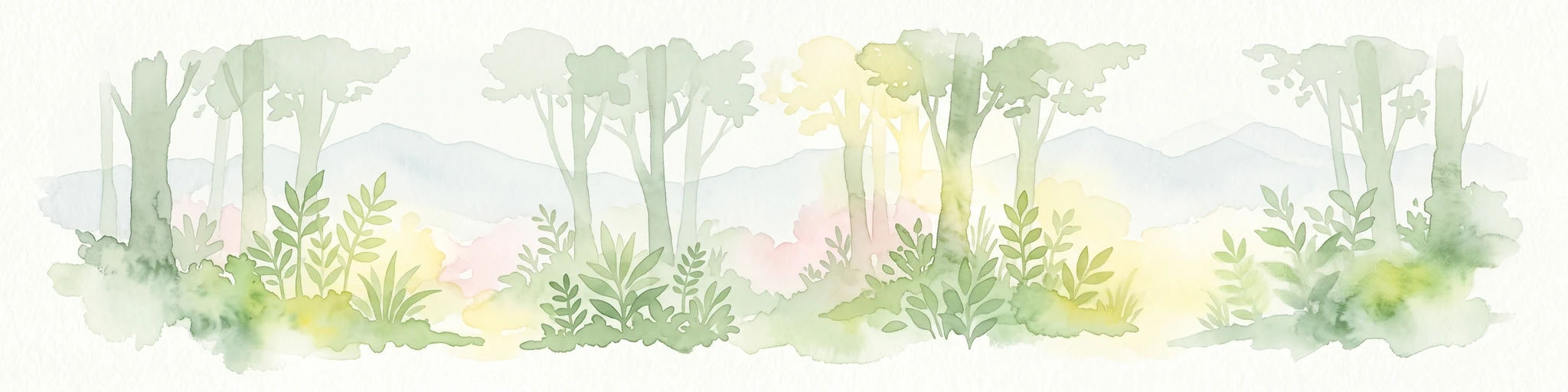
Grande Montagne is ecologically significant as the largest surviving block of native upland forest on Rodrigues and as the only habitat supporting the island's most threatened endemic species. The forest is dominated by indigenous hardwoods, shrubs, palms, and understory plants typical of the Mascarenes, many of which are restricted to Rodrigues or to this single reserve.
The reserve conserves a dense concentration of rare and endemic plants, including the Rodrigues Aloe, a succulent found nowhere else in the wild. Around forty rare Rodriguan plant species are successfully maintained on site. The vegetation is layered, with a relatively low but increasingly closed canopy, an understory of shrubs and ferns, and ground cover that responds visibly to seasonal rainfall patterns. This habitat mosaic supports the small surviving endemic animals whose populations had collapsed elsewhere on the island.
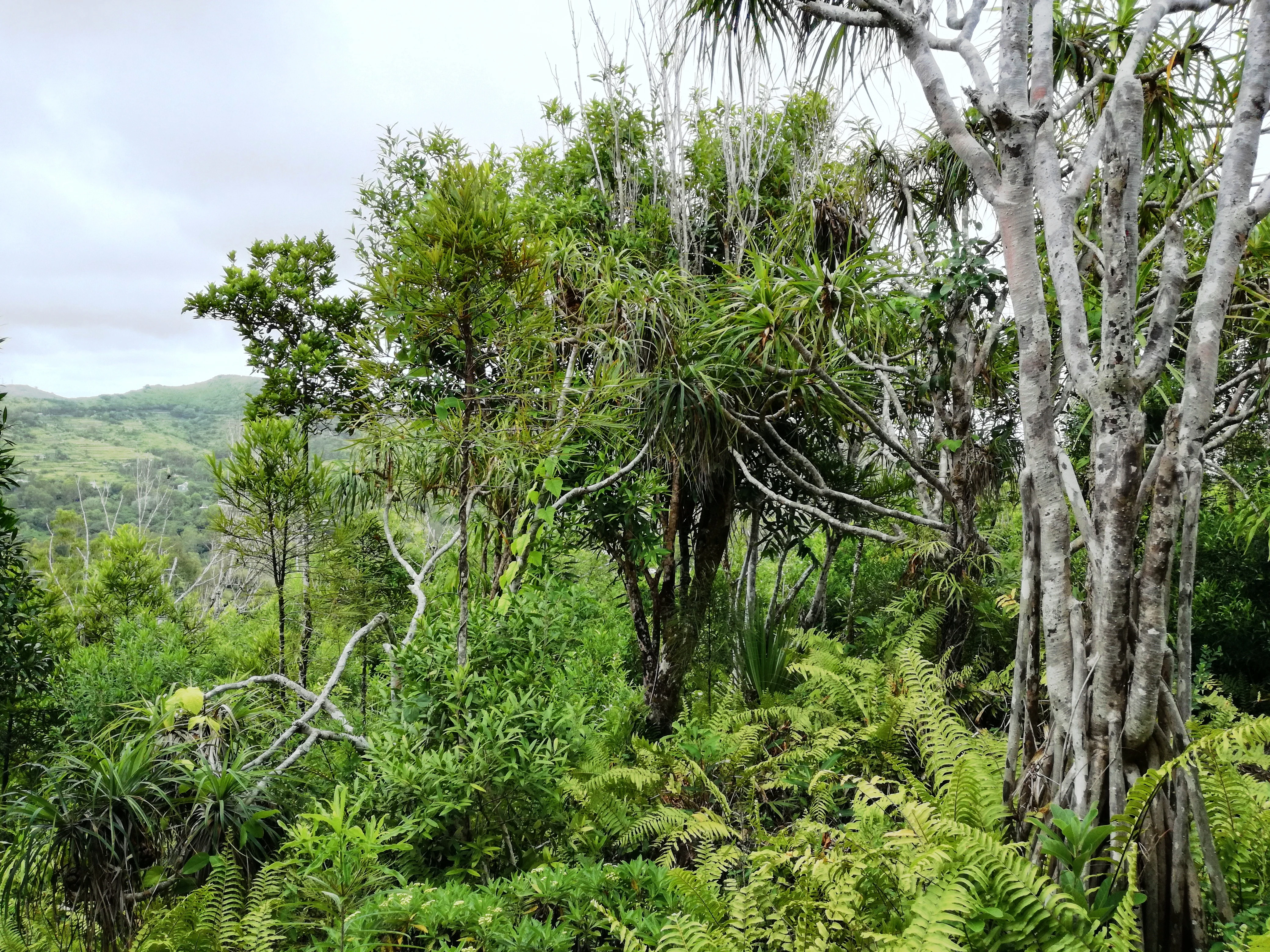
Grande Montagne Nature Reserve wildlife and species highlights
The reserve is the last reliable habitat for several of Rodrigues' endemic animals. The Rodrigues Fruit Bat, one of the largest fruit bats in the region, roosts and forages in the forest canopy. Two endemic passerine birds, the Rodrigues Fody and the Rodrigues Warbler, depend almost entirely on the regenerating native vegetation for nesting and feeding.
Earlier records suggested that the Fody had declined to as few as about thirty individuals, but by 2010 the population had recovered to several thousand birds, and the warbler had risen to a similar order of magnitude, with much of that recovery attributed to habitat restoration at Grande Montagne. The reserve also shelters native insects and other invertebrates tied to the endemic flora, and its subfossil deposits have revealed the former presence of the Rodrigues Solitaire, a large flightless relative of the pigeon, and giant tortoises, both of which have since gone extinct.
Grande Montagne Nature Reserve conservation status and protection priorities
Grande Montagne's conservation importance lies in its role as the de facto ark for Rodrigues' endemic biodiversity. Almost every surviving endemic bird, bat, and rare plant species on the island has at least part of its future tied to the health of this small patch of forest. The reserve demonstrates how an island ecosystem that had collapsed under prolonged human pressure can, with sustained effort, be reassembled.
Restoration results are unusually well documented: a fenced core area of about 25.5 hectares, more than four-fifths restored, with planting totals exceeding 156,000 individual native plants. Recovery figures for endemic birds underscore the ecological return on that work. The reserve is also central to environmental education on the island, hosting school visits and acting as a demonstration site for habitat restoration methods that can be replicated elsewhere in the Mascarenes.
Grande Montagne Nature Reserve cultural meaning and human context
The reserve is closely woven into the life of the surrounding highland villages of Rodrigues. Local people work as restoration laborers, and grassroots associations organize working days on site, making the forest both a place of employment and an object of local pride. Its inclusion in the Rodrigues Environmental Education Programme means that schoolchildren from across the island visit the reserve to learn about native species, restoration, and the broader natural heritage of Rodrigues.
The presence of subfossil remains of the extinct Rodrigues Solitaire and giant tortoises also gives the site a layered cultural resonance, reminding visitors of the vanished species that once lived alongside the ancestors of the modern Rodriguan community. By combining traditional ecological connection with modern conservation practice, Grande Montagne carries a strong community identity on the island.
Top sights and standout views in Grande Montagne Nature Reserve
Standout qualities of Grande Montagne include its position as the last surviving fragment of native upland forest on Rodrigues, making it the single most important site for the island's endemic biodiversity. It concentrates an unusual density of rare plants and animals into a very small area, including flagship species such as the Rodrigues Fruit Bat, the Rodrigues Fody, the Rodrigues Warbler, and the Rodrigues Aloe.
Equally distinctive is the visible restoration journey underway on the site. Visitors move between patches of mature regenerating forest, more recently replanted areas, and zones where work continues, giving the walk an instructive, almost narrative quality. Combined with sweeping viewpoints over the eastern coast and lagoon, this makes Grande Montagne a compact but unusually rich highlight of any visit to Rodrigues.
Best time to visit Grande Montagne Nature Reserve
The character of Grande Montagne shifts noticeably with the seasons, following the tropical climate of Rodrigues. The cooler and drier months tend to make walking the trails and visiting the viewpoints more comfortable, with clearer skies and better visibility out across the eastern coast and lagoon. Bird and bat activity remains a constant presence throughout the year, but periods when fruiting trees and flowering plants are most active tend to make wildlife encounters particularly rewarding.
The wetter months bring lusher foliage and more vigorous growth in the regenerating forest, but also heavier paths and more variable viewpoint conditions. Because the reserve sits on a ridge, rainfall and storms can close off or limit access to exposed trails; visiting in calmer, drier periods generally offers the most reliable combination of comfortable walking conditions, clear panoramas, and active forest life.