Why Khao Pu, Khao Ya National Park stands out
Khao Pu, Khao Ya is best known for its remarkable ecological diversity spanning three provinces and its profound cultural significance as a sacred landscape in southern Thailand. The park protects a substantial tract of tropical rainforest in the Banthat mountain range and serves as habitat for endangered species including the Malayan tapir, serow, yellow-throated marten, and palm civet. Beyond its natural value, the park is deeply tied to local spiritual traditions, with Khao Pu being regarded as the dwelling place of the Ta Pu spirit, a half-human, half-Gandharvas figure symbolizing goodness and purity. The landscape features distinctive attractions including Matcha Cave with its Buddha statues and fish lake, the seven-tiered Pak Jam Waterfall, and the Bee-hive Cliff viewpoint offering panoramic views of the mountain range.
Khao Pu, Khao Ya National Park history and protected-area timeline
Khao Pu and Khao Ya mountains hold deep spiritual significance for communities in Phatthalung Province, predating the formal establishment of the national park. Local belief holds that Khao Pu is the dwelling place of the Ta Pu spirit, a mythological half-human, half-Gandharvas figure associated with music and artistic expression. This spiritual dimension has shaped local practices and seasonal ceremonies that continue to characterize the region's cultural calendar. The annual "wan wang" or "free day" ceremony, held around April to May, mirrors aspects of Songkran (Thai New Year) but uniquely allows monks to participate alongside laypeople. The ceremony involves gentle water pouring over Buddha statues, monks, and elders, accompanied by folk storytelling, dancing, and games during the three-day observance. A second major ceremony, "Ching Pretah Day" in September or October, represents a traditional offering to ancestor spirits, ghosts, and demons, featuring specific desserts symbolizing different objects such as blankets, coins, and jewelry, with participants partaking in the offerings as a tradition believed to bring good fortune.
Khao Pu, Khao Ya National Park landscape and geographic character
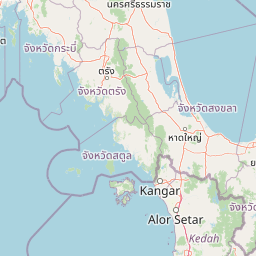
The terrain of Khao Pu–Khao Ya National Park is defined by the ridgeline of the Nakhon Si Thammarat Range, creating a mountainous landscape with steep slopes and deep valleys that capture moisture from seasonal rains. Hin Tan Hill stands as the park's highpoint at 877 meters, offering commanding views over the surrounding forest and provinces. The tropical rainforest dominates the lower slopes and valley floors, while evergreen forest patches persist in higher elevations and on slopes with different moisture regimes. The park's central location serves as a drainage divide, with streams and smaller watercourses flowing in different directions toward the Pak Panang River system to the east and the Trang River system to the west. This watershed function has made the forest cover critically important for downstream water quality and availability for agricultural and domestic use in the surrounding provinces.
Khao Pu, Khao Ya National Park ecosystems, habitats, and plant life
The ecological character of Khao Pu–Khao Ya is shaped by its location in the southern Thai peninsula within the Nakhon Si Thammarat Range, an area recognized for its high biodiversity. Approximately 60 percent of the park supports tropical rainforest, with the remainder comprising evergreen forest in certain areas. The park contains a remarkable diversity of plant species, including hardwoods such as Hopea odorata, Semecarpus curtisii, and Intsia palembanica, species valued for construction and traditionally used in local architectural design. The forest supports complex ecological communities from the valley floors to the ridgelines, with different forest types providing varied habitats. The watershed function of the park extends beyond its boundaries, with the water sources of the La Mai, Mai Siab, Cha-Uat, Lamphu Ra, and Lamor canals all originating within the protected area, linking forest conservation directly to downstream ecosystems and community water security.
Khao Pu, Khao Ya National Park wildlife and species highlights
Khao Pu–Khao Ya National Park supports remarkable faunal diversity with 162 documented animal species across multiple taxonomic groups. Mammal populations include approximately 60 species, with several protected under Thailand's Wildlife Preservation and Protection Act, including the Malayan tapir (protected since 1992), palm civet, serow, and yellow-throated marten. The park's reptile fauna comprises 67 species, featuring the blue-winged flying lizard, equatorial spitting cobra, southern curved-toed gecko, roughneck monitor lizard, and various cave-dwelling snake species. Birdlife includes the black-headed bulbul, oriental dwarf kingfisher, and puff-backed bulbul, while insect diversity encompasses 70 species including notable butterflies such as Troides amphrysus and the Malayan jungleglory. Many of these species face conservation pressures, with the park providing critical habitat for populations of endangered animals in southern Thailand.
Khao Pu, Khao Ya National Park conservation status and protection priorities
The establishment of Khao Pu–Khao Ya as Thailand's 42nd national park in 1982 reflected recognition of the area's ecological significance within the southern peninsula's forest ecosystems. The park forms part of a broader conservation landscape that includes the adjacent Khao Banthat Wildlife Sanctuary, creating a connected protected area complex that supports wildlife movement and ecological processes across larger spatial scales. The watershed function of the park adds a conservation dimension beyond biodiversity protection, as the forest cover maintains water quality and regulates flow for canals and rivers serving agricultural communities in Phatthalung and Trang provinces. Several species within the park receive legal protection under Thailand's Wildlife Preservation and Protection Act, including the Malayan tapir which has been protected since 1992, reflecting ongoing conservation priorities for endangered fauna in this region.
Khao Pu, Khao Ya National Park cultural meaning and human context
Khao Pu–Khao Ya holds profound cultural significance for communities in Phatthalung Province, where the mountains have been considered sacred spaces for generations. The belief that Khao Pu houses the Ta Pu spirit, a mythological being combining human and divine characteristics, has shaped local spiritual practices and created a cultural landscape where natural features carry symbolic meaning. These traditions persist through annual ceremonies that blend Buddhist practices with older animist beliefs, including the "wan wang" ceremony resembling Songkran but uniquely incorporating monastic participation, and the "Ching Pretah" observance involving offerings to spirits and ancestors. The local naming of the area as "Bha Brommajan" (forest of virginity) reflects values placed on the landscape's preserved, pure character, connecting environmental stewardship to cultural identity in this southern Thai region.
Top sights and standout views in Khao Pu, Khao Ya National Park
The park offers diverse attractions spanning natural landscapes and cultural sites. Matcha Cave features Buddha statues, a fish lake, and stalactite formations, accessible via two trails from the visitor center. Pak Jam Waterfall presents a seven-tiered cascade in Trang Province, reachable by approximately one hour's walk. The Bee-hive Cliff viewpoint provides panoramic views of the Banthat range and park interior, situated 250 meters from the visitor center with access by foot or bicycle, where thousands of bee colonies nest during the February to April dry season. Nan-Prew Waterfall in Nakhon Si Thammarat Province offers a stepped cascade originating from the Banthat Range. These attractions complement the park's core value as a protected tropical forest and sacred cultural landscape in southern Thailand.
Best time to visit Khao Pu, Khao Ya National Park
The park experiences a tropical climate with temperatures ranging from 20 to 35 degrees Celsius and a rainy season extending from May through December, when annual precipitation reaches 1600 to 2500 millimeters. The period from February to April offers drier conditions suitable for outdoor exploration and provides the best opportunity to observe bee colonies at the Bee-hive Cliff viewpoint, as this season marks the annual nesting period. Visitors seeking to experience the park's cultural ceremonies may plan around the traditional observances: "wan wang" in April or May and "Ching Pretah" in September or October. The cooler months outside the intense rainy season generally provide more comfortable conditions for hiking and sightseeing, though the wet season transforms waterfalls and forest streams into more impressive displays.