

Mori Atlas logo
National parkLunugamvehera National Park

Explore the mapped boundaries and natural terrain of this national park in Sri Lanka.

Lunugamvehera National Park: Sri Lanka's Protected Landscape and Geographic Context

Lunugamvehera National Park represents a significant protected area within the island nation of Sri Lanka. This page offers an atlas-driven exploration of its geographic identity, detailing its mapped boundaries and natural landscape context. Understand how this national park fits within the broader geography of Sri Lanka, providing a factual basis for discovering protected lands.

dry zone ecosystemelephant corridorwetland habitatSri Lankan national parkwater bird habitatprotected area

Lunugamvehera National Park

National park

Park overview

Structured park overview, official facts, and landscape profile for Lunugamvehera National Park

Lunugamvehera National Park park facts, protected area profile, and essential visitor context
Review the core facts for Lunugamvehera National Park, including designation, size, terrain, visitor scale, habitats, and operating context in one park-focused overview.

About Lunugamvehera National Park

Lunugamvehera National Park represents a significant protected area in Sri Lanka's southern dry zone, created in December 1995 to preserve both the ecological integrity of the Lunugamvehera reservoir catchment and the diverse wildlife populations inhabiting this semi-arid landscape. The park straddles the boundary between Uva and Southern provinces, placing it at a strategic intersection of several major protected areas in the region. Its establishment was driven by the recognition that the reservoir's watershed and the surrounding forests provide essential ecosystem services that extend well beyond the park's boundaries. The national park functions as an ecological bridge, enabling elephant populations to move safely between Yala National Park to the east and Udawalawe National Park to the northeast, addressing a critical conservation need in a region where habitat fragmentation has increasingly isolated wildlife populations. The park's drainage basin feeds into the Kirindi Oya river system, which supports five downstream tanks, making the catchment area vital for regional water security and agricultural sustainability. Additionally, the park contributes to maintaining the wetland characteristics of Bundala National Park, located nearby, which holds Ramsar convention status as an important wetland. The park reopened to the public following the end of the Sri Lankan civil war, allowing visitors to experience this distinctive dry zone ecosystem.

Quick facts and research context for Lunugamvehera National Park

Lunugamvehera National Park covers 23,498.8 hectares in Sri Lanka's Dry zone, located in the Uva and Southern provinces near Hambantota. Established on December 8, 1995, the park is managed by the Department of Wildlife Conservation and serves as a critical wildlife corridor for elephants migrating between Yala and Udawalawe National Parks. The elevation averages 91 meters with mean annual temperature around 30°C. The park contains the Lunugamvehera reservoir along with two smaller reservoirs, totaling roughly 14% of the park's area. After being closed during the Sri Lankan civil war, the park has reopened to visitors.

Park context

Deeper park guide and search-rich context for Lunugamvehera National Park

Lunugamvehera National Park history, landscape, wildlife, and travel context
Explore Lunugamvehera National Park through its history, landscape character, ecosystems, wildlife, conservation priorities, cultural context, and seasonal travel timing in a structured park guide built for atlas discovery and search intent.

Why Lunugamvehera National Park stands out

Lunugamvehera National Park is best known for its role as a vital elephant corridor connecting Yala and Udawalawe National Parks, making it one of the most important pathways for elephant movement in southern Sri Lanka. The park is also recognized as a significant habitat for water birds and as a critical catchment area protecting the hydrology of the downstream Kirindi Oya tank system. Its position within the Dry zone, characterized by scrub forest and grassland mosaic, provides crucial drought-resistant habitat for wildlife during the dry season when water becomes scarce across the region.

Lunugamvehera National Park history and protected-area timeline

Lunugamvehera National Park was officially declared a protected area on December 8, 1995, making it one of Sri Lanka's more recently established national parks. The declaration came as part of broader efforts to expand the network of protected areas in the country's Dry zone and to address the growing conservation challenges facing wildlife populations in southern Sri Lanka. The primary motivation for establishing the park was the need to protect the catchment area of the Lunugamvehera reservoir, which serves as a critical water source for downstream agricultural activities and maintains the ecological health of the Kirindi Oya river system. Following its establishment, the park faced a significant period of closure during the Sri Lankan civil war, which prevented public access and limited management activities. The reopening of the park after the conflict's conclusion marked a new chapter in its management and visitor engagement, allowing the Department of Wildlife Conservation to develop the park's potential for both conservation and sustainable tourism.

Lunugamvehera National Park landscape and geographic character

The landscape of Lunugamvehera National Park exemplifies the Dry zone ecological zone of Sri Lanka, characterized by gently undulating terrain with an average elevation of 91 meters above sea level. The park's terrain is dominated by a mosaic of scrubland and grassland, interspersed with areas of denser forest that exhibit multiple canopy layers. The Lunugamvehera reservoir dominates the western portion of the park, covering approximately 3,283 hectares, which represents about 14 percent of the total park area. Two smaller reservoirs supplement the main water body, providing additional aquatic habitat within the protected area. The vegetation pattern reflects the park's location in the Dry zone, where annual rainfall averages around 1,000 millimeters in the nearby Thanamalvila area, with precipitation decreasing both from north to south and from west to east across the park. The landscape experiences a pronounced dry season each year, with relief provided by the southwestern monsoon rains that bring the majority of annual precipitation.

Lunugamvehera National Park ecosystems, habitats, and plant life

The ecological character of Lunugamvehera National Park reflects the distinctive conditions of Sri Lanka's Dry zone, where vegetation has adapted to seasonal drought and relatively low annual rainfall. The forest communities within the park display multiple canopy layers, creating diverse microhabitats for various species. The scrubland and grassland components of the landscape represent a mosaic pattern, with different plant communities occupying distinct zones based on soil moisture availability and topography. Key tree species include Drypetes sepiaria, Manilkara hexandra, Schleichera oleosa, Lannea coromandelica, and Diospyros ovalifolia, representing the characteristic dry zone forest composition. The grassland areas contain numerous grass species and are particularly prevalent in areas of abandoned chena (shifting cultivation) lands. Teak and eucalyptus plantations have been established within the park in more recent times, representing modified habitat areas. The seasonal nature of rainfall in this region creates distinct ecological conditions throughout the year, with the landscape transforming dramatically between the wet and dry seasons.

Lunugamvehera National Park wildlife and species highlights

Lunugamvehera National Park supports remarkable biodiversity, with documented populations including 43 mammal species, 183 bird species, 33 reptile species, 12 amphibian species, and 21 fish species. The park's most notable mammalian resident is the Sri Lankan elephant, which uses the area as part of a vital migration corridor between Yala and Udawalawe National Parks. Other common large mammals include water buffalo, Sri Lankan sambar deer, wild boar, Sri Lankan spotted chevrotain, grizzled giant squirrel, Sri Lankan axis deer, and Asian palm civet. The park holds special conservation significance for the tufted gray langur, one of Sri Lanka's endemic primate species that can be found within the protected area. The amphibian fauna includes endemic species such as Bufo atukoralei and Fejervarya pulla. The aquatic environment supports mugger crocodile, while the bird population features impressive water birds including grey heron, black-headed ibis, Asian openbill, painted stork, and spot-billed pelican, making the park an important habitat for colonial waterbird nesting and foraging.

Lunugamvehera National Park conservation status and protection priorities

Lunugamvehera National Park fulfills several important conservation functions within Sri Lanka's protected area network. The park serves as a critical wildlife corridor enabling elephant movement between Yala and Udawalawe National Parks, addressing the urgent need to maintain connectivity between fragmented protected areas in the southern dry zone. The catchment area protection role of the park is essential for maintaining water security for the five downstream tanks in the Kirindi Oya system, linking the park's conservation value to broader regional sustainability. The park's contribution to maintaining the wetland characteristics of Bundala National Park, a Ramsar site, extends its conservation significance beyond its own boundaries. However, the park has faced conservation challenges, including reports of translocated elephants starving after relocation attempts, highlighting the complexity of managing wildlife populations in dry zone habitats. The protection of the tufted gray langur within the park adds to its conservation significance as a species endemic to Sri Lanka.

Lunugamvehera National Park cultural meaning and human context

Lunugamvehera National Park is situated in a region of Sri Lanka that has historical connections to traditional agricultural practices, including the ancient tank (reservoir) irrigation systems that have shaped the landscape for centuries. The Lunugamvehera reservoir itself is part of this heritage of water management, providing irrigation water for downstream agricultural lands through the chain of five tanks along the Kirindi Oya. The park's location in the Uva and Southern provinces places it within a cultural landscape where human settlement and land use have interacted with the natural environment over generations, though the primary cultural context is tied to the reservoir system's historical and contemporary importance to local communities.

Best time to visit Lunugamvehera National Park

The best time to visit Lunugamvehera National Park aligns with Sri Lanka's dry season, typically from May to September, when wildlife becomes more concentrated around the remaining water sources and visibility improves. The southwestern monsoon season, which brings rainfall to the region from May through September, marks the period when the landscape remains relatively green and water sources are replenished. However, the park's location in the Dry zone means that even during this period, the climate remains warm with mean temperatures around 30°C. The period immediately after the monsoon rains often offers excellent wildlife viewing as animals congregate around the reservoir and smaller water bodies. Visitors should be prepared for hot and dry conditions year-round, with the possibility of experiencing the park's full range of seasonal changes depending on timing.
Park location guide

Geography guide, regional context, and park location map for Lunugamvehera National Park

Lunugamvehera National Park park geography, regions, and map view in Sri Lanka
Understand where Lunugamvehera National Park sits in Sri Lanka through a broader geographic reading of the surrounding landscape, nearby location context, and its mapped position within the national park landscape.

How Lunugamvehera National Park fits into Sri Lanka

Sri Lanka is a tropical island nation in South Asia with a recorded history spanning over 3,000 years. Formerly known as Ceylon, it became independent in 1948 and adopted its current constitutional name in 1972. The country features diverse geography ranging from coastal plains to mountainous highlands and maintains a population exceeding 22 million.

Wider geography shaping Lunugamvehera National Park in Sri Lanka

Sri Lanka is an island nation in the Indian Ocean, positioned southwest of the Bay of Bengal. It is separated from India by the Gulf of Mannar and Palk Strait to the northwest. The island has a pear-like shape with diverse terrain including coastal plains, central highlands, and river valleys.

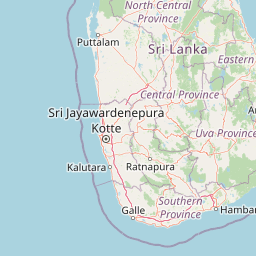
Map view of Lunugamvehera National Park

Use this park location map to pinpoint Lunugamvehera National Park in Sri Lanka, understand its exact geographic position, and read its mapped placement within the surrounding landscape more clearly.

Pigeon | © OpenStreetMap contributors

Location context for Lunugamvehera National Park

Southern ProvinceUva Province
Park atlas

Compare regional conservation landscapes and trace vital elephant corridors within Sri Lanka's southern Dry Zone.

Explore Connected Protected Areas and National Parks Near Lunugamvehera National Park
After exploring Lunugamvehera National Park, browse other national parks and protected areas within Sri Lanka's southern Dry Zone, focusing on connected wildlife habitats and regional ecosystems. Compare their unique geographies, conservation priorities, and roles as elephant migration routes to understand the broader protected-area network.
National parkSouthern Province

Yala National Park: National Park Protected Landscape and Geographic Exploration

Mapped boundaries and regional context in Southern Province

Investigate Yala National Park, a protected national park situated in the Southern Province of Sri Lanka. This entry focuses on its geographic identity, detailing mapped boundaries and the surrounding landscape context crucial for atlas-based exploration and understanding protected area distributions. Gain insight into the park's role as a significant natural landmark.

Area
978.807 km²
Established
1938
IUCN
II
Visitors
400K annual
National parkSri Lanka

Udawalawe National Park: National Park Protected Landscape and Geographic Atlas

Explore Sri Lanka's mapped natural terrain and park boundaries.

Gain a comprehensive atlas-level understanding of Udawalawe National Park, a key protected landscape in Sri Lanka. This entry focuses on the park's distinct geographic identity, its mapped boundaries, and its significance as a protected area within the island's diverse natural terrain. Explore how this national park contributes to the regional geography and provides structured insights for landscape discovery.

Area
308.21 km²
Established
1972
IUCN
II
Visitors
188.4K annual
Watercolor illustration of a landscape with green hills, grassy foreground, and pink sky
National parkSri Lanka

Ussangoda National Park: Sri Lanka's National Park and Protected Landscape Atlas Entry

Mapped protected boundaries and regional geographic context.

Ussangoda National Park represents a vital component of Sri Lanka's protected natural areas, offering unique insights into its landscape and geography. This atlas entry focuses on the park's identity as a national park, providing a detailed view of its mapped boundaries and its specific location within the island's diverse geography. Understand the protected land context and the unique characteristics that define Ussangoda National Park for focused geographic discovery.

Area
3.49 km²
Established
2010
IUCN
II
Relief
Upland
National parkEastern Province

Kumana National Park: Detailed Geographic and Protected Landscape Exploration

Mapped boundaries and regional context for this national park.

Delve into the protected landscape of Kumana National Park, a designated national park situated in Sri Lanka's Eastern Province. This dedicated exploration surface provides detailed geographic information, helping you understand the park's mapped boundaries, surrounding terrain, and its significance within the regional context. It is designed for users seeking a structured understanding of protected areas and their place in the broader atlas.

Area
356.64 km²
Established
1970
IUCN
II
Relief
Lowland
National parkCentral Province

Horton Plains National Park: A Protected Landscape within Sri Lanka's Central Province

Explore its mapped geographic boundaries and park identity.

Delve into the geographic specifics of Horton Plains National Park, a designated national park located in the Central Province of Sri Lanka. This entry provides detailed insights into its protected area status, mapped landscape features, and regional geographic context. Understand how this park contributes to the atlas of protected lands and offers a distinct point for landscape exploration.

Area
31.6 km²
Established
1988
IUCN
II
Relief
Mountain
National parkEastern Province

Lahugala Kitulana National Park: Eastern Province National Park Protected Landscape Discovery

Explore mapped boundaries and regional geography.

Lahugala Kitulana National Park is a key protected area, designated as a national park within Sri Lanka's Eastern Province. This content focuses on its geographic identity, including mapped park boundaries and its regional landscape context. Gain a structured understanding of this protected natural land for atlas-based exploration, highlighting its geographical significance and protected status.

Area
15.54 km²
Established
1980
IUCN
II
Relief
Lowland
National parkCentral Province

Galways Land National Park: A Protected Landscape within Central Province, Sri Lanka

Explore the mapped geography and protected area context of this national park.

Galways Land National Park is a designated national park within the Central Province of Sri Lanka, offering a distinct focus for geographic exploration. This entry provides specific details on its protected landscape characteristics and its place within the regional atlas. Users can examine the mapped boundaries and understand the natural terrain that defines this conservation area. Discover the unique geographic identity of Galways Land National Park and its contribution to the protected areas network.

Area
0.27 km²
Established
2006
IUCN
II
Relief
Mountain
National parkUva Province

Gal Oya National Park: Protected Landscape and Reservoir Geography in Uva Province

Explore savannah grasslands, elephant populations, and mapped terrain.

Gal Oya National Park presents a unique protected landscape within Uva Province, Sri Lanka. This national park is defined by its broad savannah grasslands, known as thalawa, interspersed with forested hills and the vast Senanayake Samudraya reservoir. Its varied topography, from lowlands to mountain peaks, offers a rich canvas for geographic exploration and understanding protected-area dynamics. The park's consistent visibility of elephant populations across these diverse terrains makes it a key site for wildlife observation within Sri Lanka's atlas of natural heritage.

Area
259 km²
Established
1954
IUCN
II
Relief
Mountain

Common questions about visiting, size, designation, and location context for Lunugamvehera National Park

Lunugamvehera National Park FAQs for park facts, access, geography, and protected area context
Find quick answers about Lunugamvehera National Park, including protected-area facts, park geography, trail and visitor context, and how the park fits into its surrounding country and regional landscape.
MoriAtlas Explorer

Continue Your Protected Areas Search Across the Global Atlas

Deepen your exploration by continuing the structured search for national parks and protected areas worldwide. Utilize the comprehensive filtering capabilities to compare different conservation landscapes and refine your understanding of global park geography. Discover more about the distribution and characteristics of protected natural areas.

Global natural geography