Why Yala National Park stands out
Yala National Park is world-famous for its exceptional leopard population, which represents the highest density of these elusive big cats found anywhere on the planet. The park serves as a critical stronghold for the endangered Sri Lankan leopard, with Block I alone supporting an estimated 25 individuals. Beyond leopards, the park is celebrated for its substantial Sri Lankan elephant herds that congregate around permanent water sources during dry seasons. The park's ecological significance is further underscored by its designation as one of Sri Lanka's 70 Important Bird Areas, supporting over 215 avian species including both resident populations and migratory waterfowl that arrive in vast numbers during the northeast monsoon. The combination of diverse habitats supporting mega-fauna, the big cat spectacle, and accessible wildlife viewing makes Yala Sri Lanka's premier safari destination.
Yala National Park history and protected-area timeline
The area now protected as Yala National Park has a documented history stretching back centuries, with early cartographic references noting the region as early as 1560 when Spanish cartographer Cipriano Sánchez recorded Yala on maps, describing it as abandoned for 300 years due to insalubrious conditions. The modern protection trajectory began in 1900 when the government proclaimed Yala and Wilpattu reserves under the Forest Ordinance, initially encompassing 389 square kilometers between the Menik and Kumbukkan Rivers. The Game Protection Society, now the Wildlife and Nature Protection Society, played a instrumental role in establishing the reserve. On March 1, 1938, Yala achieved national park status when the Flora and Fauna Protection Ordinance was passed into law by D.S. Senanayake, the minister of agriculture. The original park consisted of five blocks, with subsequent expansion incorporating four additional blocks between 1954 and 1973. A notable milestone in the park's conservation history occurred in 1958 when Game Ranger Liyanage John Stanley Fernando was photographed with a rescued leopard cub, representing one of the earliest documented examples of human-wildlife coexistence in Sri Lanka's protected area management.
Yala National Park landscape and geographic character
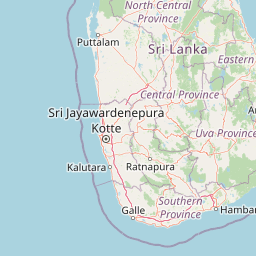
The physical landscape of Yala National Park is characterized by its position in the lowest peneplain of Sri Lanka, a flat to mildly undulating plain that extends from Trincomalee to Hambantota along the island's southeastern coast. The underlying geology consists predominantly of metamorphic rocks from the Precambrian era, classified into the Vijayan and Highland series. Topographically, elevations range from approximately 30 meters near the coast to 100 to 125 meters in the interior regions. The park's terrain encompasses several distinct landscape elements: the forest areas along the Menik River, the open pelessa grasslands extending toward the sea, coastal dune systems, and a network of freshwater and brackish water bodies including tanks, waterholes, rock pools, and lagoons. Reddish brown soils and low humic grey soils represent the primary soil types across six distinct categories found within the park. The coastal fringe features several lagoons and beaches, with Patanangala being a notable rock outcrop along the shoreline.
Yala National Park ecosystems, habitats, and plant life
Yala National Park protects an exceptional range of ecosystems that reflect Sri Lanka's ecological diversity within a semi-arid context. The park contains moist monsoon forests, dry monsoon forests, semi-deciduous forests, thorn forests, grasslands, marshes, marine wetlands, and sandy beach environments. The forest cover is primarily concentrated in Block I and along the Menik River corridor, while open rangelands and grasslands dominate the areas extending toward the coastline. The mangrove systems in coastal lagoons, particularly in the Buthuwa and Block II estuary areas, support specialized brackish water vegetation including Rhizophora mucronata, Sonneratia caseolaris, and Avicennia species. The Blocks III, IV, and V feature more extensive forest cover with canopy species including Drypetes sepiaria and Manilkara hexandra. The pitiya grasslands provide crucial grazing habitat for herbivores, while the network of tanks, waterholes, and seasonal water bodies supports aquatic and semi-aquatic species throughout the year.
Yala National Park wildlife and species highlights
The wildlife communities within Yala National Park represent one of the richest assemblages in South Asia, anchored by the park's remarkable leopard population, which achieves the highest density recorded anywhere in the world. Block I alone supports an estimated 25 individual Sri Lankan leopards, making Yala the premier location for observing these elusive predators in the wild. The Sri Lankan elephant population migrates seasonally through the park, congregating around the network of waterholes and rock pools that retain water year-round. Beyond the flagship species, Yala supports 44 mammal species including the threatened Sri Lankan sloth bear, wild water buffalo, toque macaque, golden palm civet, red slender loris, and fishing cat. The avifauna is equally impressive, with 215 bird species recorded, including seven endemic to Sri Lanka such as the Sri Lanka grey hornbill, Sri Lanka junglefowl, and Sri Lanka wood pigeon. The wetlands attract 90 waterbird species, half of which are migratory visitors arriving during the northeast monsoon. Reptile diversity includes 47 species with both mugger and saltwater crocodiles present, alongside five globally endangered sea turtle species that nest along the coastal beaches.
Yala National Park conservation status and protection priorities
Yala National Park faces multiple conservation challenges despite its protected status. The primary threats include poaching, gem mining along the Menik River, illegal logging, agricultural encroachment, and competition from free-roaming domestic livestock. The park has experienced ranger casualties in confrontations with poachers, highlighting the dangerous nature of anti-poaching efforts. Gem mining activities have created extensive holes extending up to 30 meters deep along riverbanks. In the more remote Blocks III and IV, shifting cultivation and slash-and-burn practices encroach on park boundaries. Environmental concerns include forest dieback in Sonneratia caseolaris groves at the Menik River estuary, invasive species such as Lantana camara, Opuntia dillenii, and Chromolaena odorata that threaten native vegetation, and pollution from tobacco cultivation and tourism activities. The Department of Wildlife Conservation has implemented management measures including grazing land management, small water pond conservation, invasive species eradication, and a 40-kilometer electric fence to prevent human-elephant conflict.
Yala National Park cultural meaning and human context
Yala National Park contains significant cultural and archaeological heritage reflecting millennia of human presence in the region. The area was a center of ancient civilizations, with evidence of sophisticated hydraulic agricultural systems dating back to the 5th century BC visible in the numerous ancient tanks scattered throughout the park. According to local tradition, King Ravana of Hindu mythology established his kingdom in this area, with Ravana Kotte serving as its boundary marker. Sithulpahuwa, located within the park, was historically home to 12,000 arahants (enlightened Buddhist monks), while Magul Vihara, constructed in 87 BC, and Akasa Chaitiya, dating to the 2nd century BC, represent significant ancient Buddhist sites. The region was part of the Kingdom of Ruhuna, where agricultural prosperity flourished until the decline began in the 13th century according to the Mahavamsa chronicle. During the colonial period, Yala became a popular hunting ground. The park remains a pilgrimage destination, with approximately 400,000 pilgrims visiting annually, particularly to Sithulpahuwa.
Top sights and standout views in Yala National Park
Yala National Park offers the unparalleled opportunity to observe Sri Lankan leopards in the wild at densities found nowhere else on Earth, making it a premier destination for wildlife photography and big cat enthusiasts. The park's elephant herds provide spectacular viewing opportunities, especially during the dry season when animals congregate around permanent water sources. The diversity of ecosystems from forest to coastline supports extraordinary birdlife, with migratory waterfowl creating spectacular congregations in the coastal lagoons during the northeast monsoon. Ancient Buddhist archaeological sites including Sithulpahuwa and Magul Vihara add cultural depth to the safari experience. The combination of accessible wildlife viewing, scenic coastal landscapes featuring rock outcrops like Patanangala, and the chance to encounter multiple threatened species including elephants, leopards, sloth bears, and crocodiles within a single visit makes Yala Sri Lanka's most comprehensive wildlife destination.
Best time to visit Yala National Park
The optimal time to visit Yala National Park is during the dry season from February to June, when reduced water availability concentrates wildlife around the remaining waterholes and rivers, making animal sightings more predictable. The northeast monsoon brings rainfall from December to March, transforming the landscape with lush vegetation but potentially making wildlife more dispersed and harder to locate. The period from May to September typically offers the best leopard sighting opportunities as vegetation thins and animals seek water. However, the park remains open year-round, with each season offering distinct advantages: the green season from October to November showcases the park's full vegetation vigor while the monsoon period supports exceptional bird migrations. Visitor numbers peak during Sri Lankan holidays, particularly the pilgrimage season to Sithulpahuwa, so planning outside these periods can provide a more tranquil wildlife experience.