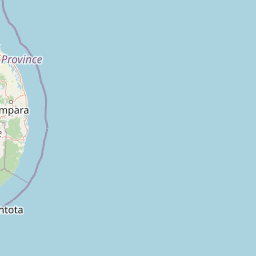
Why Lahugala Kitulana National Park stands out
Lahugala Kitulana is best known for its significant elephant population, with herds of approximately 150 individuals regularly using the park as a feeding ground. The park's wetland habitats support exceptional bird diversity, including notable waterfowl and wading species. The area is particularly significant for the last recorded Sri Lankan sighting of the knob-billed duck, a species now thought to be extinct in the country. The park also protects important populations of endemic birds including the red-faced malkoha and Sri Lanka spurfowl, alongside endangered mammals such as the Sri Lankan leopard, sloth bear, and fishing cat.
Lahugala Kitulana National Park history and protected-area timeline
The area that now comprises Lahugala Kitulana National Park was originally designated as a wildlife sanctuary on July 1, 1966, providing initial legal protection to the region's wildlife and habitats. This early protection reflected growing recognition of the area's ecological importance, particularly as an elephant habitat within Sri Lanka's dry zone. On October 31, 1980, the protected area was upgraded to national park status, granting it the highest level of protection under Sri Lankan law. The upgrade acknowledged the site's significance for conserving both elephant populations and the diverse bird and mammal species inhabiting the reservoir wetlands. Management responsibility falls to Sri Lanka's Department of Wildlife Conservation, which continues to address the challenges of protecting this small but important park within a landscape that faces development pressures.
Lahugala Kitulana National Park landscape and geographic character
The landscape of Lahugala Kitulana National Park is defined by its flat terrain with occasional rocky outcrops, characteristic of Sri Lanka's eastern dry zone. Three interconnected reservoirs, known locally as tanks, form the central hydrological features: Lahugala, Kitulana, and Sengamuwa. These water bodies collect rainfall primarily during the northeast monsoon season from November to December and gradually empty into the Heda Oya river system. The park sits within a broader landscape of dry-zone forests and agricultural lands, with the reservoirs providing critical wetland habitat in an otherwise seasonally dry environment. Two distinct dry periods shape the park's character: from May to October and again from January to March, when water levels recede and the surrounding grasslands become important grazing areas for elephants and other herbivores.
Lahugala Kitulana National Park ecosystems, habitats, and plant life
The vegetation of Lahugala Kitulana falls within the Sri Lanka dry-zone dry evergreen forest classification, a distinct ecosystem adapted to the region's lower rainfall and seasonal climate. The dominant grass species Sacciolepis interrupta forms extensive grasslands around the reservoir margins, providing the primary food source for the park's elephant population. This grass species is so significant to the park's ecology that it attracts herds of approximately 150 elephants seasonally. The forest composition includes several characteristic dry-zone species: Drypetes sepiaria, Manilkara hexandra, Berrya cordifolia, Vitex pinnata, Chloroxylon swietenia, and the golden shower tree (Cassia fistula). The reservoir wetlands support a distinct aquatic and semi-aquatic plant community that changes with seasonal water level fluctuations, creating dynamic habitat conditions throughout the year.
Lahugala Kitulana National Park wildlife and species highlights
Lahugala Kitulana supports a remarkable diversity of wildlife despite its small size. The park is traditionally used by elephants as a feeding ground, with herds of around 150 individuals drawn by the abundant Sacciolepis interrupta grass surrounding the Lahugala tank. The mammal community includes several endemic and threatened species: the toque macaque and tufted gray langur represent endemic primates, while the Sri Lankan leopard represents the island's apex predator. Conservation-significant species include the sloth bear, fishing cat, and rusty-spotted cat, alongside more common species such as golden jackal, wild boar, Indian muntjac, and various deer species including the Sri Lankan axis deer and sambar. The bird community is exceptionally diverse, featuring both resident and migratory waterfowl. Notable species include great white pelican, painted stork, lesser adjutant, white-bellied sea eagle, and grey-headed fish eagle. The park holds particular significance for the knob-billed duck, as the last recorded Sri Lankan sighting occurred here before the species was considered extinct in the country. Endemic birds including red-faced malkoha and Sri Lanka spurfowl also inhabit the park. The reptile and amphibian communities include Python molurus, Russell's viper, freshwater turtles, and several endemic amphibian species.
Lahugala Kitulana National Park conservation status and protection priorities
Conservation challenges at Lahugala Kitulana include several anthropogenic threats: poaching, logging, fuelwood collection, and grazing pressure from surrounding lands. The Sri Lanka Wildlife Conservation Society has initiated projects to establish electric fences protecting four villages adjacent to the park's southern boundary, helping to reduce human-wildlife conflict. A significant proposed development in the lower Uva basin threatens to increase cultivated area around the park, potentially isolating the elephant population and fragmenting its habitat. Conservation proposals include establishing a jungle corridor linking Lahugala Kitulana with Gal Oya and Kumana National Parks, which would enable elephant movement between protected areas. Environmentalists have successfully protested a proposed canal that would have run within the park, as such construction would violate environmental protection laws extending one kilometer beyond the park boundary.
Lahugala Kitulana National Park cultural meaning and human context
The cultural landscape of Lahugala Kitulana extends beyond its natural features to include the nearby Magul Maha Viharaya, an ancient Buddhist temple of significant historical importance. According to tradition, this sacred site was constructed for the marriage ceremony of King Kavan Tissa to Princess Viharamahadevi, a foundational event in Sri Lankan history. The vihara was later offered to the Sangha Buddhist community, establishing its continuing religious significance. This cultural heritage adds dimension to the park's identity, connecting the natural landscape to Sri Lanka's ancient kingdom and Buddhist traditions. The temple remains an important site for local religious practice and represents the long-standing human presence in this region of the Eastern Province.
Top sights and standout views in Lahugala Kitulana National Park
Lahugala Kitulana's significance stems from its role as a critical elephant habitat supporting approximately 150 individuals, making it an important destination for wildlife observation within Sri Lanka's national park system. The wetland bird community is exceptionally diverse, with the park holding historical importance as the last Sri Lankan sighting location for the now extinct knob-billed duck. The three reservoir tanks create a distinctive landscape within the dry zone, supporting both aquatic and terrestrial ecosystems in seasonal equilibrium. The park protects endemic species including the Sri Lankan leopard, toque macaque, red-faced malkoha, and Sri Lanka spurfowl. Conservation efforts focus on connecting this small park to larger protected landscapes through proposed corridor links with Gal Oya and Kumana National Parks.
Best time to visit Lahugala Kitulana National Park
The optimal time to visit Lahugala Kitulana coincides with the dry season when wildlife congregates around the remaining water sources. The period from May to October offers good viewing opportunities as elephants and other herbivores concentrate near the reservoirs. The secondary dry season from January to March also provides favorable conditions. The northeast monsoon from November to December brings rainfall and transforms the landscape, though some roads may become difficult to access. Visitors interested in bird observation should note that migratory waterfowl arrive during the northeast monsoon and remain through the dry season, while the grassland vegetation provides ideal habitat for elephant foraging year-round.