Why Mosi-oa-Tunya National Park stands out
Mosi-oa-Tunya National Park is most famous for protecting the Zambian half of Victoria Falls, known locally as "The Smoke that Thunders" for the massive spray that rises from the 1,708-meter-wide waterfall. The falls create the world's largest curtain of falling water, particularly impressive during the rainy season when the Zambezi River swells. Beyond the falls, the park is known for its dramatic riverine forest ecosystem sustained by the constant spray, which supports rare plant species including pod mahogany, ebony, ivory palm, and wild date palm. The wildlife section features populations of African elephants that cross between Zambia and Zimbabwe, along with giraffes, zebras, buffalo, and a small population of southern white rhinos that were introduced from South Africa.
Mosi-oa-Tunya National Park history and protected-area timeline
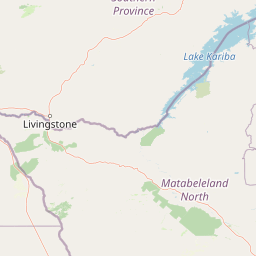
Mosi-oa-Tunya National Park was established to protect the Zambian portion of Victoria Falls and the surrounding natural environment. The park gained UNESCO World Heritage Site status in 1989, recognized under criteria vii for outstanding natural beauty and criterion viii for geological significance. The area has historical significance beyond its natural features, containing the Old Drift Cemetery where early European settlers were buried after establishing a camp near the river. These settlers suffered from a mysterious fatal illness they incorrectly attributed to the distinctive yellow-and-green-barked fever trees, when the actual cause was malaria carried by mosquitoes. The settlement eventually moved to higher ground, leading to the establishment of the town of Livingstone, which remains the park's primary access point. In November 2005, a new statue of David Livingstone was erected within the park, complementing the more famous statue on the Zimbabwean side. A plaque was also unveiled on Livingstone Island to mark the spot from which the famous explorer first viewed the falls in 1855. The park's wildlife population has faced challenges, particularly during droughts since 2000, and conservation efforts have included the introduction of southern white rhinos from South Africa, though these face ongoing poaching threats.
Mosi-oa-Tunya National Park landscape and geographic character
The landscape of Mosi-oa-Tunya National Park is defined by the dramatic encounter between the Zambezi River and the ancient basalt plateau that creates Victoria Falls. The river flows broad and powerful before encountering a series of gorges that slice deep into the landscape, with the falls themselves dropping into the first of these narrow gorges known as the First Gorge. Below the falls, a series of steep-sided gorges cascade downstream, carved by the river's relentless erosion over millennia. The terrain varies significantly between the two main sections of the park: the wildlife section features gentle undulating terrain covered in miombo woodland and grassland, interspersed with riverine forest along watercourses, while the falls section drops sharply toward the river gorge. The riverine forest in the falls area is a unique ecosystem created by the constant spray from the waterfall, supporting lush vegetation that contrasts sharply with the surrounding savanna. The Batoka Gorges below the falls are characterized by sheer cliff faces that provide nesting habitat for numerous raptor species and create dramatic viewpoints accessible by footpaths and the historic Knife-Edge Bridge.
Mosi-oa-Tunya National Park ecosystems, habitats, and plant life
The nature of Mosi-oa-Tunya National Park encompasses two distinct ecological systems that reflect the dramatic environmental gradients created by the waterfall. The rainforest surrounding the falls is a unique micro-ecosystem sustained entirely by the perpetual spray from the cascading water, creating conditions for plant species that are rare elsewhere in the region. This narrow zone supports pod mahogany, ebony, ivory palm, wild date palm, and numerous climbing vines and lianas that create a dense green canopy. The underlying geology of basalt gorges and the river itself create additional habitats, while the broader wildlife section encompasses miombo woodland, a characteristic southern African forest type dominated by Brachystegia trees, interspersed with grasslands that support diverse herbivore communities. The park sits within a broader landscape that forms part of potential transfrontier conservation initiatives connecting protected areas across five southern African nations.
Mosi-oa-Tunya National Park wildlife and species highlights
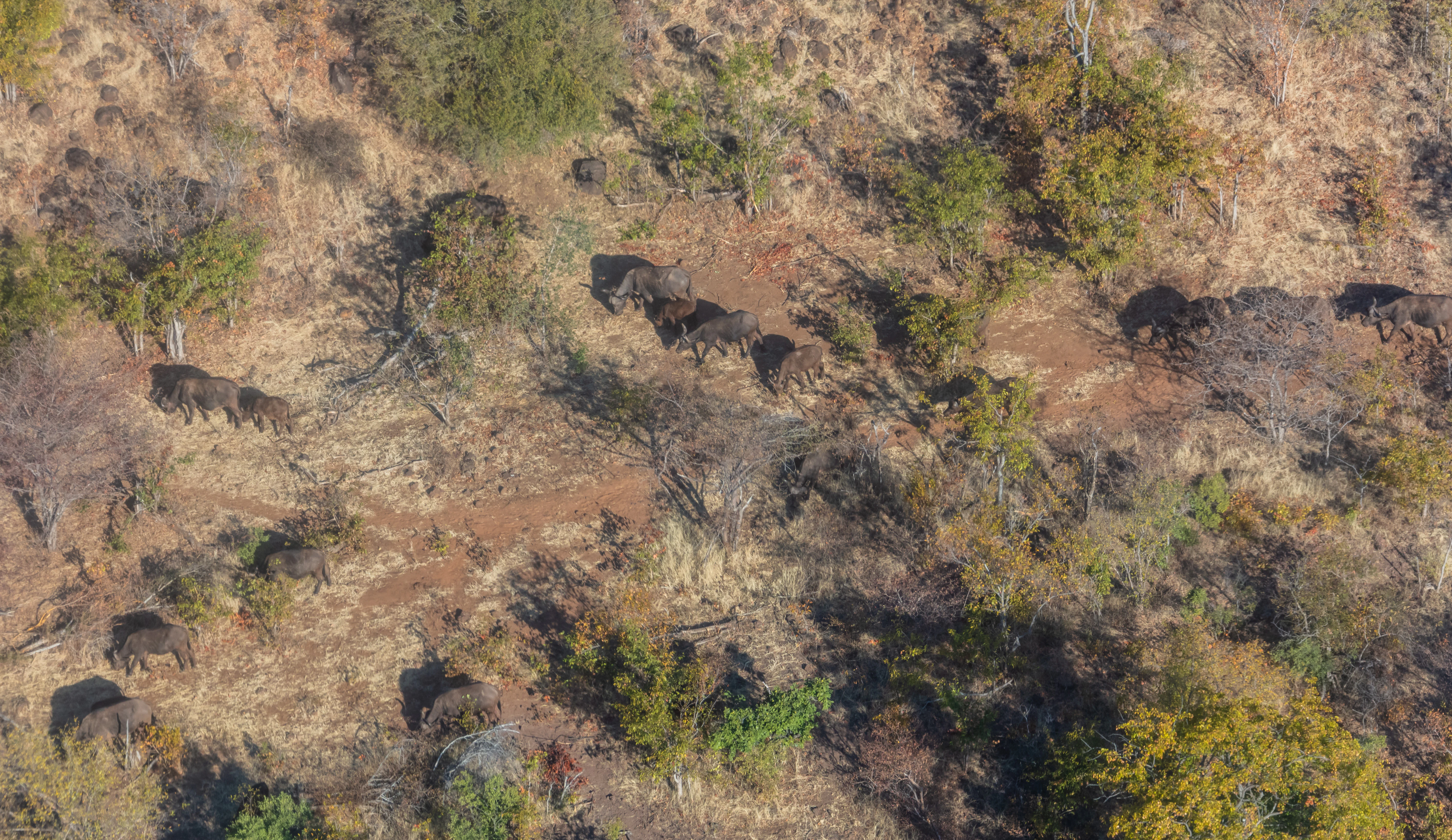
The wildlife section of Mosi-oa-Tunya National Park supports populations of large and small mammals characteristic of southern African savanna ecosystems. The park is home to Angolan giraffes, Burchell's zebras, African buffalo, impalas, warthogs, and sable antelopes that move through the miombo woodland and grassland habitats. African elephants are frequently observed crossing the Zambezi River between the Zambian and Zimbabwean sides of the falls during the dry season, while hippopotamuses and crocodiles inhabit the river channels. Smaller primates including vervet monkeys and baboons are common throughout the park. The park maintains a small population of southern white rhinos, which were introduced from South Africa as the indigenous black rhino had been extirpated from the area. The rhino population faced significant challenges including poaching incidents in 2007 but has grown to approximately ten individuals by 2022 under intensive protection. The cliff-top areas and gorges below the falls support populations of klipspringers, African clawless otters, and at least 35 species of raptors including Taita falcon, Verreaux's eagle, peregrine falcon, and augur buzzard that nest in the steep gorge walls.
Mosi-oa-Tunya National Park conservation status and protection priorities
Mosi-oa-Tunya National Park represents an important conservation node within southern Africa's protected area network, recognized internationally through its UNESCO World Heritage Site designation. The park's dual function of protecting both a world-famous waterfall and the surrounding wildlife habitat creates conservation challenges, particularly around balancing visitor access with ecological protection. The introduction of southern white rhinos represents an ambitious conservation initiative, though the challenges of protecting these valuable animals from poaching demonstrate the ongoing threats facing wildlife in the region. The park is being considered for inclusion in the Kavango-Zambezi Transfrontier Conservation Area, a five-nation initiative that would connect protected areas across Botswana, Namibia, Zambia, Zimbabwe, and Angola to create larger wildlife corridors. The small elephant crossing point near where the river plunges over the falls represents a particularly sensitive area where development pressures conflict with wildlife movement needs.
Mosi-oa-Tunya National Park cultural meaning and human context
Mosi-oa-Tunya National Park occupies a landscape that has been significant to local communities for centuries, with the Kololo and Lozi peoples giving the falls its powerful name. The name "The Smoke that Thunders" captures the dramatic visual and auditory impact of Victoria Falls, where the falling water creates a constant roar and a rising mist that can be seen from many kilometers away. The park contains the Old Drift Cemetery, marking the location where early European explorers and settlers established a camp near the river, the first Europeans to attempt permanent settlement in the area. The park is intimately connected with the legacy of David Livingstone, the Scottish explorer who first brought international attention to the falls in the mid-19th century, and the 2005 statue addition within the park continues this historical connection. The modern city of Livingstone provides the human context for the park, serving as both the primary access point for visitors and the community most directly connected to the park's management and economic benefits from tourism.
Top sights and standout views in Mosi-oa-Tunya National Park
The defining highlight of Mosi-oa-Tunya National Park is undeniably the opportunity to view Victoria Falls from the Zambian side, where the full width of the waterfall can be appreciated and the famous Knife-Edge Bridge provides dramatic views of the Rainbow Falls and the First Gorge. The wildlife section offers a different experience, with game drives through miombo woodland providing encounters with giraffes, zebras, buffalo, and elephants in a more typical safari setting. The riverine rainforest near the falls provides a unique botanical environment where visitors can walk through lush vegetation sustained by the constant spray, a striking contrast to the surrounding savanna. The knife-edge bridge and footpaths to the Boiling Pot offer access to views of the gorges that few other protected areas can match. The presence of white rhinos, though not native to the area, provides a rare opportunity to observe these endangered animals in a national park setting.
Best time to visit Mosi-oa-Tunya National Park
The best time to visit Mosi-oa-Tunya National Park depends on what visitors hope to experience. The dry season from April to October offers easier wildlife viewing as animals congregate around water sources, and the reduced water volume makes the falls less overwhelming, though still impressive. The wet season from November to March brings the Zambezi River to its highest levels, creating the most spectacular waterfall display when the full width of the falls cascades into the gorge, though the resulting spray can be intense and visibility may be reduced in some areas. The transitional periods of April-May and October-November often provide a balance between good waterfall viewing and favorable wildlife conditions. The park can be visited year-round, though visitors should be prepared for the tropical climate and the possibility of heavy rains during the wet season.