
Why Parque Natural de las Salinas stands out
The park is most renowned for its traditional salt pans, which have produced salt along this coast since at least the 8th century BCE and still frame the cultural identity of both Ibiza and Formentera. Equally important is the exceptionally well-preserved Posidonia seagrass meadow surrounding the Es Freus islands, a marine habitat widely recognized as one of the most ecologically important in the Mediterranean. These two elements, centuries-old salt-making landscapes and underwater meadows of Posidonia oceanica, are what make the park distinctive. The quality of the traditional salt harvest depends directly on the ecological state of the seagrass, which filters and stabilizes the coastal waters. The result is a tightly intertwined cultural and natural system that has shaped the look, economy, and ecology of the southern Pitiüses for thousands of years.
Parque Natural de las Salinas history and protected-area timeline
The Salinas area carries a history that stretches back to antiquity, with salt extraction along the southern coast of Ibiza documented since at least the 8th century BCE. Phoenician settlers recognized both the natural conditions for evaporation and the strategic value of salt as a trade commodity, and the activity continued through Carthaginian, Roman, and later periods of the islands' history.
The importance of this salt trade shaped the broader trajectory of Ibiza. The Phoenician settlement at Sa Caleta, dated to around 650 BCE, is considered the earliest precedent of organized salt commerce in the area. As coastal Ibiza grew in wealth and strategic value, the settlement eventually gave rise to a more substantial fortified town, precursor to the later walled city of Dalt Vila, where layers of Phoenician, Punic, Roman, Islamic, and Catalan occupation accumulated beneath the well-known Renaissance fortifications of the 16th century.
In more recent centuries, the salt pans of San José, on Ibiza, and the northern pans of Formentera continued to operate under traditional methods, preserving a distinctive checkerboard landscape of shallow evaporation basins. The eventual inclusion of the area within the UNESCO World Heritage site "Ibiza, Biodiversity and Culture" in 1999, along with the establishment of the natural park itself, formalized recognition of both the cultural and natural legacy embedded in this working coastal landscape.
Parque Natural de las Salinas landscape and geographic character
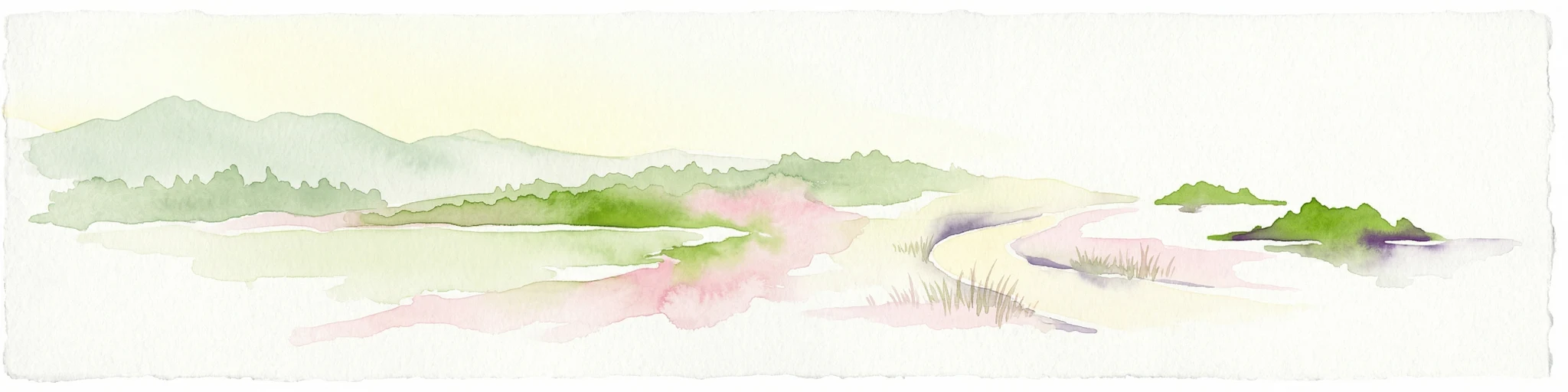
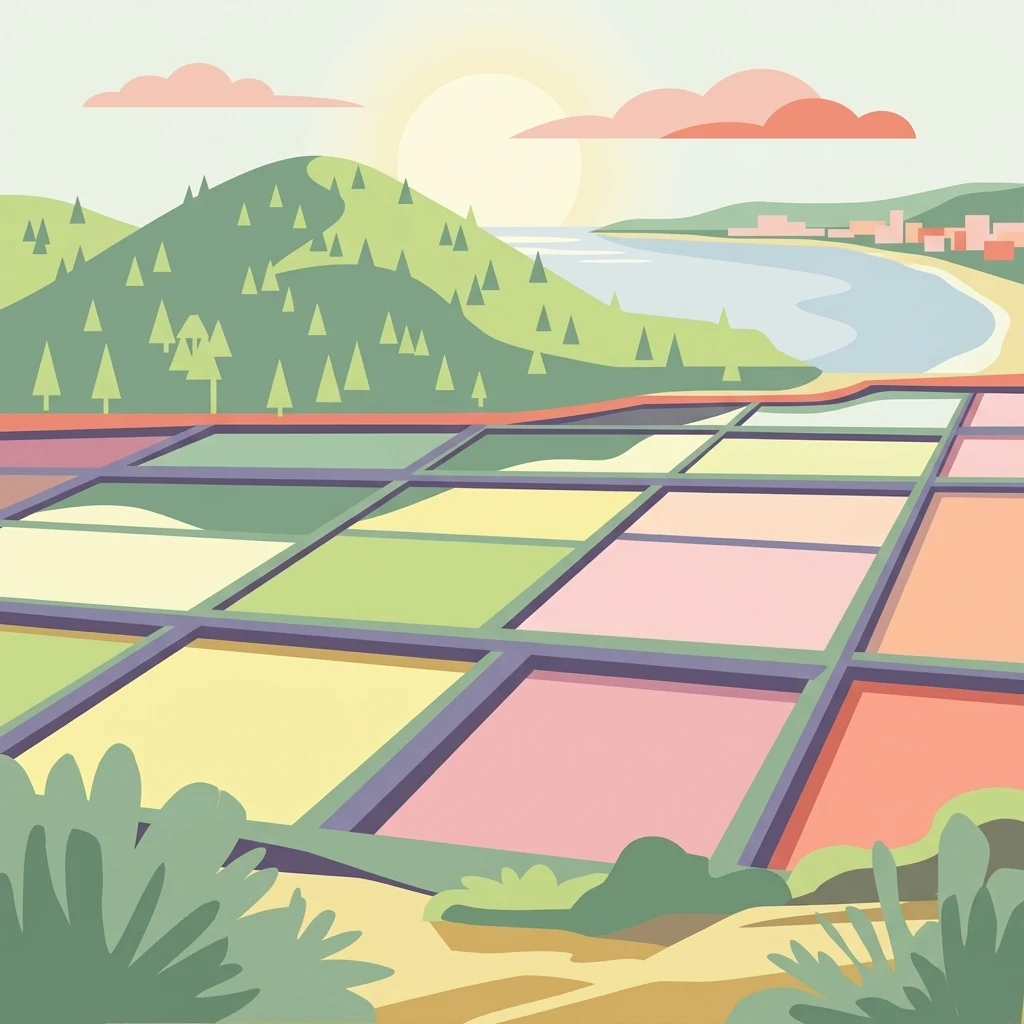
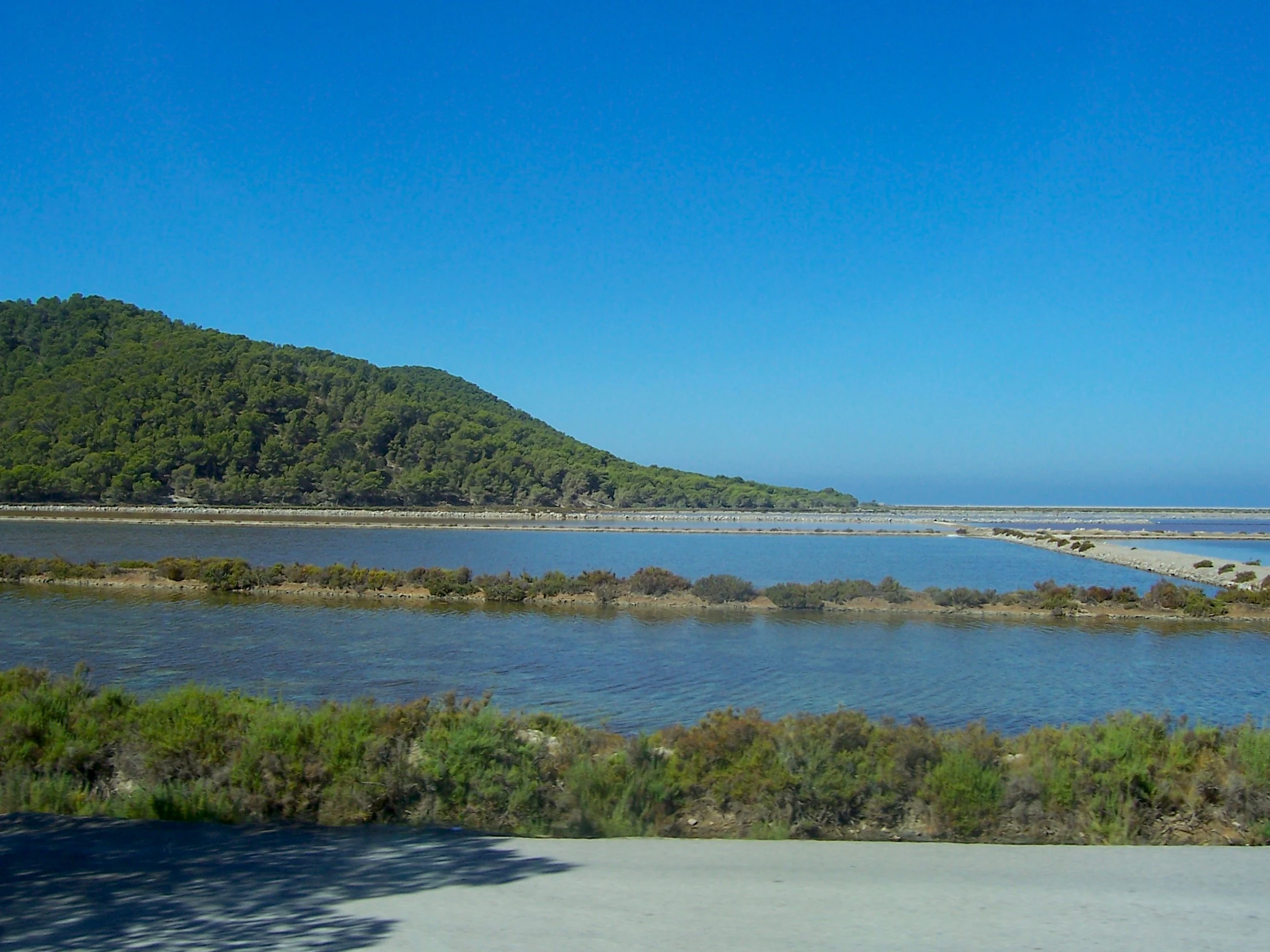
The landscape of the Parque Natural de las Salinas is defined by the meeting of low, sun-bleached land and intensely clear Mediterranean water. Along the southern arm of Ibiza and the northern coast of Formentera, the terrain flattens into broad coastal plains where former marshlands and dune fringes remain partly intact. These flatlands host a mosaic of active and inactive salt pans, built as shallow basins separated by low walls, that give the area its characteristic geometric pattern when seen from above.
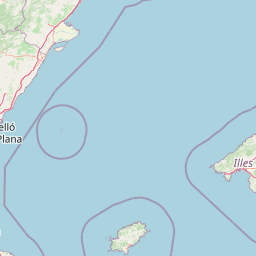
The islands of Es Freus, scattered between Ibiza and Formentera, form the rocky and low-lying marine front of the park. These small islets and their surrounding waters create a transition zone between the open sea and the more enclosed bays, with sandy bottoms, rocks, and dense underwater meadows. The combination of bright salt flats, pale coastal scrub, and the deep blue-green of the channels between the islands gives the park a strongly Mediterranean coastal character.
Parque Natural de las Salinas ecosystems, habitats, and plant life
Ecologically, the park is structured around two closely linked systems: the terrestrial salt-pan complex on land and the Posidonia-dominated seabed offshore. The salt pans create an unusual gradient of salinities, supporting specialized plant communities adapted to highly saline conditions as well as invertebrates and small crustaceans that in turn attract larger predators, wading birds, and migratory species.
Surrounding the park, the seabed is dominated by the seagrass Posidonia oceanica, whose meadows are considered among the most important in the Mediterranean. These underwater meadows oxygenate the water, stabilize sediments, shelter juvenile fish and invertebrates, and play a critical role in maintaining the clarity and quality of coastal waters. Across the terrestrial part of the park, halo-tolerant vegetation, Mediterranean scrub, and patches of more diversified coastal plant life alternate with the open water surfaces of the evaporation basins.
Parque Natural de las Salinas wildlife and species highlights
The wildlife of the Salinas park reflects its position along a major Mediterranean flyway. The shallow evaporation ponds and coastal lagoons attract a wide variety of waterbirds, including herons, waders, gulls, and terns, as well as seasonal migratory visitors that use the area for resting and feeding during their journeys across the basin.
On land, the mosaic of dunes, scrub, and salt-pan margins supports reptiles, small mammals, and a typical Mediterranean insect fauna. Below the surface, the Posidonia meadows harbor sea urchins, starfish, octopuses, and a wide range of fish, many of which use the meadows as nursery grounds. The interaction between the marine meadows and the salt-pan ecosystem is a defining feature of the park's wildlife, with species moving between habitats as conditions and seasons shift.
Parque Natural de las Salinas conservation status and protection priorities
The Parque Natural de las Salinas is protected for both its cultural and ecological values, with its management reflecting the need to preserve a working salt-making landscape while safeguarding the fragile surrounding marine environment. The park's conservation importance lies largely in the Posidonia meadows, which are increasingly rare elsewhere in the Mediterranean and are central to the ecological balance of the entire south Pitiüses coastline.
Salt-pan maintenance itself is viewed as a conservation tool, because abandoned pans tend to lose their ecological distinctiveness. Traditional harvesting methods preserve a habitat structure that supports specialized flora and fauna. As a component of the UNESCO World Heritage site "Ibiza, Biodiversity and Culture," the park also benefits from international recognition of its role as a model of how long-term human activity can be compatible with the protection of a coastal and marine ecosystem.
Parque Natural de las Salinas cultural meaning and human context
The cultural dimension of the Salinas park is inseparable from its natural one. The name itself reflects a centuries-old economy: salt produced here moved through Phoenician and Carthaginian trade routes, helped sustain later Mediterranean commerce, and shaped the development of Ibiza as a maritime hub. The earliest Phoenician settlement in the islands, at Sa Caleta, is closely tied to the birth of the salt trade, and visible cultural layers from many subsequent eras can be traced in the broader Ibizan landscape.
Equally significant is the continuity of traditional salt-working knowledge passed down through generations of islanders. Methods of channeling seawater, managing evaporation, and coordinating harvests across the San José and Formentera pans form a living cultural heritage, reinforced by the inscription of the area within the UNESCO site. The Freus islets and the southern coast of Ibiza are also closely tied to local identity, combining ancient maritime memory with present-day environmental awareness.
Top sights and standout views in Parque Natural de las Salinas
Among the most distinctive features of the park are the working and historic salt pans of San José and northern Formentera, whose geometric basins have shaped both the economy and the scenery of this coast for millennia. Equally striking is the underwater landscape of Posidonia oceanica meadows encircling the Es Freus islets, an ecosystem that is recognized as one of the Mediterranean's most valuable marine habitats.
The combination of these elements, ancient salt-making, Mediterranean coastal scenery, and a thriving marine ecosystem, gives the park its dual significance. It is both a tangible expression of island cultural heritage and a stronghold of marine and coastal biodiversity, two dimensions that are reflected in its UNESCO recognition and in the continuing importance of salt to the Pitiüses.
Best time to visit Parque Natural de las Salinas
The park has a character that shifts with the seasons, and each period offers a different way to experience it. Spring brings mild weather, lively bird activity, and a fresh greenness to the coastal vegetation, while the still-cool waters of the channel between Ibiza and Formentera are especially clear for observing the marine environment.
Summer offers long days, intense light over the salt flats, and the warmest sea conditions, making it the most popular period for general visits, though it is also when the area is busiest. Autumn softens the light and sees migratory birds passing through, while winter brings quieter conditions, lower visitor numbers, and a more contemplative atmosphere, well suited to observing wildlife and appreciating the cultural landscape without the seasonal crowds.