
Why Mont des Avaloirs Regional Nature Reserve stands out
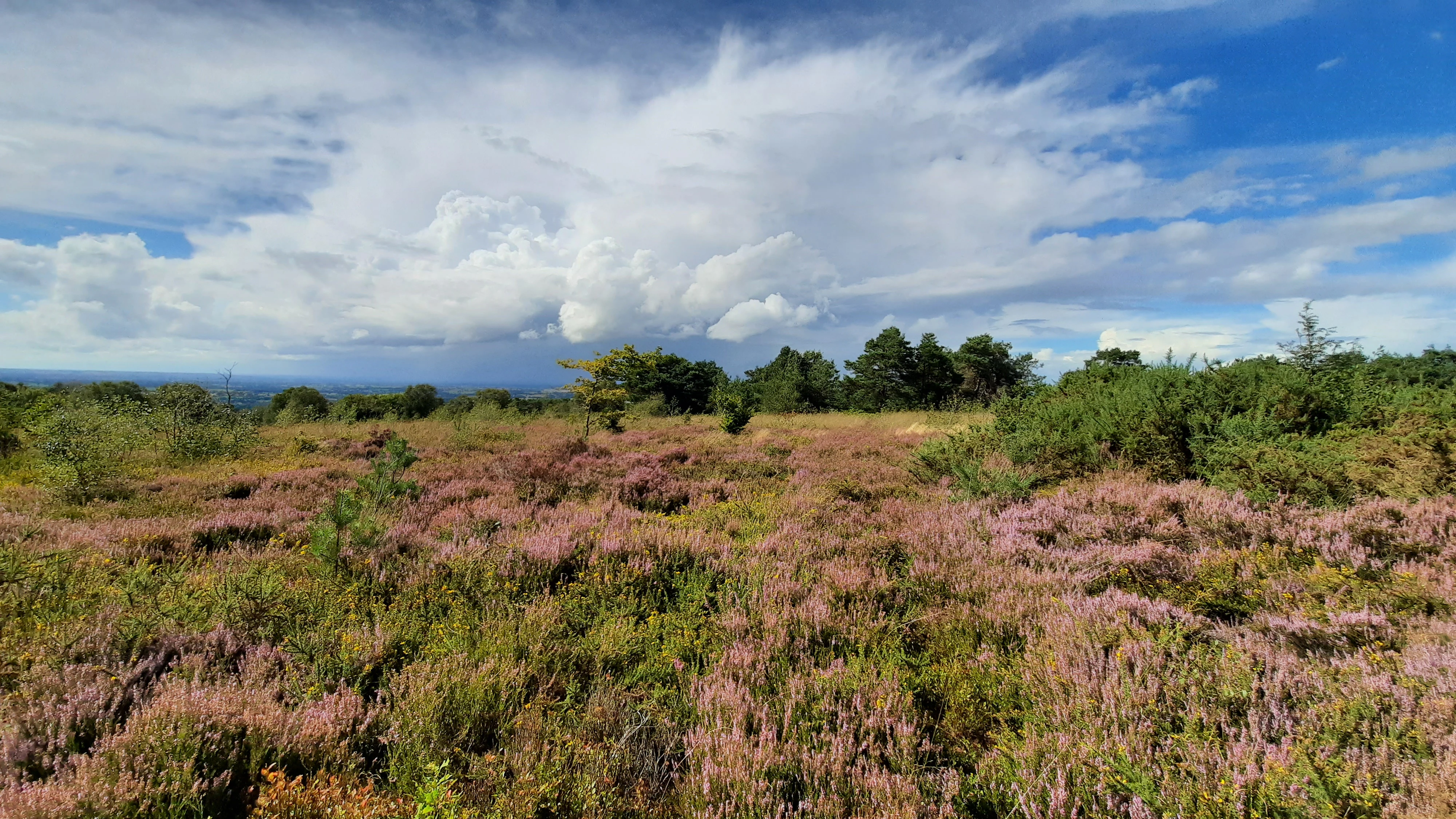
The reserve is best known for protecting one of the largest and richest upland heath and peatland complexes of the Armorican Massif, anchored on the summit that gives northwestern France its highest natural point. It is recognised as a key biodiversity core within the Parc naturel régional Normandie-Maine and a stronghold for habitats that are otherwise scarce at this latitude. Its mosaic of open heath, blockfields, peat bogs, old-growth forest in free evolution, and bocage hosts numerous protected and rare species, including sundews, bog asphodel, the Portuguese butterwort, black stork, Eurasian nightjar, and montagu's harrier. The site is also notable for integrating conservation, ecological inventory work, and tourism around the historic Avaloirs belvederes, where visitors have come to admire the Armorican panorama since 1914.
Mont des Avaloirs Regional Nature Reserve history and protected-area timeline
The history of the Mont des Avaloirs territory is shaped by its topographic position and by the use of its natural resources over many centuries. In the Middle Ages, the forests and heaths of the Avaloirs were considered wild and sparsely frequented zones. A path known as the 'Chemin de la procession', running along the eastern edge of the present reserve, served as a main access route for woodcutters and charcoal makers exploiting the area.
In the eighteenth century, the region experienced significant industrial activity from iron forges, in particular at Saint-Denis-sur-Sarthon. This activity shaped the local landscape and the historical management of the surrounding forests through demand for wood and charcoal. At the end of the same century, a Chappe telecommunications tower was installed on the Avaloirs ridge, close to the location of today's belvedere. The tower is believed to have been part of the Paris-Brest communication line placed in service in August 1798, and a written account from 1936 still mentioned remains of the structure among the heaths.
The first half of the twentieth century was marked by stone quarrying at the Bel-Air quarries, north of the present reserve. Once these activities ceased, only limited hunting-related modifications, such as the creation of small ponds and shooting rides, were made. A significant fire affected the area in 2001, burning approximately ten hectares of heath. Between 2015 and 2019, eight private owners and the commune of Pré-en-Pail-Saint-Samson, holding more than three hundred hectares together, came together to act collectively for the biodiversity of their land, a process that culminated in the official creation of the regional nature reserve on 25 September 2020 by the Pays de la Loire regional council.
Mont des Avaloirs Regional Nature Reserve landscape and geographic character
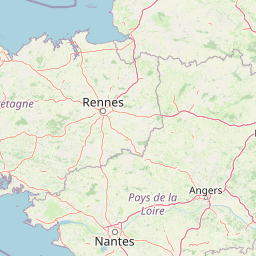
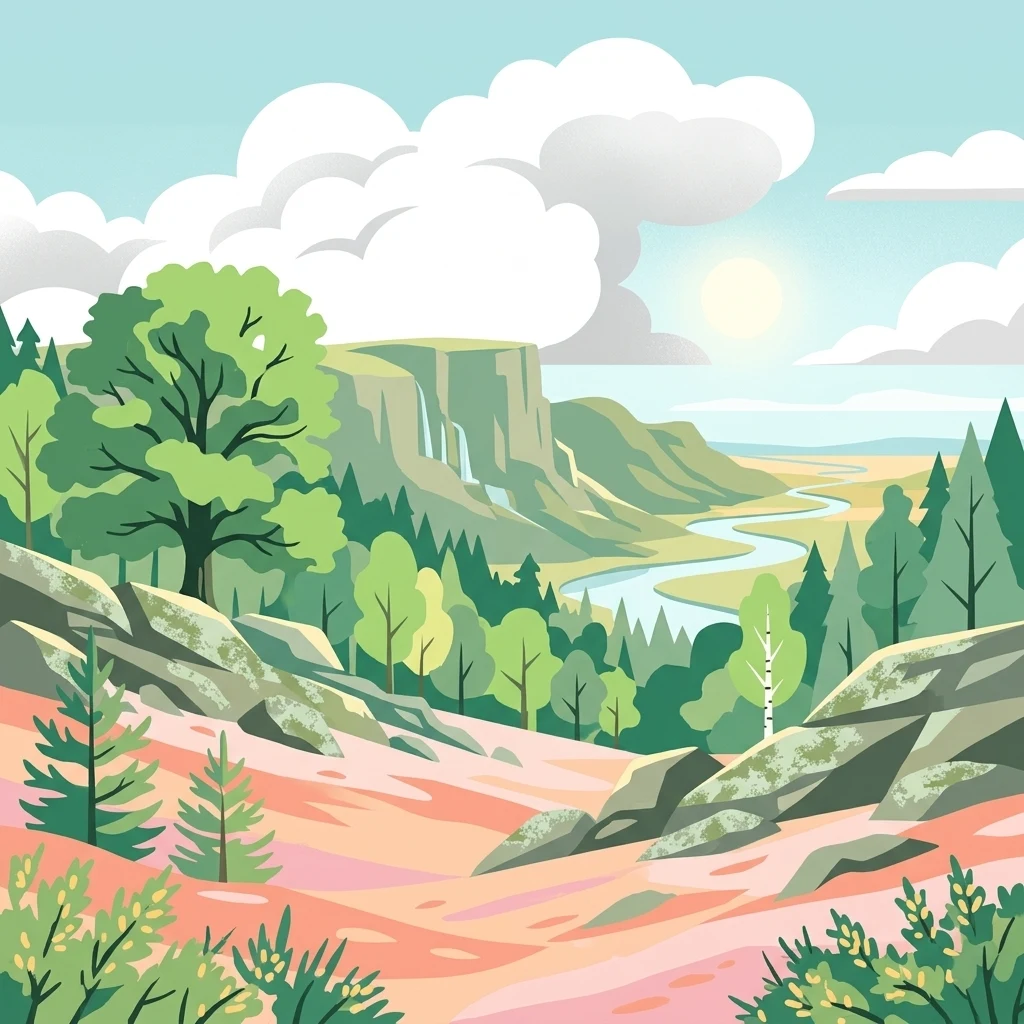
The landscape of the Mont des Avaloirs Regional Nature Reserve is defined by a high ridge rising above the surrounding Armorican countryside. Altitudes along the site vary from roughly 244 metres in the north to 416 metres at the summit, giving the reserve a notable vertical range for this part of France. The ridges and slopes support a strong contrast between open, rocky ground and forested valleys.
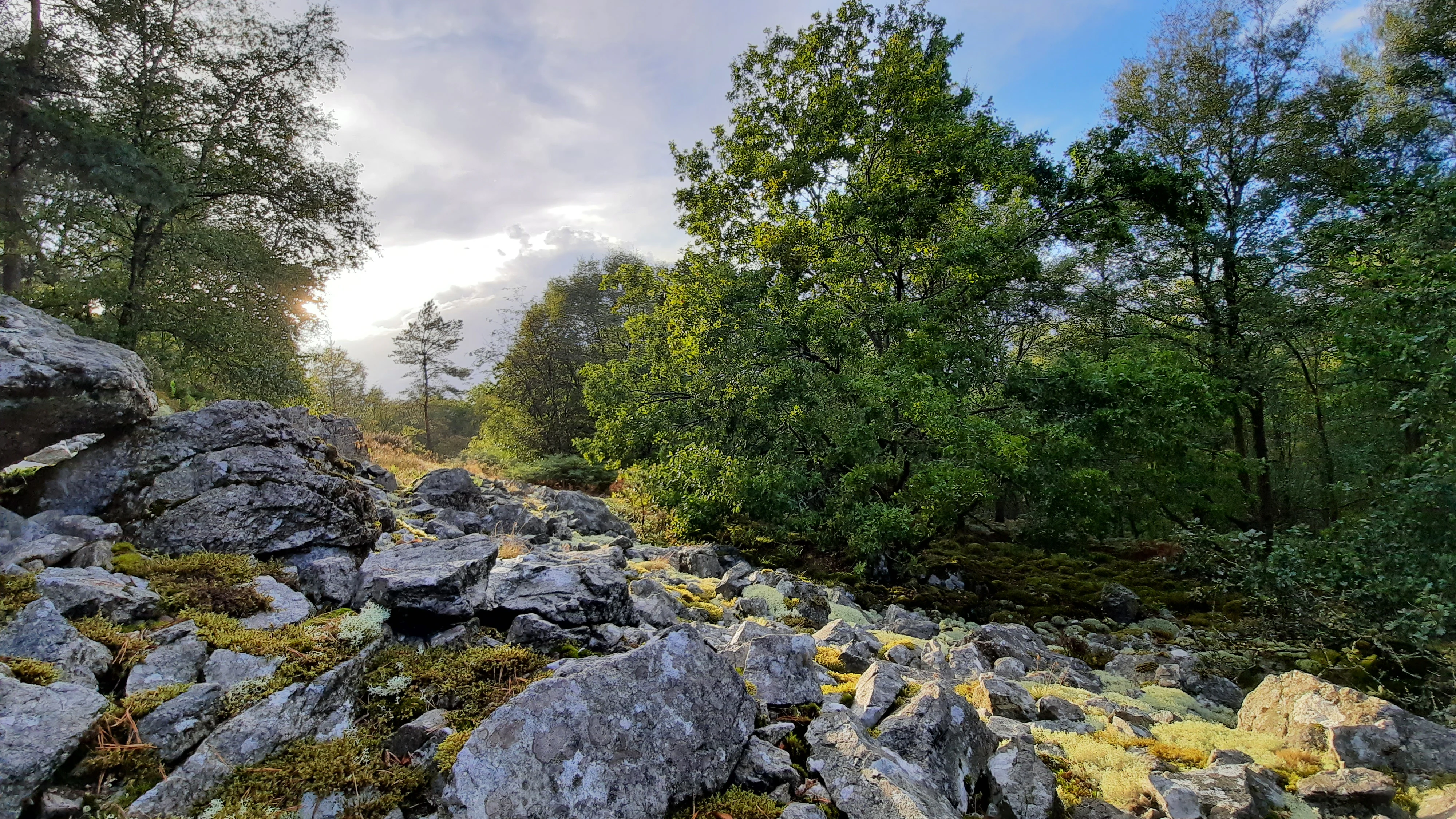
A defining feature is the Souprat area, where erosion and slope processes have produced blockfields: stony spreads where exposed rock fragments lie among vegetation. These stony outcrops break the continuity of the heaths and create microhabitats for specialised plants and animals. In the valley of the Buisson de Malheur, the landscape shifts to a more sheltered character, with brooks, wet meadows, and woodland giving way to smoother relief.
Beyond the main units, the bocage elements and small peatland basins soften the topography, while the tree stands at the Bois du Clairet and within the Souprat area add vertical structure to an otherwise open landscape. The overall impression is of a gentle but distinct massif park, in which breed, rocks, and forest interact across a compact but varied mosaic of relief.
Mont des Avaloirs Regional Nature Reserve ecosystems, habitats, and plant life
Ecologically, the Mont des Avaloirs reserve functions as one of the principal biodiversity cores of the Parc naturel régional Normandie-Maine and of the Mayenne department. Its combination of high elevation, exposure to wind and weather, and a network of habitats has created an unusually rich endowment of plant and animal species for the region.
The reserve's ecological identity is built around four main habitat groups. The first is an extensive upland heath complex, dotted with rocky scree, that hosts specialist plants adapted to acidic, exposed, nutrient-poor conditions. A second grouping consists of two forest units in free evolution, which are allowed to follow natural dynamics, producing old trees, abundant dead wood, and a substratum favourable to saproxylic species, that is, organisms dependent on decaying wood. A third component comprises three peat bog complexes, where waterlogged, acidic conditions sustain highly specialised flora. Finally, a bocage landscape of hedgerows and small parcels links these core natural zones to the surrounding agricultural countryside.
The flora recorded on the reserve includes about 460 plant species, among them 14 species of regional priority, identified as ZNIEFF determinants, and 8 protected or regulated species. The bog flora is particularly distinctive, featuring round-leaved sundew (Drosera à feuilles rondes), bog asphodel (Narthécie des marais), the Portuguese butterwort (Grassette du Portugal), white beak-sedge (Rhynchospore blanc), heath rush (Jonc raide), deergrass (Scirpe cespiteux), and the marsh violet (Violette des marais). Together these species confirm the ecological distinctiveness of the peatlands and heaths with respect to the surrounding region.
Mont des Avaloirs Regional Nature Reserve wildlife and species highlights
The reserve hosts an exceptionally diverse fauna for its size. By the end of 2023, 2,441 animal species had been recorded, including 78 of regional priority and 90 protected at national or European level, plus 33 species of European interest. The group best represented is the invertebrates, with 2,271 species, including 2,235 insects, ranging across beetles, flies, hemipterans, hymenopterans, butterflies and moths, dragonflies, and grasshoppers.
The avifauna is particularly significant. Since 1980, 96 bird species have been observed on the reserve. The site supports breeding or wintering populations of several species of high conservation interest, including woodlark, western bonelli's warbler, willow warbler, Eurasian bullfinch, common linnet, yellowhammer, red-backed shrike, black woodpecker, black stork, European honey buzzard, Eurasian nightjar, and montagu's harrier. The latter two are focal species of the LIFE Avaloirs conservation programme, which has run from 2018 to 2024, demonstrating the site's role as a refuge for endangered breeding birds of open and edge habitats.
Among mammals, 36 species have been inventoried, including 13 bat species. Red squirrel, pine marten, and the hazel dormouse are also present. Reptiles are represented by 7 species, including slow worm, smooth snake, common European adder, grass snake, Aesculapian snake, and common lizard. Nine amphibian species have been recorded, notably midwife toad, marbled newt, agile frog, and fire salamander, confirming the importance of the wet habitats and brooks. The richness of fungi is similarly high, with 547 mushroom species and 78 lichen species documented on the reserve.
Mont des Avaloirs Regional Nature Reserve conservation status and protection priorities
The Mont des Avaloirs reserve has been recognised as one of the central biodiversity cores of inland Mayenne and of the Parc naturel régional Normandie-Maine for nearly a century and a half. Its formal protection as a regional nature reserve in 2020 represents the completion of a long-term convergence of ecological, institutional, and landowner interests, and reflects the site's exceptional concentration of rare habitats in this part of France.
Nearly the entire perimeter of the reserve lies within one or more Natura 2000 designations. The heart of the area is covered by two overlapping Natura 2000 sites, the Special Area of Conservation 'Forêt de Multonne, Corniche de Pail' and the Special Protection Area 'Corniche de Pail, Forêt de Multonne', the latter designated under the European Birds Directive. A further sector overlaps with the Special Area of Conservation 'Bocage de la Forêt de Monnaie à Javron-les-Chapelles'. Two departmental sensitive natural areas (Espace naturel sensible) of Mayenne, the 'Forêt de Multonne' ENS and the 'Bocage de la Forêt de Monnaie' ENS, reinforce these protections at local level.
The reserve is also integrated into the French ZNIEFF inventory system: it lies within two functional ensembles classified as ZNIEFF type 2, including the Massif de Multonne, and contains three homogeneous ecological zones classified as ZNIEFF type 1, explicitly the Mont Souprat, the peat bog and Buisson de Malheur valley, and the Marais du Fourneau. The 2020-2026 management plan, drafted by the Parc naturel régional Normandie-Maine and validated by the regional scientific council, lays out specific protective measures across twelve themes, including fauna protection, flora protection, forestry, geological heritage, agricultural activity, visitor use, domestic animals, motor vehicle access, and public works, providing a coherent regulatory framework for long-term biodiversity conservation.
Mont des Avaloirs Regional Nature Reserve cultural meaning and human context
The Mont des Avaloirs carries an unusually rich cultural resonance for a site of its size, largely tied to its role as a landmark summit. Since the installation of the first of three belvederes in 1914, the mountain has functioned as a classic stopping point for visitors and locals alike, a place for picnics, gatherings, and panoramic appreciation of the Armorican countryside. The integration of formal nature protection into this long-standing tourism tradition has allowed local cultural uses, such as hiking and scenic appreciation, to coexist with biodiversity conservation.
The reserve also incorporates subtle traces of older rural and industrial heritage. The route known as the 'Chemin de la procession' along its eastern edge recalls pathways used by woodcutters and charcoal-makers in the Middle Ages, while the nearby eighteenth-century iron forges at Saint-Denis-sur-Sarthon, the remains of the Chappe tower on the ridge, and the abandoned Bel-Air quarries bear witness to a long history of human intervention in the landscape. These layers of human activity frame contemporary conservation without dominating it.
Top sights and standout views in Mont des Avaloirs Regional Nature Reserve
The reserve's principal highlight is the combination of upland heath, blockfields, peat bogs, forests in free evolution, and bocage arranged around the highest point of the Armorican Massif, an exceptional ecological concentration for northwestern France. The dramatic diversity of habitats within a relatively compact area is rare for the region and translates into exceptional biodiversity indicators: more than 2,400 recorded animal species, nearly 500 plant species, and a notable richness in fungi and lichens.
Equally significant is the convergence of conservation instruments: Natura 2000 designations cover nearly 96% of the site, ZNIEFF inventories designate both type 1 and type 2 zones, departmental sensitive natural area protections reinforce local safeguards, and the LIFE Avaloirs programme has used the area as a priority site for the conservation of nightjar and montagu's harrier. Combined with its panoramic belvederes and scenic walking trails, the Mont des Avaloirs Regional Nature Reserve offers a rare blend of scientific interest, landscape value, and accessible discovery.
Best time to visit Mont des Avaloirs Regional Nature Reserve
The Mont des Avaloirs Regional Nature Reserve can be experienced throughout the year, and the season strongly shapes the character of the visit. Spring and early summer are especially rewarding for appreciating the open heaths and the breeding bird season, when species such as nightjar, woodlark, and red-backed shrike are most present, and the peat bogs show their characteristic flowering of bog asphodel, sundews, and cotton grasses.
Late summer and early autumn highlight the fruiting bodies of fungi and lichens, one of the site's less visible but ecologically important dimensions, and provide good conditions for panoramic views from the belvederes. Winter is the most atmospheric period for landscape: snow, fog, and strong winds accentuate the exposed relief of the Avaloirs ridge, and the absence of foliage improves visibility for birdwatching, particularly for species that winter on the site such as the woodpeckers and the bullfinch.