Mori Atlas logo
National parkValkmusa National Park

An atlas exploration of Valkmusa National Park's mapped boundaries and geographic context.

Valkmusa National Park: Discover a Protected Landscape in Kymenlaakso, Finland

Valkmusa National Park represents a distinct protected area within the Kymenlaakso region of southeastern Finland. This page serves as a gateway to understanding the park's geographic identity, its mapped natural landscapes, and its place within the broader Finnish geography. MoriAtlas provides structured data to explore the park's protected boundaries and surrounding regional context, offering a detailed view for geographic discovery.

wetlandsbirdwatchingmigratory birdsbutterfliespeatlandssouthern Finland

Valkmusa National Park

National park

Park overview

Structured park overview, official facts, and landscape profile for Valkmusa National Park

Valkmusa National Park park facts, protected area profile, and essential visitor context
Review the core facts for Valkmusa National Park, including designation, size, terrain, visitor scale, habitats, and operating context in one park-focused overview.

About Valkmusa National Park

Valkmusa National Park represents one of Finland's most important protected wetland areas, established in 1996 to safeguard the nation's declining swamp ecosystems in the southern regions. The park occupies a strategic position in Kymenlaakso, a region where extensive peatland habitats have been lost to forestry, agriculture, and drainage over the past century. Unlike the dramatic northern wilderness areas that dominate Finland's national park system, Valkmusa offers visitors an intimate encounter with the subtle beauty of wetland landscapes. The terrain consists of interconnected mires, peat bogs, and swamp forests that change character dramatically with the seasons, from frozen winter expanses to biologically vibrant summer environments. Visitors explore the park along a network of boardwalks and causeways that allow access to the wetland interior without disturbing sensitive habitats. The park's relatively small size makes it accessible for day trips while still supporting substantial ecological diversity, a balance that has earned it recognition as an important conservation area within the European Union's Natura 2000 network.

Quick facts and research context for Valkmusa National Park

Valkmusa National Park is located in Kymenlaakso in southeastern Finland, approximately 60°34′N 026°44′E. The park was established in 1996 and covers 17 km² of predominantly wetland terrain. It is managed by Metsähallitus, the Finnish Forest and Park Service. The park receives approximately 20,300 visitors annually. The area is characterized by an exceptional diversity of swamp types, with more than 30 different classifications identified within its boundaries. The park's symbol species is the moth Idaea muricata, a species of particular conservation concern.

Park context

Deeper park guide and search-rich context for Valkmusa National Park

Valkmusa National Park history, landscape, wildlife, and travel context
Explore Valkmusa National Park through its history, landscape character, ecosystems, wildlife, conservation priorities, cultural context, and seasonal travel timing in a structured park guide built for atlas discovery and search intent.

Why Valkmusa National Park stands out

Valkmusa National Park is best known for its extraordinary representation of southern Finnish swamp ecosystems, a habitat type that has become increasingly scarce in the region. The park protects more than 30 distinct swamp classifications within its relatively compact 17-square-kilometre boundary, making it a living laboratory for understanding Finland's wetland diversity. The park's birdlife is remarkably diverse, featuring both southern species typical of more temperate climates and northern species at the southern edge of their range, such as willow grouse and rustic bunting. The area serves as a critically important resting and feeding ground for migratory birds along the East Atlantic Flyway. The park also supports an exceptional butterfly fauna, including numerous endangered species, with Idaea muricata serving as the official symbol species.

Valkmusa National Park history and protected-area timeline

Valkmusa National Park was established in 1996 as part of Finland's broader effort to expand protection of the nation's natural diversity, with particular emphasis on habitats that had received insufficient conservation attention in earlier decades. The creation of the park responded to growing scientific concern about the loss of southern Finnish wetlands, which had been drained extensively throughout the 20th century to support forestry and agriculture. By the time of the park's designation, many of the swamp types now protected within Valkmusa had become regionally rare, making the new protected area particularly significant for biodiversity conservation. The park is managed by Metsähallitus, the Finnish Forest and Park Service, which administers all of Finland's national parks and state-protected natural areas. Visitor infrastructure was developed incrementally following establishment, with boardwalks and marked trails constructed to enable safe exploration of the wetland terrain while minimizing visitor impact on sensitive ecosystems.

Valkmusa National Park landscape and geographic character

The landscape of Valkmusa National Park is defined by its extensive wetland systems, a terrain type that characterizes much of southeastern Finland's natural terrain but has been heavily modified across the wider landscape. The park encompasses a mosaic of different swamp types, including open peat bogs, forested mires, marshlands, and transitional wetlands where water tables fluctuate seasonally. The terrain is predominantly flat, with subtle elevation changes determining drainage patterns and vegetation zones. The wetlands are surrounded by mixed forest communities that fringe the saturated soils, creating a gradual transition from open water and peat surfaces to drier upland forests. In winter, the park transforms dramatically as freezing temperatures lock moisture into the frozen substrate, creating a stark white landscape that contrasts sharply with the green productivity of the growing season.

Valkmusa National Park ecosystems, habitats, and plant life

The ecological character of Valkmusa National Park centers on its exceptional wetland diversity, with more than 30 distinct swamp types identified within the park boundaries. This diversity reflects variations in hydrology, peat depth, nutrient availability, and vegetation communities across relatively small spatial scales. The wetlands support specialized plant communities adapted to saturated, often nutrient-poor conditions, including various mosses, sedges, and bog plants. The ecosystem function of these wetlands includes carbon storage in accumulated peat deposits, water filtration and regulation, and habitat provision for species specialized on peatland environments. The park's position in southern Finland places it at a biogeographic transition zone where species from more temperate European climates meet northern boreal species, creating ecological assemblages found nowhere else in Finland.

Valkmusa National Park wildlife and species highlights

Valkmusa National Park supports remarkably diverse birdlife that draws both resident species and migratory visitors throughout the year. The park's position along major migratory flyway routes makes it an important resting and feeding area for birds traveling between northern breeding grounds and southern wintering areas. The avifauna includes southern species that reach the northern edge of their range in this part of Finland, alongside northern species like willow grouse and rustic bunting that extend their distribution southward into the park's habitats. The wetland environments provide critical breeding habitat for numerous waterfowl and wading bird species. Beyond birds, the park supports a notable butterfly fauna that includes several endangered species, reflecting the importance of the wetland-edge habitats and the specific plant communities they contain. The park's symbol species, Idaea muricata, is a moth whose presence indicates the ecological health and conservation value of the area's habitats.

Valkmusa National Park conservation status and protection priorities

Valkmusa National Park plays a crucial role in conserving Finland's diminishing southern swamp ecosystems, a habitat type that has declined dramatically across the country due to drainage, forestry, and agricultural conversion. The park protects more than 30 different swamp type classifications within a relatively compact area, representing an extraordinary concentration of wetland biodiversity in a region where such habitats have become increasingly rare. The protected area is part of Finland's contribution to the European Union's Natura 2000 network, which aims to safeguard habitats and species of European conservation importance. The park's significance extends beyond its boundaries as a reference area for understanding how southern Finnish wetlands functioned before widespread modification, providing baseline conditions against which restoration efforts in degraded landscapes can be measured.

Valkmusa National Park cultural meaning and human context

Valkmusa National Park exists within the cultural landscape of Kymenlaakso, a region in southeastern Finland with a history of human settlement and land use. The wetlands and surrounding forests have traditionally supported local communities through activities including bog harvesting, fishing, and small-scale forestry. The establishment of the protected area reflects a modern shift in how Finns value their natural heritage, recognizing that wetland ecosystems provide services and biodiversity values that cannot be replicated in actively managed landscapes.

Top sights and standout views in Valkmusa National Park

Valkmusa National Park offers visitors an exceptional opportunity to experience the diverse wetland landscapes that once covered much of southern Finland but now survive mainly within protected areas. The park's network of boardwalks and causeway routes allows exploration deep into the wetland interior, where different swamp types can be observed in close proximity. The spring and autumn migration periods bring spectacular birdwatching opportunities as thousands of birds stop to rest and feed in the wetland habitats. Summer visits reveal the park's rich butterfly fauna, with numerous species visible along trails and in open wetland edges. The park's compact size and well-maintained infrastructure make it accessible for visitors of varying fitness levels while preserving the ecological integrity of its sensitive habitats.

Best time to visit Valkmusa National Park

The best time to visit Valkmusa National Park depends on what visitors hope to experience. Summer months, particularly June through August, offer the warmest conditions and maximum biological activity, with butterflies active, birds breeding, and vegetation at its peak. Spring migration in May brings large numbers of passing birds through the area, creating excellent birdwatching opportunities. Autumn in September and October offers another migration wave and the opportunity to see the park's landscapes transformed by fall colors in the surrounding forests. Winter visits are possible but require appropriate clothing for cold conditions, as the wetland terrain offers limited shelter from wind and temperatures regularly drop below freezing. The boardwalk system remains accessible throughout the year, though snow and ice can make winter hiking more challenging.
Park location guide

Geography guide, regional context, and park location map for Valkmusa National Park

Valkmusa National Park park geography, regions, and map view in Finland
Understand where Valkmusa National Park sits in Finland through a broader geographic reading of the surrounding landscape, nearby location context, and its mapped position within the national park landscape.

How Valkmusa National Park fits into Finland

Finland, officially the Republic of Finland, is a Nordic country in Northern Europe with a population of 5.6 million. It borders Sweden, Norway, and Russia, with the Gulf of Bothnia to the west and the Gulf of Finland to the south. The country gained independence from Russia in 1917 and is a unitary parliamentary republic. Its landscape is characterized by extensive boreal forests and over 180,000 lakes.

Wider geography shaping Valkmusa National Park in Finland

Finland is located in Northern Europe, occupying a peninsula bordered by the Gulf of Bothnia to the west and the Gulf of Finland to the south. It shares land borders with Sweden to the northwest, Norway to the north, and Russia to the east. The terrain is predominantly flat with extensive forest coverage and numerous lakes.

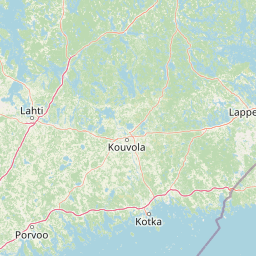
Map view of Valkmusa National Park

Use this park location map to pinpoint Valkmusa National Park in Finland, understand its exact geographic position, and read its mapped placement within the surrounding landscape more clearly.

Pigeon | © OpenStreetMap contributors

Location context for Valkmusa National Park

Kymenlaakso
Park atlas

Compare protected areas and trace the distinct wetland ecosystems and regional park geography of southern Finland.

Explore National Parks and Protected Areas Near Valkmusa National Park
Expand your park discovery from Valkmusa National Park to explore other national parks and protected areas in Finland, tracing diverse wetland ecosystems and distinct conservation landscapes. Compare the unique ecological features and regional geography of nearby protected areas, providing valuable atlas context for southern Finland's natural terrain.
National parkKymenlaakso

Eastern Gulf of Finland National Park: Kymenlaakso's National Park and Coastal Geography

Explore protected lands and mapped terrain.

The Eastern Gulf of Finland National Park is a designated national park located in the Kymenlaakso region of southeastern Finland. This entry provides specific geographic context for the park, detailing its role as a protected landscape and its mapped boundaries within the coastal atlas of the Gulf of Finland. Understanding its regional setting within Kymenlaakso allows for a more structured exploration of Finland's protected natural areas and their unique geographic identities.

Area
6 km²
Established
1982
IUCN
II
Visitors
15.8K annual
Watercolor illustration showing a landscape with mountains, a winding river, and patches of green vegetation and trees
National parkFinland

Repovesi National Park: Finland's Boreal Wilderness and Protected Landscape

Explore mapped terrain and regional geography.

Repovesi National Park represents a significant protected natural area in southeastern Finland, showcasing a landscape characterized by dense boreal forests, rolling hills, and numerous lakes. As one of Finland's most visited national parks, it offers a compelling example of conserved wilderness and natural terrain. This page details the park's protected landscape identity, its geographic setting within Finland, and the atlas-driven insights available for exploring its mapped boundaries and natural features.

Area
15 km²
Established
2003
IUCN
II
Visitors
100.9K annual
Watercolor illustration showing green trees, a river, and rolling hills under a soft sky
National parkUusimaa

Sipoonkorpi National Park: Protected Landscape and Geography in Uusimaa

Explore Finland's key national park and its natural terrain.

Discover Sipoonkorpi National Park, a vital protected landscape in Finland's Uusimaa region. This page offers detailed insight into its mapped boundaries, diverse boreal forests, extensive swamp areas, and the unique terrain that defines this significant natural area. Understand its role as one of the last undeveloped green spaces near the Helsinki metropolitan area and explore its geographic context within southern Finland.

Area
18.57 km²
Established
2011
IUCN
II
Visitors
165.5K annual
National parkPäijät-Häme

Päijänne National Park: Mapped Island Archipelago in Finland's Päijät-Häme Region

Explore unique glacial geology and boreal island wilderness.

Päijänne National Park presents a compelling protected landscape for atlas discovery, focusing on its distinct archipelago character within Lake Päijänne, Southern Finland. This national park features numerous islands showcasing ancient geological formations, from rocky outcrops to sandy beach ridges and moraine formations. Its mapped terrain offers insights into glacial processes and the development of boreal island ecosystems. Navigate its unique island settings to understand the geographic context of this protected area in the Päijät-Häme region.

Area
14 km²
Established
1993
IUCN
II
Visitors
67K annual
National park

Lahemaa National Park: Explore Estonia's Coastal Geography and Protected Landscape Atlas

Mapped terrain, bogs, and coastal peninsulas of a major protected area.

Delve into the detailed geography of Lahemaa National Park, Estonia's largest national park situated on the southern coast of the Gulf of Finland. This protected landscape encompasses a diverse range of terrain, from the deeply indented coastline and ancient glacial boulders to expansive raised bogs and rolling boreal forests. Understand the park's mapped boundaries and its significance as a premier destination for exploring distinct Baltic natural environments and historical coastal villages. The park's unique blend of natural features and cultural heritage makes it a key point of reference in any protected-area atlas.

Area
747 km²
Established
1971
IUCN
II
Relief
Lowland
National parkUusimaa

Nuuksio National Park: Uusimaa Region Protected Landscape Atlas Entry

Mapped boundaries and geographic context for a Finnish National Park.

Access detailed geographic information and mapped boundaries for Nuuksio National Park, a protected national park within the Uusimaa region. This MoriAtlas entry provides context for understanding its landscape within Finland, focusing on atlas-style exploration and the identification of protected natural areas.

Area
53 km²
Established
1994
IUCN
II
Visitors
312.6K annual
National park

Isojärvi National Park: Finland's Protected Landscape with Dynamic Beaver-Shaped Terrain

Central Finland's boreal forest, ravines, and lake district geography.

Isojärvi National Park offers a unique atlas perspective on Central Finland's protected natural landscapes. This national park is characterized by a dynamic boreal environment, featuring steep hills, deep ravines, and varied topography shaped by both ancient geological processes and contemporary beaver activity. Discover the mapped boundaries of this protected area, its central role in the Finnish lake district's geography, and the distinctive wetland habitats created by beavers that enhance its ecological diversity. It serves as a key point for understanding regional landscape context and protected land exploration.

Area
19 km²
Established
1982
IUCN
II
Visitors
24.4K annual
National parkCentral Finland

Leivonmäki National Park: Mapped Protected Landscape in Central Finland

Detailed geographic context for this Finnish national park.

Leivonmäki National Park offers a specific focus on a single protected landscape within the broader geography of Central Finland. This page provides users with detailed information centered on the park's mapped boundaries and its role as a national park. It is designed to be a foundational entry within the MoriAtlas discovery platform, helping users understand the park's geographic setting and its protected area status for informed exploration.

Area
29 km²
Established
2003
IUCN
II
Visitors
29.1K annual

Common questions about visiting, size, designation, and location context for Valkmusa National Park

Valkmusa National Park FAQs for park facts, access, geography, and protected area context
Find quick answers about Valkmusa National Park, including protected-area facts, park geography, trail and visitor context, and how the park fits into its surrounding country and regional landscape.
MoriAtlas Explorer

Continue Your Protected Areas Search Across the Global Atlas

Deepen your exploration by continuing the structured search for national parks and protected areas worldwide. Utilize the comprehensive filtering capabilities to compare different conservation landscapes and refine your understanding of global park geography. Discover more about the distribution and characteristics of protected natural areas.

Global natural geography