
Why Wadi al-Hujeir stands out
Wadi al-Hujeir is primarily recognized for its ancient olive trees and Valonia oak forests, which together define the valley's ecological character and its identity as a Mediterranean woodland reserve.
Wadi al-Hujeir history and protected-area timeline
The history of Wadi al-Hujeir extends well beyond its formal designation as a nature reserve. In the aftermath of the French occupation of Lebanon and Syria in 1920, the valley hosted a conference of anti-French revolutionaries organized by Abd al-Husayn Sharaf al-Din. The gathering called for resistance against French colonial forces and for participation in the wider Arab Revolt. Sharaf al-Din used the occasion to emphasize the importance of unity and mutual respect between Christian and Muslim communities, leaving the valley a place associated with both political mobilization and cross-confessional solidarity.
In the early twenty-first century, the valley was drawn into the wider Israeli–Lebanese conflict. During the final phase of the 2006 Lebanon War, Wadi al-Hujeir and the adjacent Wadi Saluki became the site of a major battle as part of Operation Change of Direction 11. The fighting centered on Hezbollah's effort to halt an Israeli advance toward the Litani River, with intense engagements that resulted in significant Israeli casualties and the destruction of multiple Merkava tanks. The episode earned the valley the grim label of the 'Merkava graveyard', reflecting both its strategic position and the scale of armored losses suffered there.
In 2010, recognizing the valley's ecological value and its ancient olive and oak woodlands, the Lebanese government formally declared Wadi al-Hujeir a nature reserve. This designation marked a shift toward protecting the area's natural heritage while preserving a landscape already shaped by centuries of human activity and historical events.
Wadi al-Hujeir landscape and geographic character
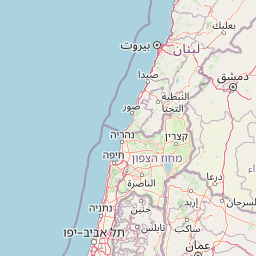
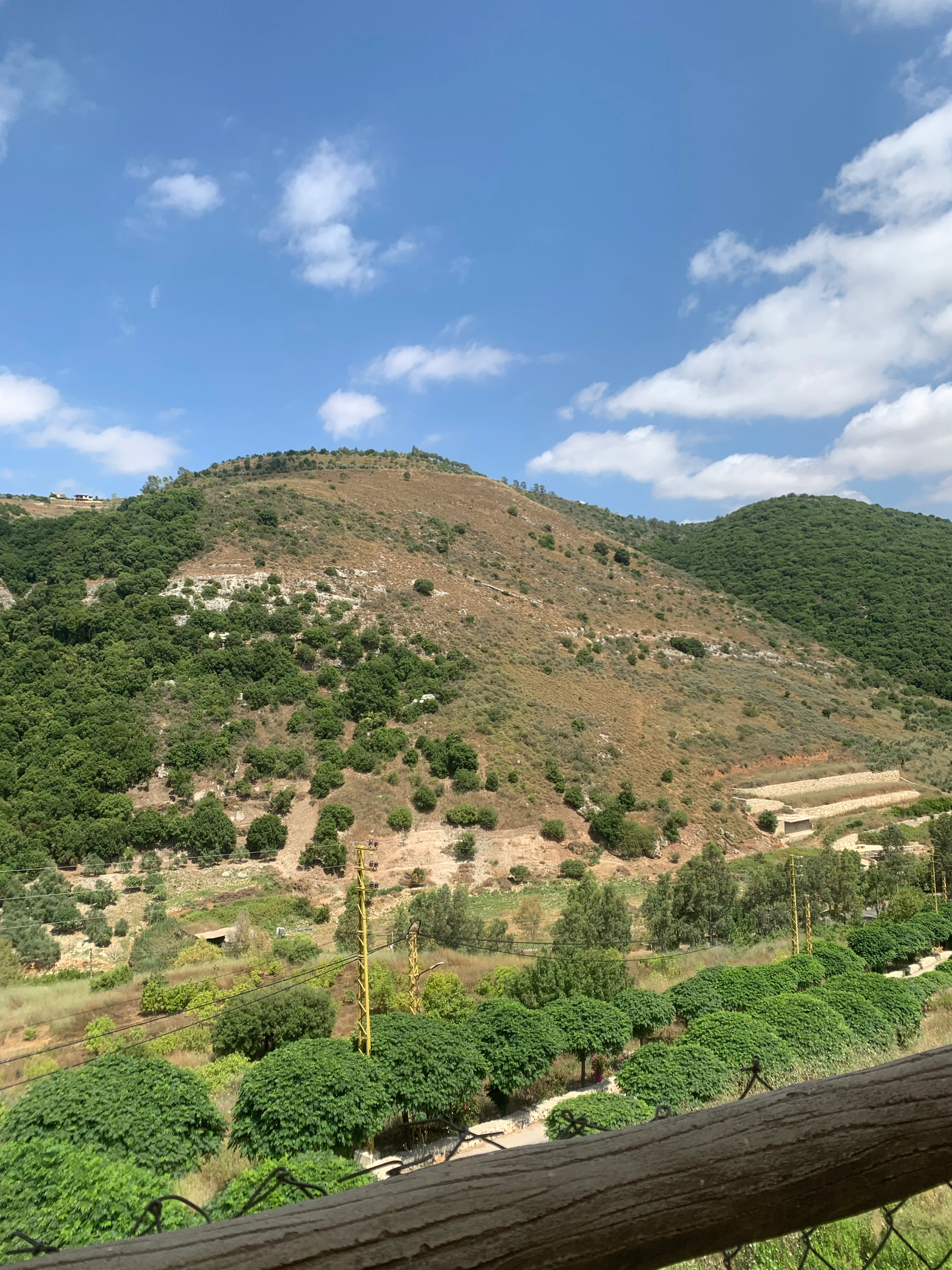
Wadi al-Hujeir lies within the hilly terrain of Jabal Amil in Southern Lebanon, an area where ridges, valleys, and seasonal streams define the regional geography. The reserve itself follows the course and surrounding slopes of a major valley, producing a mix of valley floor, mid-slope woodland, and elevated terrain that together create varied microhabitats within a relatively compact area.
The landscape is shaped by long-established tree cover. Olive groves occupy significant portions of the terrain, with mature trees contributing to a patchwork of cultivated and semi-wild vegetation. Above and around them, Valonia oak forests climb the slopes, lending the valley a distinctly Mediterranean character. Carob cultivation, still developing in parts of the reserve, further integrates human land use into the natural topography, reflecting an environment where agriculture and wild vegetation coexist across centuries.
Wadi al-Hujeir ecosystems, habitats, and plant life
The ecological identity of Wadi al-Hujeir is rooted in its semi-Mediterranean woodland systems, which combine elements of cultivation, ancient forest, and recovering vegetation. The valley's olive groves are not merely agricultural features; they represent living archives of tree genetics, with individuals potentially several centuries old. Valonia oak forests add a distinctive deciduous layer, producing shaded canopies that support a wide range of associated plant and animal communities in a region where such woodland is increasingly rare.
Carob plantations, though newer in the reserve's management, reflect an effort to extend traditional agroforestry practices. Together these vegetation types form a mosaic that provides habitat continuity across the valley, linking ancient trees to active land use and giving the protected area a strong sense of ecological resilience rooted in long-term human stewardship.
Wadi al-Hujeir conservation status and protection priorities
The 2010 designation of Wadi al-Hujeir as a nature reserve reflects recognition of its ecological importance within the broader context of Southern Lebanon. The reserve places formal protection around ancient olive groves, Valonia oak forests, and emerging carob cultivation, encompassing a landscape where traditional Mediterranean woodland is increasingly threatened by development, land-use change, and conflict-related pressures.
By safeguarding these habitats under a single legal framework, the reserve helps maintain habitat continuity for native flora and fauna while preserving cultural-natural landscapes shaped by centuries of human activity. The focus on oak and olive woodlands gives it a particular conservation value, as such mature Mediterranean tree systems are rare and slow to regenerate if lost.
Wadi al-Hujeir cultural meaning and human context
Wadi al-Hujeir is deeply embedded in the cultural identity of Jabal Amil and Southern Lebanon. Its ancient olive groves, some maintained across multiple generations, link the valley to long-standing traditions of Mediterranean agriculture. The 1920 conference held at the site, organized by Abd al-Husayn Sharaf al-Din, gave the valley a place in the political and social memory of the region, particularly as a symbol of resistance and of Christian-Muslim solidarity during the French Mandate period.
The valley's more recent wartime history has further shaped how it is perceived locally, reinforcing its significance as a landscape where natural heritage, agricultural tradition, and political memory intersect.
Top sights and standout views in Wadi al-Hujeir
The protected olive groves of Wadi al-Hujeir, with trees estimated to reach 300 years in age, stand among the reserve's defining features, alongside extensive Valonia oak forests that give the valley its Mediterranean woodland character.
The valley also stands out for its layered human history. From the 1920 anti-French resistance conference to its role as a battlefield in 2006, Wadi al-Hujeir combines ecological value with strong regional and political significance, making its 2010 nature reserve designation particularly meaningful.