Why Akagera National Park stands out
Akagera is best known for its successful conservation story of restoring wildlife populations including the Big Five game species. The parks savanna landscapes support populations of African bush elephants, African buffalo, African leopards, and reintroduced eastern black rhinoceroses and lions. The extensive wetland system, fed by the Kagera River and dotted with lakes, provides critical habitat for hippos, crocodiles, and waterfowl. The parks transformation from a depleted reserve to a thriving ecosystem with over 13,500 large mammals makes it a notable example of African conservation success.
Akagera National Park history and protected-area timeline
Akagera National Park was established in 1934 by the Belgian colonial administration, covering approximately 2,500 square kilometers of savanna and wetland habitats. The park originally supported abundant wildlife including large populations of African wild dogs, known locally as Parc aux Lycaons, which were so numerous they were considered pests. Black rhinoceroses were introduced from Tanzania in 1957, and by the 1970s over 50 individuals inhabited the savanna habitats. Masai giraffes were translocated from Kenya in 1986. The park suffered severe wildlife declines during the 1990s following the 1994 Genocide against the Tutsi, when returning farmers settled within the park and killed the entire lion population. Poaching also decimated the rhino population, with the last confirmed black rhino sighting in 2007. In 2009, the Rwanda Development Board partnered with the African Parks Network under a 20-year agreement, and the Akagera Management Company was formed in 2010 to oversee restoration. A 10 million dollar investment funded a 120-kilometer western boundary fence, aerial surveillance, anti-poaching teams, and species reintroduction programs. Lions were reintroduced in 2015 from Tembe Elephant Park in South Africa, and eastern black rhinos returned in 2017. White rhinos were added in 2021 in the largest single rhinoceros translocation to Africa. Large mammal populations grew from 4,000 in 2010 to over 13,500 by 2018.
Akagera National Park landscape and geographic character
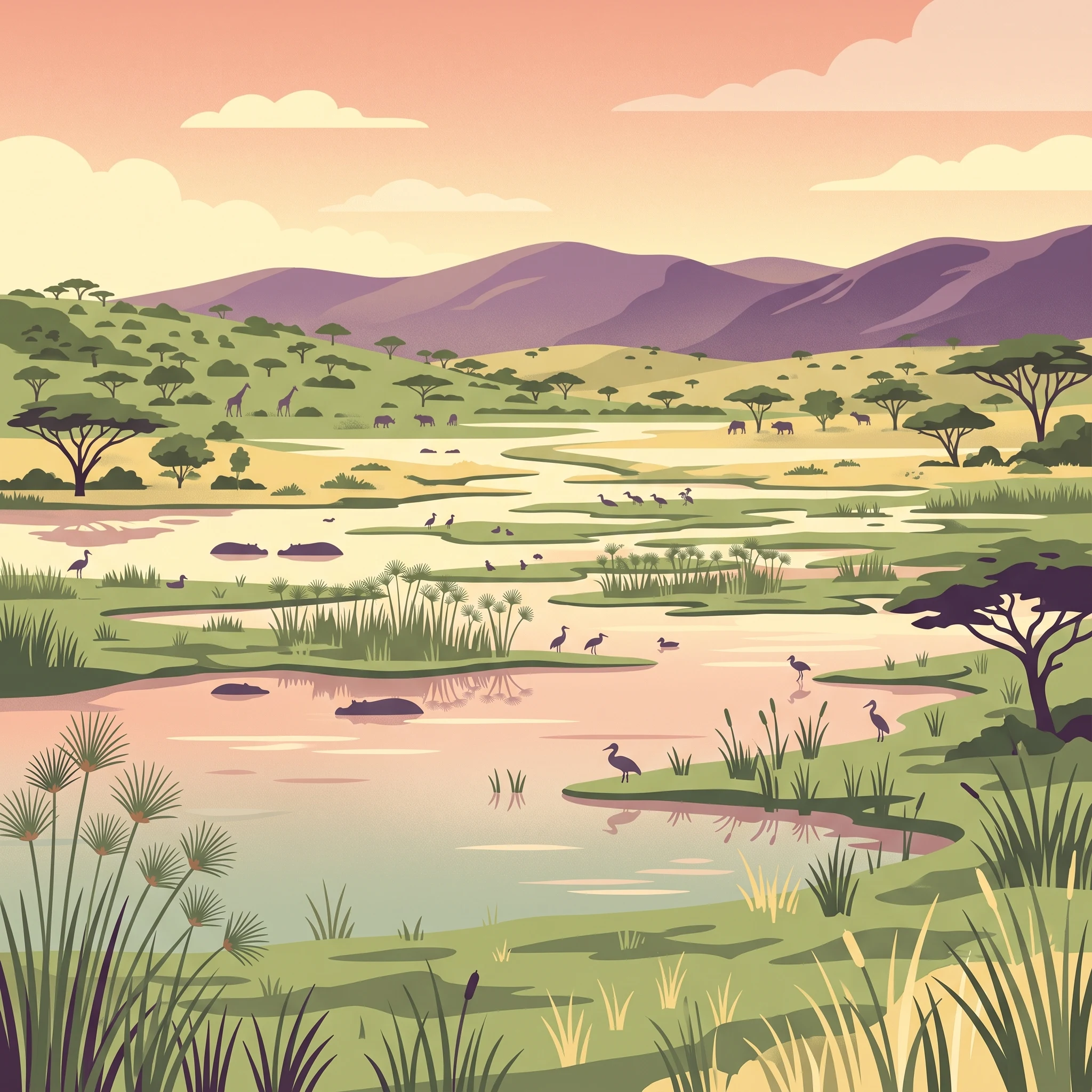
The landscape of Akagera National Park combines rolling savanna plains, acacia woodlands, and an extensive network of wetlands. The terrain is characterized by gentle slopes descending from Rwandas central highlands toward the Kagera River valley, creating a mosaic of grassland, woodland, and swamp habitats. The park contains a chain of lakes including Lake Ihema, Lake Rwanyakizinga, and smaller bodies fed by the Kagera River system. Papyrus swamps dominate the wetland areas, forming dense stands along lake margins and water channels that cover over a third of the parks area. The savanna habitats feature scattered acacia trees and tall grasses that turn golden during the dry season, creating classic East African scenery. The eastern boundary follows the Kagera River, which flows northward to join Lake Victoria and eventually the Nile. The combination of permanent water bodies, seasonal flooding, and terrestrial savanna creates a diverse landscape that supports both wetland-dependent species and savanna wildlife.
Akagera National Park ecosystems, habitats, and plant life
The ecological character of Akagera reflects its position as a transition zone between East African savanna ecosystems and Central African forest habitats. The parks savanna landscapes support characteristic grassland communities dominated by species such as star grass and red grass, interspersed with acacia woodlands that provide important dry-season browse for giraffes and elephants. The wetland system represents the largest protected freshwater habitat in the region, with papyrus swamps and open water bodies providing critical habitat for aquatic birds, hippos, and crocodiles. The Kagera River system serves as an important migratory corridor for fish species and supports one of the most productive freshwater fisheries in Rwanda. The parks diverse habitats also include montane forest patches in the western sections, adding to the ecological complexity. These varied environments create conditions for exceptional biodiversity, with the park supporting numerous mammal species, over 400 bird species, and significant populations of reptiles and amphibians.
Akagera National Park wildlife and species highlights
Akagera National Park supports diverse wildlife populations across its savanna and wetland habitats. The parks mammalian residents include African bush elephants, African buffalo, giraffes, zebras, and various antelope species including topi, impala, and waterbuck. Predators include African leopards and a growing population of lions reintroduced in 2015, now numbering over 50 individuals. The wetland areas support large populations of hippos and Nile crocodiles, with the lakes providing important habitat for waterfowl and wading birds. The parks birdlife includes herons, storks, egrets, and the iconic African fish eagle. Following the reintroduction of eastern black rhinoceroses from South Africa in 2017 and subsequent translocations, the park now hosts all of Africas Big Five: lion, leopard, elephant, rhino, and buffalo. White rhinoceroses were added in 2021, making Akagera one of the few parks with both black and white rhino populations.
Akagera National Park conservation status and protection priorities
Akagera National Park represents one of Africas most significant conservation success stories of the past two decades. The parks transformation from a depleted ecosystem to a thriving protected area demonstrates the potential of public-private partnerships in wildlife conservation. Management efforts have focused on habitat protection, anti-poaching enforcement, and species reintroduction programs that have restored biodiversity lost during the 1990s. The 120-kilometer boundary fence has reduced human-wildlife conflict and prevented cattle encroachment into core conservation areas. The reintroduction of lions and multiple rhino species has reestablished ecological processes dependent on apex predators. The parks revenue generation, reaching 4.8 million dollars in 2023, demonstrates that sustainable tourism can fund conservation operations with 92 percent of operating costs covered by park income. Akagera now serves as a model for conservation in Rwanda and the broader Great Lakes region, showing how investment in protection and species management can restore degraded protected areas.
Akagera National Park cultural meaning and human context
The Akagera region has historically been important for local communities who have utilized the lakes and wetlands for fishing and the savanna for livestock grazing. The Kagera River and associated wetlands hold cultural significance for communities along its banks, providing resources and transportation routes. The parks name derives from the Kagera River, known in local languages as the river that carries many boats. Following the 1994 genocide, population movements and resettlement in the park area created significant challenges for wildlife conservation, leading to the loss of several species. The current management model recognizes the importance of engaging local communities in conservation, with park revenues supporting surrounding villages and employment opportunities. The parks location along the Rwanda-Tanzania border also positions it within broader regional conservation efforts, connecting to Tanzanias Serengeti ecosystem.
Top sights and standout views in Akagera National Park
The restoration of Akagera National Park stands as a remarkable conservation achievement, with the parks Big Five populations representing successful species reintroductions. The extensive wetland system featuring Lake Ihema and papyrus swamps provides exceptional wildlife viewing opportunities, particularly for hippos, crocodiles, and waterbirds. Game drives across the savanna plains offer sightings of elephants, buffalo, giraffes, and an increasing lion population. The parks position as the largest protected wetland in East-Central Africa gives it regional significance for migratory birds and freshwater biodiversity. The Kagera River, one of the Niles major sources, flows along the parks boundary, adding to its geographic importance.
Best time to visit Akagera National Park
The best time to visit Akagera National Park is during the dry season from June to September, when wildlife congregates around water sources and vegetation is less dense, making animal spotting easier. The dry months offer prime conditions for game viewing as animals concentrate near the lakes and rivers. The wet season from October to May brings green landscapes and excellent birdwatching, with migratory species present. The parks accessibility and self-sustaining tourism model mean it can be visited year-round, though the dry season generally offers more reliable wildlife sightings.