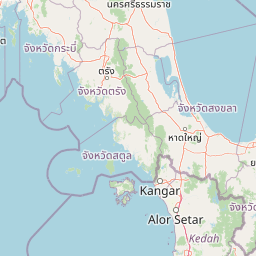
Why Ao Phang Nga National Park stands out
Ao Phang Nga National Park is best known for its extraordinary limestone tower karst islands that create one of Thailand's most recognizable seascapes. The most famous of these is Khao Phing Kan, nicknamed James Bond Island after its appearance in the 1974 James Bond film The Man with the Golden Gun. The park is equally significant for protecting Thailand's largest remaining tract of原生 mangrove forest, a critical coastal ecosystem that serves as a natural barrier against storms and provides vital breeding grounds for marine species. The combination of dramatic karst topography, extensive mangroves, and rich marine biodiversity makes this park a flagship example of tropical island and coastal conservation in Southeast Asia.
Ao Phang Nga National Park history and protected-area timeline
Ao Phang Nga National Park was formally established through a royal decree published in the Royal Gazette under proclamation number 98, section 64, dated April 29, 1981. The initial designation covered an area of approximately 250,000 rai, equivalent to about 400 square kilometers. Beyond its national park status, the area received additional international recognition when it was designated as a Ramsar Wetland on August 14, 2002, under the Ramsar Convention on Wetlands, reflecting its exceptional value as a coastal and marine wetland ecosystem. Archaeological research conducted in 1987 at Khao Tao within the park uncovered prehistoric human burial sites, providing evidence of early human habitation in the Phang Nga Bay area. Studies of cave deposits and island formations have revealed the geological history of the region, including significant sea level fluctuations during the Pleistocene and Holocene epochs that shaped the current island landscape.
Ao Phang Nga National Park landscape and geographic character
The landscape of Ao Phang Nga National Park is defined by its predominantly maritime environment and the extraordinary limestone tower karst formations that populate Phang Nga Bay. These islands feature steep, sheer sides that rise abruptly from the water, creating dramatic cliffs and vertical rock faces. The underlying geology consists of a combination of sedimentary and metamorphic rock formations, with the limestone mountains containing numerous caves and natural holes formed through geological processes over millions of years. The park's coastal areas include extensive mangrove forests along sheltered shorelines and river channels, while the surrounding waters of the Strait of Malacca vary in depth and character. The terrestrial portions of the islands support tropical rainforest vegetation, adding green canopy to the otherwise stark limestone silhouettes. This distinctive combination of vertical limestone peaks, winding water channels through mangroves, and open marine waters creates a landscape of remarkable diversity and visual complexity.
Ao Phang Nga National Park ecosystems, habitats, and plant life
The ecological character of Ao Phang Nga National Park centers on two primary habitat types: the extensive mangrove forest and the tropical rainforest covering the islands. The mangrove ecosystem represents the largest remaining example of this habitat in Thailand, characterized by species including Rhizophora apiculata, Rhizophora mucronata, Avicennia alba, Avicennia officinalis, Bruguiera cylindrica, and Bruguiera parviflora, along with cannonball trees (Xylocarpus granatum and Xylocarpus moluccensis). These mangrove forests form a critical component of the coastal environment, functioning as natural barriers against storm surges and providing essential breeding and nursery habitat for diverse marine species. The islands support tropical rainforests containing species such as Hopea ferrea, Parkia timoriana, Acacia catechu, Artocarpus lacucha, Garcinia cowa, and Morinda coreia. A 1991 wildlife inventory documented 206 species in the park, including 17 mammal species, 88 bird species, 18 reptile species, 3 amphibian species, 24 fish species, and 45 other marine animals.
Ao Phang Nga National Park wildlife and species highlights
The wildlife population of Ao Phang Nga National Park reflects the diversity of its marine, mangrove, and forest habitats. Mammals found in the park include the smooth-coated otter, various leaf monkey species, smoky leaf monkeys, and the crab-eating macaque, though the lar gibbon and serow that were once present in the area are now locally extinct. The park supports important bird populations, with notable species including the brahminy kite, Pacific reef heron, white-bellied sea eagle, multiple kingfisher species, the Asian dowitcher, and the edible-nest swiftlet. Reptile and amphibian species present include mangrove snakes, rhacophoridae frogs, and saltwater frogs. The marine environment supports additional biodiversity beyond the counted species, with the mangrove system's role as a nursery area contributing to the presence of numerous fish and crustacean species in the surrounding waters.
Ao Phang Nga National Park conservation status and protection priorities
Ao Phang Nga National Park holds significant conservation importance at both national and international levels. Its designation as a Ramsar Wetland in 2002 recognizes its exceptional value as a coastal wetland ecosystem, providing international framework for its protection and sustainable management. The park protects the largest remaining expanse of native mangrove forest in Thailand, a habitat that has faced extensive loss and degradation throughout the country due to coastal development, aquaculture expansion, and other human pressures. The mangrove ecosystem provides critical services including coastal protection, carbon storage, and support for marine biodiversity. However, the park has faced challenges from high visitor volumes, with Fodor's Travel including it in their 2018 "No List" as a destination to temporarily avoid to allow environmental recovery from overtourism impacts, highlighting the tension between conservation goals and the strong appeal of the landscape.
Ao Phang Nga National Park cultural meaning and human context
The cultural significance of Ao Phang Nga National Park extends to prehistoric times, with archaeological research at Khao Tao uncovering human burial sites demonstrating early habitation in the area. The landscape holds contemporary cultural importance through its association with the film industry, particularly the international recognition brought to Khao Phing Kan through its use as a filming location for the James Bond film The Man with the Golden Gun in 1974. This association has given the island its enduring nickname "James Bond Island" and made it one of the most photographed locations in Thai tourism. The local communities in Phang Nga Province maintain connections to the marine and coastal environment, with traditional fishing and coastal livelihoods historically intertwined with the bay's resources.
Top sights and standout views in Ao Phang Nga National Park
The defining highlights of Ao Phang Nga National Park include the dramatic limestone tower karst islands of Phang Nga Bay, with Khao Phing Kan (James Bond Island) being the most famous for its cinematic association and distinctive silhouette. The park's mangrove forests represent the largest remaining stand in Thailand and provide critical ecosystem services. The Ramsar Wetland designation recognizes the international significance of the coastal and marine environments. The combination of vertical limestone cliffs rising from turquoise waters, winding mangrove channels, and rich biodiversity creates a seascape of exceptional beauty and ecological importance. Archaeological evidence of prehistoric human presence adds historical depth to the natural landscape.
Best time to visit Ao Phang Nga National Park
Ao Phang Nga National Park can be visited throughout the year, though the optimal period generally spans from November to April when rainfall is lower and conditions are more favorable for marine activities and island exploration. The dry season offers clearer skies and more stable weather for viewing the karst islands and navigating the bay. However, the park's mangrove forests and coastal ecosystems maintain their character across seasons, and the wetter months bring their own atmospheric qualities to the landscape. Visitors interested in wildlife viewing should consider how seasonal patterns might affect animal activity and visibility.