Why Arkemheen stands out
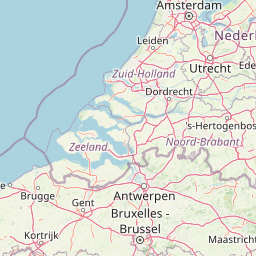
Arkemheen is best known for its exceptionally well-preserved medieval polder pattern, an open agricultural landscape supporting a rich community of breeding meadow birds and wintering waterfowl. Its combination of low peat meadows, dikes, dike-break kolks and reed marshes, together with its position along the freshwater border lakes, makes it a distinctive cultural-ecological landscape within the Netherlands.
Arkemheen history and protected-area timeline
The human history of Arkemheen reaches back to the mid-fourteenth century, when Duke Reinoud III of Gelre granted rights to dike and reclaim land along the Zuiderzee in 1356. The polders that resulted from this early reclamation are among the oldest surviving in the Netherlands, and they have retained their fourteenth-century layout into the present day because no ruilverkaveling, or land consolidation, has ever been undertaken. The original subdivision of fields, ditches and access roads is therefore still legible on the ground.
The area originated as a delta environment, where lowland streams from the Veluwe and the Gelderse Vallei discharged into the Zuiderzee, and this watery past remains written into the landscape. On the inland side of the former sea dike, a chain of kolken, the roughly circular lakes formed when a dike breach scours out the land behind it, and adjoining reed marshes mark the places where floods once broke through. The Zuiderzee dike itself remained vulnerable for centuries, with the last recorded breach occurring in 1916 during a heavy storm combined with extreme high water. The presence of the historic steam pumping station Hertog Reijnout, now functioning as a visitor center, marks a later stage in the long struggle to keep the low-lying polder dry.
In the modern era, the historical pattern has been deliberately preserved as part of the landscape's identity. Arkemheen was designated as part of the Nationaal Landschap Arkemheen-Eemland on the strength of its open peat meadow character and centuries-old parcel pattern. The site has also been registered under Natura 2000 as area number 56, with protection primarily under the European Birds Directive, and was separately recognized by BirdLife International as an Important Bird Area.
Arkemheen landscape and geographic character
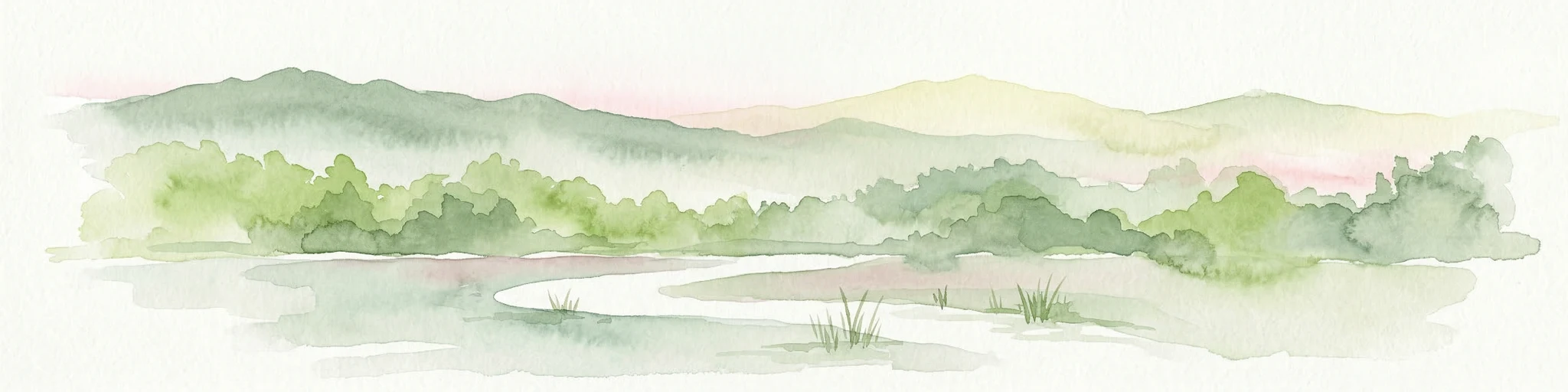
The physical landscape of Arkemheen is defined by its extreme flatness and openness. From its western edge along the Veluwerandmeren, the freshwater border lakes formed after the IJsselmeer works cut off the former Zuiderzee, the land rises only imperceptibly eastward into a broad, low-lying polder. The horizon is unusually wide here, broken only by lines of trees along the occasional farm track, ditches and the long, straight profile of the Zeedijk itself.
Three landscape elements give Arkemheen its distinctive character. First, the medieval polder pattern of long, narrow parcels separated by ditches, preserved without modern consolidation, creates a finely textured grid of fields across the entire area. Second, along the inland side of the old sea dike, a series of kolken and reed marshes has survived as evidence of past dike breaches, with the most recent major breach occurring in 1916. Third, the partial salinity of the inland grasslands, a legacy of the polder's former position at the edge of the brackish Zuiderzee, contrasts with the freshwater character of the bordering lakes, producing an unusual mosaic of meadow habitats within a relatively small area.
Arkemheen ecosystems, habitats, and plant life
Ecologically, Arkemheen is a lowland landscape dominated by open peat meadows, freshwater shoreline and patches of reed marsh. The combination of flat open terrain, shallow ditches, undisturbed dike-side lakes and brackish-influenced grasslands creates a habitat mosaic that is favourable for both breeding and migrating waterbirds, while the absence of intensive restructuring has preserved the long, undisturbed sightlines that many meadow birds prefer.
Vegetation is shaped by water levels and salinity. The brackish-influenced grasslands near the old Zuiderzee fringe carry a plant community distinct from the more typical freshwater peat meadows that dominate the polder interior, and the kolken and reed marshes along the dike support their own wetland flora. Together, these habitats form a compact ecological unit that is shaped by, and reflects, the area's delta and coastal history.
Arkemheen wildlife and species highlights
Arkemheen's wildlife profile is dominated by birds, particularly meadow-breeding waders and wintering waterfowl. The open polder supports breeding lapwings, oystercatchers, black-tailed godwits, ruffs and common redshanks, along with species such as garganey, shoveler, mallard, bluethroat, great reed warbler, skylark, meadow pipit and yellow wagtail. Local farmers contribute to conservation by, for example, fitting nest protectors to keep machinery and trampling from destroying ground nests.
In winter, the same fields serve as a major refuge and foraging area, and the polder fills with Bewick's and whooper swans, tundra and white-fronted geese, wigeons, curlews and many other waterbirds. Further afield, the lake and its surroundings have been recognized by BirdLife International as an Important Bird Area because of their significance for substantial populations of European golden plovers and lapwings, reinforcing Arkemheen's standing as one of the more important open-country bird sites in the central Netherlands.
Arkemheen conservation status and protection priorities
Arkemheen's conservation significance rests on its combination of legislative and international designations. As site NL9802062 within the Dutch Natura 2000 network, area number 56, the polder is protected under the European Birds Directive, which obliges member states to maintain the habitats of listed bird species. Its inclusion in the Important Bird Area network by BirdLife International adds an international layer of recognition, underlining the area's role in supporting significant numbers of meadow birds and wintering waterfowl.
At national level, the polder is part of the Nationaal Landschap Arkemheen-Eemland, a designation that highlights not only the natural values of the open peat meadow landscape but also the surviving medieval parcel pattern. Practical management blends direct stewardship by Natuurmonumenten and Staatsbosbeheer with agri-environmental cooperation from private farmers, who adjust mowing dates, water levels and grazing to accommodate breeding and wintering birds. Together, these measures aim to keep the area as a working agricultural landscape that retains its ecological function.
Arkemheen cultural meaning and human context
The cultural identity of Arkemheen is inseparable from its long history of water management. The original right to dike and reclaim land granted by Duke Reinoud III of Gelre in 1356 is still visible in the modern landscape through the medieval polder layout, an inheritance that sets the area apart from most other Dutch farmland. The presence of the historic Stoomgemaal Hertog Reijnout, a steam pumping station that once kept the polder dry and now houses a visitor center, anchors the engineering culture of Dutch water management within the area, linking tourism and education to the natural values of the site.
Top sights and standout views in Arkemheen
Arkemheen stands out for the rare combination of a still-intact medieval polder pattern, a low-lying open landscape, and an internationally recognized bird protection area along the former Zuiderzee coast. Few Dutch sites combine ecological, agricultural and historical value so directly within one continuous landscape. The polder also illustrates the transition from saline Zuiderzee shore to managed freshwater border lakes, with surviving kolken and reed marshes providing a tangible record of that history.
Best time to visit Arkemheen
The character of a visit to Arkemheen shifts noticeably with the seasons. Spring and early summer are the most rewarding period for those interested in breeding meadow birds, when lapwings, black-tailed godwits and redshanks can be observed across the open fields and traditional hay-making is underway. Winter transforms the polder into a stop-over and refuge for large numbers of swans, geese and other waterfowl, often visible at close range against the open skyline. Mid-summer visits, when many meadows have been cut, tend to be quieter in terms of bird activity, though the open landscape and heritage sites along the Zeedijk remain accessible year-round through the visitor network around the steam pumping station.