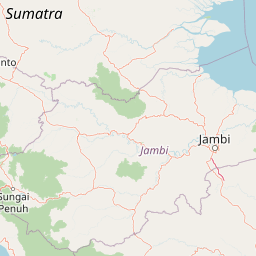
Why Bukit Tigapuluh National Park stands out
Bukit Tigapuluh is best known as one of the last refuges for critically endangered Sumatran orangutans and serves as the site of a major orangutan reintroduction program operated by the Sumatran Orangutan Conservation Programme. The park also supports significant populations of Sumatran tigers, Sumatran elephants, and Asian tapirs. In 2011, camera trap surveys documented five endangered cat species within the park and connecting corridor areas, including the Sumatran tiger, Sunda clouded leopard, marbled cat, Asian golden cat, and leopard cat. The park's botanical significance includes populations of Rafflesia hasseltii, one of the world's largest flower species.
Bukit Tigapuluh National Park history and protected-area timeline
The conservation history of Bukit Tigapuluh reflects broader shifts in Indonesian environmental protection policy. In 1982, Indonesia's National Conservation Plan first recognized the ecological importance of the Bukit Tigapuluh ecosystem, designating the Bukit Besar Wildlife Sanctuary (200,000 hectares) and Seberida Nature Reserve (120,000 hectares) as priority I conservation areas. Collaborative research conducted by the Indonesian and Norwegian governments in 1992 provided comprehensive biological documentation that reinforced the area's conservation significance. Based on this research, the ecosystem spanning approximately 250,000 hectares was recommended for national park status. Bukit Tigapuluh was officially established as a national park in 1995 through Ministerial Decree, encompassing 127,698 hectares. The park's boundary was expanded in 2002 to its current extent of 143,223 hectares. Beyond formal protection, the park has become a focal point for orangutan conservation through the Sumatran Orangutan Conservation Programme, which established a reintroduction station near the park in 2001 and has since reintroduced over 160 orangutans to the forest.
Bukit Tigapuluh National Park landscape and geographic character
The park's landscape is characterized by rolling hills and tropical lowland terrain, with elevations generally below 1,000 meters above sea level. The name Bukit Tigapuluh, meaning Thirty Hills, reflects the undulating topography that dominates much of the protected area. The forest ecosystem includes both lowland and highland forest types, with primary forest areas containing tall dipterocarp trees forming a dense canopy. The park contains significant waterways that contribute to the hydrology of the Kuantan Indragiri watershed, making the area important for broader watershed protection. The terrain supports a mix of primary forest, disturbed forest resulting from selective logging, and secondary forest in areas where human activity has impacted the original vegetation.
Bukit Tigapuluh National Park ecosystems, habitats, and plant life
Bukit Tigapuluh supports a complex tropical lowland forest ecosystem classified within the western Indonesian vegetation zone. The ecosystem is dominated by Dipterocarpaceae tree species, particularly Shorea (meranti), which form the canopy layer of primary forest areas. The park contains primary forest that has never been logged, disturbed forest that has experienced selective timber extraction, and secondary forest recovering from more significant disturbance. Vegetation includes economically important species such as Gutta-percha, as well as rattan and other climbing plants. The park's ecological significance is underscored by its inclusion in the Tesso Nilo Complex, a recognized biodiversity hotspot that represents one of the most species-rich areas in Southeast Asia. The forest plays a critical role in watershed protection for the Kuantan Indragiri river system.
Bukit Tigapuluh National Park wildlife and species highlights
The park supports exceptional mammalian diversity with 59 documented species, including six primate species and 18 bat species. The most ecologically significant mammals include the Sumatran orangutan, Sumatran tiger, Sumatran elephant, and Asian tapir, all classified as endangered or critically endangered. Additional notable species include the sun bear, siamang, Sumatran surili, Sunda loris, clouded leopard, marbled cat, dhole, Malayan civet, Indian muntjac, Sumatran serow, and Java mouse-deer. Bird diversity is equally impressive with 198 documented species, including the helmeted hornbill, wrinkled hornbill, white-winged wood duck, Storm's stork, great argus, little green-pigeon, and garnet pitta. In 2011, systematic camera trap surveys in the wildlife corridor connecting Bukit Tigapuluh to Rimbang Baling Sanctuary documented five endangered cat species using the same tracks, demonstrating the corridor's importance for feline conservation.
Bukit Tigapuluh National Park conservation status and protection priorities
Bukit Tigapuluh holds global conservation significance as one of 20 priority areas for tiger conservation identified by species experts in 2006. The park's conservation value stems from its role as a refuge for multiple threatened species and its position within the Tesso Nilo Complex biodiversity hotspot. However, the park faces severe and persistent threats. Approximately two-thirds of the park has been logged, and surrounding buffer zones and wildlife corridors are diminishing rapidly. In 2009, the Indonesian government released 30,000 hectares of the largest remaining forest area outside the park for logging. Human-wildlife conflict has escalated dramatically, particularly involving Sumatran elephants, with conflicts increasing fourfold over the past decade and causing significant damage to agricultural crops and properties. The orangutan reintroduction program operated by the Sumatran Orangutan Conservation Programme represents one of the park's most tangible conservation successes, with over 160 orangutans reintroduced to date and at least four infants born to reintroduced mothers in the wild.
Bukit Tigapuluh National Park cultural meaning and human context
The park is inhabited by the Orang Rimba and Talang Mamak, indigenous peoples who have traditionally lived within and depended on the forest ecosystem. The Orang Rimba, also known as the Kubu people, are forest-dwelling communities with deep cultural ties to the landscape. The Talang Mamak also maintain traditional relationships with the forest environment. These communities represent the human dimension of the park's ecology and are important stakeholders in conservation planning. Their traditional land use practices and knowledge systems are interconnected with the forest's ecological processes. However, expanding conservation boundaries and external pressures from commercial land development have created complex social and cultural challenges for these communities.
Top sights and standout views in Bukit Tigapuluh National Park
The park's standout features include its role as a critical orangutan reintroduction site, where captive orangutans are trained through a structured program before release into the wild. The Kembar Denalo Waterfall provides a notable scenic attraction within the park. The diversity of large mammals is exceptional, with all four of Sumatra's flagship endangered species present: orangutan, tiger, elephant, and tapir. The 2011 camera trap discovery of five endangered cat species in the park's wildlife corridor demonstrated the area's extraordinary importance for feline conservation. The presence of Rafflesia hasseltii represents a botanical highlight, with this parasitic plant producing one of the world's largest individual flowers.
Best time to visit Bukit Tigapuluh National Park
The park's tropical lowland forest climate means visits are possible year-round, though thewet season from November to March typically brings higher rainfall that may affect trail accessibility. The dry season from April to October generally offers more consistent conditions for wildlife observation. The period immediately after the wet season can offer excellent birdwatching as migratory species arrive. However, visitors should note that conditions inside the park can change rapidly and access may be limited during periods of heavy rainfall. The park's remote location and limited infrastructure mean that visits typically require advance planning and arrangement through conservation organizations or authorized guides.