Why Cascada de Texolo stands out
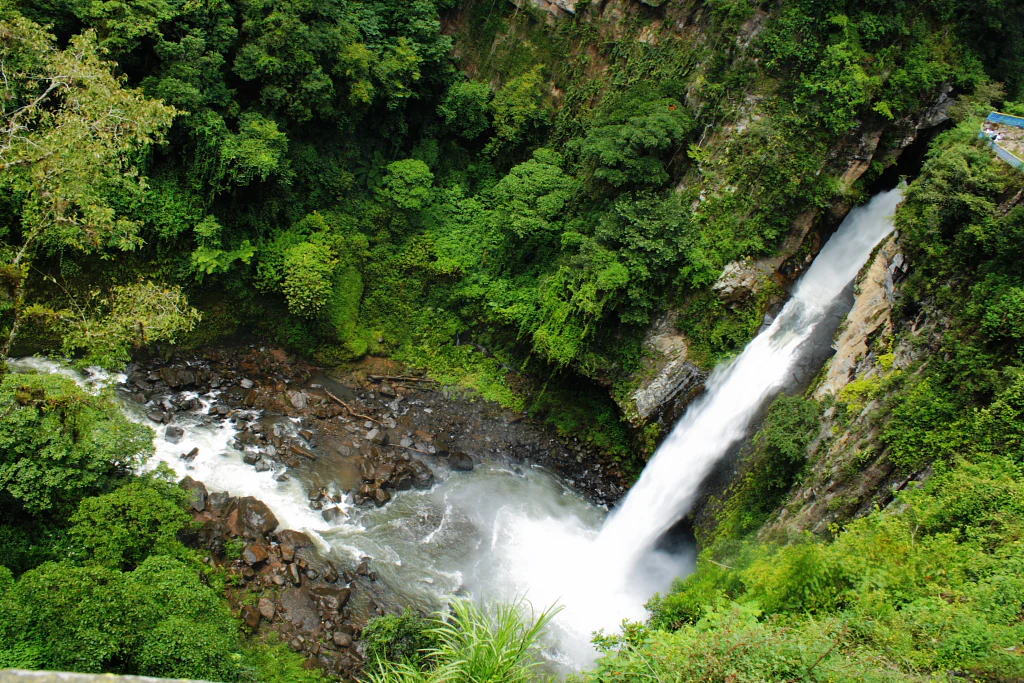
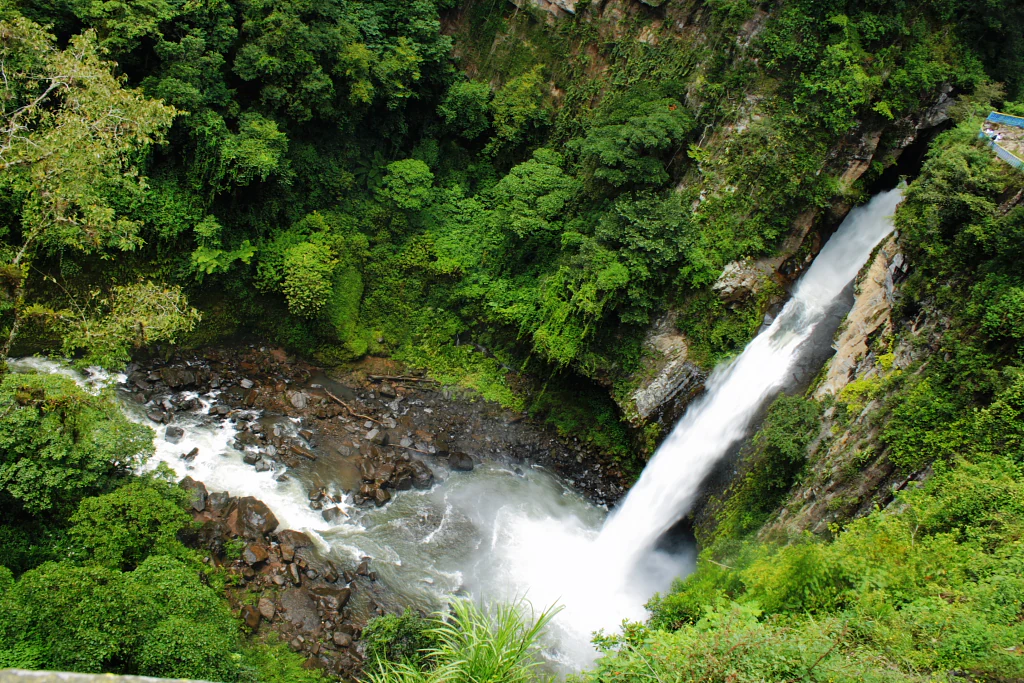
Cascada de Texolo is best known for its dramatic forested waterfall setting within the Veracruz highlands. The main cascade drops into a narrow, vegetation-lined gorge, while a pedestrian bridge spans the ravine and additional smaller falls are reachable via local footpaths. The combination of dense tropical woodland, a setting near the town of Xico, and conservation recognition under the Ramsar Convention gives the site a distinctive ecological and cultural profile. Another defining association is its role as a filming location. The falls stood in for a fictional South American setting in the adventure film Romancing the Stone, where the plot's hidden cave and jewel scene was filmed at Texolo. This cinematic visibility, alongside the park's natural appeal, has made Texolo a recognizable point of interest far beyond the Xalapa region.
Cascada de Texolo history and protected-area timeline
The natural waterfall at Texolo has long been part of the landscape surrounding the town of Xico and the broader Xalapa region, forming a focal point for local footpaths and recreation. Its broader environmental and cultural profile, however, became formalized in the early twenty-first century when the site received international recognition.
On 2 February 2006, the area encompassing the main waterfall and its surrounding terrain was inscribed as a Ramsar Wetland of international importance under the name "Cascadas de Texolo y su entorno." The Ramsar designation highlighted the ecological value of the humid forest and waterfall system, bringing the site into a global framework of wetland conservation.
In parallel, the visual identity of Texolo expanded through cinema. The waterfall and gorge were used as filming locations for Hollywood productions, including Romancing the Stone, in which Texolo stood in for a South American jungle setting in a pivotal cave-and-jewel scene. The site also appeared in Clear and Present Danger. Together, the formal conservation designation and the international film appearances have shaped Texolo's modern identity as both a protected natural area and a recognized cultural landmark.
No detailed timeline of tourist infrastructure or formal protected-area management is documented in the available sources, and the site's history is here summarized only where directly supported.
Cascada de Texolo landscape and geographic character
The landscape at Cascada de Texolo is shaped by a narrow, vegetation-filled gorge cut into the central Veracruz highlands. The principal waterfall drops roughly eighteen to twenty-four metres from a forested ledge into the ravine below, with the falling water framed by dense trees, mossy rocks, and lush understory typical of humid montane forest.
A bridge spans the gorge near the main cascade, linking the two wooded slopes and offering a direct view over the drop. Beyond the bridge, the trail network extends deeper into the ravine, where visitors can glimpse two additional smaller cascades further along the stream system. Together, the main falls, the secondary cascades, and the connecting footpaths create a tiered landscape of falling water and forest corridors.
The surrounding terrain reflects the broader character of the Xico and Xalapa region, with steep wooded slopes, persistent humidity in the forest canopy, and a stream system that feeds directly into the waterfall. The visual drama of the falls comes as much from this tight integration of rock, water, and dense vegetation as from the height of the main drop itself.
Cascada de Texolo ecosystems, habitats, and plant life
The ecological character of Texolo is tied to its humid montane forest setting, where the waterfall is the central feature of a broader stream and forest ecosystem. The dense vegetation surrounding the cascade supports a moist, shaded environment typical of the Veracruz highlands, with the gorge and adjacent slopes acting as corridors for humidity-loving plant species.
The waterfall's continuous spray and the shaded conditions of the ravine sustain mosses, ferns, and humidity-dependent understory plants along the rock faces and forest floor. The surrounding woodlands form the wider habitat context of the site, connecting the waterfall area with the regional forest landscape that extends into the Xalapa area.
The "Cascadas de Texolo y su entorno" Ramsar designation specifically acknowledges this integrated wetland system. Rather than focusing solely on the cascade, the designation recognizes the streams, forest cover, and microhabitats tied to the waterfall as a coherent ecological unit of conservation interest.
Cascada de Texolo wildlife and species highlights
The available sources do not provide a detailed inventory of specific species at Cascada de Texolo. The site's dense montane forest setting, combined with its recognized status as a Ramsar Wetland, suggests habitat conditions favorable to a typical range of cloud forest and stream-associated fauna of the Veracruz highlands.
The waterfall and gorge environment, with its persistent humidity, mossy rock faces, and closed canopy, provides shelter and humidity for amphibians, insects, and a range of forest-dwelling birds typical of the region. Streams feeding the cascade may also support aquatic life associated with clear, oxygenated upland water.
A general wildlife characterization of Texolo would be consistent with the broader ecology of protected humid forest sites in central Veracruz, but specific species-level detail is not available in the provided sources.
Cascada de Texolo conservation status and protection priorities
The defining conservation marker for Cascada de Texolo is its inscription as a Ramsar Wetland of international importance. The designation, dated 2 February 2006 under the name "Cascadas de Texolo y su entorno," placed the site within the framework of the Ramsar Convention on Wetlands, which recognizes wetlands of significant ecological, scientific, or cultural value.
The wording of the official name, which explicitly includes "y su entorno" (and its surroundings), reflects the conservation logic that the protection value of Texolo lies not only in the waterfall itself but in the surrounding forest, streams, and ravine systems. This holistic framing underscores the site's role as a habitat complex shaped by water, vegetation, and topographic relief.
For visitors, the Ramsar designation signals that the area has been formally evaluated at the international level for its ecological importance, and that the surrounding forest supporting the waterfall is recognized as a resource worth preserving alongside the cascade itself.
Cascada de Texolo cultural meaning and human context
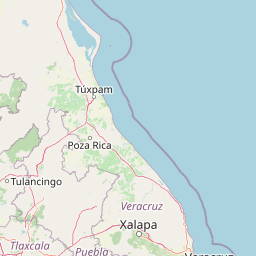
The waterfall sits in close proximity to the town of Xico, a settlement with deep regional roots in the Veracruz highlands. The proximity of Texolo to Xico and to the state capital, Xalapa, ties the natural site into the everyday geography of the region, where forested ravines, streams, and waterfalls are part of the local landscape and recreational life.
Texolo also has an unusual layer of international cultural visibility through cinema. The site served as a filming location for major Hollywood productions, most notably Romancing the Stone, where the waterfall's lush appearance was used to evoke a fictional South American jungle environment. The same area appeared in Clear and Present Danger. These film appearances connect a relatively localized natural landmark to international popular culture in a way that few comparable Mexican waterfalls share.
Within Mexico, Texolo is recognized as a regional natural attraction and an accessible escape from Xalapa, reflecting the broader cultural pattern of highland Veracruzian communities being closely tied to nearby forested landscapes for recreation and local identity.
Top sights and standout views in Cascada de Texolo
The standout feature of Cascada de Texolo is the combination of a tall, narrow waterfall and the dense, moss-rich forest that surrounds it. The main cascade drops roughly eighteen to twenty-four metres into a shadowed gorge, with a bridge offering a direct view across the ravine and footpaths leading onward to two smaller cascades.
Equally distinctive is the site's recognition under the Ramsar Convention as "Cascadas de Texolo y su entorno," a designation that frames Texolo not as an isolated waterfall but as a protected forest-and-stream ecosystem. Its international profile is further amplified by its appearance in feature films, including Romancing the Stone, where Texolo stood in for an iconic jungle setting.
Best time to visit Cascada de Texolo
The available sources do not provide detailed seasonal visitation guidance for Cascada de Texolo. As a humid montane forest waterfall in central Veracruz, the site's character is shaped by regional rainfall patterns, with the wetter months typically bringing fuller flow to the cascade and richer green conditions in the surrounding forest, and drier months offering clearer trails and more open views of the rock faces around the falls.
Seasonal experience at Texolo is therefore best understood in terms of trade-offs between waterfall flow, trail conditions, and forest atmosphere, rather than as a fixed calendar of visit windows. Visitors seeking the most dramatic cascade volume will find the wetter season of the Veracruz highlands most expressive, while those prioritizing clear footpaths and easier access along the ravine will generally find drier conditions more comfortable.