
Mori Atlas logo
National parkChagres National Park

Discover the mapped boundaries and natural terrain of this vital national park.

Chagres National Park: Panama's Protected Landscape and Regional Geography Explorer

Chagres National Park represents a significant protected area within the geographic context of Panamá Province, Panama. This atlas-focused entry details the park's mapped boundaries and its role as a protected landscape. Users can explore the park's unique natural terrain and understand its place within the regional geography, offering a clear perspective for those interested in national park discovery and conservation land mapping.

Tropical RainforestWatershed ProtectionKey Biodiversity AreaImportant Bird AreaPanama CanalContinental Divide

Chagres National Park

National park

Park overview

Structured park overview, official facts, and landscape profile for Chagres National Park

Chagres National Park park facts, protected area profile, and essential visitor context
Review the core facts for Chagres National Park, including designation, size, terrain, visitor scale, habitats, and operating context in one park-focused overview.

About Chagres National Park

Chagres National Park occupies a pivotal position in Panama's geography and economy, protecting the mountainous headwaters that feed the nation's most important waterway. The park's terrain consists of the Chagres Highlands, a series of low mountain ridges and valleys that collect precipitation from both the Caribbean and Pacific influences meeting along the isthmus. The southern portion of these highlands, known as the Serranía Piedras-Pacora, forms a section of the Continental Divide of the Americas, marking the watershed boundary between rivers flowing north to the Caribbean Sea and those flowing south to the Pacific Ocean. The park's location spanning both the Panamá Province and Colón Province places it in the heart of Panama's central corridor, relatively close to the capital city while maintaining vast tracts of relatively intact forest. The protection of this landscape is not merely environmental preference but an operational necessity, as the Panama Canal Authority depends on the forest's water-regulation capacity to maintain adequate water levels in Gatun Lake for ship transits throughout the year.

Quick facts and research context for Chagres National Park

Chagres National Park covers 129,000 hectares in central Panama, protecting the Chagres Highlands and the headwaters of the Chagres and Gatun Rivers. The highest point is Cerro Jefe at 1,007 meters above sea level. The park was established specifically to preserve the forest watershed that supplies water for Panama Canal operations and provides potable water to Panama City, Colón, and La Chorrera. It forms part of the Isthmian–Atlantic moist forests ecoregion and adjoins Portobelo National Park to the northwest and Narganá Wilderness Area to the east.

Park context

Deeper park guide and search-rich context for Chagres National Park

Chagres National Park history, landscape, wildlife, and travel context
Explore Chagres National Park through its history, landscape character, ecosystems, wildlife, conservation priorities, cultural context, and seasonal travel timing in a structured park guide built for atlas discovery and search intent.

Why Chagres National Park stands out

Chagres National Park is best known as the essential water source that sustains the Panama Canal, one of the world's most critical maritime shortcuts. The park's forests capture and regulate rainfall that feeds the Chagres and Gatun Rivers, directly enabling the canal's lock system to function. This watershed role makes the park globally significant for international trade and maritime logistics. The park is also recognized for its biodiversity, particularly the nearly endemic frog species Ectopoglossus isthminus and its designation as an Important Bird Area supporting numerous tropical bird species.

Chagres National Park history and protected-area timeline

Chagres National Park was established in 1985 through a deliberate national policy decision to protect the Chagres watershed for the continued operation of the Panama Canal. The creation of the park reflected a growing understanding that the canal's functionality depended not just on the artificial locks and channels but on the natural landscape that captured and stored water. Prior to formal protection, the forested slopes of the Chagres Highlands had been subject to varying degrees of human activity, but the recognition of the watershed's importance led to the declaration of this large protected area. The park was created with multiple mandates: to preserve sufficient natural forest cover to ensure adequate water quantity and quality for the canal, to supply potable water to Panama City and surrounding communities, and to support hydroelectric power generation for the metropolitan area. The park's establishment represented an early integration of watershed protection into national infrastructure planning in Central America.

Chagres National Park landscape and geographic character

The landscape of Chagres National Park is characterized by rugged mountainous terrain rising from the tropical lowlands of central Panama. The Chagres Highlands consist of rounded ridges and steep valleys carved by numerous streams that converge into the major river systems. The highest peak within the park, Cerro Jefe, reaches 1,007 meters above sea level, offering panoramic views across the canal corridor toward the Caribbean coastline. The terrain transitions from premontane forest on the lower slopes to lower montane forest at higher elevations. The park contains an extensive network of rivers and streams, with the Chagres River being the primary watercourse draining the highlands. The Gatun River also originates within the park's boundaries, and both rivers flow into Gatun Lake, the artificial reservoir that forms a central component of the Panama Canal system. The forest cover is dense and continuous, with canopy heights typical of tropical moist forest.

Chagres National Park ecosystems, habitats, and plant life

The park lies within the Isthmian–Atlantic moist forests ecoregion, one of the most species-rich biomes in the Western Hemisphere. This ecoregion experiences high rainfall due to its position along the Caribbean moisture corridor, supporting evergreen forest with diverse tree species, epiphytes, and lianas. The forest structure includes emergents that tower above the main canopy, creating multiple habitat layers that support different ecological communities. The park's position along the Continental Divide means it includes forest types influenced by both Caribbean and Pacific climate patterns. Rivers flowing through the park maintain riparian corridors that provide additional habitat diversity. The combination of elevation range, moisture availability, and geographic position makes this area a critical biodiversity stronghold in Panama.

Chagres National Park wildlife and species highlights

Chagres National Park supports significant wildlife populations despite its proximity to Panama's urban corridor. The park has been designated an Important Bird Area by BirdLife International, recognizing its role in supporting populations of tropical bird species. The nearly endemic frog Ectopoglossus isthminus is nearly restricted to the park, representing a significant conservation responsibility for this protected area. The forest canopy supports various primate species, including howler monkeys and capuchins, while the understory harbors diverse small mammals. The river systems contain aquatic species adapted to the seasonal flow patterns of the watershed. The park's connectivity function, linking protected areas from the Caribbean coast to the Pacific, allows for wildlife movement and genetic exchange between populations.

Chagres National Park conservation status and protection priorities

The conservation significance of Chagres National Park extends well beyond its borders due to its watershed function for the Panama Canal. The park has been identified as a Key Biodiversity Area of international significance, reflecting the concentration of species and habitats within its boundaries. The protection of this forest ensures that the canal receives adequate freshwater input, maintains water quality, and avoids sedimentation that would interfere with shipping operations. This creates a direct economic incentive for conservation that aligns local protection with global commercial interests. The Important Bird Area designation by BirdLife International further recognizes the park's global responsibility for conserving bird populations, particularly species associated with intact tropical forest. The park works in conjunction with adjacent protected areas including Portobelo National Park and Narganá Wilderness Area to form a larger conservation landscape.

Chagres National Park cultural meaning and human context

The park exists within a landscape that has been inhabited by indigenous communities and transformed by colonial and modern land uses. The Chagres River valley has historical significance as a pathway through the isthmus, with the river serving as a travel route during the colonial period when Spain sought to transport gold across Central America. While the park itself is not specifically managed for cultural heritage, the broader Chagres region contains archaeological sites and historical landscapes related to these earlier periods of human activity. The contemporary context focuses primarily on the park's infrastructure role while balancing the conservation of natural values.

Top sights and standout views in Chagres National Park

The essential watershed function for global maritime trade makes Chagres National Park uniquely important among the world's protected areas. Cerro Jefe provides access to elevated viewpoints within the park. The nearly endemic Ectopoglossus frog represents a remarkable concentration of biodiversity restricted to this specific area. The park's location within the Panama Canal corridor offers accessibility for visitors interested in understanding the relationship between natural landscapes and major infrastructure. The forests of the Chagres Highlands represent one of the most intact watershed forests remaining in Central America, providing a model for integrating conservation with economic development.

Best time to visit Chagres National Park

The park can be visited throughout the year, though the dry season from mid-December through April typically offers more comfortable conditions for exploration. The wet season from May through November brings heavier rainfall that sustains the watershed function but may limit some trail activities. The forest remains green and lush during both seasons due to the consistent moisture from the Caribbean-influenced climate. Wildlife viewing may be more productive during the drier months when animals congreg around remaining water sources. The park's function as a watershed means that the forest and rivers are visible and accessible year-round, with the seasonal variation more affecting visitor comfort than the fundamental nature of the landscape.
Park location guide

Geography guide, regional context, and park location map for Chagres National Park

Chagres National Park park geography, regions, and map view in Panama
Understand where Chagres National Park sits in Panama through a broader geographic reading of the surrounding landscape, nearby location context, and its mapped position within the national park landscape.

How Chagres National Park fits into Panama

Panama is a presidential republic located at the southern end of Central America in North America. It gained independence from Spain in 1821 and from Colombia in 1903, the latter enabling the construction of the Panama Canal under U.S. supervision between 1904 and 1914. The canal was transferred to Panamanian control in 1999 following the Torrijos-Carter Treaties. With a population of approximately 4.3 million and an area of about 75,400 km², Panama has a high-income economy driven primarily by canal tolls, banking, commerce, and tourism.

Wider geography shaping Chagres National Park in Panama

Panama is located at the southern end of the Central American isthmus, stretching from the Caribbean coast in the north to the Pacific coast in the south. The country shares land borders with Costa Rica to the west and Colombia to the southeast. The terrain consists of coastal plains, mountain ranges including the Cordillera Central and Cordillera de Talamanca, and river valleys. The Panama Canal bisects the country, connecting the Atlantic and Pacific Oceans.

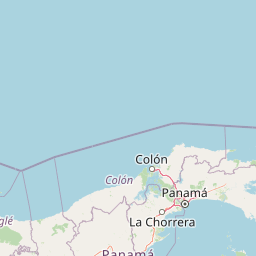
Map view of Chagres National Park

Use this park location map to pinpoint Chagres National Park in Panama, understand its exact geographic position, and read its mapped placement within the surrounding landscape more clearly.

Pigeon | © OpenStreetMap contributors

Location context for Chagres National Park

Colón ProvincePanamá Province
Park atlas

Map adjacent protected areas, tracing Panama's diverse conservation landscapes and regional geography.

Explore Nearby National Parks and Protected Areas Around Chagres National Park
Discover a curated selection of national parks and protected areas geographically related to Chagres National Park, tracing the diverse conservation landscapes of Panama. Expanding your exploration helps to compare watershed protection, montane forests, and coastal ecosystems within the wider regional context of Central America.
National parkColón Province

Soberanía National Park: Panama National Park Atlas, Geography, and Protected Landscape Details

Explore the mapped boundaries and regional geography of this national park.

Investigate Soberanía National Park, a designated national park situated in Panama's Colón Province. This entry offers detailed geographic context, focusing on its mapped protected area, landscape character, and role within regional conservation. Understand the spatial distribution and atlas significance of this protected land, essential for a structured geographic discovery of Panama's natural heritage.

Area
220 km²
Established
1980
IUCN
II
Relief
Lowland
National parkPanamá Oeste Province

Altos de Campana National Park: National Park Protected Landscape and Geographic Context

Mapped boundaries and regional geography in Panamá Oeste Province.

Gain a structured understanding of Altos de Campana National Park, a designated national park located in Panamá Oeste Province. This page details its identity as a protected landscape, offering insights into its geographic placement and mapped boundaries for comprehensive atlas-style exploration. Understand its regional context and its contribution to Panama's network of protected areas.

Area
48.16 km²
Established
1966
IUCN
II
Relief
Mountain
National parkPanama

Cerro Hoya National Park: Panama's Protected Landscape with Mapped Geographic Detail

Explore the national park's mapped boundaries and regional atlas context.

Cerro Hoya National Park presents a unique opportunity for geographic discovery, focusing on its role as a protected landscape within Panama. This park detail page allows for an in-depth atlas-style exploration of its mapped boundaries and its contribution to the regional geography of Central America. Understand the protected-area identity and the natural context that defines this significant national park, providing valuable data for landscape analysis and map-based research.

Area
333.4 km²
Established
1984
IUCN
II
Relief
Mountain
National parkDarién Province

Darién National Park: Darién Province National Park Geographic and Map Exploration

Discover its protected landscape and regional geographic context.

Darién National Park serves as a key protected area within Darién Province, offering an essential focus for geographic and atlas-based discovery. This dedicated park detail page provides insights into its mapped boundaries and its significance as a national park. Users can explore the park's specific geographic footprint and its place within the regional landscape, facilitating a structured understanding of protected natural areas. Dive into the mapped terrain and conservation landscape context that defines Darién National Park for comprehensive atlas exploration.

Area
5,790 km²
Established
1980
IUCN
II
Relief
Mountain
Marine protected areaBocas del Toro Province

Isla Bastimentos National Marine Park: Marine Protected Area Geography and Atlas Context

Explore the protected landscape within Bocas del Toro Province.

Isla Bastimentos National Marine Park represents a critical marine protected area offering essential geographic data for atlas-based research. Situated in Panama's Bocas del Toro Province, this entity provides a focal point for understanding protected marine territories and their mapped extent. Discover the park's specific location within the province, contributing to a detailed regional geography and a broader understanding of conservation landscapes.

Area
132.26 km²
Established
1988
IUCN
II
Relief
Lowland
National parkLimón Province

Cahuita National Park National Park: Geographic Atlas and Protected Landscape Identity

Explore mapped boundaries and regional context within Limón Province.

Gain an atlas perspective on Cahuita National Park, a designated national park situated in Limón Province, Costa Rica. This detailed entry focuses on its protected landscape character and geographic setting, offering insights into its mapped boundaries and its role within the region's natural geography. Understand the park's specific contribution to the protected area network through detailed geographic data.

Area
234.679 km²
Established
1982
IUCN
II
Relief
Lowland
National parkCosta Rica

La Amistad International Park National Park: Mapped Protected Area in Costa Rica

Explore its geographic boundaries and landscape context.

La Amistad International Park represents a vital component of Costa Rica's protected land network. This detail provides an atlas-centric view, highlighting the park's mapped boundaries and its contribution to the regional geography. Understand the park's identity as a national park and explore its natural terrain context, crucial for any structured geographic discovery of protected areas within Central America.

Area
1,992 km²
Established
1988
IUCN
II
Relief
Mountain
National parkColombia

Rosario and San Bernardo Corals National Natural Park: Colombia's National Natural Park Protected Landscape

Explore the mapped geography and protected natural areas of this Colombian national park.

Delve into the geographical details and protected landscape identity of Rosario and San Bernardo Corals National Natural Park, a significant national park within Colombia. This resource provides a structured atlas view of its mapped boundaries and natural terrain, contributing essential context to the broader Colombian geography and its protected areas.

Area
1,200 km²
Established
1977
IUCN
II
Visitors
318.5K annual

Common questions about visiting, size, designation, and location context for Chagres National Park

Chagres National Park FAQs for park facts, access, geography, and protected area context
Find quick answers about Chagres National Park, including protected-area facts, park geography, trail and visitor context, and how the park fits into its surrounding country and regional landscape.
MoriAtlas Explorer

Continue Your Protected Areas Search Across the Global Atlas

Deepen your exploration by continuing the structured search for national parks and protected areas worldwide. Utilize the comprehensive filtering capabilities to compare different conservation landscapes and refine your understanding of global park geography. Discover more about the distribution and characteristics of protected natural areas.

Global natural geography