Mori Atlas logo
National parkCumbres de Monterrey National Park

Discover the mapped terrain and regional setting of this important national park.

Cumbres de Monterrey National Park: Protected Landscape and Geographic Context in Mexico

(Parque Nacional Cumbres de Monterrey)

Cumbres de Monterrey National Park stands as a significant protected area within Mexico's diverse geography. This page offers an atlas-style exploration of the park's protected landscape, revealing its mapped boundaries and regional context. Understand the park's place in the national geography and its role as a conservation landscape, providing a foundation for deeper map-based discovery.

National ParksMexicoSierra Madre OrientalMountain EcosystemsKarst LandscapesPine-Oak Forests

Cumbres de Monterrey National Park

National park

Park overview

Structured park overview, official facts, and landscape profile for Cumbres de Monterrey National Park

Cumbres de Monterrey National Park park facts, protected area profile, and essential visitor context
Review the core facts for Cumbres de Monterrey National Park, including designation, size, terrain, visitor scale, habitats, and operating context in one park-focused overview.

About Cumbres de Monterrey National Park

Cumbres de Monterrey National Park represents one of Mexico's most significant protected mountain ecosystems, spanning the dramatic terrain of the northern Sierra Madre Oriental near the dynamic city of Monterrey. The park was established in 1939 during a period of rapid urban growth in northeastern Mexico, created specifically to safeguard the region's native flora and fauna from the expanding metropolitan area. At its founding, the park covered 246,500 hectares, making it the largest national park in Mexican history at that time, though a 2000 decree reduced its boundary to approximately 177,400 hectares. The park's strategic location adjacent to one of Mexico's largest metropolitan areas makes it an invaluable green sanctuary providing ecological services, recreation opportunities, and natural heritage preservation for millions of residents and visitors. The park encompasses remarkable geological diversity, with the Sierra Madre Oriental's folded marine sedimentary strata creating a landscape of towering peaks, deep canyons, and extensive underground cave systems formed through millions of years of karstification. The ecological importance of Cumbres de Monterrey extends beyond its boundaries as a watershed that replenishes aquifers providing primary water sources for the Monterrey metropolitan region, demonstrating the park's critical role in supporting urban sustainability.

Quick facts and research context for Cumbres de Monterrey National Park

Located in the Sierra Madre Oriental mountain range in northeastern Mexico, Cumbres de Monterrey National Park encompasses approximately 177,400 hectares across Nuevo León and Coahuila states. The park was established in November 1939 to protect native flora and fauna from urban expansion of the nearby Monterrey metropolitan area. It features elevation ranges from 600 meters to 2,260 meters above sea level, with peaks including Cerro de la Silla at 1,820 meters and Copete de las Águilas at 2,260 meters. The park contains extensive karst topography with notable caves such as Grutas de García, and significant waterfalls including Cascada Cola de Caballo at 25 meters and Cascada de Chipitín at 27 meters. The area supports over 3,460 documented species of plants and animals, with 104 species listed under Mexican conservation protection categories.

Park context

Deeper park guide and search-rich context for Cumbres de Monterrey National Park

Cumbres de Monterrey National Park history, landscape, wildlife, and travel context
Explore Cumbres de Monterrey National Park through its history, landscape character, ecosystems, wildlife, conservation priorities, cultural context, and seasonal travel timing in a structured park guide built for atlas discovery and search intent.

Why Cumbres de Monterrey National Park stands out

Cumbres de Monterrey is best known for its dramatic mountain landscapes within the Sierra Madre Oriental, featuring the iconic Cerro de la Silla peak that dominates the Monterrey skyline. The park contains exceptional karst cave systems including the Grutas de García, one of Mexico's largest and most impressive cave networks, and Pozo del Gavilán, the only known cenote in northern Mexico. Its spectacular waterfalls, particularly Cascada Cola de Caballo with its distinctive horsetail-shaped cascade, rank among the most photographed natural landmarks in northeastern Mexico. The park also preserves extensive pine-oak forests and serves as a critical ecological corridor connecting desert and temperate forest ecosystems.

Cumbres de Monterrey National Park history and protected-area timeline

Cumbres de Monterrey National Park was established on November 24, 1939, by decree of President Lázaro Cárdenas, representing a landmark commitment to nature conservation in Mexico. The park was created specifically in response to the growing urbanization pressures from the expanding city of Monterrey, which threatened the region's unique native ecosystems and biodiversity. At its establishment, the park encompassed 246,500 hectares, making it the largest area ever declared a national park in Mexico at that time, demonstrating the ambitious scale of early Mexican conservation efforts. The region has a rich human history dating back thousands of years, with numerous indigenous paintings and stone carvings throughout the park providing evidence of ancient human habitation. Prior to Spanish colonization, various Chichimeca groups inhabited the area and maintained resistance to European rule for many years. The city of Monterrey itself was founded as the first European settlement in the region on September 20, 1596. A significant boundary adjustment occurred on November 17, 2000, when the park's area was reduced to 177,395.95 hectares through a redelimitation decree, reflecting ongoing challenges between conservation priorities and development pressures in the rapidly growing region.

Cumbres de Monterrey National Park landscape and geographic character

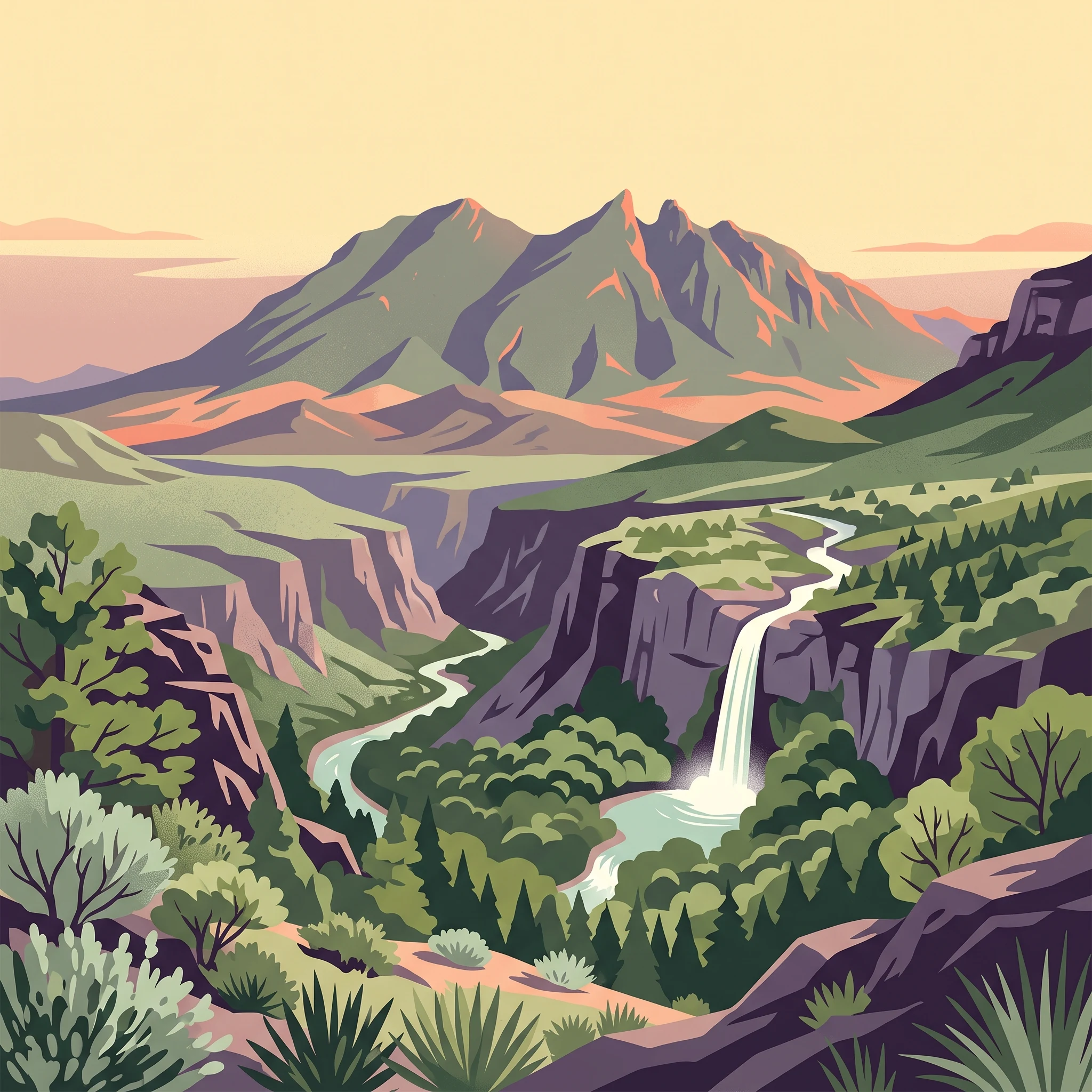
The landscape of Cumbres de Monterrey National Park exemplifies the dramatic topography of Mexico's Sierra Madre Oriental, characterized by rugged mountain terrain, deep canyons, and spectacular geological formations. The park's terrain was formed through the folding of marine-based sedimentary strata during the Eocene epoch as part of the Laramide orogeny, with the main sedimentary rock dating from the Cretaceous period. The highest peaks within the park include Copete de las Águilas at 2,260 meters, M Este at 2,020 meters, La Antenna at 2,015 meters, La Ventana at 1,955 meters, Cerro de la Silla at 1,820 meters, and Pinar at 1,515 meters above sea level. The park features extensive karst topography with vast cave systems, subterranean rivers, and aquifers that have developed over millions of years. The Grutas de García represents one of Mexico's most significant cave systems, containing marine fossils within its oceanic sedimentary rock formations and having remained hidden until its discovery in 1843. The landscape includes numerous canyons, with Cañón de la Huasteca being the most famous, featuring prehistoric glyphs created by ancient inhabitants on its walls. The park contains abundant surface and subterranean water systems, with notable waterfalls including Cascada Cola de Caballo and Cascada de Chipitín.

Cumbres de Monterrey National Park ecosystems, habitats, and plant life

The nature of Cumbres de Monterrey National Park displays remarkable ecological diversity due to the park's varied elevation zones and resulting microclimates, supporting one of the most diverse ecosystems in northern Mexico. The park contains multiple distinct climate types according to the Köppen classification, ranging from desert conditions in lower elevations to humid subtropical and oceanic climates at higher elevations. The vegetation changes dramatically with elevation, from desert scrub and thornforest in lower regions to temperate pine-oak forests in higher zones. The southern portion of the park features grasslands and temperate conifer forests dominated by species of pine, oak, and walnut. Agave, Dasylirion, and Rhus species are found throughout many areas of the park. The forest composition includes numerous species of spruce, yucca, Douglas fir, fir, oak, and pine, creating complex and layered forest communities. This ecological diversity supports the park's status as a critical habitat corridor connecting desert and tropical ecosystems.

Cumbres de Monterrey National Park wildlife and species highlights

The wildlife of Cumbres de Monterrey National Park is exceptionally diverse, with the park home to over 3,460 documented species of plants and animals, including 104 species listed under Mexican conservation protection categories. The park supports approximately 22 mammal species and 450 bird species, representing both tropical and temperate fauna due to the park's position at the ecological boundary between northern desert and tropical systems. Notable mammalian species include black bear, white-tailed deer, collared peccary, gray fox, puma, jaguar, and bobcat. The avifauna includes peregrine falcon, red-tailed hawk, northern harrier, and the endangered maroon-fronted parrot. The park contains significant fish diversity in its streams and rivers, though many species are endangered. Three endemic fish species have been identified in the park: Cyprinella rutila, Dionda melanops, and Moxostoma albidum. Several Cyprinodon species remain present but many face extinction risks, highlighting the conservation significance of aquatic habitats within the park.

Cumbres de Monterrey National Park conservation status and protection priorities

Cumbres de Monterrey National Park holds significant conservation importance as one of the largest and most ecologically diverse protected areas in northern Mexico, preserving critical habitats within the Sierra Madre Oriental. The park was specifically established to protect native flora and fauna from the pressures of metropolitan growth in the Monterrey region, a purpose that remains relevant as the city continues to expand. The park contains over 100 species listed under Mexico's NOM-059 official protection categories, demonstrating its role as a refuge for threatened and endangered species. The park's karst aquifer systems provide essential water resources for the Monterrey metropolitan area, making watershed protection a critical component of the park's conservation value. Management programs have been developed by Mexico's Secretariat of Environment and Natural Resources, with a management plan updated in 2006. The park functions as an ecological corridor connecting diverse ecosystems and serves as a natural buffer against urban development pressures.

Cumbres de Monterrey National Park cultural meaning and human context

The cultural context of Cumbres de Monterrey National Park reflects thousands of years of human presence in the Sierra Madre Oriental region. Archaeological evidence in the form of rock paintings and stone carvings distributed throughout the park demonstrates that indigenous peoples inhabited this area long before European contact. Prior to the Spanish colonial period, various groups of Chichimeca peoples occupied the region and frequently united in resistance to Spanish domination. The founding of Monterrey on September 20, 1596, marked the beginning of European settlement in the area, establishing a settlement pattern that would eventually create the pressure leading to the park's creation in 1939. The region holds particular cultural significance for northeastern Mexico, with the landscape featuring prominently in local identity and heritage. The park also encompasses areas used by agrarian communities such as Potrero Redondo, demonstrating ongoing human relationships with the land.

Top sights and standout views in Cumbres de Monterrey National Park

Cumbres de Monterrey National Park offers exceptional natural highlights including the iconic Cerro de la Silla peak forming part of Monterrey's celebrated skyline, the spectacular Cascada Cola de Caballo waterfall with its 25-meter horsetail cascade, and the extensive Grutas de García cave system featuring marine fossil deposits. The park's diverse elevation gradients support multiple ecosystems from desert scrub to temperate pine-oak forests, while its karst landscapes contain Pozo del Gavilán, the only known cenote in northern Mexico. Outdoor enthusiasts can explore numerous hiking trails, with the Chipinque ecological reserve providing accessible entry to park ecosystems. The Cañón de la Huasteca features prehistoric glyphs thousands of years old, combining natural and cultural significance. The park's role as a watershed supplying water to the Monterrey metropolitan area adds ecological importance to its scenic beauty.

Best time to visit Cumbres de Monterrey National Park

The best time to visit Cumbres de Monterrey National Park depends on preferred activities and tolerance for varying conditions. Higher elevations experience temperate climates with occasional winter snowfall, while summer months bring hot conditions throughout the park. The winter months from December through February typically offer clearer skies and more comfortable hiking temperatures in the mid-elevation zones, though higher trails may be cold. Spring and fall provide moderate temperatures and represent popular periods for wildlife observation and hiking. The rainy season from June through September brings increased water flow to waterfalls, making Cascada Cola de Caballo particularly impressive, though afternoon thunderstorms are common. Visitors seeking to avoid peak heat should plan morning activities during summer months, while those interested in birdwatching may find the spring migration periods especially rewarding.
Park location guide

Geography guide, regional context, and park location map for Cumbres de Monterrey National Park

Cumbres de Monterrey National Park park geography, regions, and map view in Mexico
Understand where Cumbres de Monterrey National Park sits in Mexico through a broader geographic reading of the surrounding landscape, nearby location context, and its mapped position within the national park landscape.

How Cumbres de Monterrey National Park fits into Mexico

Mexico, officially the United Mexican States, is a country in North America spanning the Sierra Madre mountain ranges, coastal plains, and tropical regions. It borders the United States to the north, Guatemala and Belize to the southeast, and has coastlines along the Pacific Ocean, Gulf of Mexico, and Caribbean Sea. With a population exceeding 130 million, Mexico is home to one of the world's most significant concentrations of Indigenous languages alongside Spanish.

Wider geography shaping Cumbres de Monterrey National Park in Mexico

Mexico occupies a land area of 1,972,550 km2, making it the thirteenth-largest country in the world. The terrain is highly diverse, featuring the Sierra Madre Occidental and Sierra Madre Oriental mountain ranges, the Mexican Plateau, coastal lowlands along the Pacific and Gulf/Caribbean margins, and the Yucatan Peninsula. The country spans multiple climate zones from desert in the north to tropical rainforest in the south.

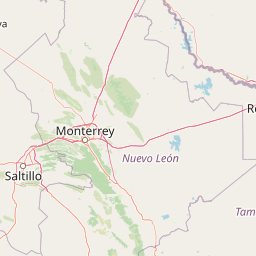
Map view of Cumbres de Monterrey National Park

Use this park location map to pinpoint Cumbres de Monterrey National Park in Mexico, understand its exact geographic position, and read its mapped placement within the surrounding landscape more clearly.

Pigeon | © OpenStreetMap contributors

Location context for Cumbres de Monterrey National Park

CoahuilaNuevo León
Park atlas

Map the regional geography and protected landscapes surrounding Cumbres de Monterrey National Park.

Explore Other National Parks and Protected Areas Near Cumbres de Monterrey National Park
Discover national parks and other protected areas that share geographic context or similar landscapes with Cumbres de Monterrey National Park across northeastern Mexico. Compare park geography, analyze protected-area spread, and understand the regional conservation landscape after exploring Cumbres de Monterrey's unique mountain terrain.
National parkSan Luis Potosí

El Potosí National Park: Detailed Protected Area Geography and Landscape Context

Explore its mapped boundaries within San Luis Potosí.

Uncover the protected landscape of El Potosí National Park, a designated national park situated in San Luis Potosí, Mexico. This entry offers a detailed perspective on its geographic significance, providing insights into its mapped boundaries and regional natural terrain. Understand how this protected area contributes to the broader atlas of natural landscapes in Mexico, ideal for geographic discovery.

Area
20 km²
Established
1936
IUCN
II
Relief
Mountain
National parkSombrerete Municipality

Sierra de Órganos National Park National Park: Mapped Protected Landscape Details

Explore geographic context and park boundaries within Sombrerete Municipality.

Sierra de Órganos National Park stands as a vital national park, offering a unique opportunity for geographic and atlas-based discovery. This dedicated entry focuses on its protected landscape identity, providing detailed insights into its mapped boundaries and its place within the regional geography of Sombrerete Municipality. Understand the park's role as a protected natural area through structured data and landscape context, essential for comprehensive geographic exploration.

Area
11.25 km²
Established
2000
IUCN
II
Relief
Mountain
National parkBrewster County

Big Bend National Park: National Park, Mapped Protected Landscape, and Regional Geography

Explore Brewster County's protected natural terrain.

Big Bend National Park is a prominent national park defined by its protected landscape and geographic features within Brewster County. This destination provides users with detailed atlas-style information, focusing on the park's mapped boundaries and its contribution to the understanding of regional natural geography. Delve into the specific context of this protected area to enhance your geographic discovery.

Area
3,242.19 km²
Established
1944
IUCN
II
Visitors
568.1K annual
National parkQuerétaro

El Cimatario National Park: National Park Protected Landscape in Querétaro Region

Explore mapped boundaries and regional geography.

Investigate El Cimatario National Park, a protected national park located in Querétaro, Mexico. This entry offers detailed atlas-style insights into the park's protected landscape, its geographic setting within the region, and its clearly mapped boundaries. It serves as a focused point for understanding this specific natural area's place in broader geographic and conservation mapping.

Area
24.48 km²
Established
1982
IUCN
II
Relief
Mountain
National parkHidalgo

El Chico National Park: National Park Boundaries and Regional Geography in Hidalgo

Explore the mapped protected landscape and terrain of this national park.

El Chico National Park is a distinct protected area offering insight into Mexico's regional geography and conservation landscapes. This page details its specific geographic footprint, the character of its natural terrain, and its place within Hidalgo's broader protected areas atlas. Users can examine mapped boundaries and understand the park's unique environmental context.

Area
27.39 km²
Established
1982
IUCN
II
Relief
Mountain
National parkMichoacán

Cerro de Garnica National Park: Its Geography and Protected Landscape Identity

Explore mapped boundaries within Michoacán's natural terrain.

Cerro de Garnica National Park serves as a distinct protected area contributing to the geographic understanding of Michoacán. This page offers a focused view on its mapped boundaries and natural landscape characteristics, providing essential context for atlas exploration. Discover the park's specific identity as a national park and its place within the regional geography, highlighting its value for structured discovery.

Area
19.36 km²
Established
1936
IUCN
II
Relief
Mountain
National parkMichoacán

Lago de Camécuaro National Park: National Park Protected Landscape and Geographic Atlas

Mapped boundaries and regional natural landscape context for Michoacán.

Lago de Camécuaro National Park offers a focused exploration of a distinct protected area within Michoacán, Mexico. Understand its specific geographic identity through mapped boundaries and regional terrain context, suitable for atlas-based discovery of natural landscapes and conservation areas. This entry provides a factual overview of the park's protected status and its placement within the broader geography of the region.

Area
0.097 km²
Established
1941
IUCN
II
Relief
Upland
National parkMichoacán

Insurgente José María Morelos y Pavón National Park: Mapped Protected Landscape in Michoacán

Discover its geographic context and protected area boundaries.

Explore Insurgente José María Morelos y Pavón National Park, a designated national park in Michoacán, Mexico. This page provides detailed insights into its protected status, mapped geographic features, and its role as a significant natural landscape within the regional atlas. Understand the park's protected boundaries and its contribution to the geographic understanding of Michoacán.

Area
71.92 km²
Established
1939
IUCN
II
Relief
Mountain

Common questions about visiting, size, designation, and location context for Cumbres de Monterrey National Park

Cumbres de Monterrey National Park FAQs for park facts, access, geography, and protected area context
Find quick answers about Cumbres de Monterrey National Park, including protected-area facts, park geography, trail and visitor context, and how the park fits into its surrounding country and regional landscape.
MoriAtlas Explorer

Continue Your Protected Areas Search Across the Global Atlas

Deepen your exploration by continuing the structured search for national parks and protected areas worldwide. Utilize the comprehensive filtering capabilities to compare different conservation landscapes and refine your understanding of global park geography. Discover more about the distribution and characteristics of protected natural areas.

Global natural geography