Why Cuyahoga Valley National Park stands out
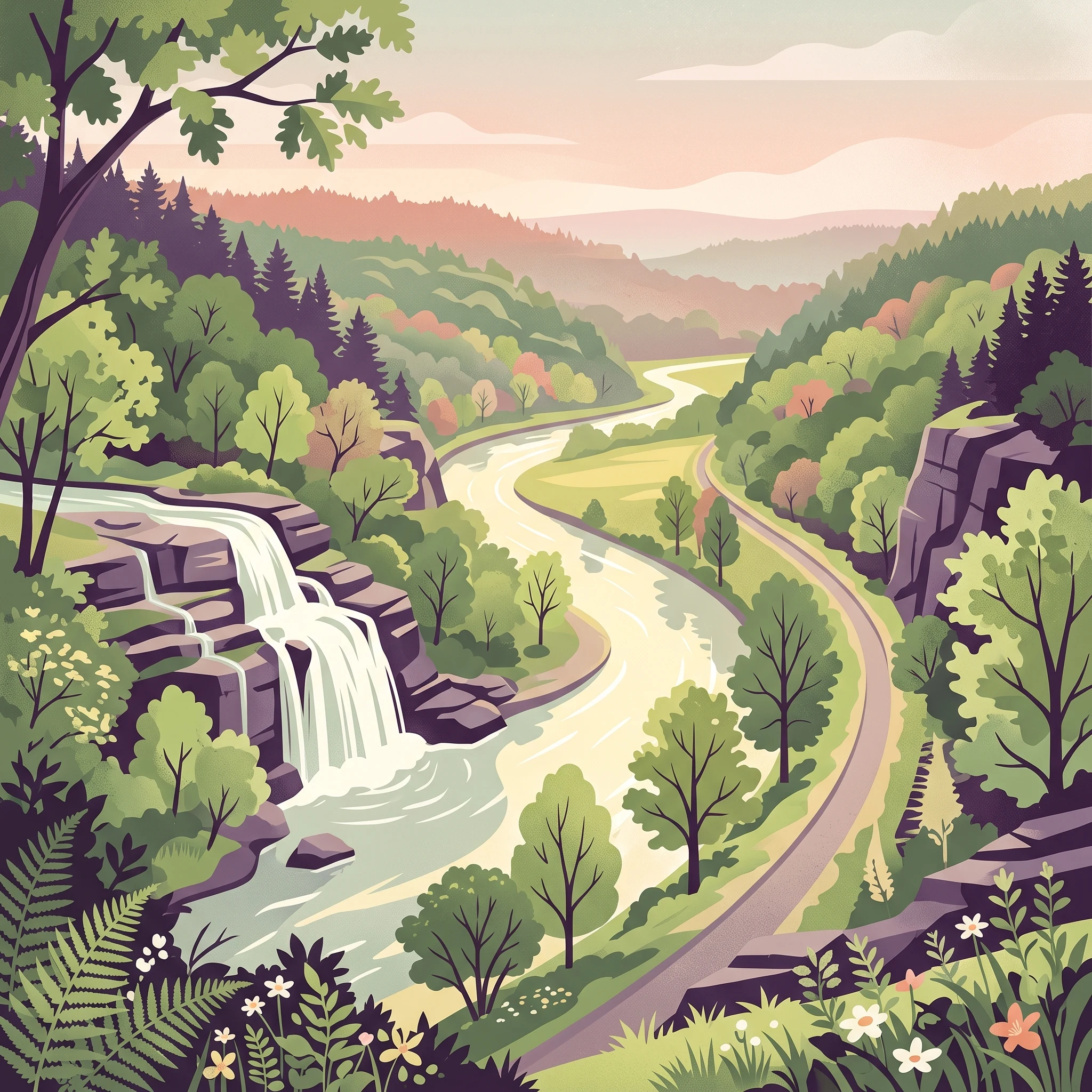
Cuyahoga Valley National Park is best known for its remarkable concentration of waterfalls, with Brandywine Falls standing as the park's signature cascade at 65 feet tall. The park is equally distinguished by its preservation of the Ohio and Erie Canal corridor, where visitors can walk the same towpath trail that mules once used to pull canal boats. The Ledges, a striking rock outcropping of Sharon Conglomerate formation, offers panoramic views across the forested valley below. The park's unusual urban-proximate character sets it apart from most American national parks, as it sits between two major metropolitan areas and incorporates active communities, roads, and even a scenic railroad within its boundaries. The combination of natural beauty, particularly the fall color displays that draw visitors seasonally, with deep historical layers of indigenous heritage, canal-era development, and industrial history makes this park a distinctive conservation model.
Cuyahoga Valley National Park history and protected-area timeline
The human history of Cuyahoga Valley spans thousands of years, beginning with the Hopewell Culture that inhabited the area by approximately 200 AD and constructed the Everett Mound near present-day Everett. The valley was traversed and inhabited by numerous indigenous nations including the Wyandot, Iroquois, Ottawa, Ojibwe, Munsee, Potawatomi, Miami, Catawba, and Shawnee, with the Lenapé Nation (Delaware) considered the Grandfathers of many upper Ohio River Valley nations. The 1795 Treaty of Greenville established the Cuyahoga River as the boundary between indigenous lands and European settlement, while the 1805 Treaty of Fort Industry ceded 500,000 acres including the present park area. European-American settlement accelerated with the canal era, as the Ohio and Erie Canal constructed between 1825 and 1832 transformed the region. The valley began providing recreation for urban dwellers in the 1870s through carriage rides and canal boat trips, while the Valley Railway of 1880 offered another escape from industrial cities. Park development commenced in the 1910s and 1920s through metropolitan park districts. In 1929, Cleveland businessman Hayward Kendall donated 430 acres around Ritchie Ledges and a trust fund, creating Virginia Kendall Park in honor of his mother. The Civilian Conservation Corps built much of the park's infrastructure in the 1930s, including the Happy Days Lodge and shelter structures. By the 1960s, citizen concerns about urban sprawl and river pollution led to advocacy that culminated in President Gerald Ford signing legislation establishing Cuyahoga Valley National Recreation Area on December 27, 1974. After decades of land acquisition and management development, Congress redesignated the area as Cuyahoga Valley National Park on October 11, 2000.
Cuyahoga Valley National Park landscape and geographic character
Cuyahoga Valley National Park encompasses a diverse landscape shaped by glacial activity and river processes. The Cuyahoga River follows an unusual V-shaped course, first flowing southwest before abruptly turning north to drain into Lake Erie near its origin. The left arm of this V corresponds to an older preglacial valley while the right arm represents relatively new drainage that cut into the old valley at Cuyahoga Falls. The valley contains impressive geological formations including the Berea Sandstone and Bedford Shale, deposited in a Lower Mississippian river delta environment, as well as Sharon Conglomerate rock formations that cap the highest hills and create the dramatic Ledges outcropping. The Defiance Moraine, a remnant of Wisconsin glaciation, protrudes south into the valley as far as Peninsula. The landscape features forests, rolling hills, narrow ravines, wetlands, and approximately 100 waterfalls that have formed as streams erode the softer Bedford Shale beneath the more resistant Berea Sandstone. Glacial drift fills the valley to depths of 400 feet, creating complex depositional environments from ancient lake systems including Lake Maumee, Lake Arkona, Lake Whittlesey, Lake Warren, and Lake Wayne.
Cuyahoga Valley National Park ecosystems, habitats, and plant life
Cuyahoga Valley supports diverse ecosystems that reflect its position in the mixed deciduous forest region of eastern North America. The park's forests contain a mix of maple, oak, pine, juniper, yew, magnolia, tulip tree, spruce, hemlock, and sycamore trees. Wetland areas and water corridors support sedge communities including Golden-fruited sedge, fox sedge, and needle spikerush, while spring wildflowers such as spring beauty, yellow trout lily, toothwort, hepatica, bloodroot, dwarf ginseng, Virginia bluebells, and jack-in-the-pulpit carpet the forest floor seasonally. Fern species including woodferns, bracken fern, horsetails, Christmas ferns, hay-scented fern, cinnamon fern, and royal fern thrive throughout the park. The combination of forest, wetland, and riverine habitats creates ecological diversity that supports numerous wildlife species despite the park's proximity to major urban areas.
Cuyahoga Valley National Park wildlife and species highlights
The wildlife community of Cuyahoga Valley reflects the park's position in the broader ecologies of Northeast Ohio. Mammals common to the area include raccoons, muskrats, coyotes, skunks, red foxes, beavers, opossums, multiple mole species, white-tailed deer, and gray foxes. Predatory species include river otters, minks, and bats, with seven bat species documented in the park. The park provides important habitat for birds of prey, including peregrine falcons and bald eagles, while waterfowl such as Canada geese and great blue herons frequent wetland and river areas. This wildlife community, while typical of Ohio's mixed habitats, thrives within the protected corridor and benefits from the park's management of diverse habitats ranging from forest to wetland to meadow.
Cuyahoga Valley National Park conservation status and protection priorities
Cuyahoga Valley National Park represents an important conservation model as one of the few American national parks established primarily to protect a landscape between major urban areas. The park's creation responded to mid-twentieth century concerns about urban sprawl consuming the Cuyahoga Valley's natural beauty and to environmental degradation of the Cuyahoga River, which suffered from industrial pollution and famously burned in 1952 and 1969. The park's unusual management structure, incorporating multiple jurisdictions and compatible-use sites, demonstrates a collaborative approach to conservation that allows protected areas to function within developed regions. A notable conservation challenge involved the Krejci Dump site, acquired in 1985 and later designated a Superfund site due to extreme contamination. Remediation efforts removed 371,000 short tons of contaminated materials by 2012, with restoration completed by 2015. In 2024, the park entered a sister-park agreement with Dartmoor National Park in England, establishing the first such partnership between the National Park Service and an English national park to advance mutual conservation goals.
Cuyahoga Valley National Park cultural meaning and human context
The cultural landscape of Cuyahoga Valley reflects thousands of years of human presence and activity. Indigenous peoples, particularly the Lenapé Nation, maintained connections to this landscape through trade networks and seasonal resource use before treaties and violent conflicts in the eighteenth and nineteenth centuries pushed them westward. The canal era of the early nineteenth century fundamentally transformed the region, as the Ohio and Erie Canal opened Ohio to broader trade networks and stimulated settlement. The historic canal infrastructure, including locks, aqueducts, and the towpath route, remains a central cultural feature of the park. The Western Reserve architectural heritage reflects the Connecticut Western Reserve's influence on early settlement, seen in structures like the Frazee House and Stanford House. The park also preserves evidence of sustainable farming and rural living through sites like Hale Farm and Village, an outdoor living history museum operated by the Western Reserve Historical Society. This layering of indigenous, canal-era, industrial, and agricultural history creates a cultural context as rich as the natural environment.
Top sights and standout views in Cuyahoga Valley National Park
Cuyahoga Valley National Park offers exceptional highlights that combine natural beauty with cultural heritage. Brandywine Falls, at 65 feet, stands as the park's tallest waterfall and one of Ohio's highest, while approximately 100 additional waterfalls cascade through the valley's ravines. The Ledges provide dramatic rock outcroppings with sweeping views, while the Everett Covered Bridge represents one of over 125 covered bridges once existing in Ohio and remains the only such bridge in Summit County. The 20-mile Ohio and Erie Canal Towpath Trail follows the historic canal corridor and serves as the primary recreational spine of the park for hiking, bicycling, and running. Stanford House offers unique in-park lodging in a historic 1830s Greek Revival home, while the Canal Exploration Center, Boston Store, and Hunt House provide visitor centers with exhibits on canal and agricultural history. The Cuyahoga Valley Scenic Railroad operates seasonal excursions that are especially popular for fall color viewing.
Best time to visit Cuyahoga Valley National Park
Cuyahoga Valley National Park offers distinct seasonal experiences throughout the year. Spring brings wildflower blooms and full waterfall flows following snowmelt and rain events, while summer provides optimal conditions for hiking, bicycling, and using the towpath trail system. Fall is particularly spectacular as the deciduous forest displays vibrant color changes, making the park extremely popular for leaf-peeping and photography, especially from the scenic railroad. Winter offers quieter visitation and opportunities for cross-country skiing and sledding at Kendall Hills. The park's proximity to Cleveland and Akron means that visitation increases significantly on weekends and during favorable weather, particularly in autumn. The humid continental climate means that visitors should prepare for hot, humid summers and cold winters with regular precipitation throughout the year.