Mori Atlas logo
National parkDeng Deng National Park

Explore the geographic boundaries and forest-savanna mosaic of this crucial national park.

Deng Deng National Park: A Vital Protected Landscape in Cameroon's East Region

Deng Deng National Park, covering approximately 683 square kilometers in Cameroon's East Region, represents a significant protected landscape within the Northern Congolian forest-savanna mosaic. This national park, established in 2010, is defined by the Sanaga River and known for its critically endangered western lowland gorilla population, making it a cornerstone for conservation efforts and a key area for understanding regional geography and mapped natural terrain.

National ParkCameroonEast RegionProtected AreaGorilla HabitatForest-Savanna Mosaic

Deng Deng National Park

National park

Park overview

Structured park overview, official facts, and landscape profile for Deng Deng National Park

Deng Deng National Park park facts, protected area profile, and essential visitor context
Review the core facts for Deng Deng National Park, including designation, size, terrain, visitor scale, habitats, and operating context in one park-focused overview.

About Deng Deng National Park

Deng Deng National Park represents an important addition to Cameroon's protected area network, established in 2010 to conserve the unique biodiversity of the forest-savanna mosaic in eastern Cameroon. The park's location along the Sanaga River provides crucial water resources and creates riparian habitats that support diverse wildlife populations. The surrounding landscape encompasses a transitional ecological zone where tropical forest patches give way to expansive savanna grasslands, creating a mosaic of habitats that supports both forest-dwelling and savanna-adapted species. The park's proximity to Mbam Djerem National Park and its position near the Lom Pangar Reservoir further contextualize its role within broader regional conservation planning. The establishment of Deng Deng reflects Cameroon's commitment to protecting its natural heritage, particularly in regions where forest ecosystems face mounting pressures from human activity and development.

Quick facts and research context for Deng Deng National Park

Deng Deng National Park is located in the East Region of Cameroon, positioned along the Sanaga River approximately 50 kilometers southeast of Mbam Djerem National Park. The Lom Pangar Reservoir lies immediately east of the park boundary. Established in 2010, the park spans roughly 683 square kilometers and falls within IUCN Category II protection status. The area is notable for supporting the northernmost population of western lowland gorillas, a critically endangered species.

Park context

Deeper park guide and search-rich context for Deng Deng National Park

Deng Deng National Park history, landscape, wildlife, and travel context
Explore Deng Deng National Park through its history, landscape character, ecosystems, wildlife, conservation priorities, cultural context, and seasonal travel timing in a structured park guide built for atlas discovery and search intent.

Why Deng Deng National Park stands out

Deng Deng National Park is most significantly known for harboring the northernmost known population of the critically endangered western lowland gorilla. This makes the park globally important for gorilla conservation, as the species faces severe threats across its range. Beyond the gorillas, the park supports substantial populations of other flagship species including African forest elephants, chimpanzees, hippopotamus, and the giant pangolin, all of which contribute to the park's conservation significance within Central Africa.

Deng Deng National Park history and protected-area timeline

Deng Deng National Park was officially designated as a national park in 2010, representing a relatively recent addition to Cameroon's protected area system. The establishment of the park coincided with broader conservation initiatives in the region, including the development of the Lom Pangar Dam and reservoir project. The creation of the protected area was intended to safeguard the significant biodiversity values of the forest-savanna mosaic in eastern Cameroon, particularly the populations of large mammals that inhabit the region. The park's relatively recent designation means that management frameworks and conservation programs continue to develop as authorities work to address the challenges of protecting wildlife in a region where human activities and natural resource pressures are ongoing concerns.

Deng Deng National Park landscape and geographic character

The terrain of Deng Deng National Park encompasses the characteristic landscape of the Northern Congolian forest-savanna mosaic, where discrete forest patches scattered across a savanna matrix create a distinctive visual and ecological character. The Sanaga River flows through or adjacent to the park, providing a permanent water source that supports riparian vegetation and wildlife throughout the year. The eastern boundary of the park lies in close proximity to the Lom Pangar Reservoir, a large hydroelectric impoundment that has altered the regional hydrology. The landscape supports a mix of forest types including semi-deciduous forest in the more protected valleys and savanna grassland on the broader plains, with the varied topography supporting this patchwork of habitats.

Deng Deng National Park ecosystems, habitats, and plant life

The ecoregional context of Deng Deng National Park places it within the Northern Congolian forest-savanna mosaic, a transition zone between the Congo Basin rainforests to the south and the savanna zones of Central Africa. This mosaic structure creates a diverse ecological setting where species from both forest and savanna environments can occur. The forest patches provide refuge for forest-dependent species while the savanna areas support species adapted to more open habitats. The Sanaga River corridor adds an additional habitat dimension, supporting riparian forests and aquatic environments that differ from the surrounding terrestrial habitats.

Deng Deng National Park wildlife and species highlights

The wildlife community of Deng Deng National Park is particularly notable for its population of western lowland gorillas, which represent the northernmost known population of this critically endangered subspecies. These gorillas inhabit the forest patches within the park and face significant conservation challenges across their range. The park also supports populations of chimpanzees, the other great ape species found in Cameroon, which share the forest habitat with the gorillas. African forest elephants traverse the landscape, while hippopotamus occupy the river habitats. The giant pangolin, a specialized ant-eating mammal, and the yellow-backed duiker, a forest-dwelling antelope, round out the notable mammalian fauna. This assemblage of large mammals gives the park significant conservation value within the Central African region.

Deng Deng National Park conservation status and protection priorities

Deng Deng National Park holds significant conservation importance due to its role in protecting populations of critically endangered western lowland gorillas. The northernmost location of this population within the park makes it strategically important for gorilla conservation efforts across their range. The presence of other threatened species including African forest elephants and chimpanzees adds to the conservation significance of the area. The park's designation as a Category II protected area provides a framework for habitat protection and species management, though challenges remain in addressing the threats that face wildlife populations in the region.

Top sights and standout views in Deng Deng National Park

Deng Deng National Park's defining highlight is its population of critically endangered western lowland gorillas, the northernmost known population of this imperiled great ape. The park's position within the forest-savanna mosaic creates a visually distinctive landscape where forest and savanna intermingle along the Sanaga River corridor. The presence of multiple flagship species including elephants, chimpanzees, and hippopotamus adds to the park's ecological significance, making it an important area for Central African biodiversity conservation.

Park location guide

Geography guide, regional context, and park location map for Deng Deng National Park

Deng Deng National Park park geography, regions, and map view in Cameroon
Understand where Deng Deng National Park sits in Cameroon through a broader geographic reading of the surrounding landscape, nearby location context, and its mapped position within the national park landscape.

How Deng Deng National Park fits into Cameroon

Cameroon is a Central African country spanning coastal, highland, and forest regions. It has a population of nearly 31 million people who speak 250 native languages alongside English and French as official languages. The country gained independence from France in 1960 and unified with British Southern Cameroons in 1961.

Wider geography shaping Deng Deng National Park in Cameroon

Cameroon is located in Central Africa, bordering Nigeria and Chad to the west and north, the Central African Republic to the east, and Equatorial Guinea, Gabon, and the Republic of the Congo to the south. The country has a coastline on the Bight of Biafra, part of the Gulf of Guinea. Terrain includes coastal plains, mountainous highlands (including Mount Cameroon), plateaus, and dense rainforest regions.

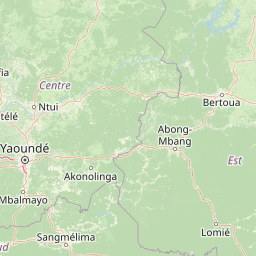
Map view of Deng Deng National Park

Use this park location map to pinpoint Deng Deng National Park in Cameroon, understand its exact geographic position, and read its mapped placement within the surrounding landscape more clearly.

Pigeon | © OpenStreetMap contributors
Park atlas

Trace surrounding protected landscapes, map regional park geography, and compare conservation zones within Cameroon's East Region.

Discover Other National Parks and Protected Areas Near Deng Deng National Park
After exploring Deng Deng National Park, continue your geographic discovery by mapping adjacent protected areas and comparing their conservation landscapes across eastern Cameroon. Compare diverse park ecosystems, hydrological features like the Sanaga River, and the unique forest-savanna mosaic ecoregion within Central Africa.
National parkCentre Region

Mpem and Djim National Park: Protected Landscape and Regional Geographic Atlas

Explore the mapped terrain and protected boundaries of this national park.

Mpem and Djim National Park is a protected natural area situated within Cameroon's Centre Region. This detail entry provides an atlas-focused view, emphasizing the park's protected landscape characteristics and its position within the regional geography. Understand the mapped context and discover the identity of Mpem and Djim National Park as a key protected area.

Area
974.8 km²
Established
2004
IUCN
II
Relief
Upland
National park

Faro National Park: Central Africa's Largest Hippo Population within Sudano-Sahelian Protected Landscape

Explore mapped boundaries and regional geography of this vital national park.

Faro National Park stands as a critical protected area within Cameroon, celebrated for its immense hippopotamus population and its role in conserving large mammals across the Sudano-Sahelian zone. The park's landscape comprises undulating savanna plains, river valleys, and elevated hilltops, offering a diverse geographic context for conservation. Its inclusion in a transboundary protected network highlights its importance for regional landscape mapping and ecological continuity. Understanding Faro National Park involves appreciating its unique habitat mosaic and its contribution to the protected areas atlas.

Area
3,418 km²
Established
1989
IUCN
II
Relief
Upland
Watercolor illustration of a landscape with rolling hills, a winding river, and varied terrain in soft colors
National parkBénoué Department

Bénoué National Park: Protected Landscape Atlas in Bénoué Department, Cameroon

Explore savanna woodland, riparian ecosystems, and geographic context.

Bénoué National Park is a vast protected landscape in Cameroon, defined by its Sudanian savanna woodland and significant frontage along the Bénoué River. Recognized as a UNESCO Biosphere Reserve, it offers critical insights into regional geography, habitat diversity, and the broader atlas of conservation lands in West Africa. Users can explore its varied terrain, from riverine zones to higher massifs, gaining a detailed understanding of this important protected area.

Area
1,800 km²
Established
1968
IUCN
II
Relief
Mixed relief
National parkCameroon

Nki National Park: Protected National Park Landscape in Cameroon

Explore the geographic context and mapped boundaries.

Nki National Park is a designated national park in Cameroon, offering a distinct protected landscape for geographic study. This page provides essential context for understanding the park's place within the country's natural geography and protected areas atlas. Explore its mapped terrain and protected boundary details to gain a clearer picture of this natural entity within Central Africa's diverse geography.

Area
3,093 km²
Established
2005
IUCN
II
Relief
Upland
National parkCameroon

Bouba Njida National Park: A Protected Landscape within Cameroon's National Park Atlas

Discover its mapped geography and regional context.

Bouba Njida National Park represents a key component of Cameroon's protected lands, contributing essential context to any atlas of Central African geography. As a designated national park, it offers a distinct focus for understanding mapped landscape features and the distribution of protected areas within the country. This park serves as a vital point of reference for exploring the nation's natural terrain and its significance within the broader context of regional conservation efforts.

Area
2,200 km²
Established
1980
IUCN
II
Relief
Upland
National parkGabon

Minkébé National Park: Protected Area and Geographic Context in Gabon

Explore the mapped terrain and protected landscape of this national park.

Gain a structured understanding of Minkébé National Park, a designated national park situated in Gabon. This destination focuses on the park's protected landscape, its distinct mapped boundaries, and its contribution to the regional geography of Central Africa. Examine how its protected status shapes the natural terrain and offers a unique angle for geographic discovery.

Area
7,570 km²
Established
2002
IUCN
II
Relief
Upland
National parkEast Province

Boumba Bek National Park: National Park with Protected Landscape Identity in East Province

Explore its geographic context and mapped protected boundaries.

Boumba Bek National Park is a key protected area within Cameroon's East Province, offering a dedicated focus for understanding national park landscapes. This resource facilitates discovery of its precise geographic footprint and its significance as a mapped protected land. Users can delve into its regional context and explore the atlas-level details defining its protected status and natural landscape character.

Area
2,382 km²
Established
2005
IUCN
II
Relief
Lowland
National park

Lobéké National Park National Park: A Protected Landscape within the Congo Basin

Explore its semi-evergreen forest, unique bais, and riverine ecosystems.

Lobéké National Park represents a core protected national park within the vast Congo Basin, renowned for its exceptionally high densities of African forest elephants and western lowland gorillas. Covering over 2,000 square kilometers of largely untouched semi-evergreen forest, the park features distinct ecosystems including mineral-rich bais clearings, saline swamp savannas, and diverse riverine habitats. As a crucial component of the Sangha Trinational protected area, Lobéké National Park offers a profound look into Central African wilderness and its unique natural geography.

Area
2,178 km²
Established
1999
IUCN
II
Relief
Lowland

Common questions about visiting, size, designation, and location context for Deng Deng National Park

Deng Deng National Park FAQs for park facts, access, geography, and protected area context
Find quick answers about Deng Deng National Park, including protected-area facts, park geography, trail and visitor context, and how the park fits into its surrounding country and regional landscape.
MoriAtlas Explorer

Continue Your Protected Areas Search Across the Global Atlas

Deepen your exploration by continuing the structured search for national parks and protected areas worldwide. Utilize the comprehensive filtering capabilities to compare different conservation landscapes and refine your understanding of global park geography. Discover more about the distribution and characteristics of protected natural areas.

Global natural geography