Why El Veladero National Park stands out
El Veladero National Park is best known for the dramatic Cerro El Veladero mountain that forms the striking green backdrop to Acapulco's famous bay and hotel zone. The park preserves medium-growth forest with scattered oak stands on the mountain slopes, creating a lush tropical environment within sight of the Pacific coastline. The protected area serves as an ecological corridor and green lung for the densely populated Acapulco metropolitan area, while its historical significance as a battleground during Mexico's independence struggle adds cultural depth to its natural value.
El Veladero National Park history and protected-area timeline
El Veladero National Park was established in 1980 through federal protected-area designation, making it part of Mexico's national park system designed to preserve representative natural areas of national significance. The creation of the park responded to growing environmental concerns about the Acapulco Bay region, where urban expansion and tourism development were increasingly pressuring the natural landscape surrounding the city. The park was explicitly created with the goal of improving and protecting the environmental quality of the area known as the amphitheater of Acapulco Bay and the Cerro Veladero, which was recognized for both its ecological and historical importance. The mountain's historical significance derives from the Battle of El Veladero, a confrontation during the Mexican War of Independence that occurred on its slopes, establishing the site as a location of national historical memory alongside its natural values.
El Veladero National Park landscape and geographic character
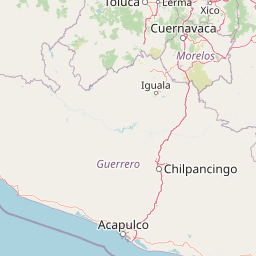
The landscape of El Veladero National Park centers on the steep, forested slopes of Cerro El Veladero, a mountain that rises abruptly from the coastal plain of Guerrero state. The mountain's elevation of 918 meters creates significant topographic relief, with ridgelines and valleys that give the terrain a rugged character despite its proximity to the urbanized coast. The slopes support medium-growth forest vegetation, with isolated oak trees emerging from the broader tropical forest canopy. The park lies within the Pacific coastal transition zone, where tropical forest ecosystems meet more arid interior environments, creating a distinctive landscape character shaped by moisture gradients and elevation changes. Views from the mountain's upper reaches encompass Acapulco Bay, the Pacific Ocean, and the surrounding coastal plain, making the area both scenically significant and ecologically important as a transitional landscape between coastal and interior environments.
El Veladero National Park ecosystems, habitats, and plant life
The vegetation of El Veladero National Park consists primarily of medium-growth tropical forest, with scattered oak trees providing a distinctive element within the broader forest community. This forest type characterizes the Pacific slope environments of Guerrero, where moisture-bearing winds from the coast support relatively dense vegetation despite seasonal dry periods. The park's location within the coastal transition zone gives it ecological significance as a habitat that bridges tropical coastal communities with more drought-resistant interior species. The forest ecosystem provides essential services for the surrounding region, including watershed protection, soil stabilization on the steep slopes, and biodiversity preservation within an area otherwise subject to significant human modification. The protected area serves as a green corridor connecting coastal and upland habitats, supporting species movement through a landscape increasingly fragmented by development.
El Veladero National Park wildlife and species highlights
The fauna documented within El Veladero National Park includes several notable species that represent the park's ecological value. Birdlife is represented by songbirds and osprey, with the latter species indicating the presence of suitable hunting habitat in the forest canopy or nearby water bodies. Reptiles present include iguana and boa, reflecting the tropical character of the ecosystem and the presence of appropriate habitat for these species within the protected area. The forest environment supports a broader community of species adapted to tropical semi-deciduous and evergreen forest conditions, though detailed species inventories for the park remain limited in the available source material. The park's value as a protected area within the increasingly urbanized Acapulco region provides essential habitat for wildlife that would otherwise face significant pressure from habitat loss and fragmentation.
El Veladero National Park conservation status and protection priorities
El Veladero National Park serves important conservation functions for the Acapulco region by preserving a remnant of natural forest ecosystem in an area otherwise subject to substantial development pressure. The park protects watershed functions critical to downstream water quality and erosion control on the steep mountain slopes. Its establishment in 1980 reflected early recognition of the need to balance tourism-driven urban growth with environmental preservation, a concern that has only intensified as Acapulco has expanded. The protection of Cerro El Veladero preserves both ecological values and the scenic landscape that underpins the region's tourism identity, linking conservation outcomes to economic sustainability. The park also preserves a site of historical memory, connecting conservation values to cultural heritage in a way that strengthens the protected area's justification and community significance.
El Veladero National Park cultural meaning and human context
El Veladero National Park encompasses cultural significance beyond its ecological values, rooted in the mountain's role during the Mexican War of Independence. The Battle of El Veladero was fought on the mountain's slopes, representing a significant confrontation in the struggle for Mexican independence from Spanish rule. This historical dimension gives the protected area cultural resonance that extends beyond typical conservation narratives, establishing the site as a place where natural landscape and national history intersect. The park's creation in 1980 explicitly recognized this dual natural and cultural significance, aiming to preserve both the environmental quality of the amphitheater area and the historical importance of Cerro Veladero. For the local community and visitors, the park offers an opportunity to experience a landscape shaped by both ecological and historical forces.
Top sights and standout views in El Veladero National Park
The defining highlight of El Veladero National Park is the dramatic Cerro El Veladero mountain itself, whose forested slopes rise behind Acapulco Bay to create one of the Pacific coast's most recognizable scenic backdrops. The park provides accessible natural landscape within the metropolitan area, offering recreation opportunities while preserving ecological function. Panoramic views from the mountain's ridgeline encompass the bay, ocean, and city, creating a unique vantage point that connects visitors to both natural and urban landscapes. The historical significance of the battleground adds a cultural dimension uncommon in typical protected areas, while the forest environment with its oak trees, birdlife, and tropical character provides ecological interest. The park serves as a green framework within the urban structure, demonstrating how conservation can integrate with city development.
Best time to visit El Veladero National Park
The optimal time to experience El Veladero National Park corresponds to the drier months from November through May, when precipitation is reduced and trail conditions are more favorable for exploration. The park can be visited year-round, though the wet season from June through October brings increased rainfall that may affect trail accessibility and visibility. The dry season typically offers clearer views from elevated vantage points, making it particularly suitable for those seeking the panoramic scenery the park is known for. Temperature conditions remain warm throughout the year given the coastal tropical setting, though higher elevations may offer some moderation compared to the coast below.