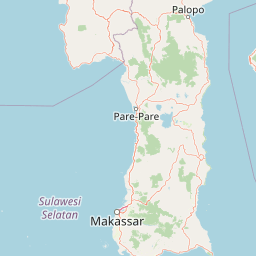
Why Gandang Dewata National Park stands out
Gandang Dewata National Park is best known for its sacred mountain landscape and exceptional endemism. The twin peaks of Tanete Gandangdewata, rising dramatically above the Sulawesi interior, form a spiritual and geographic landmark for the region. The park protects critical habitat for Sulawesi's unique Wallacean fauna, including the endangered lowland anoa (dwarf buffalo), one of the island's most iconic endemic species, and the sugar glider. The mountain range's isolation has allowed evolutionary processes to produce a distinctive suite of species found nowhere else on Earth, with approximately 31% of Sulawesi's bird species being endemic to the island.
Gandang Dewata National Park history and protected-area timeline
Gandang Dewata National Park was officially established in 2016 when the Indonesian Ministry of Environment and Forestry designated 189,208.17 hectares of the mountain range as Indonesia's 53rd national park. This designation followed scientific research conducted by the Indonesian Institute of Sciences (LIPI) in 2013, which documented the area's exceptional biodiversity and identified it as a priority for conservation. The park's establishment represented a culmination of growing recognition that Sulawesi's remaining pristine forests required formal protection to ensure the survival of endemic species. The mountain range had previously existed as a de facto conservation area due to its sacred status among local Mamasa communities, who maintained traditional practices that limited destructive land use in the highland areas.
Gandang Dewata National Park landscape and geographic character
The landscape of Gandang Dewata National Park is dominated by the rugged Quarles Range, a mountain system that rises steeply from the surrounding lowlands of West Sulawesi. The Tanete Gandangdewata peaks, standing at 3,037 meters (northern peak) and 2,966 meters (southern peak), form the most prominent features of the park, their distinctive rounded profiles visible for kilometers across the Sulawesi interior. Puncak Mistis peak reaches 3,037 meters northeast of the main Tanete formation. The mountain landscape includes dramatic ridgelines, steep valleys, and rocky outcrops that create diverse microhabitats throughout the park. The area surrounding the peaks features a transition from lower montane forests through cloud forest zones to alpine grasslands at the highest elevations, with the overall mountain complex covering 214,201 hectares.
Gandang Dewata National Park ecosystems, habitats, and plant life
The ecological significance of Gandang Dewata National Park stems from its location within Wallacea, the biogeographic region between the Asian and Australian continental shelves that harbors species found nowhere else on Earth. The park protects intact forest ecosystems that represent Sulawesi's remaining pristine montane and subalpine environments. Research by the Indonesian Institute of Sciences documented diverse flora and fauna, including several species new to science requiring conservation attention. The mountain's elevation gradient creates multiple habitat zones, from tropical lowland forest through montane forest to cloud forest and alpine vegetation, supporting a diversity of plant communities. The isolation of Sulawesi's mountains has driven evolutionary divergence, producing unique species assemblages that cannot be found in any other location globally.
Gandang Dewata National Park wildlife and species highlights
Gandang Dewata National Park provides crucial habitat for several notable endemic species. The lowland or Sulawesi anoa (Bubalus depressicornis), a dwarf buffalo considered one of Sulawesi's most endangered mammals, inhabits the park's forest environments. The sugar glider, a small nocturnal gliding possum, is among the park's more commonly encountered mammals, adapted to moving through the forest canopy. Sulawesi's exceptional bird endemism is represented within the park, with research confirming the presence of endemic bird species and suggesting additional species discoveries. The park contributes to Sulawesi's remarkable pattern where approximately 31% of the island's bird species are found nowhere else, a level of endemism rivaled only by few regions globally. Other endemic species protected in Sulawesi's national parks include the maleo bird, babirusa, and various tarsier species.
Gandang Dewata National Park conservation status and protection priorities
The establishment of Gandang Dewata National Park in 2016 marked a significant advancement in Indonesia's protected area network and Sulawesi's conservation framework. The park was designated to safeguard the mountain range's high biodiversity, which includes documented endemic bird species and newly discovered taxa requiring protection. The conservation value of the area is enhanced by the traditional protection afforded to the mountains by local Mamasa communities who regard Tanete as sacred. The park forms part of a complementary system of eight national parks across Sulawesi that collectively protect the island's diverse ecosystems, from marine environments to montane forests, representing one of Indonesia's most biodiverse regions.
Gandang Dewata National Park cultural meaning and human context
The Tanete Gandangdewata mountain range holds deep spiritual significance for the local Mamasa people, who have long considered the mountains sacred. This cultural reverence has contributed to the preservation of the forest ecosystems, as traditional practices have limited destructive activities in the sensitive highland areas. The name 'Gandang Dewata' reflects this spiritual dimension, combining the Mamasa word 'gandang' (drum) with the Sanskrit 'dewata' (God), describing how the rounded peak resembles a divine drum when viewed from a distance. This integration of conservation with cultural values provides a model for sustainable protection that blends modern conservation science with traditional stewardship practices.
Top sights and standout views in Gandang Dewata National Park
The highlights of Gandang Dewata National Park include the spectacular mountain climbing experience to the twin peaks of Tanete Gandangdewata, which offer multi-day trekking routes to summits exceeding 3,000 meters. The park contains several notable attractions including Bata Waterfall, Buttuada Waterfall, Samababo Waterfall, Hernon Hill, Mambuliling Peak, and Talepom Bulam Peak. The sacred mountain landscape provides a unique combination of spiritual and natural significance, while the presence of endemic species like the Sulawesi anoa and diverse birdlife offers exceptional wildlife viewing opportunities. The park represents one of Indonesia's newest and most significant conservation areas, protecting the last remaining pristine forests of West Sulawesi.
Best time to visit Gandang Dewata National Park
The optimal time to visit Gandang Dewata National Park aligns with Indonesia's dry season, typically from April to October, when precipitation is reduced and trail conditions are more favorable for mountain climbing and trekking. The higher elevations of the mountain range can experience cooler temperatures and increased cloud cover, particularly in the mornings and evenings. Visitors planning summit attempts should account for the tropical mountain environment and prepare for variable weather conditions. The park's relatively recent establishment means that infrastructure remains limited, requiring visitors to be self-sufficient and prepared for basic facilities.