Mori Atlas logo
National parkGrampians National Park

Discover the mapped boundaries and regional context of this significant national park in Victoria.

Grampians National Park: Protected Landscape, Aboriginal Heritage, and Sandstone Geography

Grampians National Park in Victoria, Australia, presents a dramatic protected landscape characterized by ancient sandstone mountain ranges that rise abruptly from the Wimmera plains. This extensive national park, covering over 167,000 hectares, offers a unique opportunity to explore its rugged terrain, significant Aboriginal rock art sites, and distinctive geological formations. Understanding Grampians National Park through its mapped geography and protected status reveals its profound natural beauty and deep cultural significance.

Mountain parksAboriginal heritage sitesRock art locationsSandstone landscapesVictoria national parksNature conservation areas

Grampians National Park

National park

Park overview

Structured park overview, official facts, and landscape profile for Grampians National Park

Grampians National Park park facts, protected area profile, and essential visitor context

Review the core facts for Grampians National Park, including designation, size, terrain, visitor scale, habitats, and operating context in one park-focused overview.

About Grampians National Park

Grampians National Park protects a distinctive sandstone mountain landscape in western Victoria that rises from the flat Wimmera plains to form a series of rugged, north-south trending ranges. The park's terrain is characterized by steep eastern faces where sedimentary layers have faulted, creating near-vertical cliffs and dramatic rock formations such as The Fortress. The landscape supports a network of well-developed walking tracks, with the 164-kilometre Grampians Peaks Trail crossing the length of the park on a 13-day hiking route opened in 2021. The park is bordered by the Western Highway to the north and the Glenelg Highway to the south, with the town of Halls Gap serving as the main visitor accommodation hub on the eastern side of the ranges. The Brambuk National Park and Cultural Centre in Halls Gap is owned and managed by Jardwadjali and Djab Wurrung peoples from five Aboriginal communities with historic links to the Gariwerd-Grampians ranges.

Quick facts and research context for Grampians National Park

Grampians National Park spans 1,672 square kilometres in western Victoria, Australia, established on 1 July 1984 and managed by Parks Victoria. The park features Devonian sandstone mountain ranges formed 425 to 415 million years ago, with the highest peak at Mount William reaching 1,167 metres. The region experiences a cool Mediterranean climate with high precipitation, recording rain on approximately 215 days annually and frequent winter snowfalls. The park contains 90 percent of Victoria's Aboriginal rock art and is home to 975 native plant species, including more than 75 orchid species, representing one-third of Victoria's total flora.

Protection and recognition

Tracking terrestrial conservation boundaries and official designation history since 1984

Grampians National Park Protected Area Designation and Legal Status

Grampians National Park features a documented terrestrial protection status established to manage and preserve its geographic area. Reviewing the official 1984 designation year and terrestrial boundary framework helps researchers map out the historic evolution of regional conservation zones.

Protection details

Protection scope
Terrestrial
Designated year
1984
Transboundary protection
No
Park context

Deeper park guide and search-rich context for Grampians National Park

Grampians National Park history, landscape, wildlife, and travel context

Explore Grampians National Park through its history, landscape character, ecosystems, wildlife, conservation priorities, cultural context, and seasonal travel timing in a structured park guide built for atlas discovery and search intent.

Why Grampians National Park stands out

Grampians National Park is best known for its extraordinary concentration of Aboriginal rock art, featuring depictions of humans, hands, animal tracks, and birds in caves throughout the park's sandstone ranges. The park's dramatic sandstone cliff formations and peaks attract world-class rock climbers, with notable routes including The Wheel of Life and Groove Train. The area is also celebrated for its seasonal wildflower displays, with the Grampians often called the 'garden of Victoria' due to its exceptional plant diversity and many endemic species. The Grampians Wave meteorological phenomenon makes Mount William a renowned gliding location where pilots can reach extreme altitudes.

Grampians National Park history and protected-area timeline

The Grampians region has been home to Aboriginal peoples for thousands of years, with the Jardwadjali and Djab Wurrung peoples maintaining deep cultural connections to the landscape long before European colonization. The name Gariwerd was first recorded in 1841 by Chief Protector of Aborigines George Augustus Robinson, taken from a Jardwadjali speaker. In 1836, explorer and Surveyor General Thomas Mitchell named the range after the Grampian Mountains in Scotland, initially calling them the Coast Mountains, then the Gulielmian Mountains after William IV, before settling on Grampians. The area became a popular recreation destination in the mid-nineteenth century, with railway expansion to nearby Stawell, Ararat, and Dunkeld driving tourism growth in the early twentieth century. After a two-year consultation process, the park was renamed Grampians (Gariwerd) National Park in 1991, though this proved controversial and was reversed in 1992 following the election of the Kennett government. The 1998 Geographic Place Names Act reinstated dual naming conventions, and the park is now officially referred to as Grampians National Park (Gariwerd) on the National Heritage List.

Grampians National Park landscape and geographic character

The Grampians landscape consists of a striking series of sandstone mountain ranges running roughly north-south, with the rock material laid down from rivers during the Devonian period 425 to 415 million years ago. The sediment accumulated to a depth of approximately seven kilometres before being raised and tilted into its present form. The western parts of the park feature lower-angled sandstone ridges, while the eastern sides feature steep to near-vertical cliff faces, notably at Hollow Mountain near Dadswells Bridge at the northern end. The highest peak, Mount William, reaches 1,167 metres above sea level. Numerous waterfalls punctuate the landscape, with Mackenzie Falls being among the most accessible via the park's road network. The Silverband Formation contains significant geological features, including sandstone paving slabs used in nearby construction in 1873 that contained fossilized track impressions of a four-legged vertebrate animal, considered among the oldest traces of land vertebrate life in Australia.

Grampians National Park ecosystems, habitats, and plant life

The Grampians ecosystem supports exceptional plant diversity, with the park containing 975 native plant species including more than 75 orchid species, representing approximately one-third of Victoria's total flora. Many species are endemic to the Grampians, including the Grampians pincushion lily (Borya mirabilis), one of the rarest native lilies in Australia. The park's elevation gradient from the Wimmera plains to the alpine heights of Mount William creates diverse habitats ranging from dry sclerophyll forests on lower slopes to damp ferny gullies and exposed heathland on high peaks. The seasonal wildflower display in spring is a major attraction, with the colloquial nickname 'garden of Victoria' reflecting the area's botanical significance. The ranges act as a biodiversity corridor connecting isolated remnant vegetation communities across western Victoria.

Grampians National Park wildlife and species highlights

The Grampians provides habitat for diverse native wildlife adapted to the mountain and forest environments of western Victoria. The park's forests shelter numerous bird species, mammals, and reptiles, though specific species details are limited in the source material. The rocky outcrops and cliff faces provide nesting habitat for raptors and other birds that thrive in the sandstone environment. The park's water sources, including streams and waterfalls, support aquatic species and provide drinking points for wildlife in the drier months. The vegetation communities, ranging from open forests to heathland and rocky ridges, create varied microhabitats supporting different wildlife assemblages across the elevational gradient.

Grampians National Park conservation status and protection priorities

Grampians National Park is listed on the National Heritage List for its outstanding natural beauty and exceptional Aboriginal cultural significance, being one of the richest Indigenous rock art sites in southeastern Australia. The park protects 90 percent of Victoria's rock art heritage, with significant sites containing motifs painted by Jardwadjali and Djab Wurrung peoples over thousands of years. The 2006 National Heritage List inscription recognized both the natural values and the continuing Aboriginal cultural associations with the landscape. Conservation efforts face challenges from periodic bushfires, with a major fire in January 2006 burning approximately 127,000 hectares (47 percent of the park), and subsequent fires impacting roughly 85 percent of the total area. The 164-kilometre Grampians Peaks Trail was designed with inspiration from Tasmanian walking tracks to provide sustainable visitor access while minimizing ecological impact.

Grampians National Park cultural meaning and human context

The Grampians holds profound cultural significance for the Jardwadjali and Djab Wurrung peoples, for whom the landscape of Gariwerd was central to Aboriginal dreaming and the creation narrative of Bunjil, the creator being, and the two brothers Bram responsible for shaping and naming many landscape features across western Victoria. The park contains numerous rock art sites with motifs including human figures, handprints, animal tracks, and birds, created by Aboriginal communities that have maintained cultural connections to the land despite historical disruption since European settlement from 1840. Dual naming of features has been adopted in the park based on Jardwadjali and Djab Wurrung names, including Grampians/Gariwerd for the mountain range, Halls Gap/Budja Budja, Mount Zero/Mura Mura, and Mount Difficult/Gar. The Brambuk National Park and Cultural Centre represents Indigenous management and ownership, operated by Aboriginal communities with historic links to the region.

Top sights and standout views in Grampians National Park

The Grampians offers exceptional experiences including the dramatic sandstone peaks and cliff formations perfect for rock climbing at world-class venues, the remarkable concentration of Aboriginal rock art sites showcasing thousands of years of Indigenous heritage, the seasonal wildflower displays that blanket the ranges in spring, and the panoramic views from lookouts like Boroka Peak and The Balconies overlooking Victoria Valley. The 13-day Grampians Peaks Trail provides an immersive wilderness hiking experience through the park's most scenic terrain, while the Grampians Wave enables extraordinary gliding opportunities from Mount William. The annual Grampians Grape Escape food and wine festival in Halls Gap each May celebrates local produce and culture. The Mackenzie Falls and other waterfall walks showcase the park's water features tumbling over sandstone cliffs.

Best time to visit Grampians National Park

The Grampians is best visited in winter and spring when cooler temperatures make hiking comfortable and the wildflower season creates spectacular displays across the ranges. Summer can bring extreme heat and fire closures, while winter offers dramatic scenery but cold conditions with frequent snow at higher elevations. The most popular time for day visitors is during spring when wildflowers bloom and weather is pleasant for bushwalking. Rock climbers should be aware that 30 percent of climbing areas remain closed due to ongoing cultural and ecological concerns, with specific closures affecting 70 percent of bouldering routes and 50 percent of sport climbing routes as of 2019.
Park guides

Targeted reference material addressing key protected area planning questions

Grampians National Park Published Guides for Focused Exploration

Published reference materials provide structured answers for navigating complex terrain across the protected landscape. Available documentation covers visit planning considerations, detailing optimal seasonal timing for exploring sandstone mountain ranges and regional trails.
Monthly climate preview

Long-term average temperature cycles and daily precipitation trends over thirty years

Grampians National Park Climate Normals and Monthly Weather Patterns

Long-term climatology data at a representative elevation of 258 meters reveals that Grampians National Park experiences warm, dry intervals with mean temperatures above 21 degrees Celsius alongside cooler, wetter periods. Accessing the complete monthly weather profile provides detailed historical temperature ranges and daily precipitation trends.
Annual mean14 °C
7 °C21 °C
Jan21°
Feb21°
Mar18°
Apr14°
May11°
Jun
Jul
Aug
Sep10°
Oct13°
Nov16°
Dec19°
Warmest month
January

21.4 °C

Coolest month
July

7.3 °C

Wettest month
June

2 mm/day

Driest month
March

0.8 mm/day

Park location guide

Geography guide, regional context, and park location map for Grampians National Park

Grampians National Park park geography, regions, and map view in Australia

Understand where Grampians National Park sits in Australia through a broader geographic reading of the surrounding landscape, nearby location context, and its mapped position within the national park landscape.

How Grampians National Park fits into Australia

Australia is a constitutional monarchy and federal parliamentary democracy comprising six states and ten territories. With a population of nearly 28 million, it is one of the world's most urbanised countries, with most people concentrated on the eastern seaboard. The country has a high Human Development Index and is known for its cultural diversity, ancient Aboriginal heritage, and unique wildlife.

Wider geography shaping Grampians National Park in Australia

Australia occupies the entire Australian continent, the island of Tasmania, and numerous smaller islands. It is the world's flattest and driest inhabited continent, featuring vast deserts in the interior (the Outback), tropical rainforests along the eastern coast, and a coastline bordering the Indian and Pacific Oceans.

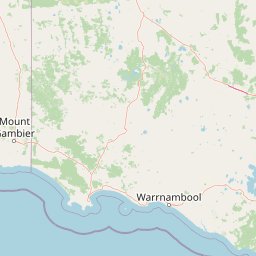
Map view of Grampians National Park

Use this park location map to pinpoint Grampians National Park in Australia, understand its exact geographic position, and read its mapped placement within the surrounding landscape more clearly.

Pigeon | © OpenStreetMap contributors
Natural feature types

Browse the Full Collection of Natural Features Within Grampians National Park

Examine the detailed geographic features that define the sandstone landscape of Grampians National Park. MoriAtlas provides a structured index of named peaks, cliffs, and waters to support deeper study of the region's complex terrain and topographic distribution.
Recorded earthquake history

Review the Historical Earthquake Catalogue for Grampians National Park

Explore a curated collection of recorded seismic events associated with the Grampians National Park area. This MoriAtlas data resource provides transparent access to historical earthquake logs for those studying regional geography and seismic history in Victoria.

Grampians National Park Earthquake History

Catalogued events

2 events

Strongest magnitude

Magnitude 3.8

Most recent event

Jun 1, 2011

This history includes earthquakes recorded inside the park or within 50 km of its borders

Park atlas

Discover the broader protected landscapes and adjacent geographic regions surrounding Grampians National Park.

Explore Other National Parks and Protected Areas Near Grampians, Victoria's Sandstone Ranges

After exploring Grampians National Park's dramatic sandstone ranges and Aboriginal heritage, continue your park discovery by browsing other national parks and protected areas in Victoria. Compare diverse landscapes, conservation efforts, and regional geographic contexts to deepen your understanding of Australia's natural and cultural heritage.
National parkAustralia
47 km away#1 closest

Northwest

Little Desert National Park: Victoria's Semi-Arid National Park and Protected Landscape

Explore mapped boundaries and unique mallee heathland ecosystems.

Delve into the protected landscape of Little Desert National Park, a significant national park covering over 1,300 square kilometers of Victoria's semi-arid western region. This area is characterized by its deep sandy soils, mallee heathlands, and diverse wildlife, including important populations of native birds. Understanding its geographic setting and mapped boundaries provides crucial insight into Australia's conservation efforts and the preservation of unique desert ecosystems.

Area
1,326.47 km²
Established
1988
IUCN
II
Visitors
50K annual
National parkAustralia
58 km away#2 closest

Southwest

Budj Bim National Park: Ancient Volcanic Landscapes and World Heritage Protected Area

Explore the unique geography of Budj Bim National Park's crater lakes and lava tubes.

Budj Bim National Park offers an exceptional exploration of volcanic geography and ancient human ingenuity. This protected area features a dramatic landscape dominated by volcanic cones, lava tubes, and the picturesque Lake Surprise crater lake. Its significance is amplified by the presence of sophisticated Aboriginal aquaculture systems, developed thousands of years ago by the Gunditjmara people, which have contributed to its UNESCO World Heritage status. Discover the mapped terrain and protected land context of this geologically and culturally rich Australian national park.

Area
54.7 km²
Established
1960
IUCN
II
Relief
Mixed relief
National parkAustralia
60 km away#3 closest

Northeast

Kara Kara National Park: Mapped Protected Landscape and Box-Ironbark Forest Ecology

Explore Victoria's protected natural geography and woodland habitats.

Kara Kara National Park is an essential protected area in Victoria, Australia, recognized for its significant box-ironbark forest ecosystems and the conservation of the endangered swift parrot. The park's geography is defined by the St Arnaud Range, offering a distinct topography of ridges and valleys that contrast with the surrounding plains. Understanding this park's mapped boundaries and its role within the regional landscape provides critical insight into its ecological value and its representation of historical woodland environments.

Area
139.9 km²
Established
2002
IUCN
II
Relief
Upland
Protected areaVictoria
About 62 km away#4 closest

Southwest

Budj Bim heritage areas: Mapped Volcanic Landscapes and Ancient Aquaculture Systems

Regional protected geography in Victoria, Australia

Budj Bim heritage areas encompass a complex volcanic terrain in south-western Victoria, featuring extensive stone channel networks and managed wetland systems. This protected landscape documents thousands of years of Gunditjmara land engineering, from the dormant Budj Bim crater to the diverse marshlands of Tyrendarra. Access detailed map context and geographical data on this vital cultural and geological site.

Area
99.35 km²
IUCN
VI
Relief
Upland
Climate
Temperate
National parkAustralia
About 62 km away#5 closest

Southwest

Mount Eccles National Park: Geographic Atlas of Volcanic Protected Landscapes

Explore mapped boundaries and regional park geography.

Delve into the structured geographic information for Mount Eccles National Park, a significant protected area in Victoria, Australia. This component of Budj Bim National Park showcases a distinct volcanic landscape and its surrounding terrain. Understand the park's mapped boundaries, regional setting, and its place within Australia's diverse protected land atlas, offering a clear view of its natural geography.

Protected areaVictoria
About 74 km away#6 closest

South

Framlingham Forest Indigenous Protected Area: Geography and Landscape Overview

Aboriginal-owned savanna woodlands in Western Victoria

Framlingham Forest Indigenous Protected Area is an important cultural and ecological site in south-western Victoria. Spanning over 1,100 hectares of stringybark and manna gum savannah, this protected area offers a unique glimpse into the native woodland ecosystems that once defined the Western District plains near the Hopkins River.

Area
11.3 km²
Established
2009
Relief
Lowland
Scope
Terrestrial
Protected areaVictoria
About 80 km away#7 closest

South

Deen Maar Indigenous Protected Area: Mapped Geography and Coastal Landscape Profile

Gunditjmara country coastal terrain in south west Victoria.

Situated between the Eumeralla River and Bass Strait, Deen Maar Indigenous Protected Area features an unusual concentration of habitats within a small footprint. From calcareous limestone ridges to shallow lake systems and shifting dunes, the reserve serves as a crucial bird conservation area while maintaining deep ties to Gunditjmara cultural identity and management practices.

Area
4.53 km²
Established
1999
IUCN
VI
Relief
Lowland
National parkBarwon South West
87 km away#8 closest

Southwest

Cobboboonee National Park: A Protected Landscape in Australia's Barwon South West Region

Explore its mapped geography and natural terrain.

Cobboboonee National Park represents an important protected area within the Barwon South West region of Australia. This destination offers users a deep dive into the park's specific geography, providing context on its mapped boundaries and the surrounding natural landscapes. It is designed for exploration of the park's protected-area identity and its place within the regional geography, offering structured data for landscape context.

Area
185.1 km²
Established
2008
IUCN
II
Climate
Temperate

Common questions about visiting, size, designation, and location context for Grampians National Park

Grampians National Park FAQs for park facts, access, geography, and protected area context

Find quick answers about Grampians National Park, including protected-area facts, park geography, trail and visitor context, and how the park fits into its surrounding country and regional landscape.
MoriAtlas Explorer

Continue Your Protected Areas Search Across the Global Atlas

Deepen your exploration by continuing the structured search for national parks and protected areas worldwide. Utilize the comprehensive filtering capabilities to compare different conservation landscapes and refine your understanding of global park geography. Discover more about the distribution and characteristics of protected natural areas.

Global natural geography