Why Gundabooka National Park stands out
Gundabooka National Park is best known for its significant Aboriginal cultural heritage, particularly the petroglyph rock art and ancestral ceremonial grounds found within the park boundaries. The striking rust-coloured cliffs of the Gunderbooka Range provide the park's most distinctive visual character, rising from the surrounding open plains and grassy woodlands. The combination of ancient Indigenous heritage sites with the dramatic outback landscape of the Darling River region makes this park a meaningful destination for understanding both natural and cultural history of far western New South Wales.
Gundabooka National Park history and protected-area timeline
Prior to its declaration as a national park in 1996, the Gundabooka area served as a sheep station, reflecting the broad pattern of European agricultural conversion that transformed much of inland New South Wales during the nineteenth and twentieth centuries. The region was previously the traditional Country of the Ngemba people, an Aboriginal group whose connection to this landscape extends back thousands of years. The establishment of the national park protected the significant Indigenous heritage of the area, including the petroglyph rock art sites and ceremonial grounds that remain important cultural places. This transition from pastoral use to protected area status represents a broader shift in how western New South Wales landscapes are valued and managed, recognizing that Indigenous cultural heritage and biodiversity conservation can coexist alongside appropriate visitor access.
Gundabooka National Park landscape and geographic character
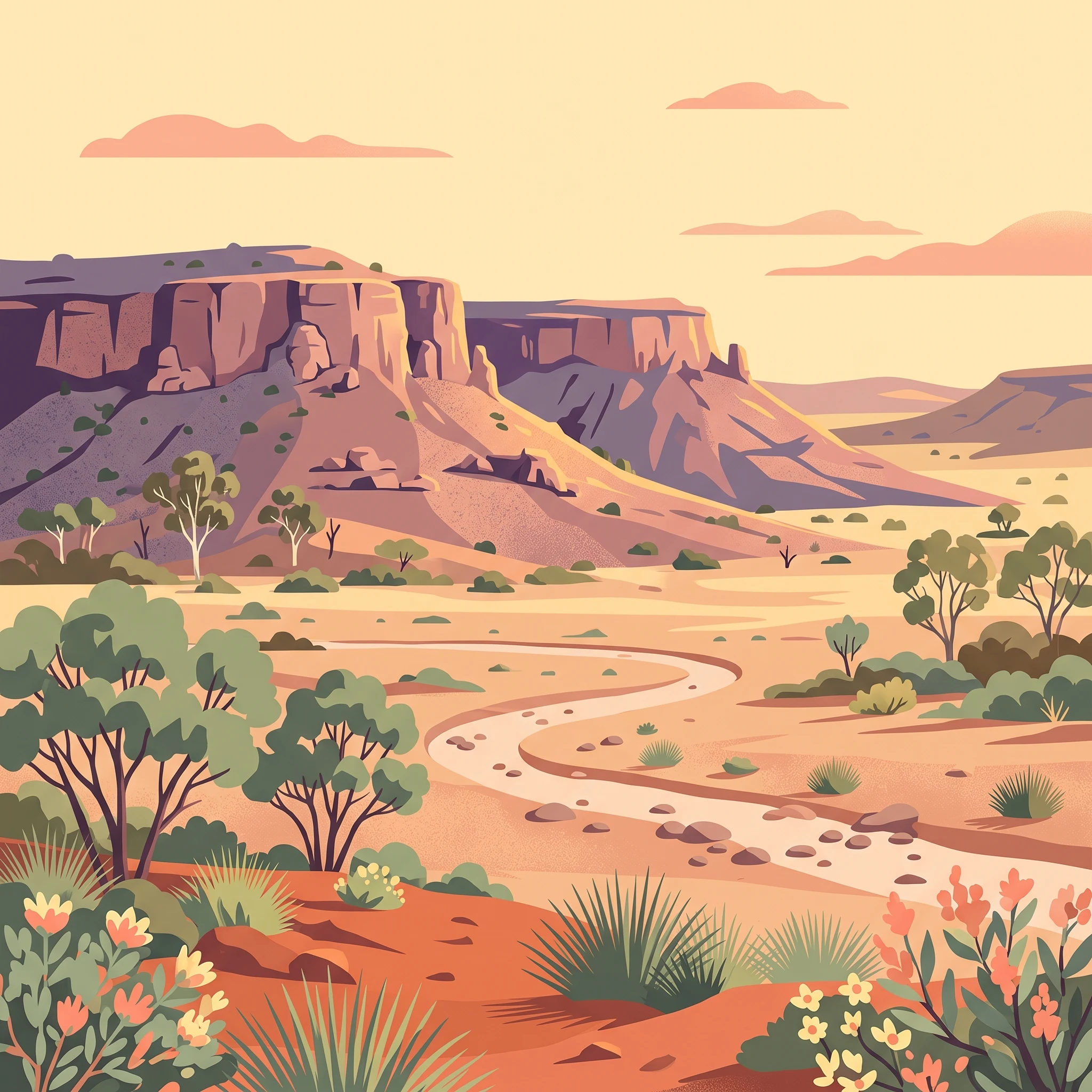
The landscape of Gundabooka National Park is defined by the prominent Gunderbooka Range, a series of rust-coloured rocky cliffs and ridges that rise from the surrounding terrain to form the park's most dramatic topographic feature. Large open plains extend across much of the park's interior, interspersed with patches of grassy woodland that provide visual variety and ecological habitat. The red and orange hues of the cliffs and rocky outcrops create a distinctive colour palette characteristic of the Australian outback, particularly striking against the typically blue skies of the region. These landforms are the product of geological processes that have shaped the interior of New South Wales over millions of years, with the exposed rock faces providing visual evidence of the region's ancient geological history.
Gundabooka National Park ecosystems, habitats, and plant life
The park supports a range of vegetation communities adapted to the semi-arid conditions of north-western New South Wales. The grassy woodlands that cover substantial portions of the park are characterized by drought-tolerant trees and understory species capable of surviving the region's variable rainfall patterns. The rocky cliffs and ridges of the Gunderbooka Range provide habitat for species adapted to more arid conditions and rock-associated environments. While the source material notes the presence of many exotic plants within the park, the native vegetation communities still provide important habitat value for native fauna, with the combination of woodland, cliff, and plain habitats supporting ecological diversity across the protected area.
Gundabooka National Park cultural meaning and human context
Gundabooka National Park holds deep significance as the traditional Country of the Ngemba people, whose connection to this landscape extends far beyond the period of European settlement. The park contains significant Aboriginal cultural heritage sites including petroglyph rock art, which represents some of the oldest evidence of human presence and cultural expression in the region. Ancestral ceremonial grounds located within the park boundaries continue to hold cultural importance for Aboriginal communities, reflecting the ongoing connection between Indigenous peoples and Country in western New South Wales. The protection of these sites within the national park framework represents an important recognition of Aboriginal cultural values alongside biodiversity conservation.
Top sights and standout views in Gundabooka National Park
The striking rust-coloured cliffs of the Gunderbooka Range form the park's most visually commanding feature, rising prominently above the surrounding plains and providing dramatic outback scenery. Ancient Aboriginal rock art sites and ceremonial grounds preserve thousands of years of Indigenous cultural heritage, offering visitors meaningful insight into the human history of this landscape. The park's position adjacent to the Darling River connects it to one of Australia's most significant inland river systems and adds regional context to visits. The combination of dramatic ridgelines, open plains, and cultural heritage makes Gundabooka a distinctive protected area in the far north-west of New South Wales.