
Why Kaieteur National Park stands out
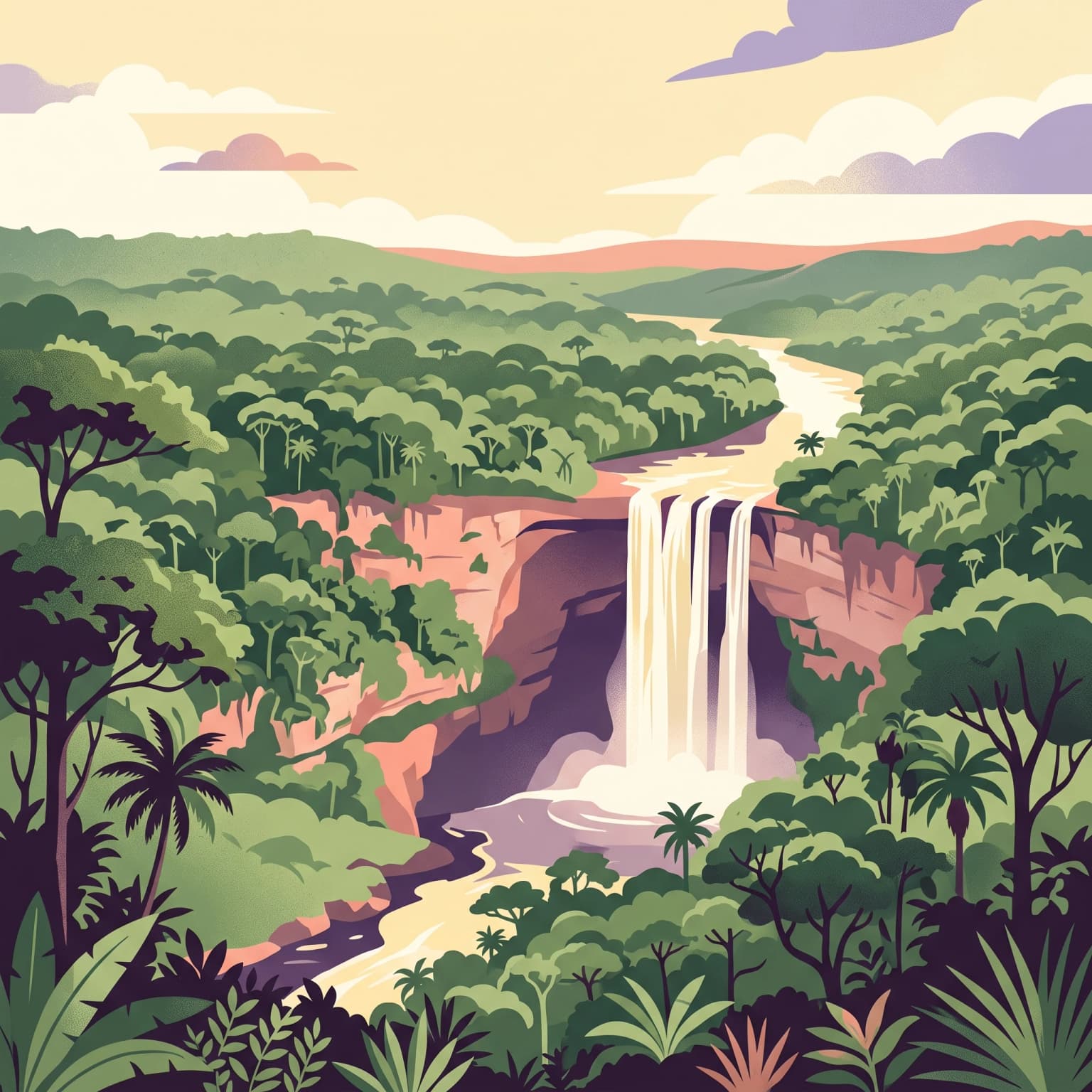
Kaieteur National Park is world-renowned for Kaieteur Falls, a towering 741-foot single-drop waterfall that ranks among the most powerful and picturesque waterfalls on the planet. The falls possess the greatest single-drop height and are considered the largest waterfall by volume anywhere on earth. Beyond the falls, the park protects an exceptional concentration of endemic species, including the golden rocket frog (Anomaloglossus beebei), which breeds exclusively within the leaves of the bromeliad Brocchinia micrantha found nowhere else in the world. The park also safeguards one of the last remaining tracts of untouched Guianan moist forest, a biodiversity hotspot containing numerous species found nowhere else on Earth.
Kaieteur National Park history and protected-area timeline
Kaieteur National Park was originally established in 1929 as a small 5-square-mile reserve protecting Kaieteur Falls and immediately surrounding forest. For seven decades, the park remained a relatively compact protected area, though its designation as Guyana's national park gave it significant symbolic importance as the country's primary wilderness showcase. In 1999, the park's boundaries were dramatically expanded through a Presidential Order, increasing its area from 5 square miles to 242 square miles (from approximately 10 km² to 630 km²). This expansion was intended to provide better ecological protection for the broader forest ecosystem surrounding the falls and to create meaningful buffer zones for the protected core area. The Kaieteur National Park Act provides the legal framework for the park's protection, specifically mandating conservation of natural resources, unique natural features, Amazonian biodiversity, and the interests of Amerindian communities who have lived in the region for generations. The Act established the Kaieteur National Park Commission to oversee administration and management. More recently, the park has faced challenges from illegal mining activities, particularly in 2017 and 2023, when villagers from the Chenapau community were accused of conducting mining operations within park boundaries, raising ongoing questions about the balance between local livelihoods and conservation protection.
Kaieteur National Park landscape and geographic character
The landscape of Kaieteur National Park is dominated by the dramatic sandstone escarpment over which Kaieteur Falls plunges 741 feet into the Potaro River gorge. The surrounding terrain consists of undulating tropical forest on the Pakaraima Plateau, with the park's elevation ranging from approximately 1,000 to 2,000 feet above sea level. The underlying geological formations are primarily sandstones and conglomerates of the Roraima Group, ancient Precambrian rocks that form the distinctive flat-topped mountains characteristic of the Guiana Shield. The Potaro River, which carries the enormous volume of water that makes Kaieteur Falls so spectacular, has carved a deep canyon through the plateau, creating dramatic cliffs and rocky outcrops. The forest surrounding the falls is dense and humid, with canopy heights reaching 100 feet or more. The region experiences typical tropical rainfall patterns, with the area receiving substantial precipitation throughout the year that feeds the falls and maintains the lush forest environment.
Kaieteur National Park ecosystems, habitats, and plant life
Kaieteur National Park occupies a critical position within the Guianan moist forests ecoregion, one of the most species-rich biomes in the Western Hemisphere. The park protects extensive tracts of primary tropical rainforest that have remained largely untouched by development. The ecoregion is characterized by extraordinarily high levels of plant and animal endemism, with numerous species found nowhere else on Earth. The park's bromeliad flora is particularly notable, with over 80 species documented, creating specialized microhabitats for unique amphibian species. The understory is dominated by a dense layer of ferns, palms, and shade-tolerant flowering plants, while the canopy supports a diverse community of trees, lianas, and epiphytes. The forest structure varies with topography, with valley bottoms supporting more mesic vegetation and ridge tops hosting species adapted to drier conditions. The park's streams and waterfalls create unique riparian habitats that support specialized aquatic organisms.
Kaieteur National Park wildlife and species highlights
The wildlife of Kaietur National Park reflects the extraordinary biodiversity of the Guianan moist forests, with numerous species found nowhere else in the world. The park is particularly notable for its amphibian diversity, including the iconic golden rocket frog (Anomaloglossus beebei), a tiny and brilliantly colored species that has become a symbol of the park's conservation significance. This frog breeds exclusively in the water-holding leaves of the bromeliad Brocchinia micrantha, a relationship so specialized that the frog's entire life cycle depends on this single plant species, which is itself found only within the park. Birdlife is exceptionally diverse, with the Guianan shield providing habitat for hundreds of resident species and seasonal migrants. The forest canopy supports toucans, macaws, and numerous tyrant flycatcher species, while the understory harbors antbirds, ovenbirds, and motmots. Mammals present include various primates, sloths, anteaters, and the elusive jaguar, though sighting opportunities are rare given the dense forest cover.
Kaieteur National Park conservation status and protection priorities
Kaieteur National Park represents Guyana's primary contribution to the global protected area network and serves as a critical stronghold for Guianan biodiversity. The park's IUCN Category II designation reflects its role as a national park managed primarily for ecosystem conservation and recreation. The Kaieteur National Park Act provides legal foundation for protecting the region's natural resources, unique features, and biodiversity, while also acknowledging the rights of Amerindian communities who have traditionally inhabited the area. The park protects numerous endemic species whose survival depends on the conservation of this specific forest ecosystem, most notably the golden rocket frog whose entire global range is confined to the park's bromeliad habitat. Conservation challenges include pressure from illegal mining, particularly as gold prices have incentivized encroachments into the protected area. Management efforts must balance the dual goals of preserving the park's ecological integrity while addressing the economic needs of local communities whose livelihoods depend on forest resources.
Kaieteur National Park cultural meaning and human context
Kaieteur National Park contains lands of significance to several Amerindian communities who have inhabited the forests of the Potaro-Siparuni Region for millennia. The Kaieteur National Park Act specifically recognizes these indigenous communities and their relationship with the land as part of the rationale for protection. The Chenapau community, located near the park's boundaries, represents one of the groups whose traditional territory overlaps with the protected area. The relationship between park management and indigenous communities has become increasingly complex, particularly regarding access to natural resources and questions of traditional land use. The 2023 protests by Chenapau villagers regarding mining rights highlighted the ongoing tensions between conservation objectives and local livelihood needs within and around the protected area. The park also holds cultural significance beyond indigenous communities, as Kaieteur Falls has been a destination of wonder for visitors since the earliest European explorations of Guyana in the 19th century.
Top sights and standout views in Kaieteur National Park
Kaieteur Falls, the park's centerpiece, is a superlative natural feature that ranks among the world's most impressive waterfalls and serves as the primary draw for visitors. The falls' 741-foot single-drop height and extraordinary water volume make them unique among global waterfalls. The golden rocket frog represents one of the most specialized and localized species on Earth, its entire global population confined to the park's bromeliad habitats. The expansion of the park in 1999 created meaningful protection for the broader forest ecosystem beyond the falls themselves. The park's location deep in Guyana's interior, accessible via dedicated air service, provides a wilderness experience largely unavailable elsewhere in the country. The Guianan moist forests surrounding the falls represent one of the world's most biodiverse ecosystems.
Best time to visit Kaieteur National Park
Kaieteur National Park can be visited throughout the year, though the optimal period generally falls between February and April when rainfall is somewhat reduced and the falls remain spectacular due to continued water flow from the wet season. The dry season from September to November also offers good conditions, though visitor services may be more limited. The Guianan climate is consistently warm and humid year-round, with temperatures in the mid-80s Fahrenheit. The wet season, roughly from May to August, brings heavier rainfall which can make some trails more challenging but also results in the most powerful flow over the falls. Regardless of season, visitors should expect tropical conditions and be prepared for both heat and periodic rain. The park's accessibility via Kaieteur International Airport makes it feasible to visit on day trips from Georgetown, though overnight stays allow for deeper exploration of the trails and more extended wildlife observation.