Why Central Suriname Nature Reserve stands out
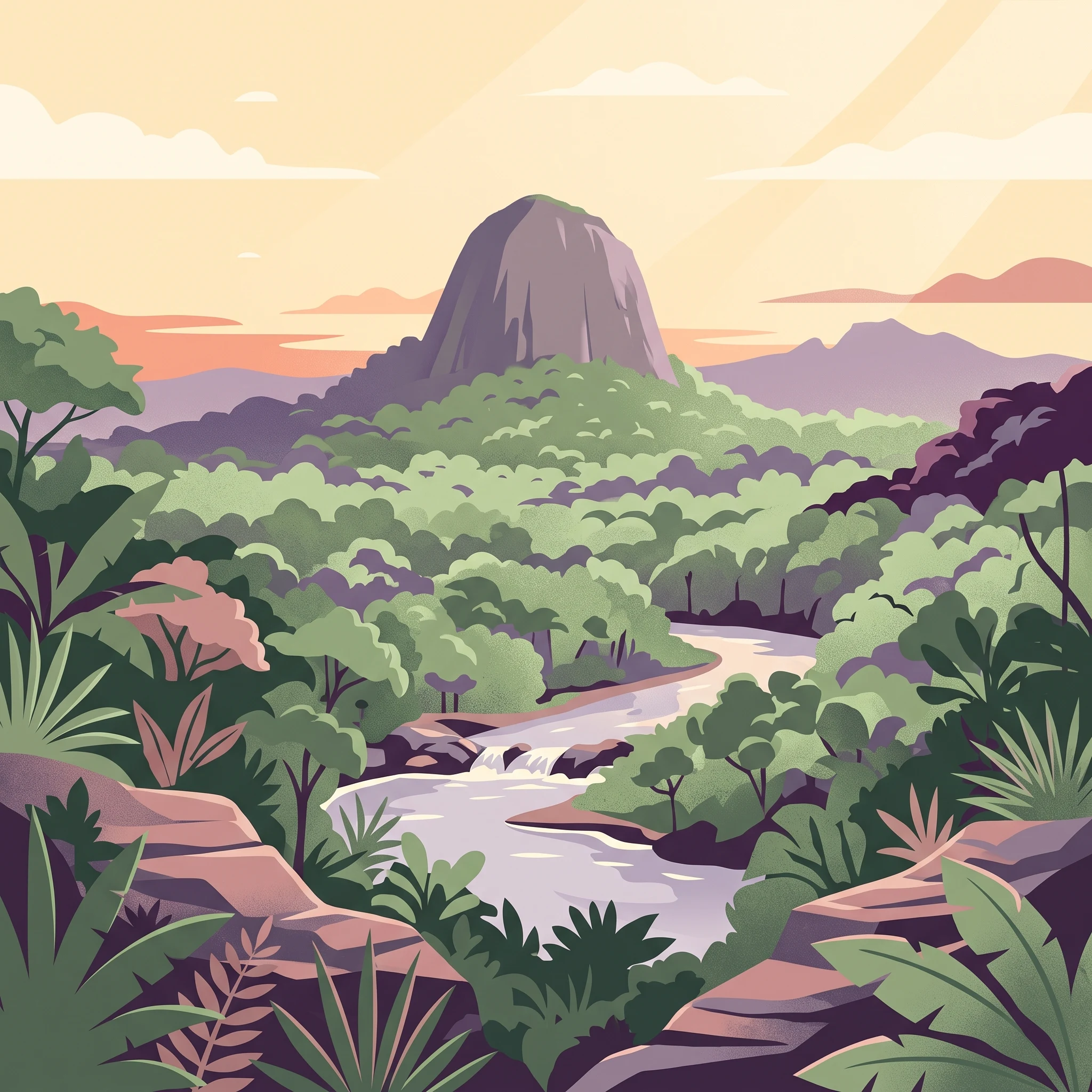
The Central Suriname Nature Reserve is best known for its dramatic granite dome formations, particularly the 245-meter-high Voltzberg which rises like a monolith from the surrounding rainforest canopy. The reserve protects extensive pristine tropical forest in the Guianan moist forests ecoregion, representing one of the most biologically diverse regions in South America. Its birdlife is especially notable, featuring the Guiana Cock of the Rock with its spectacular display grounds. The reserve also encompasses Suriname's highest mountain, Julianatop at 1,230 meters, and the enigmatic Duivelsei (Devil's Egg), a precariously balanced boulder on a mountain ridge.
Central Suriname Nature Reserve history and protected-area timeline
The Central Suriname Nature Reserve was formally established in 1998 through the merger of three pre-existing nature reserves: Ralleighvallen, Tafelberg, and Eilerts de Haan gebergte. This consolidation was driven by Conservation International in partnership with the Surinamese government, creating a unified protected area that could better support ecosystem-level conservation planning. The creation of the reserve benefited from material support contributed by Jeff Harbers, co-founder of Microsoft. Within two years of its establishment, the reserve was inscribed on the UNESCO World Heritage List in 2000 at the 24th session of the World Heritage Committee, recognizing its outstanding universal value as a pristine tropical rainforest ecosystem. The Eilerts de Haan Mountains, which form part of the reserve's western boundary, were named in honor of Johannes Gijsbert Willem Jacobus Eilerts de Haan, an explorer who perished while exploring Suriname's interior. Conservation work within the reserve continues to be supported by Conservation International Suriname, which coordinates protected-area planning and management activities.
Central Suriname Nature Reserve landscape and geographic character
The Central Suriname Nature Reserve features a dramatic and varied landscape dominated by the sheer granite domes that rise abruptly from the surrounding rainforest. The most spectacular of these is Voltzberg, a 245-meter-high granite monolith whose bare rock face creates a stark contrast against the verdant forest. These granite domes represent uplifted bedrock that has resisted erosion while the surrounding terrain has weathered away, creating unique xerophytic habitats on their sun-baked surfaces with endemic plant species adapted to these harsh conditions. The reserve encompasses portions of the Guyana Highlands, with several of Suriname's highest peaks located within its boundaries. Julianatop rises to 1,230 meters as the country's highest mountain, while Tafelberg (Table Mountain) reaches 1,026 meters and Hendriktop stands at 908 meters. The Van Stockumberg peak at 360 meters and the curious balanced boulder known as Duivelsei (Devil's Egg) add to the geological diversity. The landscape also features numerous rapids along the rivers that traverse the reserve, cutting through the forest and adding dynamic water features to the terrain.
Central Suriname Nature Reserve ecosystems, habitats, and plant life
The reserve lies within the Guianan moist forests ecoregion, one of the most biodiverse forest regions in the world. The ecosystem encompasses both montane and lowland primary tropical forest, creating a complex mosaic of habitats that supports extraordinary species richness. Over 5,000 plant species have been documented within the reserve, reflecting the region's role as a botanical treasure trove. The forest ecosystem remains in a largely pristine condition, maintaining ecological processes without significant human alteration. The granite dome environments create unique microhabitats with specialized xerophytic vegetation adapted to the exposed, sun-baked rock surfaces. These rocky outcrops support endemic plant species found nowhere else on Earth, adding to the reserve's global conservation significance.
Central Suriname Nature Reserve wildlife and species highlights
The Central Suriname Nature Reserve supports impressive mammalian diversity, with large species including the jaguar roaming the forest in significant populations. The giant armadillo, a rarely encountered species across its range, maintains viable populations within the reserve's protected boundaries. Primate diversity is particularly notable with eight species present, representing a remarkable assemblage of Neotropical primates including various howler monkeys, spider monkeys, and smaller species. The avifauna is equally spectacular, with the Guiana Cock of the Rock being the most celebrated resident. This iconic bird performs elaborate mating displays on the forest floor, drawing researchers and nature enthusiasts to witness its vibrant orange plumage and distinctive silhouette. The rivers and rapids provide habitat for aquatic species and create viewing opportunities for wildlife observers.
Central Suriname Nature Reserve conservation status and protection priorities
The Central Suriname Nature Reserve represents one of the most important conservation areas in the Guianas, protecting a vast tract of virtually untouched tropical forest that serves as a reference ecosystem for the region. Its designation as a UNESCO World Heritage Site in 2000 acknowledged the outstanding universal value of its pristine rainforest ecosystem. Conservation International Suriname continues to support management and planning activities within the reserve. The Tropical Ecology Assessment and Monitoring (TEAM) network has conducted standardized camera-trap surveys within the reserve, generating peer-reviewed data on mammal communities and biodiversity trends that inform conservation planning. This research has established baseline datasets for understanding how tropical forest biodiversity responds to environmental changes across protected landscapes.
Central Suriname Nature Reserve cultural meaning and human context
The Eilerts de Haan Mountains within the reserve carry historical significance, named for Johannes Gijsbert Willem Jacobus Eilerts de Haan, an explorer who lost his life during expeditions into Suriname's interior. This naming preserves the memory of early European exploration of the Guianan rainforest and the risks inherent in such ventures. The reserve encompasses territories that have been inhabited by Indigenous peoples whose relationship with this landscape extends back millennia, though the protected area designation focuses primarily on the ecological values of the contemporary forest ecosystem.
Top sights and standout views in Central Suriname Nature Reserve
The reserve's dramatic granite domes rising above the canopy create one of the most visually striking landscapes in northern South America. Voltzberg's 245-meter granite face and the surrounding dome formations provide exceptional hiking and photography opportunities. The Guiana Cock of the Rock represents one of the most sought-after birdwatching targets in the Western Hemisphere. The presence of Suriname's highest peak, Julianatop, adds mountaineering significance for those seeking to summit the country's roof. The pristine nature of the forest, largely unaltered by human activity, offers visitors an experience of wilderness that has become increasingly rare in the Anthropocene.
Best time to visit Central Suriname Nature Reserve
The reserve can be visited throughout the year, though the dry season typically offers more accessible trail conditions and clearer visibility for wildlife viewing. The Guianan climate is consistently warm and humid year-round, with rainfall distributed across both wet and relatively drier periods. Visitors should be prepared for tropical conditions and the logistics of accessing one of South America's more remote protected areas, which requires advance planning and typically involves arrangements through the research station at Voltzberg.