
Mori Atlas logo
Wildlife reserveKoundinya Wildlife Sanctuary

Understanding the rugged terrain, plateau edges, and seasonal river systems of this critical wildlife habitat

Koundinya Wildlife Sanctuary: A Geographic Analysis of Andhra Pradesh Protected Elephant Reserve Landscapes

Koundinya Wildlife Sanctuary represents a significant protected landscape in Andhra Pradesh, where the eastern edge of the Kolar Plateau descends into valleys and plains. This region is defined by its dry deciduous forests, thorn scrub, and essential river systems that support the only resident population of Asian elephants in the state. By mapping the sanctuary's complex topography, one can better understand the ecological importance of this unique transition zone between elevated rocky plateaus and the lower-lying terrain of southern India.

dry deciduous forestelephant reservewildlife sanctuaryAndhra Pradeshsouthern DeccanKolar Plateau
Stylized vector illustration of a waterfall flowing down colorful canyon cliffs with coniferous trees in the foreground.

Koundinya Wildlife Sanctuary

Wildlife reserve

Park overview

Structured park overview, official facts, and landscape profile for Koundinya Wildlife Sanctuary

Koundinya Wildlife Sanctuary park facts, protected area profile, and essential visitor context

Review the core facts for Koundinya Wildlife Sanctuary, including designation, size, terrain, visitor scale, habitats, and operating context in one park-focused overview.

About Koundinya Wildlife Sanctuary

Koundinya Wildlife Sanctuary is a protected natural area in the southern Indian state of Andhra Pradesh, occupying a transitional zone between the plateau uplands of the Deccan and the lower plains leading into Tamil Nadu. It is the state's only sanctuary with a resident population of Asian elephants, and its entire protected-area identity has grown around the remarkable return of elephants to a landscape they had been absent from for around two centuries.

Physically, the sanctuary sits on the descending edge of the Kolar Plateau, an escarpment-like transition where high hills and rocky ridges break down into a series of valleys and ghats. Within its roughly 357 square kilometers, the terrain is rugged, marked by dry deciduous woodlands, thorny scrub patches, scattered bamboo, and a mix of indigenous tree species. The Kaindinya and Kaigal streams, tributaries of the Palar River, along with small tanks and ponds, give the otherwise dry habitat pockets of greenery and seasonal water sources. Notable waterfalls such as Kalyana Revu (also called Kalyan Drive Falls) and the more remote Kaigal Falls form some of the most scenic features of the sanctuary and are part of the wider landscape that supports its wildlife.

Ecologically, the reserve belongs to the broader South Deccan Plateau dry deciduous forests ecosystem, an environment adapted to long dry seasons, periodic drought, and the browsing pressure of large herbivores. The vegetation includes characteristic species such as Albizia amara, Acacia, Lagerstroemia, Ficus, bamboo, and regenerating stands of Santalum album (sandalwood). Among mammals, the Asian elephant is the flagship species, but the sanctuary also hosts sloth bears, panthers (leopards), chital, four-horned antelope (chowsingha), sambar deer, wild boar, porcupines, jungle cats, jackals, and slender lorises, along with star tortoises and various birds, including jungle fowl and the vulnerable yellow-throated bulbul.

The story of the sanctuary is, in many ways, the story of its elephants. From 1983 to 1986, a substantial group of elephants gradually moved out of the forests around Anekal-Hosur in Tamil Nadu and Bannerghatta in Karnataka, searching for new habitats as their original range became less suitable. Thirty-nine of these elephants eventually settled in Andhra Pradesh, a state that had not hosted elephants in living memory. Their arrival was a turning point: it directly led the government to designate the area as a wildlife sanctuary in December 1990, giving the region formal protection and the beginnings of a managed elephant reserve.

Today, Koundinya faces the ongoing conservation challenges typical of dryland sanctuaries in densely populated parts of India. The reserve experiences human-wildlife conflict, particularly because elephants are attracted to cultivated crops like sugarcane, sorghum, and ragi in nearby farmland, while livestock overgrazing reduces the natural fodder available within the forest. Historical incidents have included fatal encounters between elephants and local residents, as well as elephants being electrocuted. In response, conservation planners have been working on establishing a wildlife corridor between Koundinya and Sri Venkateswara National Park under India's Project Elephant framework, aiming to connect fragmented habitats and reduce conflict. Despite these pressures, the sanctuary remains an important stronghold for elephants in the southern Eastern Ghats landscape and a key site for understanding dryland elephant ecology in peninsular India.

Quick facts and research context for Koundinya Wildlife Sanctuary

Koundinya Wildlife Sanctuary is situated in the Chittoor district of Andhra Pradesh, India, near the town of Chittoor and close to the Tamil Nadu border. It was established in December 1990 by the Andhra Pradesh Forest Department and is classified as an IUCN Category IV protected area (habitat and species management area). The sanctuary covers approximately 357.6 square kilometers of southern tropical dry deciduous and thorn forest, a habitat type typical of the southeastern Deccan Plateau.

The reserve is officially designated as an elephant reserve under India's Project Elephant framework, making it the only such reserve in Andhra Pradesh. Its terrain includes parts of the Kolar Plateau's edge, with high hills, deep valleys, seasonal streams, and tributaries such as the Kaindinya and Kaigal of the Palar River system. The sanctuary is administered by the Andhra Pradesh Forest Department and continues to function as a focal point for elephant conservation, dryland habitat management, and human-wildlife coexistence efforts in the region.

Protection and recognition

Documented terrestrial protection scope, designation context, and management boundaries

Koundinya Wildlife Sanctuary Protection Status and Formal Recognition Data

Koundinya Wildlife Sanctuary maintains a defined terrestrial protection scope within its regional conservation framework. Official records compile verified designation parameters, administrative boundaries, and international recognition details without external assumptions.

Protection details

Protection scope
Terrestrial
Transboundary protection
No
Park context

Deeper park guide and search-rich context for Koundinya Wildlife Sanctuary

Koundinya Wildlife Sanctuary history, landscape, wildlife, and travel context

Explore Koundinya Wildlife Sanctuary through its history, landscape character, ecosystems, wildlife, conservation priorities, cultural context, and seasonal travel timing in a structured park guide built for atlas discovery and search intent.

Why Koundinya Wildlife Sanctuary stands out

Koundinya is best known as the only sanctuary in Andhra Pradesh that hosts a resident population of Asian elephants, a remarkable ecological return after roughly 200 years without elephants in the region. This recolonization, which began with elephants migrating from Tamil Nadu and Karnataka in the 1980s, defines the sanctuary's identity and conservation purpose. The reserve is also recognized for its characteristic southern Deccan dryland habitats, a rugged mix of dry deciduous forests, thorn scrub, and rocky valleys on the slopes of the Kolar Plateau. The presence of waterfalls such as Kalyana Revu and Kaigal, along with small streams and seasonal tanks, adds a distinctive hydrological character to the otherwise arid-to-semiarid landscape, supporting both wildlife and limited nature tourism in the area.
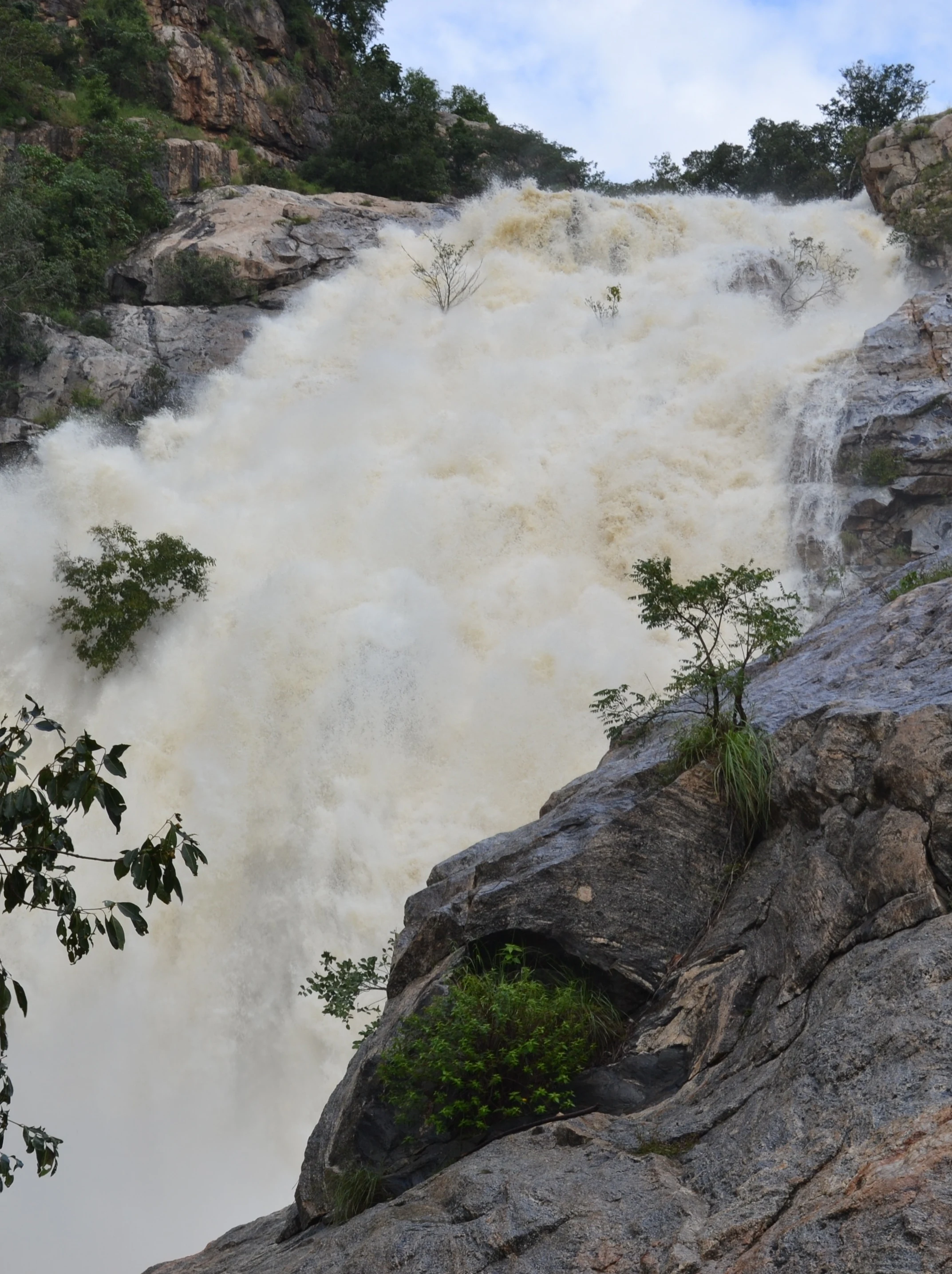
A close view of a large, powerful waterfall cascading over rugged rocky cliffs, surrounded by patches of vegetation.
The powerful flow of the Kalyan Revu waterfall located within Koundinya Wildlife Sanctuary.

Koundinya Wildlife Sanctuary history and protected-area timeline

The history of Koundinya Wildlife Sanctuary is inseparable from the story of elephants returning to Andhra Pradesh after an absence of roughly two centuries. The region had no resident elephants for generations, until the early 1980s, when growing pressure on habitats in neighboring states pushed elephants to seek new homes.

Between 1983 and 1986, a sizable group of elephants began a long migration from the forests of Anekal-Hosur in Tamil Nadu and Bannerghatta in Karnataka. Of these, thirty-nine elephants moved into Andhra Pradesh, crossing into a landscape where elephants had not been recorded for around 200 years. Their arrival was significant enough that the state government decided to formalize protection for the area, establishing Koundinya Wildlife Sanctuary in December 1990 under the Andhra Pradesh Forest Department.

Since then, the sanctuary has functioned as Andhra Pradesh's dedicated elephant reserve under India's Project Elephant initiative. The population has grown over the decades, with reports indicating around 72 to 78 elephants in residence in later years. More recently, conservation planning has focused on linking Koundinya with Sri Venkateswara National Park through a proposed wildlife corridor, aiming to strengthen the regional elephant landscape and reduce conflict-driven mortality on both sides.

Koundinya Wildlife Sanctuary landscape and geographic character

Koundinya's landscape is defined by its position on the eastern fringe of the Kolar Plateau, where elevated rocky terrain gives way to a series of ridges, valleys, and ghats dropping toward the plains of Tamil Nadu. This transition produces a rugged topography of high hills interspersed with deep valleys, valleys that channel seasonal rainfall into small streams and tanks scattered across the sanctuary.

Water shapes the sanctuary's character even in an otherwise dry setting. Two tributaries of the Palar River, the Kaindinya and the Kaigal, run through the reserve, supplying key seasonal water sources for wildlife. These waterways also create some of the sanctuary's most recognizable scenic features, including the Kalyana Revu (Kalyan Drive) Waterfalls to the north of Palamaner and the more remote Kaigal Waterfalls to the west. Together with small ponds and tanks, these streams give the dry forest a mosaic of microhabitats that support wildlife movement and seasonal congregation.

The overall terrain is best described as a mix of dry deciduous woodland, thorn scrub, and exposed rocky slopes, with bamboo patches and isolated stands of trees like Acacia and Albizia amara breaking up the canopy. The combination of high relief, erosion-shaped valleys, and forested plateaus creates the visually layered, semi-arid landscape that defines Koundinya today.

Koundinya Wildlife Sanctuary ecosystems, habitats, and plant life

Koundinya sits within the South Deccan Plateau dry deciduous forests ecoregion, an ecological zone shaped by long dry seasons, monsoon-driven greenery, and strong adaptations to drought and grazing pressure. The sanctuary's vegetation reflects this typical dry tropical composition, with a base of thorny scrub and dry deciduous trees interspersed with bamboo thickets and more moisture-loving pockets along streams.

Notable flora includes Albizia amara, various Acacia species, Lagerstroemia, Ficus, bamboo, and a regenerating population of Santalum album, the Indian sandalwood. This mix gives the sanctuary a layered vegetation structure that ranges from sparse, spiny shrubland on drier slopes to denser woodland along watercourses. Pockets of bamboo and fig trees provide important food resources for both elephants and other wildlife, while sandalwood regeneration indicates ongoing recovery of valuable native tree species.

Beyond the dominant dry forest character, Koundinya's nature also includes its watershed elements, the small tanks, ponds, and tributaries that sustain wildlife through dry periods. These wet microhabitats are crucial for elephants, herbivores, and birds, and they reinforce the sanctuary's role as a dryland refugium within a heavily modified agricultural landscape.

Koundinya Wildlife Sanctuary wildlife and species highlights

Wildlife in Koundinya is anchored by its population of Asian elephants, the species that gave the sanctuary its identity and continues to drive its conservation priorities. The reserve is home to roughly 72 to 78 Indian elephants, organized into family groups and bull herds that move across the sanctuary's valleys and forested ranges.

Alongside elephants, the sanctuary supports a typical dryland mammal community. Sloth bears move through the more rugged, rocky habitats, while leopards (referred to locally as panthers) occupy higher, forested terrain as apex predators. Several deer species are present, including chital (spotted deer), sambar, and the smaller four-horned antelope known as chowsingha. Other mammals recorded in the reserve include wild boar, porcupines, jungle cats, jackals, and slender lorises, an uncommon and ecologically valuable nocturnal primate. Reptiles such as the Indian star tortoise also occur within the sanctuary.

Birdlife at Koundinya includes widespread Indian dry-forest species and at least one important conservation target: the vulnerable yellow-throated bulbul, whose presence underscores the sanctuary's role in protecting regionally significant woodland birds. Jungle fowl further attest to the habitat quality of the reserve's understory and edge habitats. The overall wildlife profile emphasizes dry tropical species adapted to seasonal aridity and the mosaic of forest, scrub, and valley habitats that Koundinya provides.

Koundinya Wildlife Sanctuary conservation status and protection priorities

Koundinya Wildlife Sanctuary holds clear conservation significance as the only formally protected elephant habitat in Andhra Pradesh and as a representative stretch of South Deccan dry deciduous forest in an otherwise heavily cultivated landscape. Its establishment in 1990, directly in response to elephants migrating into the region, represents a notable example of conservation policy adapting to a natural recolonization event.

The sanctuary operates as an IUCN Category IV protected area (habitat/species management area) and is part of India's Project Elephant framework, which provides national policy support for managing elephant ranges and conflicts. Conservation management is overseen by the Andhra Pradesh Forest Department, with attention to maintaining dry forest cover, protecting water sources, and regulating grazing pressure.

The reserve also faces well-documented threats that shape its conservation agenda. Human-elephant conflict is a persistent challenge, driven by the attraction of elephants to nearby crops such as sugarcane, sorghum, and ragi. Overgrazing by livestock reduces natural fodder within the forest, pushing elephants into farmland and increasing conflict incidents, including historical fatalities on both sides and elephant electrocutions. Illegal wood collection adds further pressure. In response, planners are working on a wildlife corridor between Koundinya and Sri Venkateswara National Park, an effort intended to reconnect fragmented habitats, expand the effective range available to elephants, and reduce human-elephant encounters in the long term.

Koundinya Wildlife Sanctuary cultural meaning and human context

The Koundinya region lies within the broader cultural landscape of southern Andhra Pradesh, bordering Tamil Nadu, where traditional agriculture, pastoralism, and forest use have long shaped local livelihoods. Communities around the sanctuary depend on crops such as sugarcane, sorghum, and ragi, and livestock grazing, activities that have historically intersected with forest habitats and shaped patterns of human-wildlife interaction.

The sanctuary's creation reflects a broader regional recognition that elephants, after their long absence, have become a permanent ecological and cultural presence, requiring both formal protection and coexistence strategies with neighbouring villages. The waterfalls within the reserve, including Kalyana Revu and Kaigal, are also part of the local natural heritage, drawing visitors and adding to the area's identity as a scenic, forest-edged landscape within reach of towns like Palamaner and Chittoor.

Top sights and standout views in Koundinya Wildlife Sanctuary

Koundinya's strongest point of distinction is its role as the only elephant reserve in Andhra Pradesh, a status rooted in the remarkable, two-century return of elephants to the region. The sanctuary's dry deciduous forests, rugged plateau-edge topography, and seasonal waterfalls combine to create a landscape that is ecologically rich yet visually distinct from typical moist forest reserves.

Best time to visit Koundinya Wildlife Sanctuary

The most comfortable period to experience Koundinya's landscape tends to fall during and shortly after the southwest monsoon, when the dry deciduous vegetation greens up, waterfalls such as Kalyana Revu and Kaigal are at their most active, and wildlife viewing around water sources improves. The cooler winter months that follow the monsoon also offer milder temperatures for exploring the valleys and trails of the sanctuary.

By contrast, the peak summer months can be very hot and dry, making sightings of large mammals more unpredictable and conditions for outdoor exploration harsher. As with any dry tropical wildlife area, visiting around water sources and during cooler parts of the day generally improves the chance of meaningful wildlife encounters.
Monthly climate preview

Long term temperature ranges and precipitation rhythm across the coordinate profile

Koundinya Wildlife Sanctuary Climate Normals and Monthly Weather Patterns

Representative measurements from 1991 to 2020 document monthly average temperatures spanning from 20.77 degrees Celsius to 29.57 degrees Celsius alongside shifting daily precipitation rates. Examining the full twelve month sequence reveals comprehensive climate norms, average minimum and maximum thresholds, and detailed seasonal weather variations across the protected terrain.
Annual mean25 °C
21 °C30 °C
Jan21°
Feb24°
Mar27°
Apr30°
May30°
Jun27°
Jul26°
Aug26°
Sep25°
Oct24°
Nov22°
Dec21°
Warmest month
May

29.6 °C

Coolest month
December

20.8 °C

Wettest month
September

5.1 mm/day

Driest month
January

0.2 mm/day

Park location guide

Geography guide, regional context, and park location map for Koundinya Wildlife Sanctuary

Koundinya Wildlife Sanctuary park geography, regions, and map view in India

Understand where Koundinya Wildlife Sanctuary sits in India through a broader geographic reading of the surrounding landscape, nearby location context, and its mapped position within the national park landscape.

How Koundinya Wildlife Sanctuary fits into India

India is a South Asian country bordered by the Indian Ocean, Arabian Sea, and Bay of Bengal. It shares land borders with Pakistan, China, Nepal, Bhutan, Bangladesh, and Myanmar. The country has a population of over 1.4 billion people and operates as a federal parliamentary republic with its capital in New Delhi.

Wider geography shaping Koundinya Wildlife Sanctuary in India

India occupies the Indian subcontinent in South Asia, bordered by the Arabian Sea to the southwest, the Bay of Bengal to the southeast, and the Indian Ocean to the south. It shares land borders with Pakistan to the west, China, Nepal, and Bhutan to the north, and Bangladesh and Myanmar to the east. The territory also includes the Andaman and Nicobar Islands in the Indian Ocean.

Map view of Koundinya Wildlife Sanctuary

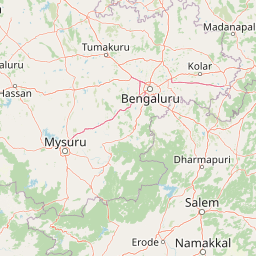
Use this park location map to pinpoint Koundinya Wildlife Sanctuary in India, understand its exact geographic position, and read its mapped placement within the surrounding landscape more clearly.

Pigeon | © OpenStreetMap contributors

Location context for Koundinya Wildlife Sanctuary

Andhra Pradesh

Explore visual records of dry deciduous forests, rocky valleys, and elephant habitats.

Koundinya Wildlife Sanctuary Photos, Scenery, and Protected Landscapes

Photographic collections reveal the rugged terrain and dryland habitats that define Koundinya Wildlife Sanctuary across the southern Deccan landscape. Visual reference materials help observers examine the plateau edge, seasonal waterfalls, and protected environments more closely.

A close view of a large, powerful waterfall cascading over rugged rocky cliffs, surrounded by patches of vegetation.

Park atlas

Compare adjacent southern Deccan dryland reserves and connected regional habitats

Exploring Parks Near Koundinya Wildlife Sanctuary And Surrounding Protected Areas

Browsing other protected areas near Koundinya Wildlife Sanctuary reveals broader ecological patterns across the southern Deccan plateau and surrounding hills. Examining adjacent dry deciduous forests and regional wildlife reserves provides valuable context for understanding local elephant habitats and regional topography.
National parkAndhra Pradesh
About 110 km away#1 closest

Northeast

Sri Venkateswara National Park: Andhra Pradesh National Park Protected Landscape Atlas

Mapped protected area, regional geography, and natural terrain.

Uncover the core geographic identity of Sri Venkateswara National Park, a designated national park within Andhra Pradesh. This resource delves into its protected landscape features, providing a mapped perspective on its boundaries and natural terrain. It serves as a crucial point for understanding the park's regional context and its significance as a mapped natural area for atlas-based exploration.

Area
353 km²
Established
1989
IUCN
II
Relief
Mountain
Watercolor illustration showing mountains, a winding river, and green vegetation
National parkKarnataka
About 119 km away#2 closest

West

Bannerghatta National Park: A National Park in Karnataka with Mapped Geographic Identity

Explore the protected landscape and regional terrain context.

Bannerghatta National Park is an important protected area within the state of Karnataka, India. Its designation as a national park signifies its role in preserving regional natural landscapes and providing valuable geographic context for atlas exploration. Users can examine its mapped boundaries and understand its placement within the diverse terrain characteristic of South India and the Western Ghats, contributing to a structured understanding of protected lands.

Area
260.51 km²
Established
1974
IUCN
II
Relief
Mountain
Wildlife reserveAndhra Pradesh
About 140 km away#3 closest

Northeast

Sri Penusila Narasimha Wildlife Sanctuary: Geographic Atlas and Protected Area Context

Protected dry evergreen forests of the Eastern Ghats transition zone.

Sri Penusila Narasimha Wildlife Sanctuary stands as a key protected area in Andhra Pradesh, known for its rare dry evergreen forest formation and status as a habitat for tigers, leopards, and the critically endangered Jerdon's courser. The sanctuary's undulating terrain of hills and valleys forms a complex mosaic of sheltered basins that provide essential refuge for both large mammals and endemic ground birds across the Eastern Ghats.

Area
1,030.85 km²
IUCN
IV
Relief
Mountain
Scope
Terrestrial
Wildlife reserveTirupati district
About 166 km away#4 closest

Northeast

Nelapattu Bird Sanctuary: Wetland Geography and Wildlife Reserve in Tirupati District

Mapping the freshwater swamp forest and scrub landscapes of Andhra Pradesh.

Nelapattu Bird Sanctuary serves as a crucial protected area in Tirupati district, featuring an 83 hectare reservoir tank fringed by productive Barringtonia swamp forest. This reserve integrates dry upland ridges with aquatic lowland terrain to support significant breeding colonies and migratory bird life within the Deccan region.

Area
4.59 km²
Established
1976
IUCN
IV
Relief
Lowland
National parkTamil Nadu
About 172 km away#5 closest

East

Guindy National Park: Exploring its Protected Area Identity and Geographic Setting in Tamil Nadu

National park terrain and mapped boundaries for regional context.

Guindy National Park represents a significant protected natural landscape within Tamil Nadu, India. This entry provides detailed geographic context, focusing on the park's mapped boundaries and its identity as a national park. Users can delve into the regional landscape, understanding how Guindy National Park contributes to the atlas of protected areas in South India and appreciating its specific natural terrain.

Area
2.706 km²
Established
1977
IUCN
II
Visitors
700K annual
Watercolor illustration showing a landscape with rolling green hills, pale mountains in the background, and clusters of trees in soft shades of green and pink on the sides.
Wildlife reserveAndhra Pradesh
About 176 km away#6 closest

North

Sri Lankamalleswara Wildlife Sanctuary: Protected Geography and Forest Landscapes

A critical dry forest refuge in Andhra Pradesh, India

Located in the Eastern Ghats, Sri Lankamalleswara Wildlife Sanctuary provides a critical sanctuary for the rare Jerdon's courser. The landscape features deep gorges, rocky outcrops, and dry deciduous thorn forests that remain essential for maintaining the ecological integrity of Andhra Pradesh. This protected area represents one of the most distinctive dry-forest systems in the southern part of India.

Area
464.42 km²
IUCN
IV
Relief
Upland
Access
Access unknown
Wildlife reserveAndhra Pradesh
About 179 km away#7 closest

East

Pulicat Lake Bird Sanctuary: Coastal Wetland and Wildlife Reserve in Andhra Pradesh

Mapped landscapes and protected brackish water habitats

Explore the expansive Pulicat Lake Bird Sanctuary, an essential coastal wetland ecosystem in Andhra Pradesh. This wildlife reserve features a vast brackish lagoon, mudflats, and salt-tolerant vegetation, serving as a primary refuge for migratory waterbirds along the southeastern coast of India.

Area
759 km²
Established
1976
IUCN
IV
Relief
Lowland
National parkAndhra Pradesh
About 189 km away#8 closest

North

Rajiv Gandhi National Park (Rameswaram) National Park: Exploring Andhra Pradesh's Protected Landscapes

Mapped geography and protected area context for Rajiv Gandhi National Park (Rameswaram).

Delve into the geographic identity of Rajiv Gandhi National Park (Rameswaram), a key protected area within Andhra Pradesh. This detail page serves as an atlas anchor for understanding the park's landscape, mapped features, and its significance as a national park. Users can explore its protected boundaries and appreciate its role within the regional geography of Andhra Pradesh.

Area
2.4 km²
Established
2005
IUCN
II
Relief
Lowland

Common questions about visiting, size, designation, and location context for Koundinya Wildlife Sanctuary

Koundinya Wildlife Sanctuary FAQs for park facts, access, geography, and protected area context

Find quick answers about Koundinya Wildlife Sanctuary, including protected-area facts, park geography, trail and visitor context, and how the park fits into its surrounding country and regional landscape.
MoriAtlas Explorer

Continue Your Protected Areas Search Across the Global Atlas

Deepen your exploration by continuing the structured search for national parks and protected areas worldwide. Utilize the comprehensive filtering capabilities to compare different conservation landscapes and refine your understanding of global park geography. Discover more about the distribution and characteristics of protected natural areas.

Global natural geography