
Mori Atlas logo
Wildlife reserveKrishna Wildlife Sanctuary

Explore the geographic boundaries and tidal landscape of this vital coastal reserve

Krishna Wildlife Sanctuary: Mapping the Mangrove Forests of the Krishna River Delta

Krishna Wildlife Sanctuary serves as a crucial protected estuarine landscape within the Krishna River delta of Andhra Pradesh. The sanctuary preserves primary mangrove forests and tidal waterways that define the coastal terrain where the river meets the Bay of Bengal. This atlas entry provides insight into the mosaic of deltaic islands, reserve forest patches, and the complex saline conditions that shape this rare southern Indian ecosystem.

mangrovesestuarine ecosystemcoastal wetlandriver deltabirdwatchingreptiles

Krishna Wildlife Sanctuary

Wildlife reserve

Park overview

Structured park overview, official facts, and landscape profile for Krishna Wildlife Sanctuary

Krishna Wildlife Sanctuary park facts, protected area profile, and essential visitor context

Review the core facts for Krishna Wildlife Sanctuary, including designation, size, terrain, visitor scale, habitats, and operating context in one park-focused overview.

About Krishna Wildlife Sanctuary

Krishna Wildlife Sanctuary is a mangrove-dominated protected area situated along the eastern coast of India, in the state of Andhra Pradesh. It is part of the broader mangrove wetland system associated with the Krishna River delta, a region shaped by the slow accumulation of sediment where the river meets the Bay of Bengal. The sanctuary represents one of the most ecologically distinctive protected landscapes in South India, defined less by elevation or dramatic scenery and more by the quiet complexity of its tidal ecosystems.

The protected area extends across the coastal plains of Krishna and Guntur districts, encompassing a chain of reserve forests that include Sorlagondi, Nachugunta, Yelichetladibba, Kottapalem, Molagunta, Adavuladivi, and Lankivanidibba. These forests occupy deltaic islands as well as adjacent mainland areas, creating a fragmented but ecologically interconnected landscape. A separate, unconnected section of mangrove lies near Machilipatnam on the eastern side of the park and extends toward Nakshatranagar in the west, indicating the broader ecological footprint of mangrove habitat in this part of Andhra Pradesh.

What makes Krishna Wildlife Sanctuary particularly significant is the maturity and intactness of its mangrove cover. Conservationists frequently describe the area as one of the last remaining tracts of thick primary mangrove forest in South India, a habitat class that has been extensively altered or lost elsewhere along the Indian coastline. Because mangroves provide critical functions, including shoreline stabilization, nursery grounds for marine life, and refuges for coastal wildlife, the sanctuary plays a disproportionately important role in regional ecological health. Its protected status, administered by the Andhra Pradesh Forest Department, reflects recognition of these values.

Beyond its mangroves, the sanctuary supports a mix of coastal vegetation, inland scrub, and woodland patches, providing varied habitat conditions across a relatively compact area. As an estuarine protected landscape, Krishna Wildlife Sanctuary occupies a niche distinct from inland forests or hill national parks, making it a meaningful representative of India's coastal and mangrove ecosystems in any broader inventory of protected natural areas.

Quick facts and research context for Krishna Wildlife Sanctuary

Krishna Wildlife Sanctuary is classified as an IUCN Category IV protected area, reflecting its role as a habitat and species management area. It lies in Andhra Pradesh, India, on the coastal plain of the Krishna River delta, spread across parts of Krishna and Guntur districts. The nearest major city is Machilipatnam.

The sanctuary covers roughly 194.81 square kilometers and encompasses multiple reserve forests, including Sorlagondi, Nachugunta, Yelichetladibba, Kottapalem, Molagunta, Adavuladivi, and Lankivanidibba. It is governed by the Andhra Pradesh Forest Department and is recognized for preserving one of the most intact mangrove ecosystems in southern India.

Protection and recognition

Documented terrestrial protection framework and designation records

Krishna Wildlife Sanctuary Protection Status and Management Scope

Krishna Wildlife Sanctuary maintains a defined terrestrial protection status within the regional conservation network. Documented management parameters and territorial boundaries outline the administrative framework governing this protected area.

Protection details

Protection scope
Terrestrial
Transboundary protection
No
Park context

Deeper park guide and search-rich context for Krishna Wildlife Sanctuary

Krishna Wildlife Sanctuary history, landscape, wildlife, and travel context

Explore Krishna Wildlife Sanctuary through its history, landscape character, ecosystems, wildlife, conservation priorities, cultural context, and seasonal travel timing in a structured park guide built for atlas discovery and search intent.

Why Krishna Wildlife Sanctuary stands out

Krishna Wildlife Sanctuary is best known for its extensive and largely intact mangrove forests, which are considered among the last thick primary mangrove tracts of South India. The sanctuary's estuarine setting within the Krishna River delta creates a unique interface of freshwater, brackish, and marine conditions that support a distinctive mangrove ecosystem. The protected area is also valued for its assemblage of reserve forest patches spread across deltaic islands and adjacent mainland, creating a mosaic of mangrove, scrub, and coastal woodland habitats. This combination of habitat diversity, tidal influence, and relatively undisturbed primary mangrove cover is what sets Krishna Wildlife Sanctuary apart from other protected areas in the region.
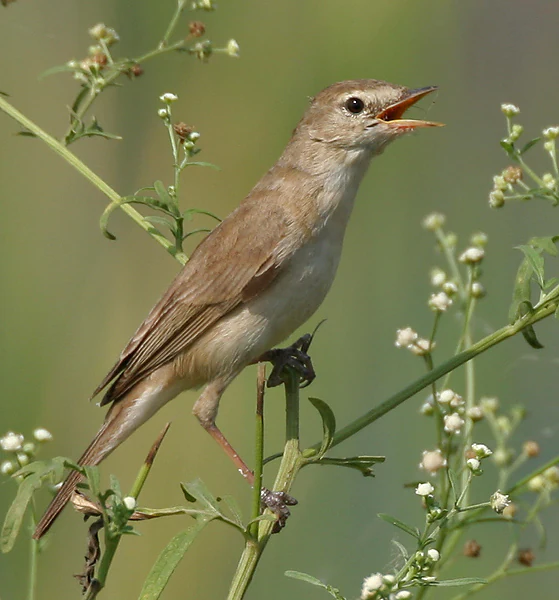
A small light brown bird with a pale belly, identified as a Sykes's Warbler, perching on a thin green stalk with small white flowers.
A Sykes's Warbler perched on a plant in Krishna Wildlife Sanctuary.

Krishna Wildlife Sanctuary landscape and geographic character

The landscape of Krishna Wildlife Sanctuary is shaped almost entirely by its coastal and estuarine setting along the Krishna River delta. The terrain consists of flat coastal plains interrupted by tidal channels, river distributaries, and low-lying deltaic islands formed by long-term sediment deposition at the mouth of the Krishna River.

Rather than dramatic topography, the scenery is defined by dense stands of mangrove trees, interlacing waterways, and a mosaic of reserve forests spread across both islands and adjacent mainland. The unconnected mangrove fragments near Machilipatnam and Nakshatranagar highlight how the broader landscape of mangrove and coastal vegetation extends well beyond the formal sanctuary boundary. Tidal influence, salinity gradients, and seasonal flooding from the river system all play major roles in shaping the visible character of this protected area.
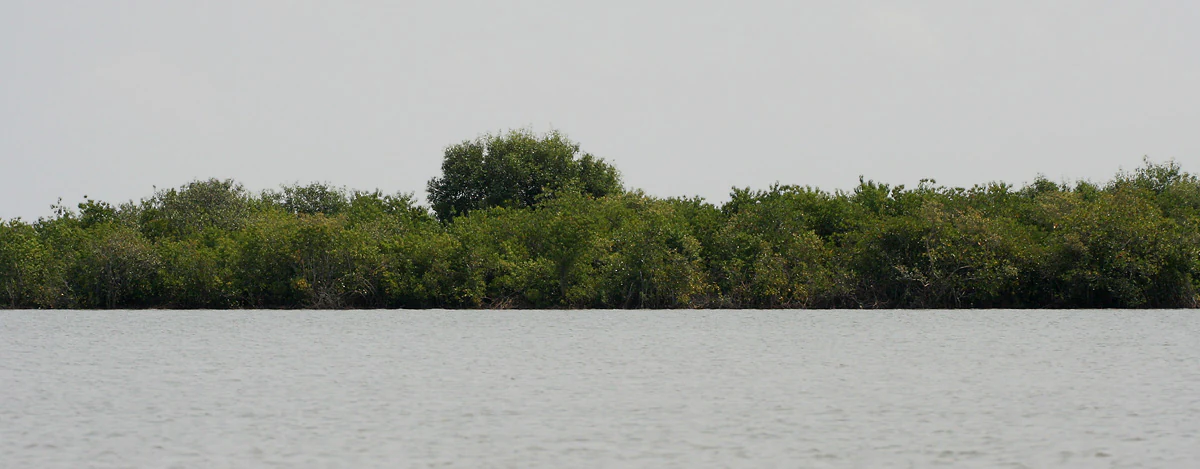
A wide view of a dense line of green mangrove trees bordering a calm, grey river under an overcast sky.
Mangrove forest ecosystem along the waterfront in Krishna Wildlife Sanctuary.

Krishna Wildlife Sanctuary ecosystems, habitats, and plant life

Ecologically, Krishna Wildlife Sanctuary is defined by its mangrove wetlands, one of the rarer and more threatened habitat types in South India. The mangroves form the backbone of the sanctuary's biodiversity, creating conditions that support a specialized community of plants and animals adapted to saline, anaerobic, and tidally influenced environments.

Alongside the mangroves, the sanctuary includes patches of coastal woodland, scrub, and mixed tree cover where species such as Casuarina, Pongamia, Calotropis, Thespesia, banyan, peepul, palmyra, and mango occur. Sandy coastal vegetation, including Ipomoea and Spinifex species, helps stabilize shorelines within the sanctuary. Together, these vegetation types form a layered ecosystem in which mangrove, scrub, and terrestrial forest habitats interact through the delta's hydrology, giving the sanctuary a distinctive ecological signature not shared by inland protected areas in Andhra Pradesh.

Krishna Wildlife Sanctuary wildlife and species highlights

Wildlife in Krishna Wildlife Sanctuary reflects the estuarine and coastal nature of the protected area. The mangroves and surrounding habitat support reptiles such as the saltwater crocodile and a notable diversity of snakes, including the Indian python, common cobra, Russell's viper, saw-scaled viper, king cobra, common krait, and several species of wolf snakes, keelbacks, and sand snakes. Amphibians and aquatic mammals like otters are also part of the sanctuary's fauna.

Among mammals, herbivores such as spotted deer, sambar, and blackbuck occur within and around the sanctuary, alongside smaller predators and adaptable species including jungle cat, fox, and bear. Fishing cats have been recorded in the surrounding landscape, highlighting the importance of wetland and mangrove edges for carnivores tied to aquatic prey.

The sanctuary is also notable for its birdlife, which includes species such as the crested serpent eagle, Indian roller, various wagtails and pipits, and migratory species like Sykes's warbler. The combination of mangrove, tidal mudflats, and adjacent dry woodland gives the area strong value for both resident and seasonal bird populations, reinforcing its importance as a coastal wildlife refuge.

Krishna Wildlife Sanctuary conservation status and protection priorities

Krishna Wildlife Sanctuary holds significant conservation value because it protects one of the last large, relatively undisturbed tracts of primary mangrove forest in South India. Mangroves are among the most threatened coastal ecosystems globally, and their rapid disappearance elsewhere in the region makes the sanctuary's intact stands particularly important for habitat preservation at a broader biogeographic scale.

The protected area's mangrove forests contribute to shoreline stabilization, reduce coastal erosion, and serve as nursery grounds for commercially and ecologically important marine species. Its estuarine position along the Krishna River delta amplifies these functions by linking freshwater, brackish, and marine ecosystems. The sanctuary's classification as an IUCN Category IV area reflects this management focus on habitat and species conservation, and oversight by the Andhra Pradesh Forest Department underscores its institutional importance.

The presence of species such as the fishing cat in surrounding wetlands and the detection of a wide snake fauna further indicate that the sanctuary functions as a meaningful refuge for species sensitive to habitat disturbance. In this way, Krishna Wildlife Sanctuary represents not only a local protected area but also a regionally significant reservoir of mangrove biodiversity in an increasingly altered coastal landscape.

Top sights and standout views in Krishna Wildlife Sanctuary

A standout feature of Krishna Wildlife Sanctuary is the sheer extent and maturity of its mangrove cover, which conservationists consider rare at both regional and global scales. The sanctuary's location in the Krishna River delta adds ecological depth, as riverine, estuarine, and marine influences converge to support a uniquely layered habitat mosaic.

Another highlight is the sanctuary's strong reptile and birdlife presence, supported by the dense mangroves and adjacent coastal vegetation. From king cobra and saltwater crocodile to migratory warblers and resident raptors like the crested serpent eagle, the area offers a wildlife profile distinct from inland parks. Combined with its protected status and connectivity to multiple reserve forests, Krishna Wildlife Sanctuary stands as one of the most important coastal protected areas in Andhra Pradesh.

Best time to visit Krishna Wildlife Sanctuary

The most rewarding time to experience Krishna Wildlife Sanctuary is during the cooler and drier months, roughly from late autumn through winter, when weather conditions are more comfortable and migratory birdlife augments the resident species. During this period, birdwatching opportunities are typically richer, and wildlife is more visible away from the harsher heat of the peak summer months.

Mangrove and estuarine habitats, however, retain their character throughout the year, and the monsoon season transforms the deltaic landscape with increased freshwater flow, higher tidal activity, and lush vegetation. Visitors interested in seeing the mangroves at their most dynamic may find the post-monsoon period especially compelling, while those focused on comfortable exploration and bird diversity often prefer the winter months.


Monthly climate preview

Long-term representative monthly averages and temperature rhythms across the landscape

Krishna Wildlife Sanctuary Climate Normals, Annual Temperature and Precipitation

Krishna Wildlife Sanctuary records measured long-term temperatures and precipitation levels across representative coordinates from nineteen ninety-one to twenty twenty. Examining the complete monthly climate normals reveals detailed seasonal shifts in average temperature and rainfall patterns.
Annual mean28 °C
25 °C31 °C
Jan25°
Feb26°
Mar28°
Apr30°
May31°
Jun30°
Jul29°
Aug28°
Sep28°
Oct28°
Nov27°
Dec25°
Warmest month
May

31 °C

Coolest month
January

24.8 °C

Wettest month
October

7.8 mm/day

Driest month
March

0.2 mm/day

Park location guide

Geography guide, regional context, and park location map for Krishna Wildlife Sanctuary

Krishna Wildlife Sanctuary park geography, regions, and map view in India

Understand where Krishna Wildlife Sanctuary sits in India through a broader geographic reading of the surrounding landscape, nearby location context, and its mapped position within the national park landscape.

How Krishna Wildlife Sanctuary fits into India

India is a South Asian country bordered by the Indian Ocean, Arabian Sea, and Bay of Bengal. It shares land borders with Pakistan, China, Nepal, Bhutan, Bangladesh, and Myanmar. The country has a population of over 1.4 billion people and operates as a federal parliamentary republic with its capital in New Delhi.

Wider geography shaping Krishna Wildlife Sanctuary in India

India occupies the Indian subcontinent in South Asia, bordered by the Arabian Sea to the southwest, the Bay of Bengal to the southeast, and the Indian Ocean to the south. It shares land borders with Pakistan to the west, China, Nepal, and Bhutan to the north, and Bangladesh and Myanmar to the east. The territory also includes the Andaman and Nicobar Islands in the Indian Ocean.

Map view of Krishna Wildlife Sanctuary

Use this park location map to pinpoint Krishna Wildlife Sanctuary in India, understand its exact geographic position, and read its mapped placement within the surrounding landscape more clearly.

Pigeon | © OpenStreetMap contributors

Location context for Krishna Wildlife Sanctuary

Andhra Pradesh

Explore the unique terrain, tidal channels, and primary mangrove habitats defining this protected estuarine landscape.

Krishna Wildlife Sanctuary Photos and Scenery: Visualizing the Coastal Delta and Mangrove Forests

Visual documentation reveals the dense mangrove forests and intricate tidal channels that characterize the Krishna River delta. Examining these protected area views helps researchers understand the rare estuarine habitats and coastal geography shaping the region.

A small light brown bird with a pale belly, identified as a Sykes's Warbler, perching on a thin green stalk with small white flowers.

A wide view of a dense line of green mangrove trees bordering a calm, grey river under an overcast sky.

Park atlas

Compare adjacent wetland habitats and protected landscapes across the delta region

Explore Parks Near Krishna Wildlife Sanctuary and Surrounding Coastal Reserves

Continue geographic exploration by comparing Krishna Wildlife Sanctuary with other protected estuarine habitats and coastal reserves throughout the surrounding region. Analyzing adjacent delta landscapes reveals broader patterns of tidal ecology and regional biodiversity.
Wildlife reserveAndhra Pradesh
About 97 km away#1 closest

North

Kolleru Bird Sanctuary Wildlife Reserve: Protected Wetland and Basin Geography Atlas

Mapped freshwater wetlands in Andhra Pradesh

Kolleru Bird Sanctuary represents an essential protected freshwater basin situated in the deltaic plains of Andhra Pradesh. The area supports a dynamic habitat of open water and reedbed environments that transition through the seasons. This record provides a clear geographic view of the sanctuary, highlighting its role as a key Ramsar-recognized wetland within the regional landscape context.

Area
673 km²
Established
1999
IUCN
IV
Relief
Lowland
A soft watercolor illustration of a river winding through green mangrove vegetation with distant hills under a light, hazy sky.
Wildlife reserveAndhra Pradesh
About 189 km away#2 closest

Northeast

Coringa Wildlife Sanctuary: Mapping Protected Mangrove Wetlands in Andhra Pradesh

Coastal delta geography and estuarine tidal landscape exploration

Coringa Wildlife Sanctuary represents one of the largest continuous stretches of mangrove forests in India. This protected area along the Godavari Estuary offers a rich study in coastal geography, where complex tidal channels, backwater systems, and deltaic landforms create a unique, sediment-rich wetland environment essential for local avian and aquatic life.

Area
235.7 km²
Established
1978
IUCN
IV
Relief
Lowland
National parkAndhra Pradesh
About 198 km away#3 closest

North

Papikonda National Park: Andhra Pradesh National Park Protected Landscape and Map Exploration

Mapped protected area boundaries and regional geography context.

Papikonda National Park is a designated national park in Andhra Pradesh, India, serving as a crucial component of regional protected landscapes. This entry provides detailed information on its mapped boundaries and geographic positioning, essential for atlas-based exploration and understanding its natural terrain. Users can explore the specific context of Papikonda National Park within the broader geography of Andhra Pradesh through its structured park data.

Area
1,012.86 km²
Established
1978
IUCN
II
Relief
Upland
Wildlife reserveAndhra Pradesh
About 236 km away#4 closest

West

Gundla Brahmeswaram Wildlife Sanctuary: Mapped Geography and Protected Forest Landscapes

A vital plateau sanctuary within the Andhra Pradesh Eastern Ghats

Positioned across the rugged Nallamala Forest, this sanctuary protects a diverse array of dry deciduous woodlands and riparian corridors along the Gundlakamma River. As a key segment of the broader regional tiger habitat, the sanctuary provides essential biodiversity protection through its varied hill-pass topography and isolated plateau environment.

Area
1,194 km²
Established
1990
IUCN
IV
Relief
Mountain
Wildlife reserveTirupati district
About 239 km away#5 closest

Southwest

Nelapattu Bird Sanctuary: Wetland Geography and Wildlife Reserve in Tirupati District

Mapping the freshwater swamp forest and scrub landscapes of Andhra Pradesh.

Nelapattu Bird Sanctuary serves as a crucial protected area in Tirupati district, featuring an 83 hectare reservoir tank fringed by productive Barringtonia swamp forest. This reserve integrates dry upland ridges with aquatic lowland terrain to support significant breeding colonies and migratory bird life within the Deccan region.

Area
4.59 km²
Established
1976
IUCN
IV
Relief
Lowland
Wildlife reserveAndhra Pradesh
About 252 km away#6 closest

Southwest

Sri Penusila Narasimha Wildlife Sanctuary: Geographic Atlas and Protected Area Context

Protected dry evergreen forests of the Eastern Ghats transition zone.

Sri Penusila Narasimha Wildlife Sanctuary stands as a key protected area in Andhra Pradesh, known for its rare dry evergreen forest formation and status as a habitat for tigers, leopards, and the critically endangered Jerdon's courser. The sanctuary's undulating terrain of hills and valleys forms a complex mosaic of sheltered basins that provide essential refuge for both large mammals and endemic ground birds across the Eastern Ghats.

Area
1,030.85 km²
IUCN
IV
Relief
Mountain
Scope
Terrestrial
Watercolor illustration showing a landscape with rolling green hills, pale mountains in the background, and clusters of trees in soft shades of green and pink on the sides.
Wildlife reserveAndhra Pradesh
About 257 km away#7 closest

Southwest

Sri Lankamalleswara Wildlife Sanctuary: Protected Geography and Forest Landscapes

A critical dry forest refuge in Andhra Pradesh, India

Located in the Eastern Ghats, Sri Lankamalleswara Wildlife Sanctuary provides a critical sanctuary for the rare Jerdon's courser. The landscape features deep gorges, rocky outcrops, and dry deciduous thorn forests that remain essential for maintaining the ecological integrity of Andhra Pradesh. This protected area represents one of the most distinctive dry-forest systems in the southern part of India.

Area
464.42 km²
IUCN
IV
Relief
Upland
Access
Access unknown
Wildlife reserveAndhra Pradesh
About 257 km away#8 closest

South

Pulicat Lake Bird Sanctuary: Coastal Wetland and Wildlife Reserve in Andhra Pradesh

Mapped landscapes and protected brackish water habitats

Explore the expansive Pulicat Lake Bird Sanctuary, an essential coastal wetland ecosystem in Andhra Pradesh. This wildlife reserve features a vast brackish lagoon, mudflats, and salt-tolerant vegetation, serving as a primary refuge for migratory waterbirds along the southeastern coast of India.

Area
759 km²
Established
1976
IUCN
IV
Relief
Lowland

Common questions about visiting, size, designation, and location context for Krishna Wildlife Sanctuary

Krishna Wildlife Sanctuary FAQs for park facts, access, geography, and protected area context

Find quick answers about Krishna Wildlife Sanctuary, including protected-area facts, park geography, trail and visitor context, and how the park fits into its surrounding country and regional landscape.
MoriAtlas Explorer

Continue Your Protected Areas Search Across the Global Atlas

Deepen your exploration by continuing the structured search for national parks and protected areas worldwide. Utilize the comprehensive filtering capabilities to compare different conservation landscapes and refine your understanding of global park geography. Discover more about the distribution and characteristics of protected natural areas.

Global natural geography