
Mori Atlas logo
National parkLlanganates National Park

Discover the mapped boundaries and regional landscape context of this Ecuadorian national park.

Llanganates National Park: Protected Landscape and Geographic Atlas Entry in Ecuador

Llanganates National Park stands as a key protected area within Ecuador, offering a unique lens through which to explore its natural landscape and geographic features. As a national park, it represents a significant component of the country's conservation efforts. This page serves as an atlas entry, detailing the park's spatial presence and contributing to a broader understanding of Ecuador's diverse protected lands and mapped terrain.

Páramo EcosystemsAndean MountainsCloud ForestProtected AreaAlpine WildlifeMountaineering

Llanganates National Park

National park

Park overview

Structured park overview, official facts, and landscape profile for Llanganates National Park

Llanganates National Park park facts, protected area profile, and essential visitor context
Review the core facts for Llanganates National Park, including designation, size, terrain, visitor scale, habitats, and operating context in one park-focused overview.

About Llanganates National Park

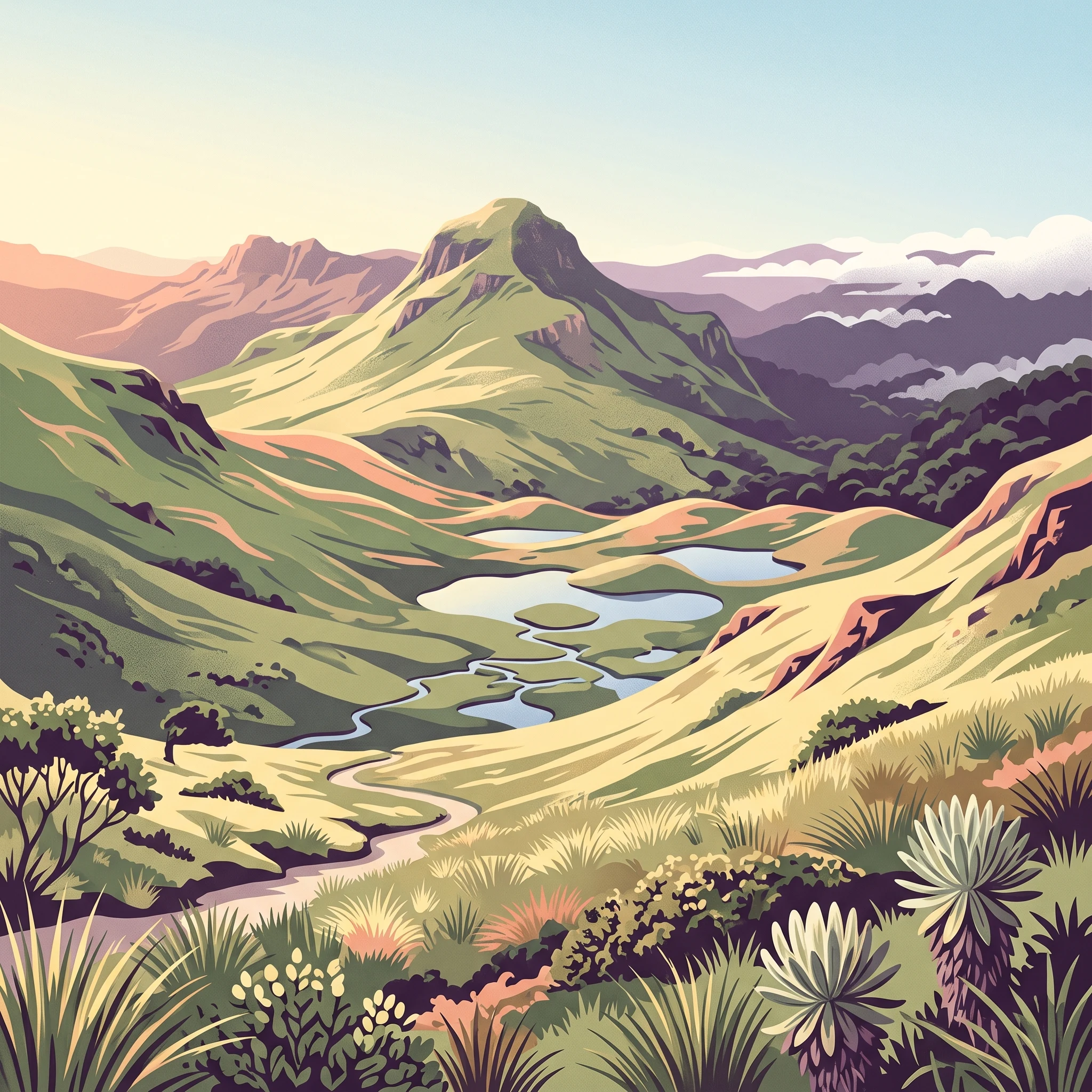
Llanganates National Park represents one of Ecuador's most significant protected wilderness areas, encompassing a remarkable range of ecosystems within a single protected boundary. The park straddles the dramatic ecological transition where the high Andes give way to the Amazon basin, creating a gradient of habitats that supports extraordinary biodiversity. Visitors approaching from the western side encounter the stark beauty of the páramo, a high-altitude grassland ecosystem found only in the northern Andes, where twisted vegetation and resilient shrubs cling to slopes swept by cold winds and frequent mists. This alpine world sits above the tree line, presenting a desolate yet hauntingly beautiful landscape of peaks and valleys that has supported South American camelids for generations. The eastern portion of the park tells a different story, where dense montane forests cloak the Andean slopes in a tapestry of green, their canopies often shrouded in clouds that rise from the Amazon lowlands below. These forests remain among the most difficult terrain in Ecuador to traverse, with countless rivers cascading down from the heights, creating a maze of ravines and forested ridges that has historically limited human access and allowed biodiversity to flourish relatively undisturbed. The park's cultural significance extends beyond its ecological value, as the legend of the Treasure of the Llanganatis has shaped regional identity and attracted explorers, adventurers, and historians to these mountains for centuries.

Quick facts and research context for Llanganates National Park

Llanganates National Park covers approximately 219,707 hectares across four provinces in central Ecuador. The protected area was established on January 18, 1996, and holds IUCN Category II designation as a national park. The park features two distinct ecological zones: the western Andean páramo at high elevation, and the eastern montane forest zone descending toward the Amazon. Access points include the towns of Salcedo, Patate, Pillaro, Baños, and Rio Verde. Cerro Hermoso, at 4,570 meters, is the park's highest peak and a major attraction for trekkers.

Park context

Deeper park guide and search-rich context for Llanganates National Park

Llanganates National Park history, landscape, wildlife, and travel context
Explore Llanganates National Park through its history, landscape character, ecosystems, wildlife, conservation priorities, cultural context, and seasonal travel timing in a structured park guide built for atlas discovery and search intent.

Why Llanganates National Park stands out

Llanganates National Park is best known for its extraordinary ecological diversity, spanning from windswept páramo grasslands to cloud-covered Amazonian montane forests. The park is famous for the legend of the Treasure of the Llanganatis, an Incan treasure hoard that Spanish conquistadors allegedly hid in the mountains during the 16th century, and which has inspired countless expeditions over centuries. The towering peak of Cerro Hermoso draws hikers seeking high-altitude Andean challenges, while the western páramo zone provides habitat for vicuñas, llamas, and alpacas in a landscape that feels remote and primordial. The eastern forest zone remains among Ecuador's most biologically unexplored regions, where recent botanical discoveries have uncovered new species of Andean magnolia.

Llanganates National Park history and protected-area timeline

Llanganates National Park was officially established on January 18, 1996, creating a formal protected boundary around a region that had long capture the Ecuadorian imagination. The establishment of the park came after decades of growing recognition that the unique ecosystems of the Llanganati mountains warranted formal conservation status, particularly as logging, agriculture, and development pressures increased throughout the central Ecuadorian highlands. The park's creation also served to protect the region's cultural heritage, as the area had become inextricably linked to the legend of the Treasure of the Llanganatis. According to local tradition, when Spanish conquistadors conquered the Incan Empire, they seized enormous quantities of gold and silver, including a renowned statue of the Incan sun god. Rather than surrender this treasure, Incan priests allegedly transported it into the remote mountains of Llanganates, where it was hidden in caves and never recovered. This legend has inspired numerous expeditions over the centuries, and while no major treasure caches have been confirmed, the myth continues to lend the region an air of mystery and adventure. In 2013, a team of international explorers discovered a significant stone structure in the remote forest zone, adding new intrigue to the region's archaeological potential.

Llanganates National Park landscape and geographic character

The physical landscape of Llanganates National Park is defined by the dramatic topography of the central Ecuadorian Andes, where锋锐的山峰和深邃的山谷相交,创造出令人敬畏的地形。西部区域呈现典型的帕拉莫景观特征,高耸的山峰与狭窄的山谷交织,草甸在寒冷的高山气候中顽强生长。向东,地面急剧下降到安第斯东坡,形成植被茂密的雾气林,山坡被密集的树木和藤本植物覆盖。公园内最高的山峰Cerro Hermoso海拔4,570米,是徒步旅行者的热门目的地,其山顶可俯瞰周围山脉的全景。众多河流发源于公园的高地,向东流向亚马逊盆地,形成深邃的峡谷和湍急的瀑布,为这个多样化的景观增添了动态的水文特征。

Llanganates National Park ecosystems, habitats, and plant life

Llanganates National Park contains two fundamentally different ecological zones that reflect the dramatic altitudinal and climatic transition across the Andean divide. The western zone occupies the high-elevation páramo, a unique ecosystem found only in the tropical high Andes, where constant winds, low temperatures, and intense ultraviolet radiation shape a distinctive community of tough grasses, cushion plants, and shrubby vegetation adapted to survive in this harsh environment. The páramo acts as a natural water reservoir, with its spongy soils absorbing moisture from clouds and releasing it slowly to feed rivers below, making this ecosystem critical for water supply throughout the region. The eastern zone presents a stark contrast, hosting lush montane forests that represent the upper reaches of the Amazon basin. These forests feature incredibly twisted and distorted trees, their trunks often draped in epiphytes, mosses, and ferns, creating a fantastical atmosphere as clouds pass through the canopy. The park's relative inaccessibility has allowed botanical exploration to continue revealing new species, including several rareMagnolia species discovered in recent years, underscoring how much of this forest remains scientifically unexplored.

Llanganates National Park wildlife and species highlights

The wildlife of Llanganates National Park reflects the park's position at a critical ecological crossroads between high Andean and Amazonian environments. In the western páramo zone, South American camelids thrive in the open grasslands, with vicuñas, llamas, and alpacas all present in significant numbers. These animals have been historically important to local communities and represent some of the few large mammals adapted to the harsh alpine conditions above the tree line. The eastern montane forest supports a much richer diversity of species, though the region's remoteness has limited comprehensive wildlife surveys. Birds are particularly abundant in the forest canopy, where mixed-species flocks move through the epiphyte-laden branches. The discovery of new plant species in the eastern zone suggests that the faunal diversity may also be underappreciated, with many species likely still awaiting scientific description. The park's rivers provide habitat for various aquatic species and serve as wildlife corridors through the mountainous terrain.

Llanganates National Park conservation status and protection priorities

Llanganates National Park holds IUCN Category II protected area status, recognizing its significance as a national park that protects both natural ecosystems and outstanding natural features. The park's conservation value is amplified by its role in protecting the páramo ecosystem, which functions as a critical water catchments for surrounding lowland communities and agricultural areas throughout central Ecuador. The páramo's ability to store water and regulate downstream flow makes it an essential service provider beyond its borders, justifying protection as a national priority. The eastern montane forest zone represents a biodiversity hotspot where new species continue to be discovered, underscoring the importance of maintaining intact forest cover to preserve the evolutionary processes that produce such diversity. The park also protects cultural heritage values associated with the Treasure of the Llanganatis legend, creating a layered conservation mandate that addresses both biological and cultural significance.

Llanganates National Park cultural meaning and human context

The cultural significance of Llanganates National Park extends far beyond its ecological value, rooted in one of Ecuador's most persistent historical legends. The Treasure of the Llanganatis has captured the imagination of explorers, adventurers, and treasure hunters since the Spanish colonial period, when tradition holds that Incan priests hid vast quantities of gold, silver, and sacred objects in the remote mountain caves rather than allow them to fall into conquistador hands. This legend has shaped regional identity and created a cultural landscape where history and mythology intertwine. The discovery of a significant stone structure by international explorers in 2013, featuring hundreds of two-ton stone blocks arranged in a roughly square mile area at 8,500 feet elevation in cloud forest, suggests that the region may hold archaeological significance beyond the treasure legend. Access to the park traditionally comes through Andean communities including Salcedo, Patate, Pillaro, Baños de Agua Santa, and Rio Verde, each offering different approaches to this mountainous wilderness.

Top sights and standout views in Llanganates National Park

Llanganates National Park offers visitors a rare combination of high-altitude adventure, ecological diversity, and cultural mystery. The ascent to Cerro Hermoso peak provides hikers with a challenging but rewarding experience through páramo terrain to views spanning multiple provinces. The park's dual personality, with windswept alpine grasslands contrasting against misty Amazonian forests, allows visitors to experience radically different ecosystems within a single trip. The legend of the Incan treasure adds an element of adventure and speculation that few other protected areas can match, inspiring curiosity about what might remain hidden in the remote valleys. The relatively low visitation compared to Ecuador's more famous parks offers a wilder experience, where the sense of exploration remains genuine and the landscapes feel genuinely remote.

Best time to visit Llanganates National Park

The best time to visit Llanganates National Park depends on which zone visitors plan to explore and what weather conditions they prefer. The páramo zone can be visited year-round, though the dry season from June to September typically offers clearer skies and more comfortable conditions for hiking. The eastern montane forest receives higher rainfall throughout the year, with the wettest months generally falling between April and August. Visitors should be prepared for rapid weather changes in the mountains, as fog and rain can descend suddenly regardless of the season. The dry months often provide more stable conditions for attempting the climb to Cerro Hermoso, while the green season may offer lusher scenery in the lower forest zones. Temperature decreases significantly with elevation, and visitors to the páramo should prepare for cold, windy conditions even when sunny.
Park location guide

Geography guide, regional context, and park location map for Llanganates National Park

Llanganates National Park park geography, regions, and map view in Ecuador
Understand where Llanganates National Park sits in Ecuador through a broader geographic reading of the surrounding landscape, nearby location context, and its mapped position within the national park landscape.

How Llanganates National Park fits into Ecuador

Ecuador is a presidential republic located in northwestern South America, with Quito as its capital and Guayaquil as its largest city. The country spans 283,561 km² and encompasses the Galápagos Islands, a volcanic archipelago famous for unique wildlife that helped shape Darwin's theory of evolution. Ecuador is a plurinational state with Spanish as the official language, though Kichwa and Shuar are recognized for indigenous peoples.

Wider geography shaping Llanganates National Park in Ecuador

Ecuador is located in northwestern South America along the Pacific coast. It shares borders with Colombia to the north and Peru to the east and south. The country includes the Galápagos Islands, a volcanic archipelago in the Pacific Ocean approximately 1,000 km west of the mainland. The territory encompasses diverse terrain including the Amazon rainforest in the east, the Andean highlands in the center, and coastal plains along the Pacific.

Map view of Llanganates National Park

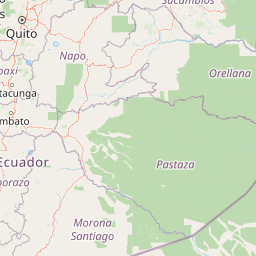
Use this park location map to pinpoint Llanganates National Park in Ecuador, understand its exact geographic position, and read its mapped placement within the surrounding landscape more clearly.

Pigeon | © OpenStreetMap contributors

Location context for Llanganates National Park

Cotopaxi ProvinceNapo ProvincePastaza ProvinceTungurahua Province
Park atlas

Compare the diverse páramo and cloud forest protected areas across Ecuador's central Andes.

Explore Other National Parks Near Llanganates National Park and Surrounding Andean Landscapes
After exploring Llanganates National Park, continue your discovery by browsing nearby national parks and protected areas within Ecuador's central Andean region. Compare varied páramo ecosystems, cloud forests, and high-altitude Andean terrain to understand the broader geographic context of this protected landscape.
National parkCotopaxi Province

Cotopaxi National Park: Ecuador's Mapped Protected Landscape and Regional Geography

Explore the geographic context of this national park.

Cotopaxi National Park represents a key protected landscape within Ecuador, located in Cotopaxi Province. This page facilitates detailed exploration of the park's mapped boundaries and its contribution to the regional geography. Understand the specific characteristics of this national park as part of a broader atlas of protected areas and natural terrains.

Area
333.93 km²
Established
1975
IUCN
II
Relief
Mountain
Watercolor illustration showing a mountain landscape with a snow-capped peak, a lake, and green hills.
National parkEcuador

Sangay National Park: Ecuador's National Park for Mapped Landscape and Geographic Discovery

Explore Ecuador's protected area boundaries and regional terrain.

Sangay National Park serves as a crucial protected landscape within Ecuador, offering rich opportunities for atlas and geography exploration. This page details the park's specific mapped boundaries and its natural terrain, providing essential context for understanding its place within South America's broader geographic tapestry. Investigate Sangay National Park's identity as a protected national park and its value for focused landscape and regional discovery.

Area
5,177.65 km²
Established
1979
IUCN
II
National parkEcuador

Sumaco Napo-Galeras National Park: Ecuador's Volcanic National Park Landscape

Explore protected areas and biodiversity in the Andean-Amazon transition.

Sumaco Napo-Galeras National Park protects a dramatic volcanic landscape in Ecuador, showcasing a significant elevation gradient that supports diverse cloud forest and Amazonian rainforest habitats. This national park is recognized for its endemic species and rich avifauna, offering a compelling case study for understanding protected land geography and ecological transitions within South America.

Area
2,067.49 km²
Established
1994
IUCN
II
Relief
Mountain
National parkEcuador

Yasuní National Park: Ecuador's Protected Landscape and Geographic Atlas Entry

Explore the mapped boundaries and regional terrain of this key national park.

Delve into the atlas-level details of Yasuní National Park, Ecuador's designated national park. This entry provides essential geographic context, focusing on the park's mapped boundaries and its role as a protected landscape within the region. Understand the specific terrain and protected area distribution that makes Yasuní National Park a significant point of geographic interest for atlas exploration.

Area
10,227.4 km²
Established
1979
IUCN
II
Relief
Lowland
Watercolor painting of a lake with green hills and trees in the background
Protected areaNariño

La Corota Island Flora Sanctuary: A Unique Protected Area within Colombia's Nariño Region

Explore its Andean cloud forest landscape and mapped island geography.

La Corota Island Flora Sanctuary is a critical protected area in Nariño, Colombia, celebrated for its distinctive status as the country's only lake island ecosystem supporting old-growth Andean cloud forest. This compact sanctuary provides a unique landscape context, safeguarding endemic plant species and diverse birdlife within its mapped boundaries. Its presence within Laguna de la Cocha highlights a special convergence of wetland and forest geography, offering insights for atlas exploration of protected lands.

Area
0.152 km²
Established
1977
IUCN
II
Visitors
28K annual
Watercolor illustration of a mountain range with a lake in the foreground, green fields, and a colorful sky
Protected areaColombia

Galeras Protected Area: Exploring Colombia's Mapped Natural Landscapes

Discover the geography and protected terrain of Galeras.

The Galeras protected area in Colombia offers a distinct opportunity for geographic exploration, focusing on its defined boundaries and the natural landscape it encompasses. This resource details the park's setting within the Colombian geography, providing a map-centric view of its protected status. Understanding Galeras contributes to a broader appreciation of protected lands across South America and their unique terrain.

Relief
Mountain
Climate
Alpine
Access
Highly restricted
National parkManabí Province

Machalilla National Park: Protected Area and Geographic Context in Manabí Province

Explore mapped natural landscapes and regional geography.

Delve into Machalilla National Park, a protected national park situated in Ecuador's Manabí Province. This page provides a focused view on its protected landscape character, emphasizing its geographic setting and mapped natural terrain. Understand how Machalilla National Park fits into the regional geography, offering a distinct case study for protected-area discovery and landscape atlas exploration.

Area
750.59 km²
Established
1979
IUCN
II
National parkColombia

Serranía de Los Churumbelos Auka-Wasi National Natural Park: Colombia's Protected Landscape Atlas

Mapped national park boundaries and regional geography.

Understand Serranía de Los Churumbelos Auka-Wasi National Natural Park through its geographic context and protected landscape features. This atlas view highlights the park's mapped boundaries and its significance within Colombia's natural geography, offering detailed insights into its protected status and regional terrain.

Area
562 km²
Established
2007
IUCN
II
Relief
Mountain

Common questions about visiting, size, designation, and location context for Llanganates National Park

Llanganates National Park FAQs for park facts, access, geography, and protected area context
Find quick answers about Llanganates National Park, including protected-area facts, park geography, trail and visitor context, and how the park fits into its surrounding country and regional landscape.
MoriAtlas Explorer

Continue Your Protected Areas Search Across the Global Atlas

Deepen your exploration by continuing the structured search for national parks and protected areas worldwide. Utilize the comprehensive filtering capabilities to compare different conservation landscapes and refine your understanding of global park geography. Discover more about the distribution and characteristics of protected natural areas.

Global natural geography