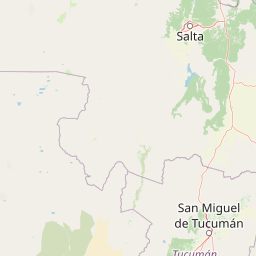
Why Los Cardones National Park stands out
Los Cardones National Park is best known for its extraordinary stands of cardon grande cactus, which form distinctive forest-like formations across the Andean desert landscape. The park preserves one of the most significant paleontological sites in northern Argentina, featuring well-preserved dinosaur tracks estimated at 70 million years old that attract scientific interest. Its location along provincial Route 33, including the famous Recta del Tin-Tin straight road section, provides accessible exploration of a fragile high-altitude desert ecosystem that transitions through multiple phytogeographic zones from Monte through Prepuna to Puna and Altoandina environments.
Los Cardones National Park history and protected-area timeline
The creation of Los Cardones National Park resulted from over a decade of planning that began in 1986 when the province of Salta and the Administración de Parques Nacionales signed a cooperation agreement to establish the protected area. The formal creation project was outlined in 1988 with multiple objectives including protection of representative flora and fauna of Andean biomes, conservation of the altitudinal gradient and its ecological processes, protection of singular features such as churqui forest and wetlands, and preservation of pre-Hispanic cultural heritage. The province of Salta ceded jurisdiction through Provincial Law 6805 in August 1995, transferring approximately 70,690 hectares to the national government. National Law 24737, passed on November 20, 1996, formally accepted the jurisdiction transfer and established the legal framework for the park and national reserve. At the time of creation, 116 people lived within the park boundaries in 31 family groups engaged primarily in livestock grazing. A 2007 census showed this population had decreased to 98 people in 25 families, who continue to use between 33% and 50% of the park area for grazing. The park's Management Plan was most recently updated in November 2017, establishing detailed zoning for the national park and reserve sections.
Los Cardones National Park landscape and geographic character
The landscape of Los Cardones National Park encompasses three primary geomorphological environments that create its distinctive character. The serrano environment features pronounced relief with steep mountain ranges and isolated peaks including Cerro Negro (Malcante) reaching 5,226 meters. The piedemonte and bajadas present gently sloping surfaces preserved from active fluvial deposition, alongside areas subject to ongoing erosion and sediment accumulation. The depressions correspond to low-lying areas receiving continuous fine material transport from water flow. The park's most visually striking feature is the extensive cardon cactus formations that create a forest-like appearance across the valleys and lower slopes. These towering columnar cacti, reaching heights of several meters, define the park's visual identity and provide critical habitat for numerous species. The landscape also features the Valley Encantado, a notable scenic location with an overlook and parking area, and is traversed by the Recta del Tin-Tin, a perfectly straight section of Provincial Route 33 that connects the Lerma Valley with the Calchaquíes valleys.
Los Cardones National Park ecosystems, habitats, and plant life
The ecological character of Los Cardones National Park is defined by its position at the intersection of multiple phytogeographic provinces, creating exceptional biodiversity within a relatively compact area. The Prepuneña province dominates the lower elevations, characterized by the iconic cardon cactus formations. The Monte de Sierras y Bolsones district appears in transitional areas, while the Puneña and Altoandino Quechua provinces occur at higher elevations. The park contains important churqui (Prosopis ferox) woodlands at higher altitudes, representing a distinct habitat type within the protected area. Wetlands and endorheic basins support specialized hydrophilic vegetation communities despite the overall arid conditions. The cactus diversity is particularly noteworthy, with numerous species including the small-spined Echinopsis cinnabarina occurring within the park boundaries. The altitudinal gradient from approximately 2,600 meters to over 5,200 meters creates a complex mosaic of habitats that supports species adapted to different elevation zones.
Los Cardones National Park wildlife and species highlights
The wildlife community of Los Cardones National Park reflects the park's position in the Andean desert environment, with several species of conservation concern present in the area. The guanaco (Lama guanicoe) remains the most commonly observed large mammal, often seen grazing in the open terrain. Two fox species occur in the park: the culpeo or red fox (Lycalopex culpaeus) and the grey or pampas fox (Lycalopex gymnocercus). The rare pajonal cat (Leopardus garleppi), also known as the Andean mountain cat, represents one of the most threatened felines in South America and has been recorded in the park. Other mammals include the chinchillón (Lagidium viscacia) and the piche or hairy armadillo (Chaetophractus vellerosus). The park has been designated as an Important Bird Area (IBA) due to its significant avian diversity, supporting numerous species including the rufous-banded miner, straight-billed earthcreeper, chestnut-winged cinclodes, and various canastero species. The bird community includes both resident and migratory species adapted to the high-altitude desert environment.
Los Cardones National Park conservation status and protection priorities
Los Cardones National Park plays a crucial role in protecting the biodiversity of northwestern Argentina's Andean environments, which face significant pressures from mining, grazing, and infrastructure development. The park's zoning system divides the protected area into zones with different allowed uses, with a substantial intangible zone covering over 30,000 hectares that protects the most ecologically sensitive areas including altoandine and puneño communities, wetlands, and critical wildlife habitat. A subzone for recovery of intangibility encompasses areas currently used for grazing that are targeted for reduced human impact over time. The park's designation as an Important Bird Area recognizes its global significance for avian conservation. The presence of threatened species including the pajonal cat and guanaco adds to the conservation importance of the area. The park's management plan addresses the ongoing challenge of balancing traditional grazing activities by local communities with the need to protect the fragile desert ecosystem.
Los Cardones National Park cultural meaning and human context
The area now within Los Cardones National Park held significance for pre-Hispanic cultures, who recognized the strategic value of its water sources and high-altitude grasslands for pastoral activities. The park contains archaeological evidence of human presence including rock art (pinturas rupestres) that attests to the historical importance of this landscape. Local communities, particularly in the southern portion of the park, maintain traditional livelihoods centered on livestock grazing, with residents continuing to use portions of the protected area for their animals. The park is accessed via Provincial Route 33, which follows historic pathways connecting the Lerma Valley with the Calchaquíes valleys, a route of cultural and commercial significance dating to colonial times. The town of Payogasta, located near the park's administrative center, serves as a gateway community for visitors exploring this corner of Salta Province.
Top sights and standout views in Los Cardones National Park
Los Cardones National Park offers visitors the opportunity to explore one of Argentina's most distinctive cactus-dominated landscapes, with the towering cardon grande forming forest-like stands across the Andean foothills. The dinosaur track sites represent a unique paleontological attraction, with 70-million-year-old footprints preserved in the desert substrate. Several viewpoints including Ojo de Cóndor and Secretos del Cardonal provide access to scenic panoramas of the mountain and valley terrain. The park's location along the Recta del Tin-Tin makes it accessible from Salta for day trips, though overnight visitors should note limited infrastructure within the protected area. Hiking trails range from short overlooks to longer routes through the mountain terrain, with the Valley Encantado area offering one of the most developed visitor facilities.
Best time to visit Los Cardones National Park
The optimal time to visit Los Cardones National Park corresponds to the dry season from April through October, when clear skies predominate and daytime temperatures remain comfortable for outdoor exploration. Winter months (June through August) offer the clearest visibility and most stable weather, though nights can be cold at higher elevations. The summer rainy season from November through March brings intermittent storms that can create muddy trail conditions and reduce visibility in the mountains, though this period also brings the greenest vegetation and best cactus flowering. The park can be visited year-round, but the shoulder seasons of spring (September-November) and autumn (March-May) often provide the best balance of favorable weather and accessible conditions. Visitors should be prepared for large temperature swings between day and night in all seasons, typical of high-altitude desert environments.