Mori Atlas logo
National parkPan de Azúcar National Park

Explore mapped park boundaries and regional terrain within this South American national park.

Pan de Azúcar National Park: Chile's Protected Landscape and Geographic Context

Pan de Azúcar National Park represents a significant protected area within the geography of Chile. As a national park, its boundaries define a unique natural landscape offering rich context for atlas exploration. This detailed view helps understand the park's place within the broader Chilean geography, showcasing its mapped terrain and its role as a conservation landscape.

Coastal DesertHumboldt PenguinsCactus ConservationIsland EcosystemsMarine MammalsFog-Dependent Ecosystem

Pan de Azúcar National Park

National park

Park overview

Structured park overview, official facts, and landscape profile for Pan de Azúcar National Park

Pan de Azúcar National Park park facts, protected area profile, and essential visitor context
Review the core facts for Pan de Azúcar National Park, including designation, size, terrain, visitor scale, habitats, and operating context in one park-focused overview.

About Pan de Azúcar National Park

Pan de Azúcar National Park represents one of Chile's most distinctive protected areas, located in the hyperarid Atacama Desert but supported by a remarkable ecological adaptation. The park straddles the administrative boundary between the Antofagasta Region and Atacama Region in northern Chile, approximately 180 kilometers north of Copiapó. Established in 1985, the park encompasses 438 square kilometers of territory that includes both mainland areas and 1.1 square kilometers of insular terrain. The park's name, meaning sugar loaf in Spanish, references the characteristic shape of the prominent rock formations that rise from the Pacific coast and offshore islands. What makes this park particularly noteworthy is its ability to support significant biodiversity in an environment where annual rainfall is essentially nonexistent. The coastal fog known as camanchaca provides the essential moisture that sustains plant and animal life across the park's varied terrain. This fog drip system creates oases of vegetation in an otherwise barren landscape, supporting specialized species that have evolved remarkable adaptations to survive in these conditions.

Quick facts and research context for Pan de Azúcar National Park

Pan de Azúcar National Park is located in the Atacama Desert region of northern Chile, approximately 30 kilometers north of the town of Chañaral and 180 kilometers north of Copiapó. The park covers 438 square kilometers including 1.1 square kilometers of insular territory. It was established in 1985 and is managed by the national forestry corporation CONAF. The park's unique biodiversity is supported by coastal fog rather than rainfall, with more than 20 cactus species documented in the area. The park encompasses two distinct ecosystems: the coastal desert of Taltal and the steppe desert of the Sierra Vicuña Mackenna mountain range.

Park context

Deeper park guide and search-rich context for Pan de Azúcar National Park

Pan de Azúcar National Park history, landscape, wildlife, and travel context
Explore Pan de Azúcar National Park through its history, landscape character, ecosystems, wildlife, conservation priorities, cultural context, and seasonal travel timing in a structured park guide built for atlas discovery and search intent.

Why Pan de Azúcar National Park stands out

Pan de Azúcar National Park is best known for its remarkable concentration of Humboldt penguins that nest on Isla Pan de Azúcar, the park's offshore island. The park is also renowned for its exceptional cactus diversity, with over 20 species of Copiapoa cacti thriving in the fog-supported microenvironments of the coastal desert. The Caleta Pan de Azúcar cove represents another distinctive feature, offering a glimpse into the region's mining heritage while serving as a gateway to explore the park's coastal and island environments. The dramatic geological formations along the road northward from the cove add to the park's visual appeal, with the landscape transitions from coastal shoreline to interior desert representing a unique ecological interface.

Pan de Azúcar National Park history and protected-area timeline

Pan de Azúcar National Park was established in 1985 through the designation of existing desert landscapes and coastal territories as a protected national park. The creation of the park reflected Chile's growing recognition of the ecological importance of its northern coastal desert regions, which had long been considered too arid to warrant significant conservation attention. The park's territory includes areas that had historical uses related to copper mining, particularly around Caleta Pan de Azúcar, where copper ore was processed and shipped by boat from small harbor facilities. The remnants of this industrial past remain visible beneath the waters at the cove, where divers can still explore portions of the old wharf and loading crane. The establishment of the park provided formal protection for the diverse ecosystems found within its boundaries, including the critical penguin breeding habitat on Isla Pan de Azúcar and the unique fog-dependent vegetation communities of the coastal desert.

Pan de Azúcar National Park landscape and geographic character

The landscape of Pan de Azúcar National Park presents a dramatic contrast between coastal formations and interior desert environments. The park's coastline features rugged cliffs, rocky coves, and the prominent Isla Pan de Azúcar, which rises dramatically from the Pacific Ocean approximately 24 kilometers offshore from the mainland portion of the park. The coastal terrain gives way inland to the arid steppe of the Sierra Vicuña Mackenna, a mountain range that forms the backdrop to the coastal plain. Along the road that extends northward from Caleta Pan de Azúcar toward the Pan-American Highway, numerous geological formations create a visually striking landscape of eroded rock and desert terrain. The park's two primary ecological zones reflect this topographical transition: the coastal desert of Taltal along the immediate shoreline, and the drier steppe desert of the interior mountains. Despite the apparent harshness of this environment, the landscape supports remarkable biological productivity in areas where coastal fog provides essential moisture.

Pan de Azúcar National Park ecosystems, habitats, and plant life

The ecological character of Pan de Azúcar National Park is defined by its location at the intersection of two distinct desert ecosystems and the influence of coastal fog on biological productivity. The coastal desert of Taltal occupies the western portion of the park, where proximity to the ocean and the regular presence of camanchaca fog create conditions that support a surprising diversity of plant life. More than 20 species of cacti have been documented within the park, with the genus Copiapoa being particularly well represented. These cacti have adapted to absorb moisture directly from the fog that rolls in from the Pacific, developing specialized root systems and growth forms that maximize water capture. The steppe desert of the Sierra Vicuña Mackenna occupies the inland portion of the park, where conditions are even more arid and vegetation is correspondingly sparse. The fog system represents the critical ecological factor that distinguishes this park from typical desert protected areas, creating microhabitats that support species found nowhere else in the Atacama Desert.

Pan de Azúcar National Park wildlife and species highlights

The wildlife of Pan de Azúcar National Park reflects the park's unique position between marine and terrestrial ecosystems. The guanaco serves as the park's primary terrestrial mammal species, herds of which can be observed moving across the desert terrain in search of vegetation that persists in fog-supported areas. Smaller mammals include the culpeo fox and the chilla fox, both of which have adapted to the challenges of surviving in the arid environment. The European hare has also established populations within the park. The marine environment along the park's coastline supports additional wildlife, including the marine otter and the South American sea lion, both of which can be observed along the rocky shores and near the offshore islands. The avian fauna includes the Humboldt penguin, which breeds in significant numbers on Isla Pan de Azúcar, and the Peruvian pelican, which frequents the coastal waters and shoreline areas. Reptile species from the genera Tropidurus and Callopistes round out the vertebrate fauna found within the park.

Pan de Azúcar National Park conservation status and protection priorities

Pan de Azúcar National Park holds significant conservation value as one of the few protected areas in Chile's hyperarid north that preserves both coastal and desert ecosystems within a single boundary. The park's designation as an IUCN Category II protected area reflects its role in maintaining natural processes and species populations while allowing for compatible visitor use. The protection of Isla Pan de Azúcar is particularly important given its role as a breeding site for Humboldt penguins, a species that faces significant conservation pressures throughout its range. The park's cactus populations represent another conservation priority, with multiple species of Copiapoa cacti requiring protection from habitat degradation and illegal collection. The CONAF-managed park includes a cactarium facility near the entrance that provides educational opportunities while supporting conservation awareness. The fog-dependent ecosystems found within the park represent unique biological communities that exist at the edge of survival, making their protection through national park status particularly meaningful.

Pan de Azúcar National Park cultural meaning and human context

The cultural context of Pan de Azúcar National Park includes elements of Chile's mining heritage and the traditional relationship between coastal communities and the sea. Caleta Pan de Azúcar represents a settlement where fishing and copper mining converged, with the small cove serving as a harbor for vessels loading copper ore transported from inland mines. The underwater remains of the old loading facilities serve as tangible reminders of this industrial past, now repurposed as attractions for diving visitors. The ongoing use of the cove by local fishing families maintains connections to traditional maritime livelihoods that predate the park's establishment. The park's landscape has also been shaped by the broader human history of the Atacama coast, where communities have long adapted to the challenges of surviving in one of the world's driest environments by relying on fog water and marine resources.

Top sights and standout views in Pan de Azúcar National Park

Pan de Azúcar National Park offers visitors a rare opportunity to experience the biodiversity of Chile's coastal desert, supported by the remarkable fog system that sustains life in an environment otherwise devoid of moisture. The boat trip to Isla Pan de Azúcar provides close encounters with breeding Humboldt penguins, while the mainland portions of the park reveal the intricate adaptations that allow cacti and other desert species to thrive on fog moisture alone. The Caleta Pan de Azúcar cove serves as a base for exploring the park, with opportunities to observe marine mammals along the coastline and to dive among the historical remnants of the copper shipping operations. The dramatic geology along the northern road provides additional visual interest, with eroded formations creating a landscape of sculptural rock formations against the desert backdrop.

Best time to visit Pan de Azúcar National Park

The optimal time to visit Pan de Azúcar National Park generally corresponds to the austral summer months from December through March, when warmer temperatures and clearer skies provide the most comfortable conditions for exploring the desert landscape. However, the park's desert environment means that visiting is possible year-round, with each season offering different atmospheric conditions. The winter months may bring more frequent fog events, which while creating cooler conditions, also enhance the visual drama of the landscape as moisture blankets the coastal terrain. Wildlife viewing opportunities remain consistent throughout the year, though penguin activity on the island may vary with seasonal breeding cycles. Visitors should be prepared for the extreme dryness of the environment regardless of when they visit, and should consider the park's remote location when planning logistics.
Park location guide

Geography guide, regional context, and park location map for Pan de Azúcar National Park

Pan de Azúcar National Park park geography, regions, and map view in Chile
Understand where Pan de Azúcar National Park sits in Chile through a broader geographic reading of the surrounding landscape, nearby location context, and its mapped position within the national park landscape.

How Pan de Azúcar National Park fits into Chile

Chile is a presidential republic in western South America, extending as a narrow strip along the western edge of the continent between the Andes Mountains and the Pacific Ocean. It is the southernmost country in the world and the closest to Antarctica. The country is bordered by Peru, Bolivia, and Argentina, and administers several Pacific islands including Easter Island. Chile is a major copper producer and has a population of approximately 19.6 million.

Wider geography shaping Pan de Azúcar National Park in Chile

Chile occupies a narrow strip of land along the western edge of South America, extending approximately 4,300 km north to south but only about 350 km east to west at its widest point. The country is sandwiched between the Andes Mountains to the east and the Pacific Ocean to the west. It shares borders with Peru to the north, Bolivia to the northeast, and Argentina to the east. Southern Chile borders the Drake Passage. Chile also administers several Pacific islands including Juan Fernández Islands, Isla Salas y Gómez, Desventuradas Islands, and Easter Island, plus the Chilean Antarctic Territory.

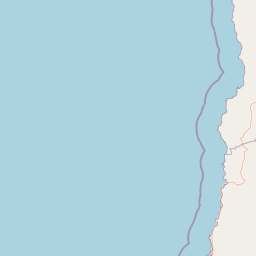
Map view of Pan de Azúcar National Park

Use this park location map to pinpoint Pan de Azúcar National Park in Chile, understand its exact geographic position, and read its mapped placement within the surrounding landscape more clearly.

Pigeon | © OpenStreetMap contributors

Location context for Pan de Azúcar National Park

Antofagasta RegionAtacama Region
Park atlas

Map Chile's coastal desert and steppe, comparing adjacent protected areas and their geographic spread across the Atacama and Antofagasta Regions.

Discover Nearby Protected Areas: Expand Your Exploration Beyond Pan de Azúcar National Park
From Pan de Azúcar National Park, browse other national parks and protected areas in Chile's northern regions, focusing on coastal desert ecosystems and marine-terrestrial interfaces. This structured view helps you compare the geographic context, conservation landscapes, and unique biological features of protected areas spanning the Atacama and Antofagasta Regions.
National parkAtacama Region

Nevado Tres Cruces National Park: National Park in Atacama Region's Mapped Geography

Explore protected landscapes and regional park context.

Nevado Tres Cruces National Park is a significant protected national park situated within the Atacama Region of Chile. This entry provides essential geographic context, detailing the park's mapped boundaries and its contribution to the region's conservation landscape. Understand its place within the broader atlas of protected areas, focusing on the natural terrain and the distinct geography that characterize this important national park.

Area
591 km²
IUCN
II
Relief
Mountain
Climate
Alpine
National parkAtacama Region

Llanos de Challe National Park: Unique Coastal Desert and Lomas Ecosystem

Atacama Region National Park with Dramatic Terrain and Wildlife

Llanos de Challe National Park presents a rare protected coastal desert environment within the Atacama Region. Its unique lomas ecosystem, sustained by coastal fog, supports a surprising diversity of life. The park encompasses striking geographic features, from unspoiled white-sand beaches to rugged mountainous terrain, offering a clear example of a vital protected landscape with significant guanaco populations and unique flora, all mapped within its regional context.

IUCN
II
Relief
Mixed relief
Climate
Arid
Scope
Mixed
National parkAntofagasta Region

Llullaillaco National Park: Mapped Volcanic Terrain and Protected Andean Landscape

Explore the high-altitude desert ecosystem and national park boundaries.

Llullaillaco National Park is a significant protected area in the Antofagasta Region, characterized by its striking volcanic landscape and high-altitude desert environment. The park's geography includes the towering Llullaillaco volcano, ancient ravines, and expansive semi-desert plains, forming a unique segment of the Central Andean dry puna ecoregion. Discover the mapped terrain and protected area context of this remarkable Chilean national park, offering insights into its arid-adapted biodiversity and geological significance.

Area
2,687 km²
IUCN
II
Relief
Mountain
Climate
Arid
National parkAntofagasta Region

Morro Moreno National Park National Park: Mapped Landscape and Regional Geography in Antofagasta

Explore its protected boundaries and arid terrain.

Morro Moreno National Park represents a vital protected area within the northern Chilean landscape of the Antofagasta Region. This national park serves as a focal point for understanding the specific geography and mapped terrain characteristic of this arid zone. By examining Morro Moreno National Park, users gain insight into the distribution of protected lands and the unique natural context it provides for regional geographic study.

Area
73.14 km²
Established
2010
IUCN
II
Relief
Upland
Watercolor illustration of mountain ranges with green and yellow hills, a central dark peak, and pinkish foreground
National park

San Guillermo National Park: High Andes Protected Landscape & Vicuña Conservation Area

Explore its rugged terrain and arid mountain ecosystem.

San Guillermo National Park, a key national park in Argentina's San Juan Province, protects over 166,000 hectares of high-altitude Andean wilderness. Its landscape is defined by arid mountain ranges and expansive puna grasslands, serving as a critical sanctuary for vicuñas and other high-Andean wildlife. This page offers detailed geographic context for understanding the park's protected boundaries, unique terrain, and its importance as a mapped conservation area.

Area
1,660 km²
Established
1998
IUCN
II
Relief
Mountain
National parkSalta Province

Los Cardones National Park: National Park Protected Landscape in Salta Province

Explore the mapped geography and protected area boundaries.

Los Cardones National Park represents a distinct protected landscape within Salta Province, Argentina. This page provides an atlas-driven view of its status as a national park, focusing on its geographic setting and mapped boundaries. It is designed for users seeking structured information about the park's protected-area identity and its regional landscape context, offering a foundation for broader geographic exploration.

Area
650 km²
Established
1996
IUCN
II
Relief
Mixed relief
National parkTucumán Province

Aconquija National Park: Southern Andean Yungas Protected Landscape in Tucumán Province

Explore its montane forest and mapped geographic context.

Aconquija National Park is a significant federal protected area located in Tucumán Province, Argentina. This national park is dedicated to conserving the diverse Southern Andean Yungas montane forest ecosystem, characterized by a dramatic elevational gradient. Its landscapes transition from cloud forest to high alpine terrain, offering a unique opportunity to study and appreciate a well-preserved montane environment within a critical geographic region. Discover the mapped extent and ecological importance of this protected area.

Area
700 km²
Established
1995
IUCN
II
Relief
Mountain
National parkLa Rioja Province

Talampaya National Park: Argentinian National Park with Dramatic Desert Canyons

Explore protected landscape and mapped geography in La Rioja Province.

Talampaya National Park, a significant national park in Argentina's La Rioja Province, offers a profound exploration of a dramatic desert canyon environment. This protected area is renowned for its rich paleontological sites, yielding crucial dinosaur fossils, and for its well-preserved indigenous petroglyphs carved into ancient rock formations. Understanding Talampaya National Park provides vital context for the region's geography and its place within Argentinian protected lands and mapped natural landscapes.

Area
2,150 km²
Established
1997
IUCN
II
Relief
Mountain

Common questions about visiting, size, designation, and location context for Pan de Azúcar National Park

Pan de Azúcar National Park FAQs for park facts, access, geography, and protected area context
Find quick answers about Pan de Azúcar National Park, including protected-area facts, park geography, trail and visitor context, and how the park fits into its surrounding country and regional landscape.
MoriAtlas Explorer

Continue Your Protected Areas Search Across the Global Atlas

Deepen your exploration by continuing the structured search for national parks and protected areas worldwide. Utilize the comprehensive filtering capabilities to compare different conservation landscapes and refine your understanding of global park geography. Discover more about the distribution and characteristics of protected natural areas.

Global natural geography